Love this? Save it for later!
Share the inspiration with your friends
“I never thought I’d be the person to hoard overripe bananas just waiting for the perfect recipe,” I confessed to my friend last Thursday while juggling a cracked mixing bowl and a stubborn whisk. Honestly, the first time I tried making gluten-free banana bread, it was a total mess—crumbly, dry, and sad. But then, during an impromptu chat with my neighbor, who casually mentioned using oat flour for a softer crumb, I got curious. That conversation turned into a kitchen experiment that went way better than expected.
Moist gluten-free banana bread with oat flour has since become my go-to comfort bake, especially on chilly mornings when I crave something warm and satisfying but need to keep things gluten-free. You know that feeling when you bite into a slice and it’s perfectly tender, sweet, and just dense enough without being heavy? That’s exactly what this recipe delivers. I remember the first batch I made—the kitchen was a mess, bananas everywhere, and I forgot to set the timer. But when it finally came out, my husband (who’s usually skeptical about gluten-free baking) was sneaking slices like it was candy.
Maybe you’ve been there—looking for a banana bread that’s both wholesome and indulgent, without complicated ingredients or weird textures. This recipe is just that, and I promise it’s worth keeping on repeat. Let me tell you, once you try this moist gluten-free banana bread with oat flour, you might find yourself purposely letting bananas turn extra ripe just for the next loaf.
Why You’ll Love This Recipe
I’ve tested this moist gluten-free banana bread with oat flour several times (sometimes more than I’d admit), and each time it gets better. Here’s why this recipe stands out and why it’s earned a permanent spot in my baking rotation:
- Quick & Easy: Comes together in under 45 minutes, perfect for busy mornings or last-minute bake cravings.
- Simple Ingredients: No fancy health food store trips needed; most ingredients are pantry staples you already have.
- Perfect for Breakfast or Snack: Great for cozy weekend mornings, school lunches, or an afternoon pick-me-up.
- Crowd-Pleaser: Even friends who aren’t gluten-free ask for seconds—there’s nothing “special diet” about the flavor or texture.
- Unbelievably Moist: Oat flour keeps it tender and soft without the dryness that often plagues gluten-free bakes.
This isn’t just another banana bread recipe with a gluten-free twist. The oat flour adds a mild nuttiness and a lush crumb that feels almost like a traditional loaf, but with the added bonus of being easier to digest. I’ve tried other flours, but oat flour consistently nails the perfect balance between moistness and structure. Plus, the natural sweetness from ripe bananas means you can keep sugar on the lighter side without sacrificing taste. Honestly, it’s the kind of recipe that makes you close your eyes after the first bite and say, “Yep, this is it.”
What Ingredients You Will Need
This moist gluten-free banana bread recipe uses simple, wholesome ingredients to deliver bold flavor and a satisfyingly soft texture without fuss. Most of these are pantry staples, and substitutions are easy if you need them.
- Ripe Bananas (3 medium, mashed) – The star of the show; the riper, the better for natural sweetness and moisture.
- Oat Flour (2 cups / 200g) – Look for fine, gluten-free certified oat flour for best results. I like Bob’s Red Mill for consistency.
- Baking Soda (1 tsp) – Helps the bread rise and keeps it light.
- Salt (½ tsp) – Balances sweetness and enhances flavor.
- Ground Cinnamon (1 tsp) – Adds a warm, cozy note.
- Eggs (2 large, room temperature) – For structure and richness.
- Honey or Maple Syrup (¼ cup / 85g) – Natural sweetener that complements bananas perfectly.
- Plain Greek Yogurt (½ cup / 120g) – Adds moisture and a slight tang; swap with dairy-free coconut yogurt if needed.
- Vanilla Extract (1 tsp) – For depth of flavor.
- Unsalted Butter or Coconut Oil (⅓ cup / 75g, melted) – Adds richness and keeps the crumb tender.
- Chopped Walnuts (optional, ½ cup / 60g) – For crunch and texture contrast.
If you’re avoiding nuts, feel free to skip walnuts or swap them with pumpkin seeds. For a vegan version, replace eggs with flax eggs (1 tbsp ground flax + 3 tbsp water per egg, whisked and rested). If you want a sweeter loaf, add a couple tablespoons of brown sugar or coconut sugar.
Equipment Needed
- Mixing Bowls: One large bowl for wet ingredients and one for dry; glass or stainless steel preferred to avoid lingering odors.
- Measuring Cups and Spoons: Accurate measuring is key for gluten-free baking to avoid a dry or dense loaf.
- Electric Mixer or Whisk: I usually use a handheld mixer to blend wet ingredients quickly, but a sturdy whisk works fine too.
- Loaf Pan: Standard 9×5 inch (23×13 cm) loaf pan; I recommend lining it with parchment for easiest removal and cleanup.
- Spatula: A flexible silicone spatula helps fold ingredients gently without overmixing.
- Cooling Rack: Essential for letting the bread cool evenly and preventing sogginess at the bottom.
If you don’t have oat flour on hand, you can make your own by pulsing gluten-free oats in a food processor until fine. I keep a small hand mixer for quick prep, but honestly, a good whisk and some elbow grease do the job. For budget-friendly loaf pans, silicone versions are great and easy to clean, but metal pans give a nicer crust if you’re after that.
Preparation Method
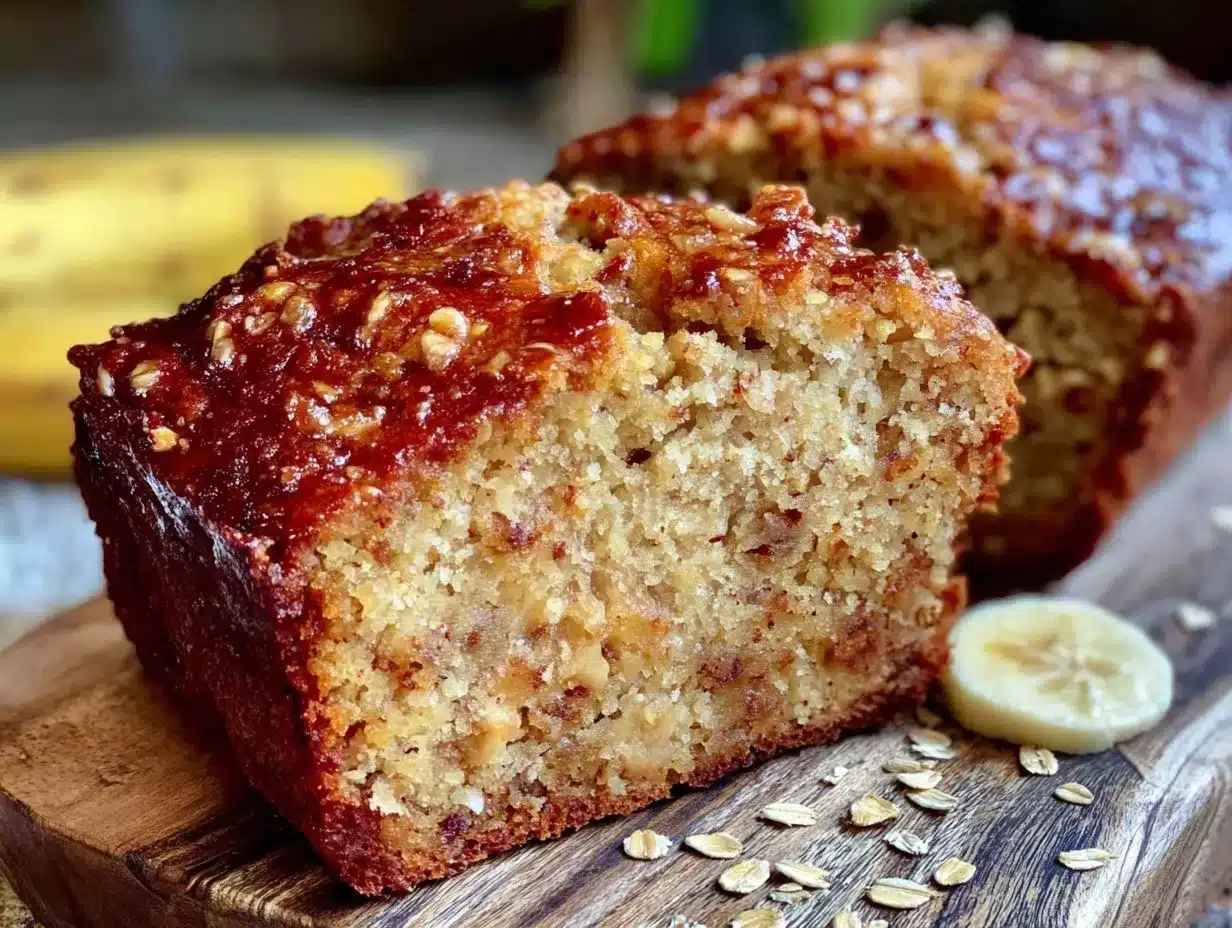
- Preheat your oven to 350°F (175°C). Grease your 9×5 inch (23×13 cm) loaf pan with butter or line it with parchment paper for easy removal. This usually takes about 5 minutes.
- Mix the dry ingredients: In a medium bowl, whisk together 2 cups (200g) oat flour, 1 teaspoon baking soda, ½ teaspoon salt, and 1 teaspoon ground cinnamon. Set aside. This step helps distribute the leavening agents evenly.
- Combine wet ingredients: In a large bowl, mash 3 ripe bananas thoroughly with a fork until mostly smooth but still a bit chunky. Add 2 large eggs, ¼ cup (85g) honey or maple syrup, ½ cup (120g) plain Greek yogurt, 1 teaspoon vanilla extract, and ⅓ cup (75g) melted unsalted butter or coconut oil. Whisk until everything is just combined. Avoid overmixing to keep the bread light.
- Fold dry into wet: Slowly add the dry mixture to the wet ingredients, folding gently with a spatula. The batter will be thick and slightly sticky, which is perfect. If it feels too dry, a tablespoon of milk or dairy-free alternative can help (but don’t go overboard!).
- Add optional walnuts: If using, fold in ½ cup (60g) chopped walnuts for texture and flavor.
- Transfer batter: Scrape the batter into the prepared loaf pan, smoothing the top with a spatula. The batter should fill the pan about ¾ full.
- Bake: Place the pan on the middle rack and bake for 50-60 minutes. Start checking at 50 minutes by inserting a toothpick into the center; it should come out mostly clean with a few moist crumbs. If it’s too wet, bake in 5-minute increments.
- Cool: Let the bread cool in the pan for 15 minutes, then transfer to a cooling rack. This prevents sogginess and helps the loaf set.
Pro tip: Don’t skip letting it cool before slicing—gluten-free banana bread is softer and can crumble if cut too soon. Also, I once forgot to add the baking soda (don’t ask!), and it was dense, so double-check your ingredients before mixing. The smell of cinnamon and bananas baking is honestly the best kitchen reward.
Cooking Tips & Techniques
Moist gluten-free banana bread isn’t rocket science, but a few tricks make a big difference. Here are some tips I learned the hard way:
- Use ripe bananas: The sweeter and softer the bananas, the moister and more flavorful your bread will be. If you’re like me, you might stash bananas on the counter until they’re almost too mushy.
- Don’t overmix: When combining wet and dry ingredients, fold gently. Overworking the batter can make the bread dense and tough.
- Check your oat flour: Sometimes oat flour can be coarse; if you notice a gritty texture, pulse your flour in a blender for a few seconds before using.
- Watch the oven temperature: Gluten-free baking can be sensitive. If your oven runs hot, lower the temperature by 10°F (5°C) and bake a bit longer to prevent a burnt crust with an undercooked center.
- Use parchment paper: It’s a game changer for cleanup and loaf removal, especially with stickier gluten-free batters.
- Multitasking tip: While the bread is baking, clean up your stations and prepare your coffee or tea to enjoy with your warm slice.
One time, I tried swapping oat flour for almond flour without adjusting liquids, and it was a disaster—super crumbly and dry. That mistake taught me how important flour choice is for moisture balance. Gluten-free baking often needs small tweaks, but this recipe nails it pretty consistently.
Variations & Adaptations
This moist gluten-free banana bread is versatile and easy to adapt, depending on your dietary needs or taste preferences. Here are a few ways I’ve switched it up:
- Vegan version: Replace eggs with flax eggs and use coconut oil instead of butter. Make sure your yogurt substitute is unsweetened and thick.
- Add mix-ins: Toss in dark chocolate chips, dried cranberries, or shredded coconut for extra flavor and texture.
- Spice it up: Include nutmeg or ginger along with cinnamon for a warmer spice profile.
- Low-sugar option: Reduce or omit the honey/maple syrup if your bananas are very ripe; the bread will still be naturally sweet.
- Gluten-free flour blend substitute: If you don’t have oat flour, a 1:1 gluten-free baking flour blend can work, but expect a slightly different crumb.
Personally, I love adding toasted pecans and a handful of blueberries during summer months. It adds a fresh burst of flavor that pairs perfectly with the banana and cinnamon. Feel free to experiment—you might find your own signature twist.
Serving & Storage Suggestions
This banana bread is best served slightly warm or at room temperature. I like to slice it thick and spread a little butter or nut butter on top while it’s still warm. It pairs beautifully with a hot cup of coffee or a spiced chai tea.
For storage, wrap the loaf tightly in plastic wrap or keep it in an airtight container at room temperature for up to 3 days. You can also refrigerate it for up to a week, though I recommend bringing slices back to room temp or warming them slightly before eating.
To freeze, wrap the loaf or individual slices in plastic wrap and place in a freezer bag. It keeps well for up to 3 months. Thaw overnight in the fridge or warm quickly in a toaster oven.
Flavors actually deepen a bit after resting a day or two, so if you can wait, it’s worth it. Just don’t wait too long—this bread tends to disappear fast at our house!
Nutritional Information & Benefits
This moist gluten-free banana bread with oat flour offers a nutritious treat without feeling heavy or overly sweet. Per slice (assuming 12 slices per loaf), here’s an estimate:
| Calories | 180-200 kcal |
|---|---|
| Protein | 4-5 grams |
| Carbohydrates | 28-30 grams |
| Fiber | 3-4 grams |
| Fat | 6-7 grams (mostly healthy fats if using coconut oil or nuts) |
Oat flour is a great source of soluble fiber and helps support digestion. Bananas add potassium and natural sweetness, which means less added sugar is needed. This recipe is gluten-free, dairy-free adaptable, and can be made vegan, making it accessible for many dietary needs.
As someone who pays attention to wellness but loves comfort food, this banana bread strikes a nice balance. It feels indulgent but won’t weigh you down.
Conclusion
This moist gluten-free banana bread with oat flour is more than just a loaf—it’s a little slice of comfort that’s easy to make and hard to resist. Whether you’re new to gluten-free baking or a longtime fan, this recipe delivers consistent results with simple ingredients and a tender crumb.
I encourage you to try it as is, then play around with your favorite add-ins or swaps. Trust me, once you get the hang of it, it becomes a versatile kitchen staple. I still smile remembering my early baking blunders and how this recipe became my favorite fix.
If you bake it, I’d love to hear how it turns out! Drop a comment below or share your creative twists. Happy baking—may your kitchen be warm and your loaf always moist.
FAQs
Can I use regular all-purpose flour instead of oat flour?
Yes, you can substitute with all-purpose flour, but the texture and moisture will differ. Oat flour gives this banana bread its signature soft crumb and slight nuttiness.
Is this banana bread suitable for people with nut allergies?
Absolutely! Just omit the optional walnuts or replace them with seeds like pumpkin or sunflower seeds for crunch.
How do I make this recipe vegan?
Replace the eggs with flax eggs (1 tablespoon ground flaxseed + 3 tablespoons water per egg) and use dairy-free yogurt and coconut oil instead of butter.
Can I freeze the banana bread?
Yes, wrap it tightly in plastic wrap and freeze for up to 3 months. Thaw overnight in the fridge or warm slices in a toaster oven before serving.
What makes oat flour better for gluten-free banana bread?
Oat flour has a mild flavor and helps retain moisture, resulting in a tender crumb that’s less dense than many other gluten-free flours.
By the way, if you enjoy recipes with oats, you might appreciate my gluten-free oatmeal cookies or the easy oat pancakes I make on slow Sunday mornings.
Pin This Recipe!
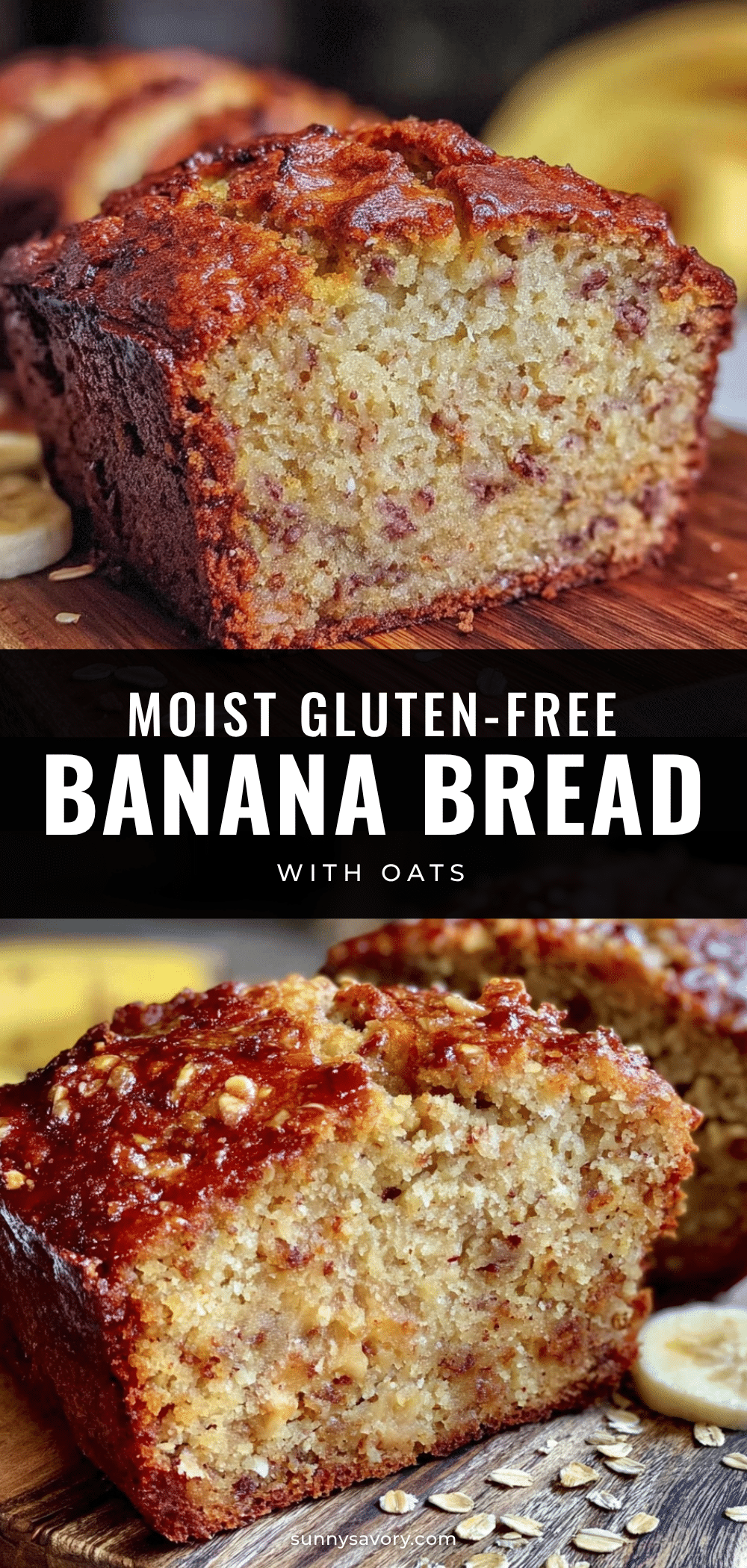
Moist Gluten-Free Banana Bread Recipe with Oat Flour Easy and Perfect

A moist and tender gluten-free banana bread made with oat flour, perfect for breakfast or a snack. This recipe delivers a soft crumb with natural sweetness and is easy to make with simple pantry ingredients.
- Prep Time: 10 minutes
- Cook Time: 55 minutes
- Total Time: 65 minutes
- Yield: 12 servings 1x
- Category: Breakfast, Snack, Dessert
- Cuisine: American
Ingredients
- 3 medium ripe bananas, mashed
- 2 cups (200g) gluten-free oat flour
- 1 teaspoon baking soda
- ½ teaspoon salt
- 1 teaspoon ground cinnamon
- 2 large eggs, room temperature
- ¼ cup (85g) honey or maple syrup
- ½ cup (120g) plain Greek yogurt (or dairy-free coconut yogurt)
- 1 teaspoon vanilla extract
- ⅓ cup (75g) unsalted butter or coconut oil, melted
- ½ cup (60g) chopped walnuts (optional)
Instructions
- Preheat your oven to 350°F (175°C). Grease a 9×5 inch (23×13 cm) loaf pan with butter or line it with parchment paper.
- In a medium bowl, whisk together oat flour, baking soda, salt, and ground cinnamon. Set aside.
- In a large bowl, mash the ripe bananas until mostly smooth but still a bit chunky. Add eggs, honey or maple syrup, Greek yogurt, vanilla extract, and melted butter or coconut oil. Whisk until just combined.
- Slowly fold the dry ingredients into the wet ingredients using a spatula. If the batter feels too dry, add a tablespoon of milk or dairy-free alternative.
- Fold in the optional chopped walnuts if using.
- Scrape the batter into the prepared loaf pan, smoothing the top. Fill the pan about ¾ full.
- Bake on the middle rack for 50-60 minutes. Check at 50 minutes by inserting a toothpick; it should come out mostly clean with a few moist crumbs. If wet, bake in 5-minute increments.
- Let the bread cool in the pan for 15 minutes, then transfer to a cooling rack before slicing.
Notes
Use very ripe bananas for best moisture and sweetness. Avoid overmixing the batter to keep the bread light and tender. Let the bread cool completely before slicing to prevent crumbling. Parchment paper helps with easy removal and cleanup. For vegan version, replace eggs with flax eggs and use dairy-free yogurt and coconut oil.
Nutrition
- Serving Size: 1 slice (1/12th of l
- Calories: 190
- Sugar: 12
- Sodium: 150
- Fat: 6.5
- Saturated Fat: 2.5
- Carbohydrates: 29
- Fiber: 3.5
- Protein: 4.5
Keywords: gluten-free banana bread, oat flour banana bread, moist banana bread, gluten-free baking, healthy banana bread, easy banana bread recipe