Love this? Save it for later!
Share the inspiration with your friends
“I wasn’t planning on cooking anything fancy that Wednesday afternoon,” I remember telling myself as the rain drummed steadily against the kitchen window. The power had flickered twice already, and honestly, I was just trying to get dinner on the table before my stomach started staging a protest. Then, out of nowhere, my phone buzzed with a message from my neighbor, Mark, who casually mentioned, “Got an extra zucchini and some fresh peas from the farmer’s market. You want ’em?”
That little message sparked the idea for this quick 20-minute pasta primavera with seasonal vegetables. I didn’t have much else planned, and the fridge was looking rather uninspiring, but those fresh veggies? They were the perfect spark to create something light, colorful, and fast. I threw on some pasta, sautéed the zucchini and peas with garlic and herbs, and tossed it all together with a splash of lemon and olive oil. The whole thing came together in the time it took for a single episode of my favorite show to play out.
Honestly, it was one of those meals that remind you why simple food can be so satisfying. Maybe you’ve been there—racing against time, digging through the fridge, hoping for a quick fix that still feels fresh and nourishing. This pasta primavera recipe isn’t just a last-minute save; it’s a little celebration of what seasonal vegetables can do when you treat them right. The bright green peas, tender zucchini, and al dente pasta all meld into a dish that’s as comforting as it is vibrant. Plus, it’s easy enough to whip up on any busy weeknight without sacrificing flavor or freshness.
So, whether you’re juggling work, family, or just the usual everyday chaos, this pasta primavera with seasonal vegetables might just become your new go-to. It’s quick, it’s healthy, and it’s a nod to those unexpected moments that make cooking feel like a small victory.
Why You’ll Love This Quick 20-Minute Pasta Primavera with Seasonal Vegetables
After testing this recipe countless times (and yes, sometimes with a kitchen that looked like a tornado hit it), I can confidently say this pasta primavera is a keeper. It’s the kind of dish that feels effortless but never bland, and here’s why you might just fall for it too:
- Quick & Easy: Ready in just 20 minutes, this pasta primavera is perfect when you’re short on time but craving something homemade and wholesome.
- Simple Ingredients: You likely have most of these in your pantry and fridge, plus the seasonal veggies are easy to swap depending on what’s fresh.
- Perfect for Any Occasion: Whether it’s a casual weeknight dinner, a light lunch, or a potluck contribution, this dish fits right in.
- Crowd-Pleaser: I’ve served this at family dinners and small gatherings, and it’s always met with smiles and requests for seconds.
- Unbelievably Delicious: The combination of fresh vegetables, herbs, and lemon juice creates a bright, satisfying flavor that feels like a little sunshine in every bite.
What sets this pasta primavera apart is the balance of textures and freshness. The veggies are cooked just right—still crisp but tender—while the pasta remains perfectly al dente. Plus, the light dressing made from olive oil, lemon, and a hint of garlic ties everything together without weighing it down. It’s not one of those heavy, cream-filled pasta dishes; it’s pure, simple, and full of life.
This recipe has become a staple in my kitchen, especially when I want to impress guests without spending hours cooking or fussing over complicated ingredients. Honestly, it’s the kind of dish you can close your eyes and savor, knowing it’s as good for your schedule as it is for your taste buds.
What Ingredients You Will Need
This quick 20-minute pasta primavera uses simple, wholesome ingredients that come together beautifully to highlight the freshness of seasonal vegetables. Most of these are pantry staples, while the veggies can be swapped based on what’s local or in season. Here’s what you’ll need:
- Pasta: 8 ounces (225 grams) of your favorite pasta—penne, farfalle, or spaghetti work great. I usually go with Barilla for consistent texture.
- Olive Oil: 3 tablespoons of good-quality extra virgin olive oil (adds richness and body).
- Garlic: 3 cloves, minced for that punch of flavor.
- Zucchini: 1 medium, sliced into thin half-moons (adds tender crunch).
- Fresh Peas: 1 cup (about 150 grams), shelled. Frozen peas can be used in a pinch.
- Cherry Tomatoes: 1 cup, halved (optional but adds a lovely pop of sweetness and color).
- Fresh Basil: A handful, torn (for that aromatic freshness).
- Lemon: Juice and zest of 1 lemon (brightens the whole dish).
- Parmesan Cheese: 1/4 cup, grated (optional, but highly recommended for a savory finish).
- Salt & Pepper: To taste.
- Red Pepper Flakes: A pinch, if you like a little heat.
If zucchini or peas aren’t in season, swap in asparagus tips, green beans, or even fresh spinach. For a dairy-free version, leave out the parmesan or use a plant-based alternative like nutritional yeast. For gluten-free pasta, brown rice or chickpea pasta works beautifully without losing that satisfying bite.
Equipment Needed
For this quick 20-minute pasta primavera, you won’t need anything fancy—just the basics that most home kitchens have ready to go. Here’s what I use:
- Large Pot: For boiling the pasta. A heavy-bottomed one works best to keep a rolling boil steady.
- Large Skillet or Sauté Pan: To cook the vegetables and toss everything together. I prefer a non-stick skillet to avoid extra oil and for easy cleanup.
- Colander: To drain the pasta.
- Microplane or Zester: For lemon zest—if you don’t have one, a fine grater works fine.
- Garlic Press: Optional, but it speeds up mincing garlic if you’re in a rush.
- Measuring Cups and Spoons: For precise seasoning and oil amounts.
If you don’t have a non-stick pan, a well-seasoned cast iron skillet makes a great alternative but keep an eye on the heat to prevent sticking. For zesting, even a vegetable peeler can create strips of lemon peel that add flavor, just chop them finely. Honestly, you can make this recipe with whatever you’ve got — no need to break the bank on special tools.
Preparation Method
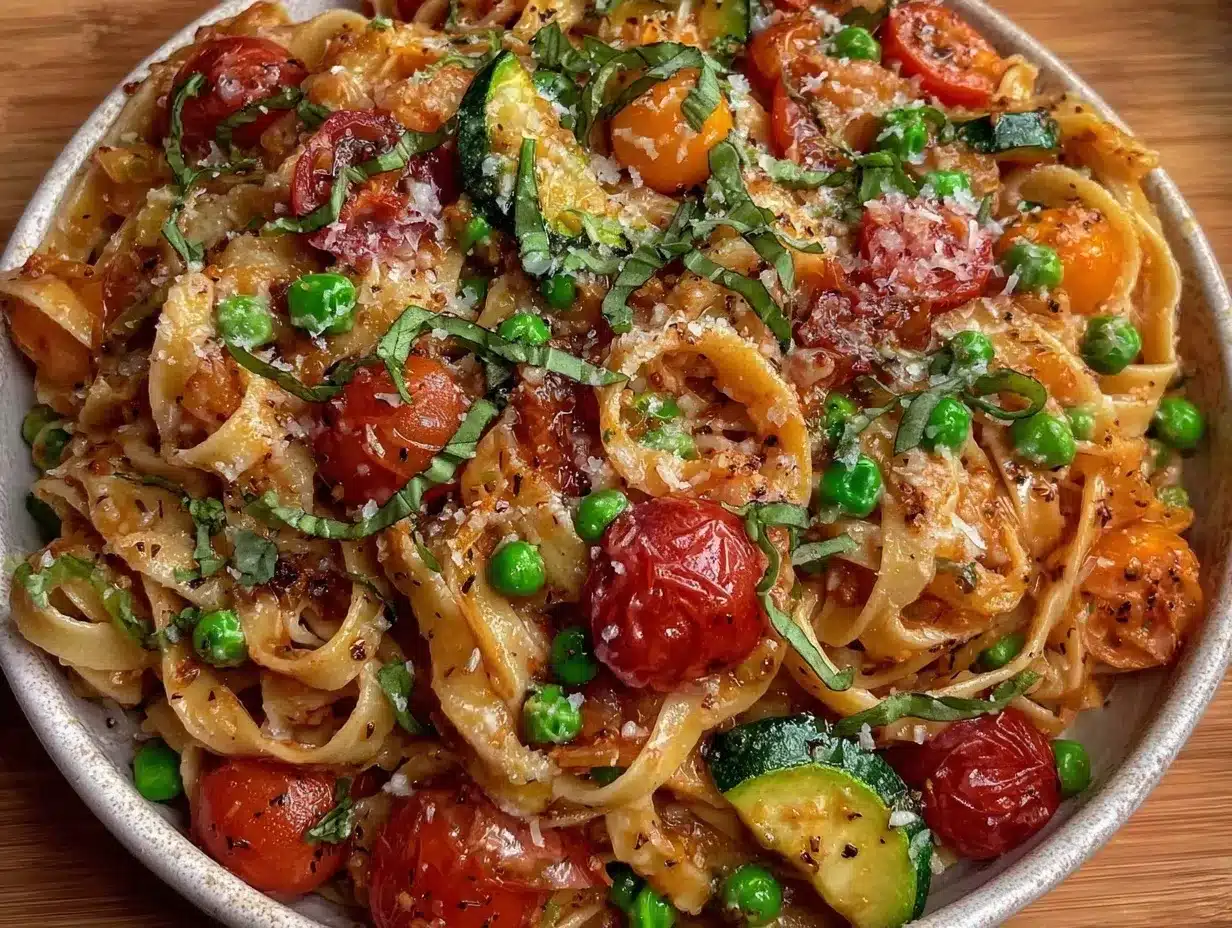
- Bring a large pot of salted water to a boil. Add 1 tablespoon of salt to the water (about 1 tablespoon per 4 quarts/4 liters). This will season the pasta as it cooks. Cooking time for pasta is usually 9-11 minutes, but check package directions for al dente.
- While the water heats, prep your vegetables. Slice the zucchini into half-moons about 1/4-inch thick, shell the peas if fresh, halve the cherry tomatoes, and mince the garlic. Zesting and juicing the lemon now saves time later.
- Once the pasta is in the boiling water, heat 3 tablespoons of olive oil in a large skillet over medium heat. Add the minced garlic and sauté for about 30 seconds until fragrant (watch carefully to avoid burning).
- Add the sliced zucchini and peas to the skillet. Sauté for 4-5 minutes, stirring occasionally until the zucchini softens but still has a slight crunch, and peas turn bright green.
- Toss in the cherry tomatoes. Cook for an additional 2 minutes until they soften but keep their shape. Season with salt, pepper, and a pinch of red pepper flakes if using.
- Drain the pasta, reserving 1/2 cup (120 ml) of the pasta water. This starchy water helps bind the sauce.
- Add the drained pasta directly to the skillet with the vegetables. Toss to combine.
- Stir in the lemon juice, lemon zest, and fresh basil. Add reserved pasta water a little at a time—about 2 tablespoons—to loosen the mixture and create a light sauce that coats everything.
- Remove from heat and sprinkle with grated Parmesan cheese if desired. Toss gently once more.
- Serve immediately. A quick drizzle of olive oil on top adds a silky finish.
Pro tip: Don’t overcook the veggies—they should be tender but still have a nice bite. If your pasta gets done before the veggies, drain it and keep it aside while you finish sautéing the vegetables; then combine everything promptly. This recipe’s magic is in timing it just right so everything feels fresh and lively.
Cooking Tips & Techniques
From my kitchen to yours, here are a few tips that make this quick 20-minute pasta primavera shine:
- Salt Your Pasta Water Well: This is your main seasoning chance for the pasta. It should taste like the sea—don’t be shy here.
- Keep Vegetables Crisp-Tender: Remember, the veggies continue to cook a bit after you toss them with hot pasta, so pull them off the heat when they’re just shy of done.
- Use Pasta Water to Your Advantage: The starchy water helps create a light sauce that clings to the pasta and veggies, making the dish cohesive without heavy cream.
- Don’t Skip the Lemon Zest: It adds a depth of brightness that lemon juice alone can’t achieve.
- Work Quickly: Pasta primavera is best served right away. If you’re pressed for time, prep all your ingredients before boiling the pasta to keep the cooking smooth.
- Customize Your Heat: Red pepper flakes are optional, but they add a lovely kick. I learned this the hard way after serving a completely mild version to my spice-loving friend who gave me a sly smile and said, “Next time, bring the heat!”
Variations & Adaptations
This pasta primavera is a flexible canvas for seasonal ingredients and dietary preferences. Here are some ways to make it your own:
- Dairy-Free Version: Leave out the Parmesan and add a sprinkle of toasted pine nuts or nutritional yeast for a cheesy flavor.
- Protein Boost: Toss in some grilled chicken strips, sautéed shrimp, or crispy chickpeas for a more filling meal.
- Seasonal Veggie Swaps: In spring, try fresh asparagus tips or sugar snap peas. Come fall, roasted butternut squash cubes or sautéed mushrooms make a cozy twist.
- Whole Grain or Gluten-Free: Substitute whole wheat pasta or your favorite gluten-free pasta to suit dietary needs.
- Spicy Variation: Add a splash of chili oil or fresh chopped chilies for an extra zing.
One time, I swapped in roasted beets and goat cheese instead of zucchini and peas, and it turned out surprisingly delightful—sweet earthiness with creamy tang is a combo worth trying if you want to switch things up.
Serving & Storage Suggestions
This quick 20-minute pasta primavera is best enjoyed fresh, served warm straight from the pan or plate. A light sprinkle of fresh basil or parsley right before serving adds a pop of color and freshness.
Pair it with a simple green salad or some crusty garlic bread for a satisfying meal. For drinks, a chilled glass of white wine like Pinot Grigio or a sparkling water with lemon complements the brightness perfectly.
If you have leftovers (rare, but it happens!), store them in an airtight container in the refrigerator for up to 2 days. When reheating, add a splash of olive oil or a little pasta water to bring back the silky texture. Reheat gently on the stove or in the microwave to avoid drying out the veggies.
Flavors tend to mellow and blend after a day, so if you make it ahead, a quick squeeze of fresh lemon juice before serving will freshen things up nicely.
Nutritional Information & Benefits
This pasta primavera is not just quick and tasty but also packs a nourishing punch. With fresh seasonal vegetables like zucchini and peas, it’s rich in fiber, vitamins A and C, and antioxidants. Olive oil provides heart-healthy fats, and if you add Parmesan, you get a boost of calcium and protein.
Using pasta as a base gives you energizing carbohydrates, making this dish balanced and satisfying. It’s naturally low in saturated fat and can be made gluten-free or dairy-free easily, so it fits a variety of dietary needs.
From a wellness perspective, this recipe feels like a light, bright meal that supports digestion and keeps you fueled without feeling heavy—perfect for an active day or a relaxed evening.
Conclusion
If you’re looking for a quick, fresh, and healthy dinner that doesn’t skimp on flavor, this 20-minute pasta primavera with seasonal vegetables is your new best friend. It’s a recipe that respects your time and your taste buds, letting the natural goodness of fresh veggies shine through with simple, honest ingredients.
Feel free to make it your own—swap veggies, add proteins, or spice it up to match your cravings. For me, it’s the recipe I come back to when I want something light yet comforting, quick yet satisfying.
Give it a try, and let me know how it turns out! I love hearing about your twists and tweaks—drop a comment, share your photos, or tell me your favorite seasonal vegetable to use.
Happy cooking and bon appétit!
Frequently Asked Questions
Can I use frozen vegetables for this pasta primavera?
Absolutely! Frozen peas and other veggies are fine to use, just add them a little earlier in the sauté to make sure they’re fully heated through without becoming mushy.
What type of pasta works best in this recipe?
Penne, farfalle, or spaghetti are great choices. I recommend using pasta that holds sauce well, so shapes like penne or farfalle work especially nicely.
How can I make this recipe vegan?
Simply omit the Parmesan cheese or replace it with a vegan cheese alternative or nutritional yeast for a cheesy flavor.
Can I prepare any parts of this recipe ahead of time?
You can prep and chop the vegetables in advance and keep them refrigerated. Cooking everything fresh is best, but prepping cuts down active cooking time.
What’s the best way to reheat leftovers without drying out the pasta?
Reheat gently on the stovetop with a splash of olive oil or water, stirring frequently to keep the pasta and vegetables moist and flavorful.
Pin This Recipe!
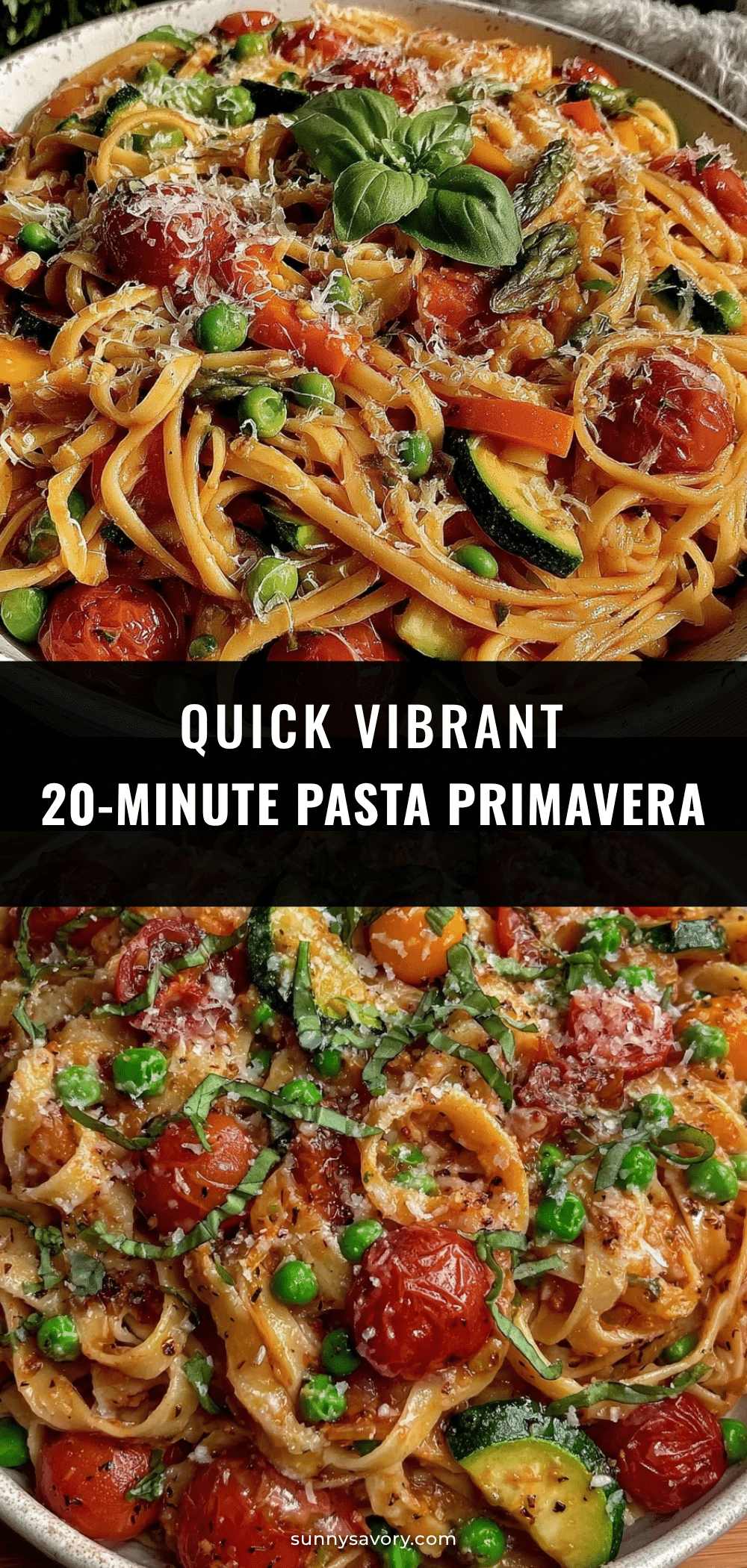
Quick 20-Minute Pasta Primavera Recipe Easy Healthy Seasonal Vegetables
A quick, light, and colorful pasta primavera featuring seasonal vegetables like zucchini and peas, tossed with garlic, lemon, and olive oil for a fresh and satisfying meal ready in just 20 minutes.
- Prep Time: 10 minutes
- Cook Time: 10 minutes
- Total Time: 20 minutes
- Yield: 4 servings 1x
- Category: Main Course
- Cuisine: Italian
Ingredients
- 8 ounces (225 grams) pasta (penne, farfalle, or spaghetti)
- 3 tablespoons extra virgin olive oil
- 3 cloves garlic, minced
- 1 medium zucchini, sliced into thin half-moons
- 1 cup (about 150 grams) fresh peas, shelled (frozen peas can be used)
- 1 cup cherry tomatoes, halved (optional)
- A handful fresh basil, torn
- Juice and zest of 1 lemon
- 1/4 cup grated Parmesan cheese (optional)
- Salt to taste
- Black pepper to taste
- Pinch of red pepper flakes (optional)
Instructions
- Bring a large pot of salted water to a boil. Add 1 tablespoon of salt per 4 quarts of water.
- Prep vegetables: slice zucchini into 1/4-inch thick half-moons, shell peas if fresh, halve cherry tomatoes, mince garlic, zest and juice lemon.
- Add pasta to boiling water and cook according to package directions for al dente (9-11 minutes).
- While pasta cooks, heat 3 tablespoons olive oil in a large skillet over medium heat.
- Add minced garlic and sauté for about 30 seconds until fragrant, being careful not to burn.
- Add zucchini and peas to skillet and sauté for 4-5 minutes until zucchini is tender but still slightly crisp and peas are bright green.
- Add cherry tomatoes and cook for an additional 2 minutes until softened but holding shape. Season with salt, pepper, and red pepper flakes if using.
- Drain pasta, reserving 1/2 cup (120 ml) pasta water.
- Add drained pasta to skillet with vegetables and toss to combine.
- Stir in lemon juice, lemon zest, and fresh basil. Add reserved pasta water a little at a time (about 2 tablespoons) to loosen sauce and coat pasta.
- Remove from heat and sprinkle with grated Parmesan cheese if desired. Toss gently.
- Serve immediately with a drizzle of olive oil on top.
Notes
Do not overcook the vegetables; they should be tender but still crisp. Use reserved pasta water to create a light sauce that coats the pasta and veggies. For dairy-free, omit Parmesan or use nutritional yeast. For gluten-free, substitute with gluten-free pasta. Red pepper flakes add optional heat.
Nutrition
- Serving Size: 1 serving (about 1/4
- Calories: 350
- Sugar: 6
- Sodium: 350
- Fat: 14
- Saturated Fat: 2
- Carbohydrates: 45
- Fiber: 5
- Protein: 10
Keywords: pasta primavera, quick pasta recipe, healthy pasta, seasonal vegetables, zucchini pasta, peas, easy dinner, vegetarian pasta