Love this? Save it for later!
Share the inspiration with your friends
This was supposed to be a roasted vegetable medley. I had the carrots chopped, the sweet potatoes cubed, and a vague plan to toss everything in honey and call it a side dish. But the butternut squash—that stubborn, thick-skinned thing—refused to cooperate. I grabbed the wrong peeler, the knife was dull from last week’s marathon meal prep, and I was already running late because my youngest decided socks were the enemy. Honestly, I almost gave up and ordered pizza.
What came out of that chaotic kitchen session was nothing like the plan. The squash, roasted until its edges were caramelized and sticky, got a last-minute drizzle of maple syrup because the honey jar was empty. I spotted a pomegranate sitting on the counter, leftover from a failed attempt at a fancy salad, and scattered the seeds over the top. My kids, who normally treat vegetables like they’re a punishment, devoured it. My son asked for seconds. My daughter asked if we could have it for breakfast. Maybe you’ve been there—that moment when a kitchen disaster turns into something you can’t stop thinking about.
This recipe stayed with me because it proved something I’d been trying to learn for years: you don’t need perfect ingredients or a flawless plan to make something memorable. The sweetness of the maple syrup, the tart pop of the pomegranate seeds, the way the squash gets soft in the middle and crisp at the edges—it all came together by accident. And now, it’s the one side dish that gets requested for every family dinner, holiday table, and random Tuesday night. Let me tell you, it’s a keeper.
Why You’ll Love This Recipe
I’ve tested this recipe more times than I can count, and every single time, it delivers. It’s the kind of dish that makes you look like a hero in the kitchen without any of the stress. Here’s why it works for my family—and why it’ll work for yours.
- Quick & Easy: From start to finish, this comes together in about 40 minutes. Most of that time is hands-off roasting, so you can focus on the rest of the meal or just breathe for a minute.
- Simple Ingredients: You probably have the maple syrup and olive oil in your pantry right now. The squash and pomegranate are easy to find at any grocery store, and they won’t blow your budget.
- Perfect for Family Meals: This dish pleases picky eaters and adults alike. The sweetness makes it approachable for kids, while the pomegranate seeds add a grown-up twist that feels special.
- Crowd-Pleaser: I’ve brought this to potlucks, Thanksgiving dinners, and casual weeknight gatherings. It always gets compliments, and I’ve had multiple friends ask for the recipe.
- Unbelievably Delicious: The combination of caramelized maple syrup and juicy pomegranate seeds creates a flavor and texture that’s hard to beat. It’s comfort food that feels a little fancy.
What makes this recipe different from all the other roasted squash recipes out there? It’s the balance. The maple syrup doesn’t overpower the squash—it just enhances its natural sweetness. The pomegranate seeds add a burst of tartness that cuts through the richness. And the roasting method I use ensures every piece gets that perfect caramelized edge without burning. This isn’t just another version of roasted squash. It’s the version you’ll come back to again and again.
Honestly, this recipe is the kind that makes you close your eyes after the first bite. It’s comfort food reimagined—faster than you’d expect, but with the same soul-soothing satisfaction. Perfect for impressing guests without stress, or turning a simple meal into something memorable.
What Ingredients You Will Need
This recipe uses simple, wholesome ingredients to deliver bold flavor and satisfying texture without the fuss. Most of these are pantry staples or easy to find at your local grocery store.
- Butternut Squash (1 medium, about 2-3 pounds): Look for one that feels heavy for its size with firm, unblemished skin. You’ll need to peel, seed, and cube it into 1-inch pieces. (Pro tip: Buy pre-cut cubes from the produce section to save time on busy nights.)
- Olive Oil (2 tablespoons): Use a good-quality extra virgin olive oil for the best flavor. It helps the squash get crispy and golden in the oven.
- Maple Syrup (3 tablespoons): Pure maple syrup is best here—skip the pancake syrup, which is too sweet and artificial. I recommend Maple Grove Farms or Kirkland Signature for a reliable, affordable option.
- Salt (1/2 teaspoon): Fine sea salt works perfectly. It balances the sweetness and brings out the squash’s natural flavor.
- Black Pepper (1/4 teaspoon): Freshly ground is ideal, but pre-ground works too. Just a pinch adds a subtle warmth.
- Cinnamon (1/2 teaspoon): Ground cinnamon adds a cozy, warm note that pairs beautifully with the maple syrup. (Optional: swap for pumpkin pie spice for extra depth.)
- Pomegranate Seeds (1/2 cup): Fresh is best—they’re juicy and tart. You can buy them pre-seeded in the produce section, which saves a lot of time and mess. (Look for POM Wonderful or store-brand options.)
- Fresh Thyme (1 tablespoon, optional): A few sprigs or leaves add an earthy, aromatic touch. If you don’t have fresh, use 1 teaspoon dried thyme.
For substitutions, you can swap the maple syrup with honey or agave nectar if needed. The flavor will be slightly different, but still delicious. If you’re avoiding sugar, try a sugar-free maple syrup alternative—just note that it may not caramelize as well. For a nutty variation, toss in 1/4 cup of chopped pecans or walnuts during the last 5 minutes of roasting.
Equipment Needed
You don’t need a fancy kitchen to make this recipe work. Here’s what you’ll need:
- Baking Sheet (1 large, rimmed): A half-sheet pan is ideal—it gives the squash plenty of room to spread out and caramelize. If you don’t have one, use two smaller pans to avoid overcrowding.
- Chef’s Knife (1 sharp): A good knife makes cutting through butternut squash much easier. I use a Victorinox Fibrox—it’s affordable and stays sharp for months.
- Vegetable Peeler (1 sturdy): A Y-shaped peeler works best for butternut squash. It glides over the tough skin without slipping. (I learned this after nearly losing a fingertip with a cheap peeler.)
- Cutting Board (1 large): Use a sturdy wooden or plastic board. Make sure it’s stable so the squash doesn’t slide around.
- Mixing Bowl (1 medium): For tossing the squash with oil, maple syrup, and spices.
- Spatula or Wooden Spoon (1): For stirring the squash halfway through roasting.
- Measuring Spoons (1 set): For accurate measurements of oil, syrup, and spices.
If you don’t have a vegetable peeler, you can microwave the whole squash for 2 minutes to soften the skin, then use a knife to slice it off. It’s a little messy, but it works in a pinch. For the pomegranate seeds, you can buy them pre-seeded—just make sure to drain any excess liquid before using.
Preparation Method
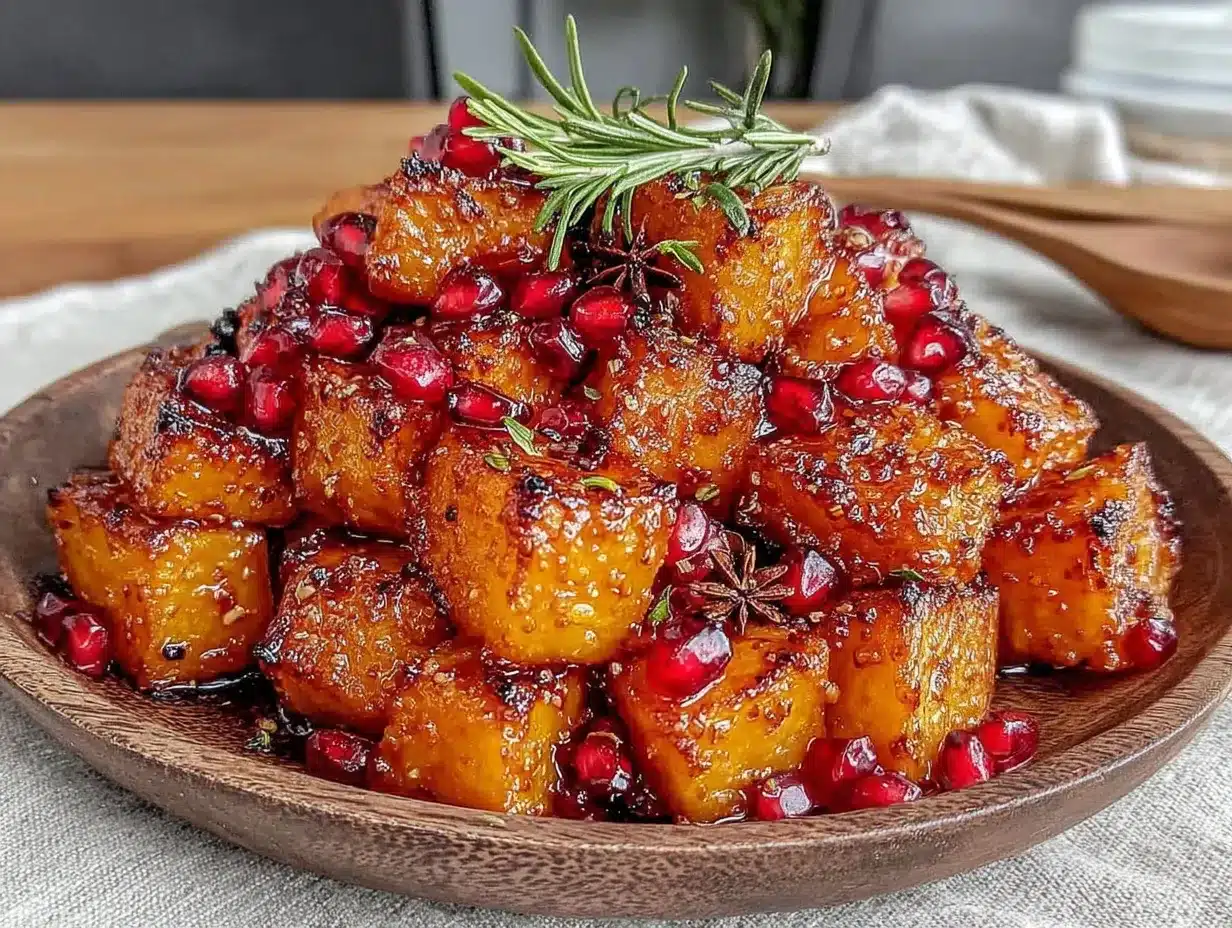
Follow these steps for perfectly roasted maple butternut squash with pomegranate seeds. I’ve included time estimates and sensory cues so you know exactly what to look for at each stage.
- Preheat your oven to 400°F (200°C). This temperature is hot enough to caramelize the maple syrup without burning the squash. While the oven heats, line your baking sheet with parchment paper for easy cleanup.
- Prepare the butternut squash. Using a sharp chef’s knife, cut off both ends of the squash. Stand it upright on the cutting board and slice it in half lengthwise. Scoop out the seeds and stringy pulp with a spoon. Then, use a vegetable peeler to remove the tough skin. Cut the squash into 1-inch cubes—try to keep them uniform so they cook evenly. (This step takes about 10 minutes. If you’re short on time, use pre-cut cubes from the store.)
- Toss the squash with oil and seasonings. In a medium mixing bowl, combine the cubed squash, olive oil, maple syrup, salt, black pepper, and cinnamon. Use a spatula to toss everything together until the squash is evenly coated. The mixture should look glossy and smell sweet and warm.
- Spread the squash on the baking sheet. Arrange the cubes in a single layer with a little space between each piece. If they’re crowded, they’ll steam instead of caramelizing. (If you’re using two pans, swap their positions halfway through roasting.)
- Roast for 25-30 minutes. Place the pan in the preheated oven and roast for 15 minutes. Then, remove the pan and use a spatula to flip the squash pieces. Return to the oven and roast for another 10-15 minutes. The squash is done when it’s golden brown on the edges, tender in the middle, and slightly sticky from the maple syrup. (A fork should slide in easily.)
- Add the pomegranate seeds and thyme. Once the squash is out of the oven, let it cool on the pan for 2 minutes. Then, transfer it to a serving dish and sprinkle the pomegranate seeds and fresh thyme leaves over the top. Toss gently to combine. The seeds will add a burst of tartness and a pop of color.
- Taste and adjust. Give the dish a quick taste. If it needs more salt, add a pinch. If you want extra sweetness, drizzle a little more maple syrup. Serve warm or at room temperature.
One thing I learned the hard way: don’t skip the flipping step. The first time I made this, I left the squash untouched for the full 30 minutes, and the bottom pieces burned while the top ones were still pale. Flipping halfway ensures even caramelization and that perfect golden color.
Cooking Tips & Techniques
I’ve made this recipe more times than I can count, and I’ve picked up a few tricks along the way. Here are the ones that make the biggest difference.
- Cut the squash into uniform cubes. This is the single most important tip for even cooking. If some pieces are smaller than others, they’ll burn while the larger ones stay hard. Aim for 1-inch cubes, and don’t stress if they’re not perfect—just try to keep them close in size.
- Don’t overcrowd the pan. The squash needs space to roast, not steam. If you’re doubling the recipe, use two baking sheets. Trust me, it’s worth the extra pan to get those caramelized edges.
- Use parchment paper for easy cleanup. The maple syrup can get sticky and hard to scrub off the pan. Parchment paper saves you from a lot of scrubbing. (I learned this after spending 15 minutes scraping a burnt-on mess.)
- Roast at high heat for the best texture. 400°F is the sweet spot—it’s hot enough to caramelize the sugar without burning it. If your oven runs hot, check the squash at the 20-minute mark.
- Add the pomegranate seeds after roasting. If you add them before roasting, they’ll burst and turn into a mushy mess. Sprinkle them on right before serving for that fresh, juicy pop.
One mistake I made early on was using too much maple syrup. I thought more syrup would mean more flavor, but it just made the squash soggy and overly sweet. Stick to the 3 tablespoons—it’s the perfect amount for a balanced sweetness that doesn’t overpower the squash.
Variations & Adaptations
This recipe is incredibly versatile. Here are a few ways to switch it up based on what you have on hand or what your family likes.
- Savory Twist: Skip the cinnamon and add 1/2 teaspoon of smoked paprika and 1/4 teaspoon of cayenne pepper. The smoky heat pairs beautifully with the maple syrup and pomegranate seeds. My husband loves this version.
- Herb-Infused: Toss the squash with fresh rosemary or sage before roasting. The earthy herbs complement the sweetness and add a sophisticated flavor. I’ve used this for holiday dinners, and it always gets rave reviews.
- Nutty Crunch: Add 1/4 cup of chopped pecans or walnuts during the last 5 minutes of roasting. They’ll toast up and add a satisfying crunch. My kids love this version because it feels like a treat.
- Dietary Adaptations: For a vegan option, this recipe is already plant-based. For a lower-sugar version, use a sugar-free maple syrup alternative. For a gluten-free option, it’s naturally gluten-free—just double-check your spice blends.
- Seasonal Swap: In the summer, swap the butternut squash for cubed sweet potatoes or carrots. The cooking time will be similar, and the pomegranate seeds still work beautifully. In the fall, add a pinch of nutmeg or ginger for extra warmth.
I once tried a version with balsamic vinegar instead of maple syrup. It was interesting—tangy and complex—but it didn’t have the same kid appeal. Stick with the maple syrup for the version that makes everyone happy.
Serving & Storage Suggestions
This dish is best served warm, right out of the oven, when the squash is still tender and the pomegranate seeds are cool and juicy. But it’s also delicious at room temperature, which makes it perfect for potlucks or holiday buffets.
For presentation, transfer the squash to a shallow serving bowl or platter. Sprinkle the pomegranate seeds and fresh thyme on top, and finish with a light drizzle of maple syrup if you want extra shine. It looks gorgeous with the deep orange squash and bright red seeds against a white plate.
This pairs beautifully with roasted chicken, grilled pork chops, or a simple green salad. For a vegetarian meal, serve it alongside quinoa or farro. My family loves it with maple glazed pork tenderloin—the flavors complement each other perfectly.
For storage, let the squash cool completely, then transfer it to an airtight container. It will keep in the refrigerator for up to 4 days. The pomegranate seeds may soften slightly, but the flavor will still be great. To reheat, spread the squash on a baking sheet and warm it in a 350°F oven for 5-7 minutes. You can also microwave it in 30-second bursts, but the texture won’t be as crisp.
One thing I love about this recipe is that the flavors actually get better after a day in the fridge. The maple syrup soaks into the squash, and the pomegranate seeds release their juice, creating a kind of sweet-tart sauce. I’ve been known to make a double batch just so I can have leftovers for lunch.
Nutritional Information & Benefits
This recipe is as nutritious as it is delicious. Here’s a rough estimate per serving (based on 4 servings):
- Calories: 180
- Fat: 7g
- Carbohydrates: 30g
- Fiber: 5g
- Sugar: 16g
- Protein: 2g
- Vitamin A: 200% of the Daily Value
- Vitamin C: 30% of the Daily Value
Butternut squash is packed with vitamin A, which supports eye health and immune function. It’s also a good source of fiber, which helps keep you full and supports digestion. Pomegranate seeds are rich in antioxidants, which help fight inflammation and protect your cells. The maple syrup adds natural sweetness without the processed sugar of many desserts.
This recipe is naturally gluten-free, dairy-free, and vegan, making it a great option for a wide range of dietary needs. If you’re watching your sugar intake, you can reduce the maple syrup to 2 tablespoons—the squash is sweet enough on its own.
I love serving this to my family because I know they’re getting a healthy dose of vegetables without any complaints. It’s one of those rare dishes that feels indulgent but is actually good for you.
Conclusion
This maple roasted butternut squash with pomegranate seeds started as a kitchen accident, but it’s become one of my most-requested recipes. It’s proof that you don’t need a perfect plan or fancy ingredients to create something memorable. The sweetness of the maple syrup, the tart pop of the pomegranate seeds, and the tender, caramelized squash come together in a dish that feels special enough for holidays but simple enough for a Tuesday night.
I hope you give this recipe a try and make it your own. Swap in different spices, add nuts, or experiment with different squashes. The beauty of this dish is that it’s forgiving—it’s hard to mess up, and even the “mistakes” taste amazing. If you make it, I’d love to hear how it turned out. Leave a comment below or tag me in your photos. And if your kids ask for seconds, don’t say I didn’t warn you.
Happy cooking, and remember: sometimes the best recipes come from the messiest kitchens.
Frequently Asked Questions
Can I use frozen butternut squash for this recipe?
Yes, but the texture will be softer and less caramelized. Thaw the squash first and pat it dry with paper towels to remove excess moisture. Roast for 5-10 minutes less than fresh squash.
How do I cut a butternut squash safely?
Start by cutting off both ends to create flat surfaces. Stand the squash upright and slice it in half lengthwise. Scoop out the seeds, then use a vegetable peeler to remove the skin. Always use a sharp knife and a stable cutting board.
Can I make this recipe ahead of time?
Absolutely. Roast the squash up to 2 days in advance, then store it in the refrigerator. Reheat it in the oven or microwave, and add the pomegranate seeds just before serving.
What can I use instead of pomegranate seeds?
Try dried cranberries, fresh blueberries, or chopped dried apricots. Each will add a different sweetness and texture, but all work well with the maple-roasted squash.
How do I store leftover pomegranate seeds?
Place them in an airtight container in the refrigerator. They’ll stay fresh for up to 5 days. You can also freeze them in a single layer on a baking sheet, then transfer to a freezer bag for up to 3 months.
Pin This Recipe!
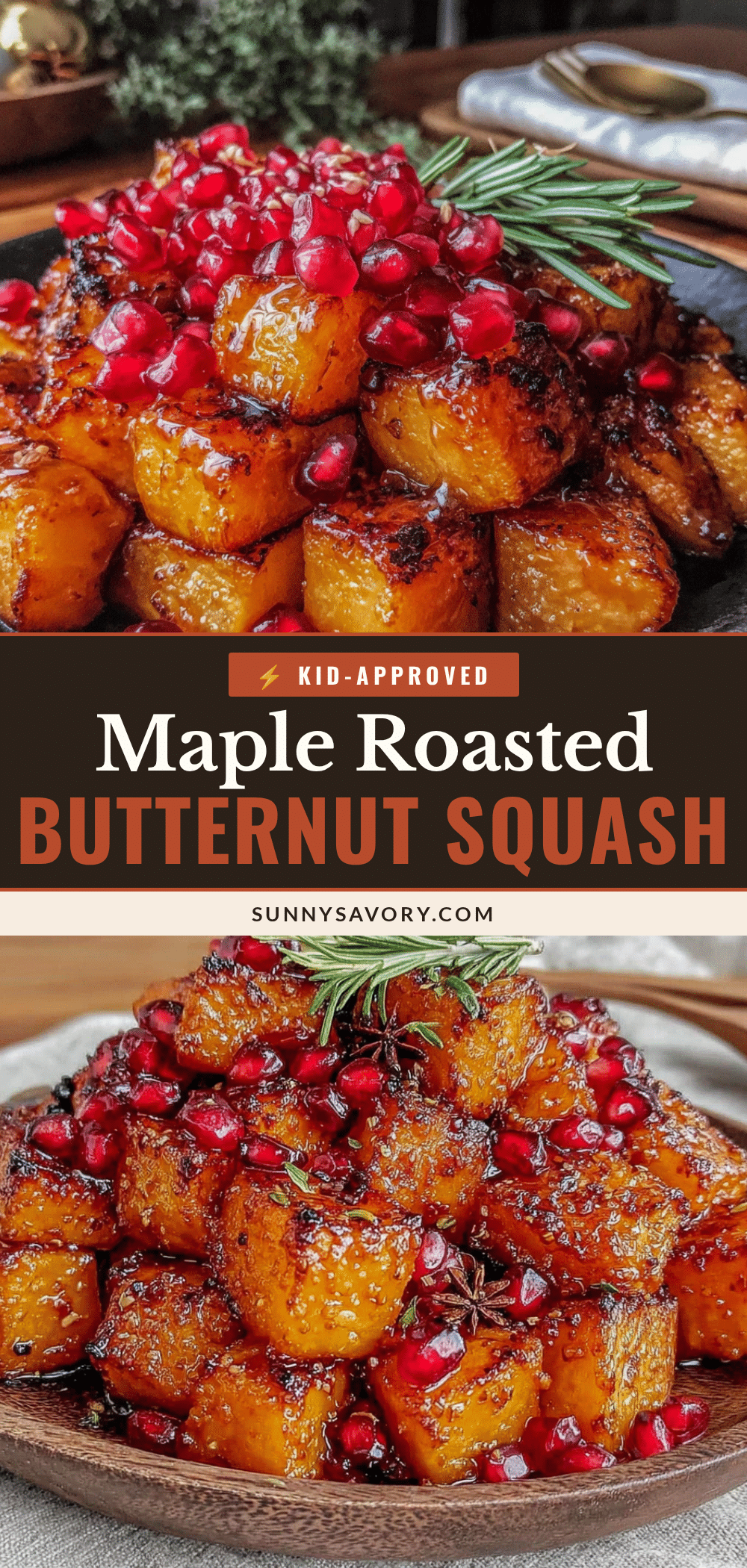
Easy Maple Roasted Butternut Squash with Pomegranate
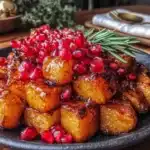
This maple roasted butternut squash with pomegranate seeds started as a kitchen accident, but it’s become one of my most-requested recipes. The sweetness of the maple syrup, the tart pop of the pomegranate seeds, and the tender, caramelized squash come together in a dish that feels special enough for holidays but simple enough for a Tuesday night.
- Prep Time: 15 minutes
- Cook Time: 25-30 minutes
- Total Time: 40-45 minutes
- Yield: 4 servings 1x
- Category: Side Dish
- Cuisine: American
Ingredients
- 1 medium butternut squash (about 2–3 pounds), peeled, seeded, and cubed into 1-inch pieces
- 2 tablespoons olive oil
- 3 tablespoons pure maple syrup
- 1/2 teaspoon fine sea salt
- 1/4 teaspoon black pepper, freshly ground
- 1/2 teaspoon ground cinnamon
- 1/2 cup pomegranate seeds
- 1 tablespoon fresh thyme leaves (optional)
Instructions
- Preheat your oven to 400°F (200°C). Line a baking sheet with parchment paper for easy cleanup.
- Prepare the butternut squash: Using a sharp chef’s knife, cut off both ends of the squash. Stand it upright on the cutting board and slice it in half lengthwise. Scoop out the seeds and stringy pulp with a spoon. Then, use a vegetable peeler to remove the tough skin. Cut the squash into 1-inch cubes, keeping them uniform for even cooking.
- In a medium mixing bowl, combine the cubed squash, olive oil, maple syrup, salt, black pepper, and cinnamon. Toss with a spatula until the squash is evenly coated.
- Spread the squash in a single layer on the prepared baking sheet, leaving space between pieces to avoid overcrowding.
- Roast for 15 minutes. Remove the pan, flip the squash pieces with a spatula, and return to the oven. Roast for another 10-15 minutes, until the squash is golden brown on the edges, tender in the middle, and slightly sticky from the maple syrup.
- Remove from the oven and let cool on the pan for 2 minutes. Transfer to a serving dish and sprinkle pomegranate seeds and fresh thyme leaves over the top. Toss gently to combine.
- Taste and adjust seasoning if needed. Serve warm or at room temperature.
Notes
Cut the squash into uniform cubes for even cooking. Don’t overcrowd the pan—use two baking sheets if doubling the recipe. Add pomegranate seeds after roasting to keep them fresh and juicy. For a savory twist, skip the cinnamon and add smoked paprika and cayenne. Leftovers keep in the refrigerator for up to 4 days; reheat in a 350°F oven for 5-7 minutes.
Nutrition
- Serving Size: 1 serving (about 1 c
- Calories: 180
- Sugar: 16
- Sodium: 300
- Fat: 7
- Saturated Fat: 1
- Carbohydrates: 30
- Fiber: 5
- Protein: 2
Keywords: maple roasted butternut squash, butternut squash with pomegranate, easy roasted squash, holiday side dish, vegan side dish, gluten-free side dish