Love this? Save it for later!
Share the inspiration with your friends
Introduction
“You know that moment when you’re about to start dinner, and suddenly the power goes out?” That happened to me last Thursday evening, right when I was prepping a complicated recipe I’d sworn I’d master. Talk about a kitchen curveball! I was left staring at a pile of fresh spring vegetables and some pasta, with zero access to my usual gadgets or oven. Honestly, I was tempted to order takeout, but then I remembered a quick idea I’d jotted down months ago during a chat with my neighbor, Lisa—she swears by a simple one-pot pasta primavera that’s both fresh and fuss-free.
I grabbed a big pot, tossed in those vibrant veggies and pasta, added broth, and hoped for the best. The sizzle and bubbling brought a comforting warmth despite the dark kitchen. What came out? A vibrant, fresh pasta primavera bursting with spring flavors, and all made in one pot. No mess, no stress. That night, with candles flickering, I realized this recipe isn’t just about convenience—it’s about savoring the season’s best while keeping things easy. Maybe you’ve been there too, craving something fresh but feeling too busy to fuss. This one-pot pasta primavera with fresh spring vegetables is exactly that kind of recipe. It’s stuck with me ever since—because sometimes the best meals come from unexpected moments.”
Why You’ll Love This Recipe
After testing this easy one-pot pasta primavera recipe more times than I can count, I can honestly say it’s a keeper for busy weeknights and casual dinners alike. Here’s why it stands out:
- Quick & Easy: Ready in about 30 minutes, perfect when time is tight but flavor can’t be sacrificed.
- Simple Ingredients: Uses fresh spring vegetables you can find at any local market, plus pantry staples you probably already have.
- Ideal for Seasonal Cooking: Celebrates spring produce like asparagus, peas, and baby spinach—bright, fresh, and vibrant.
- Crowd-Pleaser: Whether for family dinner or a casual get-together, this pasta gets rave reviews every time.
- One-Pot Wonder: Less cleanup, more time to enjoy your meal or relax afterward.
What makes this recipe different from the rest? It’s all about layering flavors during the cooking process. I gently sauté the garlic and onions first to release their aroma, then add the vegetables and pasta right into the same pot with broth, letting everything cook together. This way, the pasta absorbs the fresh veggie flavors directly, creating a naturally bright and comforting dish without extra steps. Plus, finishing it with a sprinkle of freshly grated Parmesan and a squeeze of lemon juice adds that perfect balance to the dish.
This recipe isn’t just an easy meal—it’s the kind that makes you close your eyes after the first bite, appreciating the harmony of fresh veggies and tender pasta. It’s spring’s soul on a plate, ready when you are.
What Ingredients You Will Need
This recipe relies on simple, fresh ingredients that come together to create bold flavor and satisfying texture without any fuss. Most of these are pantry staples or seasonal finds, making it easy to whip up even on short notice.
- Pasta: 12 ounces (340 grams) of linguine or spaghetti works best for even cooking and texture.
- Fresh Spring Vegetables:
- 1 cup (150 grams) asparagus tips, trimmed and cut into 1-inch pieces
- 1 cup (150 grams) fresh peas or frozen peas, thawed
- 2 cups (60 grams) baby spinach leaves, roughly chopped
- 1 medium zucchini, sliced into half-moons
- Aromatics:
- 3 cloves garlic, minced
- 1 small yellow onion, finely chopped
- Liquids & Seasonings:
- 4 cups (950 ml) vegetable broth (I recommend Swanson for a rich base)
- 2 tablespoons olive oil (extra virgin for flavor)
- 1 teaspoon salt, adjust to taste
- ½ teaspoon freshly ground black pepper
- Juice of half a lemon (adds bright freshness)
- Finishing Touches:
- ½ cup (50 grams) freshly grated Parmesan cheese (optional but highly recommended)
- Fresh basil or parsley leaves for garnish
Substitution tips: Feel free to swap linguine with gluten-free pasta if needed, or use dairy-free cheese alternatives for a vegan-friendly dish. For a twist, in summer, swap peas with fresh cherry tomatoes for a burst of sweetness.
Equipment Needed
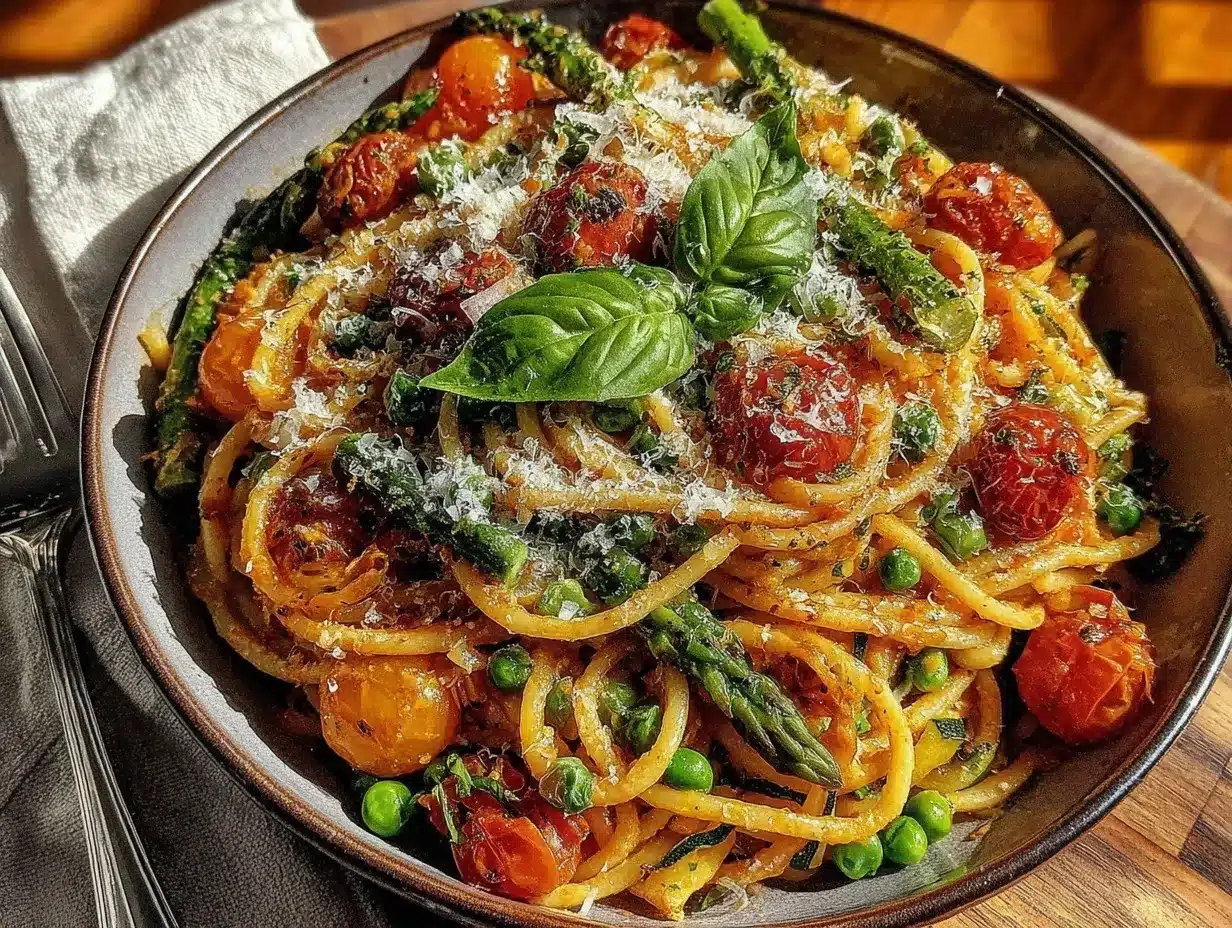
- Large deep skillet or wide saucepan with a lid (at least 12 inches diameter) – essential for cooking everything in one pot.
- Wooden spoon or silicone spatula – for stirring gently without scratching your pan.
- Measuring cups and spoons – to keep your seasoning balanced.
- Fine grater – for fresh Parmesan or lemon zest if you want that extra zing.
If you don’t have a large skillet, a wide pot or Dutch oven works well too. I personally like using a heavy-bottomed sauté pan because it distributes heat evenly, preventing any sticking. For budget-friendly options, non-stick pans are great and reduce cleanup hassle.
Preparation Method
- Prepare your vegetables: Rinse and trim the asparagus, slice the zucchini, chop the spinach, and mince the garlic and onion. This should take about 10 minutes if you’re organized.
- Heat the olive oil: Place your large skillet over medium heat and add 2 tablespoons of olive oil. When shimmering, add the chopped onion and sauté for 3-4 minutes until translucent and soft. This releases the sweetness that builds flavor.
- Add the garlic: Stir in the minced garlic and cook for 30 seconds until fragrant. Be careful not to burn it—garlic can turn bitter fast.
- Add the veggies: Toss in asparagus, zucchini, and peas. Stir well to coat with oil and cook for 2-3 minutes, keeping the veggies crisp-tender.
- Add pasta and broth: Break the linguine in half and add it directly to the pan. Pour in 4 cups of vegetable broth, making sure the pasta is mostly submerged. Season with salt and pepper.
- Cook covered: Bring the mixture to a gentle boil, then reduce heat to medium-low and cover with a lid. Let it simmer for about 12-15 minutes, stirring occasionally to prevent sticking. The pasta will cook right in the broth, soaking up all the flavors.
- Check doneness: Taste the pasta around 12 minutes to ensure it’s al dente—tender but with a slight bite. If it needs more time, add a splash of water or broth and cook a minute or two longer.
- Finish with spinach and lemon: Once pasta is cooked, stir in the chopped spinach and lemon juice. The spinach will wilt quickly in the hot pasta and add a lovely fresh note.
- Serve: Remove from heat, sprinkle with freshly grated Parmesan and fresh herbs. Give it a gentle toss and serve immediately while warm and comforting.
Pro tip: Keep an eye on the liquid level during cooking; if it looks too dry before the pasta is done, add a little more broth or water to avoid burning. Also, stirring every few minutes keeps everything cooking evenly.
Cooking Tips & Techniques
One-pot pasta dishes can be tricky if you’re new to them, but here are some tips I picked up after a few trial runs (and a couple of burnt noodles!).
- Use the right pan: A wide, deep skillet or sauté pan helps the pasta cook evenly and prevents clumping.
- Break pasta in half: This helps it fit better in the pot and cook faster with the veggies.
- Layer flavors: Sautéing onions and garlic first builds a flavor base that makes a big difference.
- Monitor liquid: The pasta absorbs broth as it cooks, so add more if needed. Too dry and the pasta will stick or burn.
- Stir gently but regularly: Keeps pasta from sticking and blends flavors well.
- Don’t overcook: Pasta should be al dente. It will keep softening slightly even after you remove it from heat.
Honestly, the first few times I made this, I forgot to add the lemon at the end, and it was fine—but once I did, it brought that extra zing that really brightened the whole dish. Trust me, little details count.
Variations & Adaptations
This easy one-pot pasta primavera recipe is wonderfully flexible. Here are some ways to make it your own:
- Vegan option: Skip the Parmesan and toss in some nutritional yeast or vegan cheese for a cheesy finish.
- Protein boost: Add cooked chicken, shrimp, or chickpeas to the pot for a heartier meal.
- Seasonal swaps: In summer, use cherry tomatoes and fresh basil; in fall, swap spring veggies for roasted butternut squash and kale.
- Gluten-free: Use gluten-free pasta varieties like rice or corn pasta. Just watch cooking times as they vary.
- Spicy twist: Add crushed red pepper flakes along with garlic to give it a little kick.
Personally, I love throwing in some toasted pine nuts or walnuts on top for crunch when I have them. It’s an unexpected texture that plays really well with the soft veggies and pasta.
Serving & Storage Suggestions
This pasta primavera is best served warm and fresh from the pot. I like to sprinkle a few extra fresh herbs on top for color and aroma. It pairs beautifully with a crisp green salad or a light white wine like Pinot Grigio.
Leftovers keep well in an airtight container in the fridge for up to 3 days. Reheat gently on the stove with a splash of broth or water to loosen it up. Avoid microwaving for too long or it might dry out.
Flavors tend to deepen after sitting overnight, so sometimes I make it a day ahead on busy days—and honestly, it tastes just as good the next day. Just add fresh lemon juice and cheese again when reheating to brighten it back up.
Nutritional Information & Benefits
This easy one-pot pasta primavera recipe is a balanced meal featuring fresh vegetables and whole grains. Per serving (based on 4 servings):
| Calories | 380 kcal |
|---|---|
| Protein | 12 grams |
| Carbohydrates | 58 grams |
| Fat | 8 grams |
| Fiber | 6 grams |
The fresh spring vegetables supply vitamins A and C, plus antioxidants that support overall health. Using olive oil provides heart-healthy monounsaturated fats. This recipe can easily be adapted for gluten-free or dairy-free diets, making it accessible for many dietary needs.
Conclusion
This easy one-pot pasta primavera with fresh spring vegetables is a recipe I keep coming back to, especially when life feels rushed but I still want a nourishing meal. It’s simple, fresh, and flexible enough to fit into any weeknight or casual weekend dinner.
Feel free to tweak the veggies or add proteins to suit your tastes—after all, cooking should be fun and personal. I hope this recipe becomes one of your go-to dishes for quick, wholesome meals that don’t skimp on flavor.
If you try it, I’d love to hear how you make it your own. Drop a comment below or share your variations. Cooking is always better when shared!
FAQs About Easy One-Pot Pasta Primavera
Can I use other types of pasta for this recipe?
Absolutely! Spaghetti, fettuccine, or even penne can work. Just adjust the cooking time slightly depending on the pasta shape and thickness.
How do I keep the vegetables crisp but cooked?
Add the vegetables in stages based on their cooking times—harder veggies like asparagus go in earlier, while delicate ones like spinach are added last to wilt gently.
Can I make this recipe ahead of time?
Yes, you can prepare it a day ahead and store in the fridge. Reheat gently with a splash of broth and add fresh lemon juice before serving.
Is this recipe suitable for vegans?
It is if you omit the Parmesan cheese or replace it with a vegan alternative like nutritional yeast.
What should I do if my pasta absorbs all the liquid before it’s cooked?
Simply add a little more broth or water, a quarter cup at a time, and continue cooking until al dente.
For those who enjoy fresh, simple dishes like this, you might also appreciate the bright flavors in my lemon garlic shrimp pasta or the hearty comfort of crispy garlic chicken. Both bring their own unique twists to easy weeknight dinners.
Pin This Recipe!
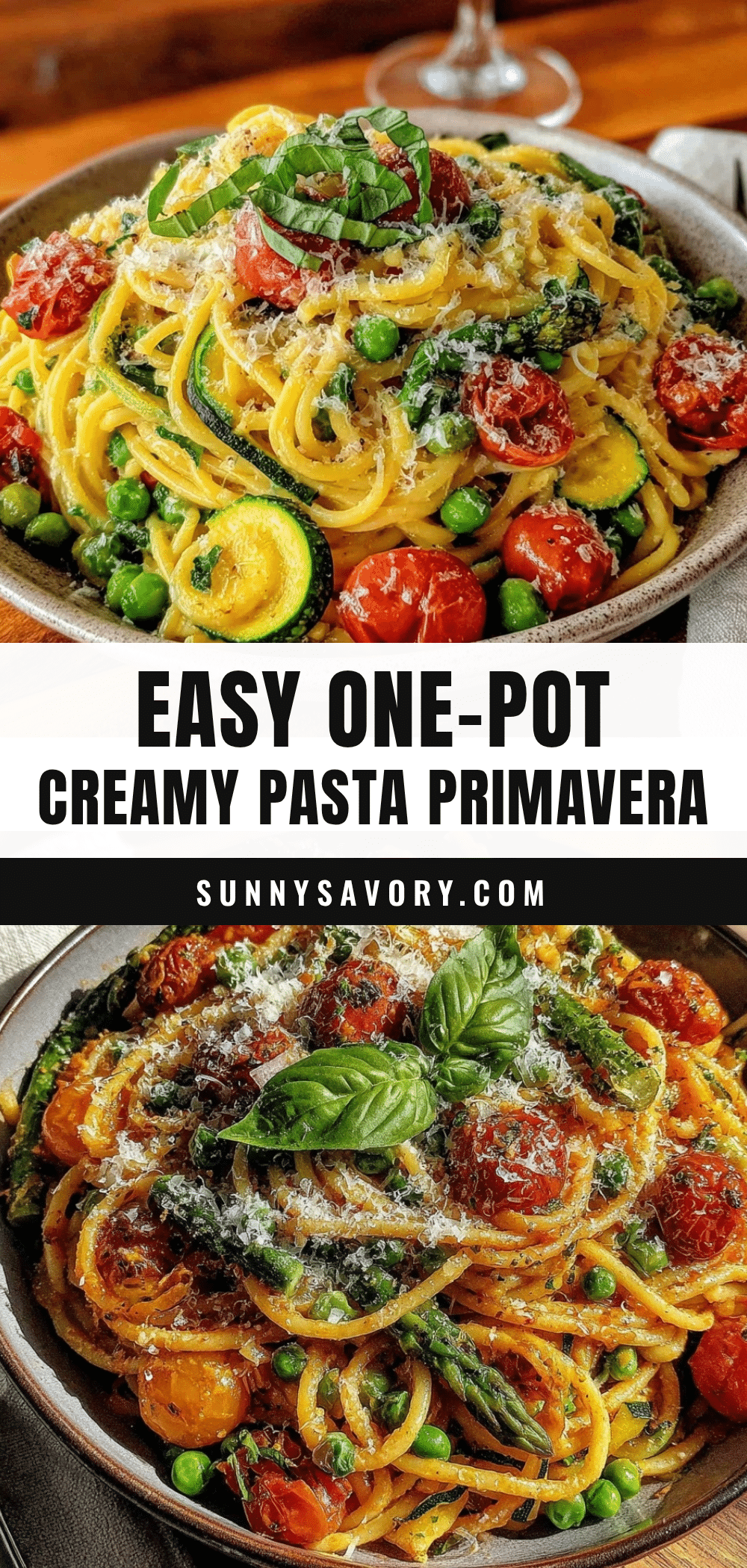
Easy One-Pot Pasta Primavera Recipe with Fresh Spring Vegetables for Quick Healthy Meals
A quick and easy one-pot pasta primavera featuring fresh spring vegetables, perfect for busy weeknights and casual dinners. This vibrant dish combines linguine, asparagus, peas, zucchini, and spinach cooked together in vegetable broth for a fresh and flavorful meal.
- Prep Time: 10 minutes
- Cook Time: 20 minutes
- Total Time: 30 minutes
- Yield: 4 servings 1x
- Category: Main Course
- Cuisine: Italian
Ingredients
- 12 ounces linguine or spaghetti
- 1 cup asparagus tips, trimmed and cut into 1-inch pieces
- 1 cup fresh or frozen peas, thawed
- 2 cups baby spinach leaves, roughly chopped
- 1 medium zucchini, sliced into half-moons
- 3 cloves garlic, minced
- 1 small yellow onion, finely chopped
- 4 cups vegetable broth
- 2 tablespoons olive oil
- 1 teaspoon salt, adjust to taste
- ½ teaspoon freshly ground black pepper
- Juice of half a lemon
- ½ cup freshly grated Parmesan cheese (optional)
- Fresh basil or parsley leaves for garnish
Instructions
- Rinse and trim the asparagus, slice the zucchini, chop the spinach, and mince the garlic and onion.
- Heat 2 tablespoons olive oil in a large skillet over medium heat. Add chopped onion and sauté for 3-4 minutes until translucent.
- Add minced garlic and cook for 30 seconds until fragrant, being careful not to burn it.
- Add asparagus, zucchini, and peas. Stir to coat with oil and cook for 2-3 minutes until crisp-tender.
- Break linguine in half and add to the pan. Pour in 4 cups vegetable broth, ensuring pasta is mostly submerged. Season with salt and pepper.
- Bring to a gentle boil, then reduce heat to medium-low and cover. Simmer for 12-15 minutes, stirring occasionally to prevent sticking.
- Check pasta for al dente doneness around 12 minutes; add more broth or water if needed and cook a bit longer.
- Stir in chopped spinach and lemon juice; spinach will wilt quickly.
- Remove from heat, sprinkle with Parmesan cheese and fresh herbs, toss gently, and serve immediately.
Notes
Keep an eye on the liquid level during cooking; add more broth or water if it looks too dry to avoid burning. Stir gently but regularly to prevent sticking. For vegan option, omit Parmesan or use vegan cheese alternatives. Gluten-free pasta can be used but adjust cooking times accordingly. Adding lemon juice at the end brightens the dish.
Nutrition
- Serving Size: 1 serving (about 1/4
- Calories: 380
- Fat: 8
- Carbohydrates: 58
- Fiber: 6
- Protein: 12
Keywords: one-pot pasta, pasta primavera, spring vegetables, quick dinner, healthy meals, easy pasta recipe, vegetarian, fresh vegetables