Love this? Save it for later!
Share the inspiration with your friends
The New Year’s Eve party was in about six hours, and I’d completely forgotten that I was supposed to bring the “good luck” dish. Everyone else would be showing up with their great-aunt’s famous collard greens or a perfectly glazed ham that took two days to prepare. I had a bag of dried black-eyed peas I’d bought on a whim, a sad-looking onion, and honestly, a bit of a panic setting in. I mean, you know that feeling when you’ve promised a dish that has cultural weight and you have absolutely nothing prepared?
I rummaged through the pantry, muttering to myself about New Year’s traditions and my terrible time management. The clock was ticking, and the idea of showing up empty-handed felt worse than showing up with something simple. I grabbed that bag of peas, some garlic that was starting to sprout, and a can of diced tomatoes I found hiding behind the baking soda. Let me tell you, the pressure was on, and I was not feeling lucky.
But then, something clicked. I decided to stop panicking and just cook. I tossed everything into my trusty old Dutch oven—the one with the chipped lid from my college days—and let it simmer. The smell that filled my tiny apartment was incredible, a smoky, savory promise that maybe, just maybe, this was going to work out. I showed up late, slightly flustered, and set my pot down next to the spread. Honestly, I was ready to apologize for my last-minute scramble. But that Lucky New Year’s Black-Eyed Pea Soup? It was the first thing to disappear. That’s the thing about this recipe—it’s humble, it’s easy, and it has a way of making you look like you planned it all along.
Why You’ll Love This Lucky New Year’s Black-Eyed Pea Soup
This isn’t just another bean soup recipe. After testing this for three different New Year’s celebrations (and a few random Tuesdays), I can tell you it’s the one that hits all the right notes. It’s the kind of recipe that feels like a warm hug on a cold January day, but it also carries that special meaning for the year ahead.
- Quick & Easy: This comes together in under an hour if you use canned peas, or about two hours if you start with dried ones. It’s perfect for that frantic New Year’s Eve prep or a lazy New Year’s Day lunch.
- Simple Ingredients: You probably have most of this in your pantry right now. No fancy grocery trips, no hunting for obscure spices. It’s all about pantry staples.
- Perfect for New Year’s: This is the ultimate good luck dish. It’s traditional, comforting, and makes the whole house smell like prosperity is on its way.
- Crowd-Pleaser: I’ve served this to everyone from my spice-averse mother-in-law to my chili-loving brother, and it always gets rave reviews. It’s hearty enough for a meal but light enough for a side.
- Unbelievably Delicious: The smoky flavor from the ham hock, the earthy richness of the peas, and that little kick of heat—it’s next-level comfort food that just happens to be good for you.
What makes this version different? It’s the balance. I spent a lot of time figuring out how to get that deep, slow-cooked flavor without actually simmering it all day. The secret is a quick sauté of the aromatics and a splash of apple cider vinegar at the end to brighten everything up. It’s not just another bean soup—it’s my best version. This recipe is the one that makes you close your eyes after the first bite and think, “Okay, this year is going to be a good one.” It’s soul-soothing, stress-free, and perfect for starting the year off right.
What Ingredients You Will Need
This Lucky New Year’s Black-Eyed Pea Soup relies on simple, wholesome ingredients to build layers of flavor. Most of these are pantry staples, which makes this recipe a lifesaver when you need something impressive without a last-minute store run. Let’s break down what you’ll need and why each one matters.
- Black-Eyed Peas (1 lb dried, or 3 cans, drained and rinsed): The star of the show. I prefer dried peas for a creamier texture, but canned are a fantastic time-saver. If using dried, give them a good rinse and pick through them for any small stones—I’ve learned this the hard way!
- Smoked Ham Hock (1 large, or 8 oz smoked turkey neck): This is your flavor powerhouse. The smoky, salty meat infuses the broth with a depth you just can’t get any other way. I usually grab a ham hock from the butcher counter. You can also use a meaty ham bone leftover from a holiday dinner.
- Yellow Onion (1 large, diced): The foundation of the soup. I don’t bother with a super fine dice here, just a good, even chop. It will melt into the broth as it cooks.
- Celery (2 ribs, diced): Adds that classic mirepoix base and a subtle freshness. Don’t skip it—it’s not just for crunch.
- Carrots (2 large, diced): For a little sweetness and color. They soften beautifully and add a touch of natural sweetness to balance the smoky ham.
- Garlic (4 cloves, minced): Non-negotiable. Fresh garlic is key here. I’ve used the jarred stuff in a pinch, and it’s just not the same. Let it sizzle for just 30 seconds to wake it up.
- Diced Tomatoes (1 can, 14.5 oz, undrained): I use fire-roasted tomatoes for a deeper, slightly charred flavor. The acidity from the tomatoes helps cut through the richness of the ham.
- Chicken Broth (6 cups, low-sodium): The liquid base. I prefer low-sodium so I can control the salt level, especially since the ham hock adds plenty. A good quality broth makes a difference, but water works in a bind.
- Bay Leaves (2): For that subtle, earthy background note. Remember to fish them out before serving—nobody likes a surprise bay leaf in their bowl.
- Dried Thyme (1 tsp): A classic pairing with beans and pork. It adds a gentle, woodsy aroma that feels very cozy.
- Smoked Paprika (1 tsp): This is my secret weapon. It reinforces the smoky flavor from the ham hock without needing to smoke anything yourself. It gives the soup a beautiful color, too.
- Apple Cider Vinegar (2 tbsp): This is the magic touch. You add it at the very end, and it brightens the entire pot. It’s not for a vinegary taste; it just wakes up all the other flavors. I learned this trick from a Southern cookbook, and it’s a game-changer.
- Salt and Black Pepper (to taste): Go easy on the salt until the end. The ham hock is salty, so taste before you add more.
- Optional Garnishes: Fresh parsley, hot sauce (Tabasco or Crystal are my favorites), and sliced green onions. These add a pop of color and freshness right before serving.
Equipment Needed
You don’t need a fancy kitchen to make this soup, which is one of the reasons I love it. Here’s what you’ll need to get the job done.
- Large Dutch Oven or Heavy-Bottomed Pot (6-8 quarts): This is your best friend for this recipe. A Dutch oven retains heat beautifully and is perfect for slow simmering. If you don’t have one, a large stockpot will work just fine, just keep an eye on the heat so it doesn’t scorch.
- Sharp Chef’s Knife and Cutting Board: For all that dicing. A good knife makes prep feel less like a chore and more like cooking. I’m still using the same $30 knife I bought ten years ago, and it works great.
- Wooden Spoon or Silicone Spatula: For stirring the aromatics and scraping up any browned bits from the bottom of the pot. That’s where the flavor lives.
- Measuring Cups and Spoons: For accuracy. I’m usually a “pinch of this” kind of cook, but for a soup this balanced, it’s worth being precise, especially with the broth and vinegar.
- Colander: For rinsing the dried peas or draining the canned ones. A simple, sturdy colander is a kitchen essential.
- Ladle: For serving. A deep, wide ladle makes getting the perfect ratio of broth to peas easy.
Preparation Method
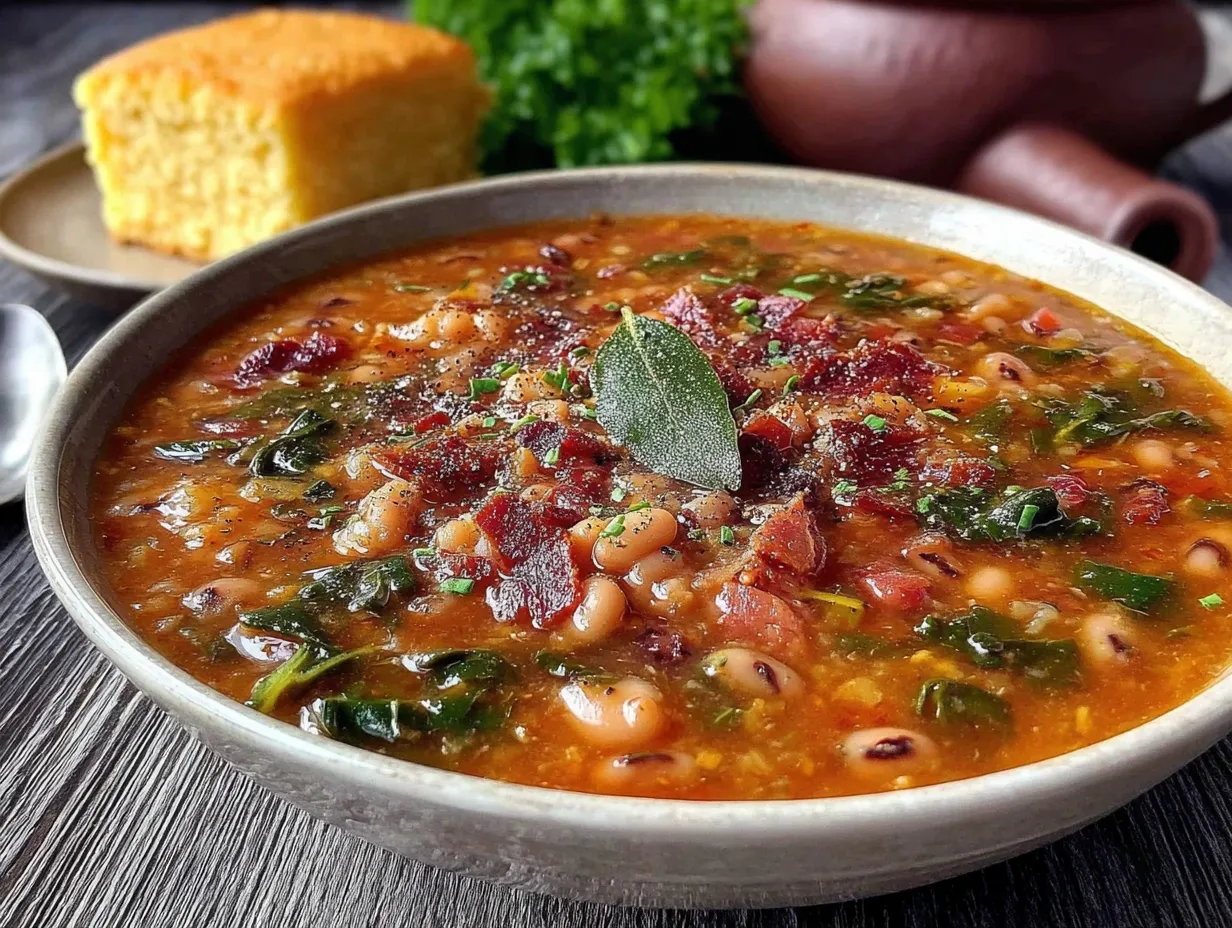
This is the easy part. I’ll walk you through every step, including the little tricks I’ve picked up from making this soup more times than I can count. Get ready for a pot of pure, cozy luck.
- Prep the Peas (If Using Dried): The night before or at least 6-8 hours ahead, place your dried black-eyed peas in a large bowl and cover them with about 3 inches of cold water. Let them soak overnight. This helps them cook more evenly and reduces the cooking time. If you’re in a rush, you can do a quick soak: bring the peas and water to a boil for 2 minutes, then cover and let them sit for 1 hour. Drain and rinse them before using. If you’re using canned peas, just drain and rinse them well—skip this step entirely.
- Sauté the Aromatics: Place your large Dutch oven or pot over medium heat. Add a glug of olive oil (about 2 tablespoons). Once the oil is shimmering, add the diced onion, celery, and carrots. Cook, stirring occasionally, for about 6-8 minutes, until the vegetables have softened and the onion is translucent. Don’t rush this step—it builds the flavor base. I usually do this while I’m chopping the garlic.
- Bloom the Garlic and Spices: Add the minced garlic, dried thyme, and smoked paprika to the pot. Stir constantly for about 30 seconds until the garlic is fragrant. Be careful not to burn the garlic—it can turn bitter quickly. Your kitchen should smell amazing right about now.
- Add the Ham Hock and Peas: Nestle the ham hock into the pot, meaty side down. Then, add your soaked and drained (or canned and rinsed) black-eyed peas. Give everything a good stir to coat the peas in the aromatic mixture.
- Pour in the Liquids: Add the can of undrained diced tomatoes and the 6 cups of low-sodium chicken broth. Toss in the 2 bay leaves. Stir everything together. The liquid should just cover the peas and ham hock. If it doesn’t, add a little more broth or water.
- Bring to a Boil, Then Simmer: Increase the heat to high and bring the soup to a gentle boil. Once it’s boiling, reduce the heat to low, cover the pot, and let it simmer. If using dried peas, simmer for 45 minutes to 1 hour, or until the peas are tender but not mushy. If using canned peas, you only need to simmer for about 20-25 minutes to let the flavors meld. You’ll know it’s ready when the peas are soft and the broth has thickened slightly.
- Remove the Ham Hock: Using tongs, carefully remove the ham hock from the pot and place it on a cutting board. Let it cool for a few minutes until it’s cool enough to handle. This is my favorite part because I know the meat is going to be so tender.
- Shred the Meat: Using two forks, shred all the meat from the ham hock. Discard the skin, bones, and any large pieces of fat. Don’t worry about getting every last bit of fat—a little adds flavor. Return the shredded meat to the pot and stir to combine.
- Finish with Vinegar and Seasoning: This is the most important step. Remove the bay leaves and discard them. Stir in the 2 tablespoons of apple cider vinegar. Now, taste the soup. Add salt and black pepper to your liking. Remember, the ham hock adds salt, so start with a pinch and add more as needed. The vinegar should not make the soup taste sour; it should just make all the other flavors pop.
- Serve and Garnish: Ladle the hot soup into bowls. Top with a sprinkle of fresh parsley, a few slices of green onion, and a generous dash of your favorite hot sauce. I love a good Louisiana-style hot sauce here. Serve it with a thick slice of crusty bread or some warm cornbread for dipping.
Cooking Tips & Techniques
I’ve made a few mistakes with this soup over the years, so you don’t have to. Here are my best tips for getting it perfect every single time.
- Don’t Skip the Soak: I know it’s tempting to just toss the dried peas in, but soaking them really does make a difference. It softens the skins and helps them cook more evenly. If you forget to soak overnight, do the quick soak method I mentioned above. It works like a charm.
- Watch Your Salt: This is the biggest mistake I made the first time. Ham hocks are incredibly salty. I added salt at the beginning, and the soup was almost inedible. Always, always wait until the end to add salt. Taste the broth after you’ve added the shredded meat, and then adjust.
- Low and Slow is Your Friend: A rapid boil can break the peas apart and turn your soup into a mushy mess. A gentle simmer is all you need. You should see small bubbles lazily breaking the surface, not a violent roll. This gentle heat allows the flavors to meld without destroying the texture.
- The Vinegar Trick: I cannot stress this enough—do not skip the apple cider vinegar at the end. It’s not about making the soup sour. It’s about brightness. It cuts through the richness of the ham and the starchiness of the peas, making every other flavor stand up and say hello. It’s the difference between a good soup and a great one.
- Make it Ahead: This soup is actually better the next day. The flavors have time to get to know each other in the fridge. I often make this on New Year’s Eve day and let it sit overnight. It’s a lifesaver for a stress-free New Year’s Day lunch.
Variations & Adaptations
The beauty of this soup is how flexible it is. Here are a few ways to make it your own, depending on what you have or what you’re craving.
- Vegetarian/Vegan Version: To make this meatless, skip the ham hock entirely. Use a good quality vegetable broth instead of chicken broth. To get that smoky flavor, add an extra teaspoon of smoked paprika and a few drops of liquid smoke. I’ve also added a can of drained and rinsed chickpeas for extra protein and heartiness. It’s a different soup, but still incredibly delicious.
- Spicy Kick: If you like heat, add a diced jalapeño (seeds and membranes removed for less heat, or leave them in for more) along with the onions and celery. You can also stir in a teaspoon of cayenne pepper or a splash of your favorite hot sauce at the end. I sometimes add a chipotle pepper in adobo sauce for a smoky, deep heat.
- Greens Addition: To make it even more traditional for New Year’s, stir in a few handfuls of chopped collard greens, kale, or Swiss chard during the last 10 minutes of cooking. They’ll wilt right into the soup, adding color and even more good luck (greens are said to represent money).
- Different Meat: If you can’t find a ham hock, you can use 8 ounces of smoked turkey neck or even a leftover ham bone from a holiday dinner. I’ve even used a few slices of thick-cut bacon, cooked and crumbled, in a pinch. The key is that smoky, cured flavor.
- Herb Swap: If you don’t have dried thyme, you can use a teaspoon of dried oregano or a couple of sprigs of fresh rosemary (remove the stems before serving). Each herb will give the soup a slightly different personality, but they all work beautifully.
Serving & Storage Suggestions
This soup is a meal in a bowl, but the right accompaniments can turn it into a feast.
Serving Suggestions: Serve this soup piping hot. I love it with a side of warm, buttery cornbread or a thick slice of crusty sourdough for dipping. A simple side salad with a tangy vinaigrette is a great way to add some freshness. For a truly traditional Southern New Year’s meal, serve it alongside some smoky collard greens and a slice of skillet cornbread. The flavors are a perfect match—earthy, smoky, and deeply comforting.
Storage Instructions: This soup stores beautifully. Let it cool completely to room temperature, then transfer it to an airtight container. It will keep in the refrigerator for up to 5 days. The flavors actually get better as they meld, so don’t be surprised if you like it more on day two. You can also freeze it for up to 3 months. I like to portion it into individual containers for easy lunches. Just leave a little headspace in the container, as the soup will expand slightly as it freezes.
Reheating Tips: The best way to reheat this soup is on the stovetop over medium-low heat. Add a splash of water or broth if it has thickened up too much in the fridge. You can also microwave it in a pinch—just cover the bowl and heat in 60-second bursts, stirring in between. The texture of the peas might soften a bit more upon reheating, but the flavor will still be fantastic.
Nutritional Information & Benefits
This soup isn’t just lucky—it’s packed with good-for-you ingredients. Here’s a general estimate per serving (based on 8 servings).
| Nutrient | Amount per Serving |
|---|---|
| Calories | ~320 |
| Protein | 22g |
| Fat | 8g |
| Carbohydrates | 45g |
| Fiber | 15g |
| Sugar | 6g |
| Sodium | ~600mg (varies with ham hock) |
Health Benefits: Black-eyed peas are a fantastic source of plant-based protein and fiber, which helps keep you full and supports digestive health. They’re also packed with folate, iron, and potassium. The carrots and celery add a dose of vitamins A and K. This is a hearty, nourishing meal that feels indulgent but is actually really good for you. It’s the perfect way to start the new year feeling healthy and satisfied.
Dietary Considerations: This recipe is naturally high in fiber and can be made gluten-free easily (just check your broth). For a lower-sodium version, use a low-sodium ham hock and no-salt-added broth. It’s also dairy-free and nut-free as written.
Conclusion
So, here’s my final thought on this Lucky New Year’s Black-Eyed Pea Soup. It’s the recipe I turn to when I need a win—whether it’s for a holiday gathering, a chilly weeknight, or just a day when I need a little comfort. It’s proof that you don’t need a ton of time or fancy ingredients to make something truly special. You just need a little patience, a good pot, and the willingness to let simple things shine. I honestly believe that’s a pretty good recipe for the whole year, too.
I’d love for you to try this and make it your own. Maybe you’ll add more spice, or throw in some greens, or serve it with a different kind of bread. That’s the fun part. When you do make it, come back and let me know how it turned out. Tell me about your New Year’s traditions, or what you served on the side, or even if your family loved it as much as mine does. Your stories are what make this community so special. Until next time, happy cooking, and here’s to a year full of good food and good luck!
Frequently Asked Questions
Can I use frozen black-eyed peas instead of dried or canned?
Yes, you can! Frozen black-eyed peas are a great option. You don’t need to thaw them first. Just add them directly to the pot, and they will cook in about 20-30 minutes. They tend to hold their shape a bit better than canned peas.
My soup is too thick. How can I thin it out?
No problem at all. Just stir in some additional chicken broth or water, a half cup at a time, until it reaches your desired consistency. This is very common, especially if you let the soup sit overnight, as the peas will continue to absorb liquid.
Can I make this in a slow cooker or Instant Pot?
Absolutely. For a slow cooker, sauté the aromatics on the stove first, then add everything to the slow cooker. Cook on low for 6-8 hours or on high for 3-4 hours. For an Instant Pot, use the sauté function for the aromatics, then add the remaining ingredients. Pressure cook on high for 15 minutes for canned peas (or 30 minutes for dried, soaked peas), then do a natural pressure release for 10 minutes.
How can I add more vegetables to this soup?
This soup is very forgiving. You can stir in a cup of chopped kale or spinach at the end, add some diced bell peppers with the onions, or even throw in a handful of frozen corn during the last 10 minutes of cooking. It’s a great way to clean out the vegetable drawer.
What if I can’t find a ham hock?
If a ham hock is unavailable, you have several great options. Smoked turkey necks are a fantastic substitute. You can also use a leftover ham bone, or even 4-5 slices of thick-cut bacon. Cook the bacon until crispy, crumble it, and use the rendered fat to sauté the vegetables. Stir the crumbled bacon back in at the end for a similar smoky, salty flavor.
Pin This Recipe!

Lucky New Years Black-Eyed Pea Soup: Easy 1-Pot Recipe

This Lucky New Year’s Black-Eyed Pea Soup is a quick, easy, and delicious one-pot recipe perfect for New Year’s celebrations. Made with simple pantry staples like black-eyed peas, smoked ham hock, and aromatic vegetables, it delivers deep, slow-cooked flavor in under an hour.
- Prep Time: 15 minutes
- Cook Time: 45 minutes (dried peas) or 25 minutes (canned peas)
- Total Time: 1 hour (canned) or 1 hour 15 minutes (dried, plus soaking)
- Yield: 8 servings 1x
- Category: Soup
- Cuisine: Southern / American
Ingredients
- 1 lb dried black-eyed peas (or 3 cans, drained and rinsed)
- 1 large smoked ham hock (or 8 oz smoked turkey neck)
- 1 large yellow onion, diced
- 2 ribs celery, diced
- 2 large carrots, diced
- 4 cloves garlic, minced
- 1 can (14.5 oz) diced tomatoes, undrained (fire-roasted preferred)
- 6 cups low-sodium chicken broth
- 2 bay leaves
- 1 tsp dried thyme
- 1 tsp smoked paprika
- 2 tbsp apple cider vinegar
- Salt and black pepper to taste
- Optional garnishes: fresh parsley, hot sauce, sliced green onions
Instructions
- If using dried peas, soak them overnight in cold water (or do a quick soak: boil for 2 minutes, then let sit for 1 hour). Drain and rinse. If using canned peas, just drain and rinse.
- In a large Dutch oven or heavy-bottomed pot over medium heat, add about 2 tablespoons olive oil. Sauté the onion, celery, and carrots for 6-8 minutes until softened and translucent.
- Add the minced garlic, dried thyme, and smoked paprika. Stir constantly for about 30 seconds until fragrant.
- Nestle the ham hock into the pot, meaty side down. Add the soaked/drained peas and stir to coat.
- Pour in the undrained diced tomatoes and chicken broth. Add the bay leaves. Stir to combine. The liquid should just cover the peas and ham hock; add more broth or water if needed.
- Bring to a gentle boil over high heat, then reduce heat to low, cover, and simmer. For dried peas, simmer 45 minutes to 1 hour until tender. For canned peas, simmer 20-25 minutes.
- Carefully remove the ham hock with tongs and let it cool slightly. Shred the meat with two forks, discarding skin, bones, and large fat pieces. Return the shredded meat to the pot.
- Remove and discard the bay leaves. Stir in the apple cider vinegar. Taste and season with salt and black pepper as needed.
- Ladle into bowls and garnish with fresh parsley, green onions, and hot sauce if desired. Serve with crusty bread or cornbread.
Notes
Don’t skip the apple cider vinegar at the end—it brightens the flavors. Always wait to add salt until after the ham hock is shredded and tasted, as the ham hock is very salty. This soup tastes even better the next day. For a vegetarian version, skip the ham hock, use vegetable broth, and add extra smoked paprika and a few drops of liquid smoke.
Nutrition
- Serving Size: 1 bowl (about 1.5 cu
- Calories: 320
- Sugar: 6
- Sodium: 600
- Fat: 8
- Saturated Fat: 2.5
- Carbohydrates: 45
- Fiber: 15
- Protein: 22
Keywords: black-eyed pea soup, New Year's soup, lucky soup, ham hock soup, easy soup recipe, one-pot soup, comfort food, Southern soup