Love this? Save it for later!
Share the inspiration with your friends
The woman at the next stall watched me poking at a sad, rubbery loaf of brown bread from the grocery store bakery section. I was on a work trip in Dublin, standing in a crowded market on a drizzly Tuesday morning, and I was clearly failing at lunch. She didn’t say anything at first. Then she just pushed a thick slice of her own bread across the counter toward me. It was studded with plump raisins, speckled with caraway, and still warm from her oven. I took a bite, and honestly, I think I let out a little sound that was probably embarrassing in public. She just laughed and said, “That’s not bread. That’s a sorry excuse for a scone.”
Her name was Siobhan, and she ran a small stall selling preserves and fresh-baked goods. I didn’t buy anything from her that day—I was too busy talking to her for an hour about how she got that perfect, craggy crust and that impossibly soft, tender crumb. She told me her grandmother’s rule: “You don’t knead it, you barely touch it. The bread decides what it wants to be.” I scribbled her rough measurements on a napkin, which I promptly lost in the bottom of my bag for two weeks. When I got home to my own kitchen in Chicago, I had to reconstruct the whole thing from memory. It took me three attempts before I got the cross cut deep enough and stopped over-mixing the dough into a hockey puck. Maybe you’ve been there, staring at a bowl of flour and buttermilk, wondering how such simple things can go so wrong so fast.
That napkin-less recipe is now the one I make for St. Patrick’s Day, for cozy Sunday afternoons, and honestly, for any day I need a reminder that good food doesn’t have to be complicated. This Classic Irish Soda Bread with Raisins and Caraway is the bread that taught me to trust my hands more than a timer. It’s rustic, it’s forgiving, and it tastes like a conversation with a kind stranger in a Dublin market.
Why You’ll Love This Recipe
Let’s be real—there are a million soda bread recipes out there. But this Classic Irish Soda Bread with Raisins and Caraway is the one I keep coming back to, and I think you will too. It’s not just another quick bread; it’s the result of a lot of trial and error (and a few burnt bottoms) to get that perfect balance of sweet, savory, and tangy.
- Quick & Easy: From mixing bowl to cooling rack in under an hour. No yeast, no rising time, no complicated techniques. It’s the perfect last-minute bread for soup night or breakfast with a slather of butter.
- Simple Ingredients: You probably have everything in your pantry right now. Flour, baking soda, salt, buttermilk, raisins, and caraway seeds. That’s it. No fancy starter or specialty flours are required.
- Perfect for St. Patrick’s Day: Or any day you want a taste of Ireland. It’s a staple on my table for corned beef and cabbage, and it makes the kitchen smell like a cozy pub.
- Crowd-Pleaser: My kids fight over the corner pieces with the most crust. It’s not overly sweet, so it pairs beautifully with both savory meals and a dollop of jam for tea time.
- Unbelievably Delicious: The texture is what gets me every time. A craggy, golden-brown crust that gives way to a soft, almost cake-like interior. The bursts of sweet raisins and the subtle, earthy perfume of caraway seeds make it anything but plain.
What makes this version different? It’s the technique. I learned the hard way that you can’t overwork this dough. You mix it just until it comes together—a shaggy, lumpy mess is exactly what you’re after. That’s the secret to a light, tender crumb instead of a dense brick. This recipe isn’t just good; it’s the kind of bread that makes you close your eyes after the first warm, buttery bite. It’s comfort food, reimagined for a busy weeknight, but with the same soul-soothing satisfaction of something baked with care.
What Ingredients You Will Need
This recipe uses simple, wholesome ingredients to deliver that signature rustic texture and bold, slightly sweet flavor. Most of these are pantry staples, which is exactly why this bread is such a lifesaver on a rainy Tuesday.
- All-Purpose Flour (4 cups / 480g): The backbone of the bread. I use King Arthur Flour for its consistent protein content, but any good all-purpose flour works. Don’t use bread flour—it will make the bread too tough. For a slightly nuttier flavor, you can swap in 1 cup of whole wheat flour, but you might need an extra tablespoon of buttermilk.
- Granulated Sugar (3 tablespoons / 36g): Just a touch to balance the tangy buttermilk and complement the raisins. It doesn’t make the bread sweet, just rounds out the flavor.
- Baking Soda (1 teaspoon): This is your leavening agent. Make sure it’s fresh! If it’s been sitting in your pantry for a year, it won’t give you that beautiful rise. You can test it by dropping a pinch into a little vinegar—it should fizz aggressively.
- Salt (1 teaspoon): Don’t skip it. Salt controls the yeast activity (even though there’s no yeast here) and enhances all the other flavors. I use fine sea salt.
- Cold Unsalted Butter (4 tablespoons / 56g): Cut into small cubes. The cold butter is cut into the flour to create little pockets of steam, which helps create a tender crumb. If you only have salted butter, just reduce the added salt to ½ teaspoon.
- Raisins (1 cup / 150g): I prefer golden raisins for their milder, fruitier flavor, but regular dark raisins work perfectly too. If your raisins are very dry, plump them in hot water for 10 minutes, then drain well before adding them to the dough. I’ve also used dried currants and even chopped dried apricots in a pinch.
- Caraway Seeds (1 tablespoon): This is the signature Irish soda bread flavor. They have a slightly peppery, anise-like taste that is absolutely essential. If you are not a fan (my husband was a skeptic), you can reduce it to 1½ teaspoons, or leave them out entirely for a plain raisin soda bread. But honestly, give them a try—they make the bread.
- Buttermilk (1¾ cups / 420ml): The magic ingredient. The acid in the buttermilk reacts with the baking soda to create carbon dioxide, which makes the bread rise. It also gives the bread its signature tangy flavor. If you don’t have buttermilk, you can make a quick substitute: add 1 tablespoon of lemon juice or white vinegar to a measuring cup, then fill it up to the 1¾ cup line with whole milk. Let it sit for 5 minutes to curdle. It works like a charm.
- Egg (1 large, optional): I sometimes add one beaten egg to the buttermilk for a slightly richer, more cake-like crumb. It’s not traditional, but I love the texture it gives. It’s completely optional.
Equipment Needed
You don’t need a fancy stand mixer for this bread. In fact, your hands are the best tool you have. But a few basic items make the process smoother.
- Large Mixing Bowl: Big enough to get your hands in there without flinging flour everywhere. I use a wide ceramic bowl.
- Pastry Cutter or Two Forks: For cutting the cold butter into the flour. You can also use your fingertips, but work quickly so the butter doesn’t warm up. I’ve used a pastry cutter for years and it’s the fastest method.
- Bench Scraper: Not essential, but incredibly helpful for scraping the shaggy dough out of the bowl and onto the floured surface. A good metal one costs about ten bucks and lasts forever.
- Baking Sheet: A simple rimmed baking sheet lined with parchment paper works perfectly. You don’t need a cast iron skillet, though that does give a nice crust if you have one.
- Sharp Knife or Lame: For slashing the deep cross on top. A serrated knife works best to cut through the dough without dragging it. I’ve used a regular chef’s knife in a pinch, but it can be a bit sticky.
- Cooling Rack: Absolutely necessary. If you let the bread cool on the baking sheet, the steam will make the bottom soggy. Let it breathe on a wire rack.
Budget-Friendly Tip: Don’t have a pastry cutter? Grab two butter knives and use them to scissor through the butter and flour. It’s a little more work, but it gets the job done.
Preparation Method
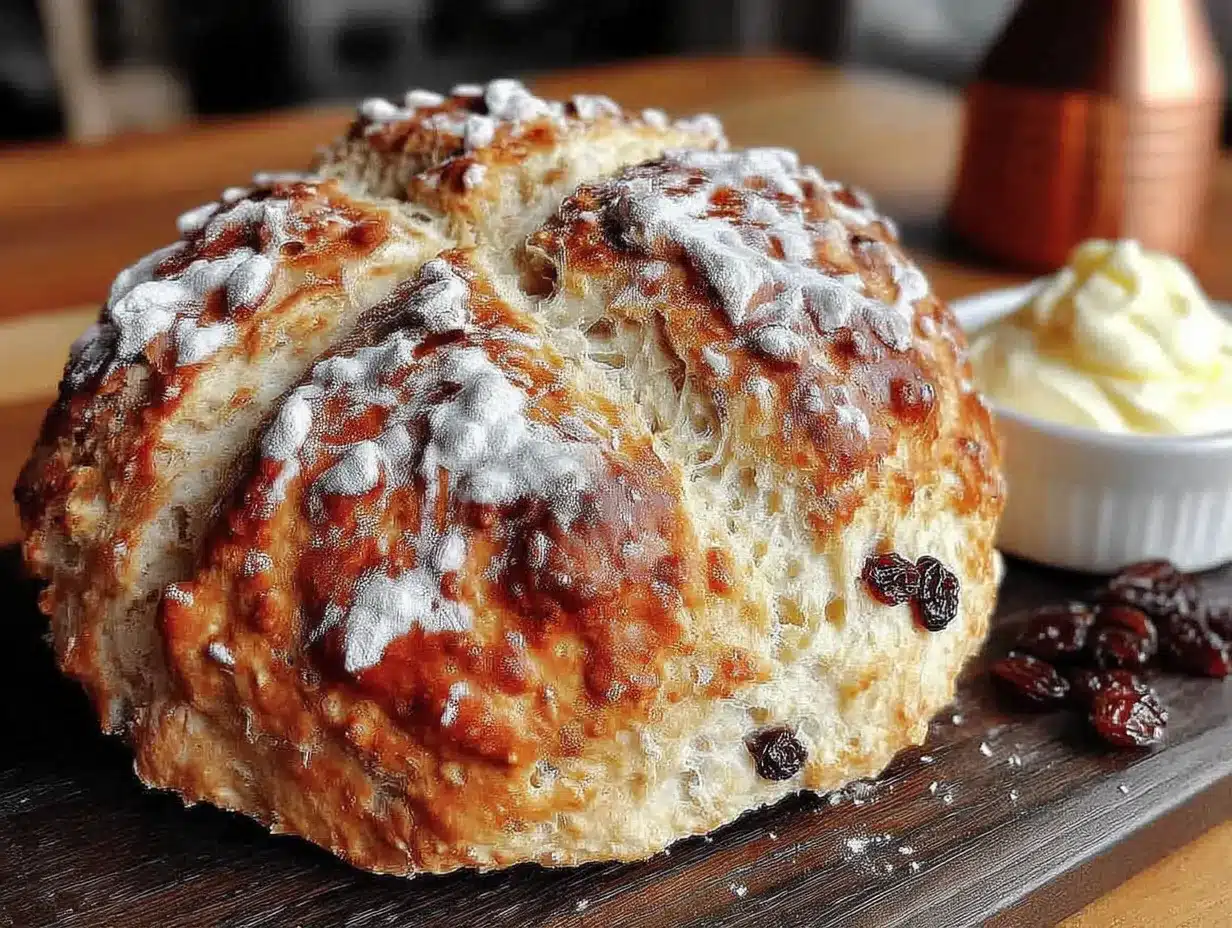
This is where the magic happens. Remember, the key is a light touch. You are not making pasta dough. You are coaxing a bread into existence.
- Preheat and Prep: Preheat your oven to 400°F (200°C). Line a large baking sheet with parchment paper. Get your buttermilk out of the fridge—you want it cold.
- Whisk the Dry Ingredients: In your large bowl, whisk together the 4 cups of all-purpose flour, 3 tablespoons of sugar, 1 teaspoon of baking soda, and 1 teaspoon of salt. Make sure the baking soda is evenly distributed. I usually give it a good 10-second whisk.
- Cut in the Butter: Add the 4 tablespoons of cold, cubed butter to the flour mixture. Using your pastry cutter or fingertips, work the butter into the flour until it resembles coarse meal. You should see small, pea-sized pieces of butter still visible. This is good—those little bits create flakiness. Don’t overdo it until it looks like sand. It took me a few batches to learn this.
- Add the Fruit and Seeds: Stir in the 1 cup of raisins and 1 tablespoon of caraway seeds until they are evenly coated in the flour mixture. This helps prevent them from sinking to the bottom of the loaf.
- Add the Buttermilk: Make a well in the center of the flour mixture. Pour in the 1¾ cups of cold buttermilk (and the beaten egg, if using). Using a fork or your hands, gently stir until a shaggy, sticky dough forms. It will look lumpy and not particularly pretty. That is exactly what you want. If it seems too dry to come together, add another tablespoon of buttermilk. If it’s too sticky, add a tablespoon more of flour.
- Bring it Together: Turn the dough out onto a lightly floured surface. With floured hands, gently bring the dough together into a rough ball. Do not knead it. Seriously. No kneading. Just fold it over on itself once or twice to incorporate any loose flour. The less you handle it, the more tender it will be.
- Shape the Loaf: Pat the dough into a round disk, about 7 to 8 inches in diameter and about 1½ inches thick. Don’t worry about making it perfectly round—rustic is the look we’re going for. Place the disk onto your prepared baking sheet.
- Slash the Cross: Using a sharp serrated knife, cut a deep cross into the top of the dough, going about ¾ of the way through the loaf. This is the iconic Irish soda bread sign. It’s not just for looks; it helps the bread bake evenly by allowing heat to penetrate the center. Some people say it’s to “let the fairies out,” and I like that story better. Cut deep and confident—shallow cuts will just bake over.
- Bake: Bake for 35 to 45 minutes, until the bread is deep golden brown and sounds hollow when you tap the bottom. If the top is browning too quickly after 25 minutes, tent it loosely with aluminum foil. My oven runs hot, so I always check at the 30-minute mark.
- Cool: Transfer the bread to a wire rack to cool completely. I know it’s tempting to slice into it immediately, but it needs at least 30 minutes to set the crumb. If you cut it too soon, it will be gummy. Let it cool, I promise it’s worth the wait.
Cooking Tips & Techniques
I have made this bread more times than I can count, and I have definitely made my share of mistakes. Here are the lessons I learned the hard way so you don’t have to.
The Number One Mistake: Over-mixing the Dough. I cannot stress this enough. The first time I made this, I kneaded it like a yeast bread, trying to get it smooth and elastic. The result was a dense, tough brick that was better suited as a doorstop. The gluten develops very quickly when you mix the acidic buttermilk with the flour and baking soda. You want a shaggy, messy dough. Stop mixing the second it comes together. Trust the process.
The Cross Cut is Critical. I used to make a timid little X on top, barely a scratch. The bread would crack in weird places and the center would remain underbaked. Now I cut a deep, bold cross that goes almost to the bottom of the loaf. It looks dramatic and it bakes perfectly. Don’t be shy with your knife.
Timing and Multitasking: This bread comes together in about 10 minutes of active work. I usually get my oven preheating and my baking sheet lined before I even start measuring ingredients. Have everything ready to go. Because the reaction between the buttermilk and baking soda starts immediately, you want to get the bread into the oven as soon as possible after mixing. Don’t let the dough sit around while you search for a pan.
For a Softer Crust: If you prefer a softer, less crunchy crust, wrap the cooled bread in a clean kitchen towel. The steam will soften the crust slightly. I do this if I’m serving it for breakfast the next day.
Check Your Baking Soda: This is a classic rookie mistake. If your baking soda is old, your bread won’t rise. It will be flat and dense. If you can’t remember when you bought it, just buy a new box. It’s cheap insurance.
Variations & Adaptations
One of the best things about this Classic Irish Soda Bread with Raisins and Caraway is how adaptable it is. Don’t be afraid to make it your own.
- Whole Wheat Version: Substitute 1 cup of the all-purpose flour with 1 cup of whole wheat flour. The bread will be denser and have a nuttier, more earthy flavor. You will likely need to add an extra 2 to 3 tablespoons of buttermilk, as whole wheat flour absorbs more liquid. I love this version with a sharp cheddar cheese.
- Savory Soda Bread: Omit the sugar, raisins, and caraway seeds. Add 1 cup of shredded sharp cheddar cheese, ¼ cup of chopped fresh chives, and ½ teaspoon of black pepper to the flour mixture. This savory version is incredible served alongside a bowl of hearty soup or stew.
- Gluten-Free Option: You can use a good quality 1-to-1 gluten-free baking flour blend (I recommend Bob’s Red Mill or King Arthur’s). The dough will be a bit wetter and stickier, so you might need to add an extra tablespoon or two of the flour blend. The texture will be slightly more crumbly, but it’s still delicious. Let it cool completely before slicing to help it set.
- Dairy-Free Adaptation: Use a dairy-free butter substitute (like Miyoko’s) and replace the buttermilk with a dairy-free milk (like unsweetened oat or almond milk) mixed with 1 tablespoon of lemon juice or apple cider vinegar. Let it sit for 5 minutes before using.
- My Favorite Personal Variation: I often add the zest of one orange to the flour mixture. The orange zest adds a bright, floral note that pairs beautifully with the caraway and raisins. It’s a small change, but it makes the bread feel a little special for a Sunday brunch.
Serving & Storage Suggestions
This bread is at its absolute best on the day it is baked, still slightly warm from the oven. The crust is crisp, and the inside is pillowy soft. But it is still wonderful the next day.
- Serving Temperature: Serve at room temperature or slightly warm. To reheat a whole loaf, wrap it in foil and warm it in a 300°F (150°C) oven for 10-15 minutes. For individual slices, a quick 15-second blast in the toaster works wonders to revive the crust.
- How to Serve: It is a classic partner for a bowl of Irish stew or a hearty lentil soup. For breakfast or tea, slice it thick, toast it, and slather it generously with salted butter and a dollop of raspberry jam or orange marmalade. It also makes an incredible base for a savory bread pudding.
- Storage: Store the completely cooled bread wrapped tightly in plastic wrap or in an airtight container at room temperature for up to 3 days. Do not refrigerate it—the refrigerator will dry it out and make it stale faster.
- Freezing: This bread freezes beautifully. Wrap the fully cooled loaf tightly in a layer of plastic wrap, then a layer of aluminum foil. Freeze for up to 3 months. To thaw, let it sit at room temperature for several hours, then warm it in the oven as directed above.
- How Flavors Develop: Honestly, the caraway flavor mellows and becomes more integrated on the second day. I actually prefer the flavor of day-old soda bread for that reason. The raisins also plump up a bit more, making them extra juicy.
Nutritional Information & Benefits
While this is a rustic, indulgent bread, it does have some redeeming qualities. The nutritional values below are an estimate based on 12 slices.
| Nutrient | Per Slice (approx.) |
|---|---|
| Calories | 280 |
| Fat | 6g |
| Saturated Fat | 3.5g |
| Carbohydrates | 50g |
| Fiber | 2g |
| Sugar | 12g |
| Protein | 6g |
| Sodium | 350mg |
- Raisins are a good source of fiber, potassium, and iron. They provide natural sweetness, so we can keep the added sugar low.
- Caraway Seeds have been used for centuries to aid digestion. They are rich in antioxidants and can help soothe an upset stomach.
- Buttermilk is a great source of calcium, vitamin B12, and probiotics (if you use cultured buttermilk).
- Dietary Considerations: This recipe is vegetarian. It can easily be made dairy-free and gluten-free with the substitutions listed above. It is a relatively low-sugar baked good compared to most cakes and muffins.
Frequently Asked Questions
Why did my soda bread turn out so dense and heavy?
This is almost always caused by over-mixing the dough. When you overwork the gluten, the bread becomes tough. The second most common culprit is old baking soda. Make sure your baking soda is fresh and active. Mix just until the dough comes together—a shaggy, lumpy dough is the goal.
Can I use regular milk instead of buttermilk?
You can, but you need to acidify it first. The acid in buttermilk is what reacts with the baking soda to create the rise. To make a quick buttermilk substitute, add 1 tablespoon of lemon juice or white vinegar to a measuring cup. Fill it with whole milk to the 1¾ cup line. Let it sit for 5 minutes until it curdles and thickens slightly. It works perfectly.
Do I have to add the caraway seeds?
Not at all! Caraway seeds are traditional in Irish soda bread, but they have a distinct flavor that isn’t for everyone. If you are a skeptic, try using just 1 teaspoon first, or leave them out entirely. You can also swap them for fennel seeds for a slightly sweeter, licorice-like flavor. The bread will still be delicious.
How do I know when the bread is fully baked?
The best test is the hollow sound test. Carefully turn the loaf over and tap the bottom with your knuckles. If it sounds hollow, it is done. The internal temperature should be around 200°F (93°C) if you want to use an instant-read thermometer. The crust should be a deep, golden brown.
Can I make this bread ahead of time?
You can make the dough up to the point of shaping it, wrap it tightly, and refrigerate it for up to 4 hours before baking. You may need to add a couple of minutes to the baking time since you are starting with a cold dough. However, the bread is truly best baked and eaten on the same day. It freezes well for longer storage.
Conclusion
This Classic Irish Soda Bread with Raisins and Caraway is more than just a recipe—it is a small moment of connection to a simpler way of cooking. It reminds me that you don’t need a dozen ingredients or hours of patience to create something that feels special. A bowl, a spoon, and a little bit of trust in the process are all you really need.
I love how forgiving this bread is. It doesn’t demand perfection. It just asks you to be gentle and not overthink it. Whether you serve it with a steaming bowl of soup on a cold night or toasted with butter for a lazy weekend breakfast, it has a way of making the kitchen feel like the coziest place in the house.
Now I want to hear from you. Did you try this recipe? Did you swap the raisins for cranberries or add a pinch of nutmeg? Let me know in the comments below. Share your photos and tag me on Pinterest—I love seeing your beautiful, rustic loaves. Happy baking, friend!
Pin This Recipe!
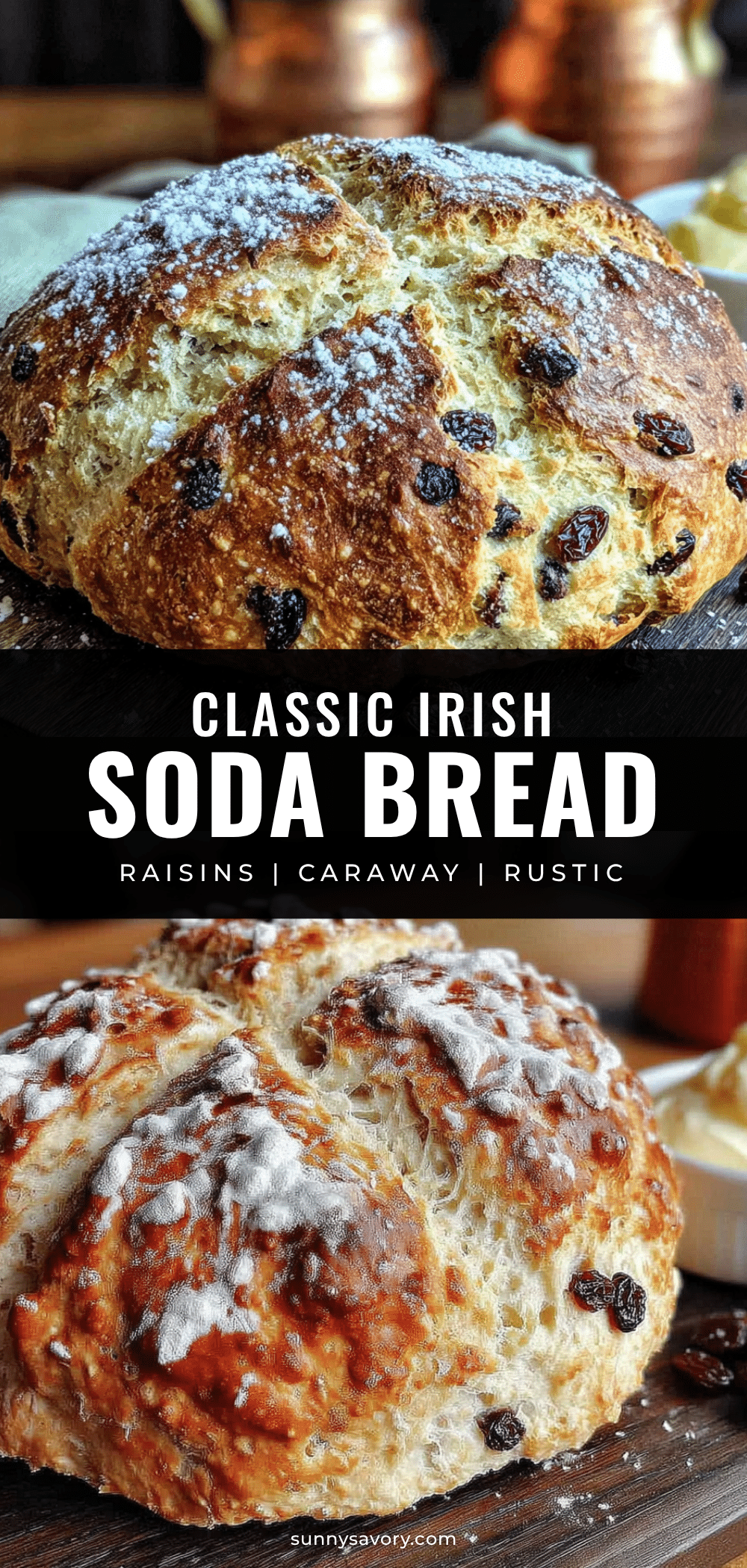
Easy Classic Irish Soda Bread with Raisins & Caraway

This Classic Irish Soda Bread with Raisins and Caraway is a rustic, forgiving bread with a craggy golden-brown crust and a soft, tender crumb. Studded with plump raisins and speckled with caraway, it’s quick to make with simple pantry ingredients and perfect for St. Patrick’s Day or any cozy day.
- Prep Time: 15 minutes
- Cook Time: 40 minutes
- Total Time: 55 minutes
- Yield: 12 servings 1x
- Category: Bread
- Cuisine: Irish
Ingredients
- 4 cups (480g) all-purpose flour
- 3 tablespoons (36g) granulated sugar
- 1 teaspoon baking soda
- 1 teaspoon fine sea salt
- 4 tablespoons (56g) cold unsalted butter, cut into small cubes
- 1 cup (150g) raisins (golden or dark)
- 1 tablespoon caraway seeds
- 1¾ cups (420ml) cold buttermilk
- 1 large egg (optional)
Instructions
- Preheat your oven to 400°F (200°C). Line a large baking sheet with parchment paper.
- In a large bowl, whisk together the flour, sugar, baking soda, and salt.
- Add the cold cubed butter to the flour mixture. Using a pastry cutter or your fingertips, work the butter into the flour until it resembles coarse meal with pea-sized butter pieces still visible.
- Stir in the raisins and caraway seeds until evenly coated in the flour mixture.
- Make a well in the center of the flour mixture. Pour in the cold buttermilk (and the beaten egg, if using). Gently stir with a fork or your hands until a shaggy, sticky dough forms. If too dry, add another tablespoon of buttermilk; if too sticky, add a tablespoon more of flour.
- Turn the dough out onto a lightly floured surface. With floured hands, gently bring the dough together into a rough ball. Do not knead—just fold it over once or twice to incorporate any loose flour.
- Pat the dough into a round disk about 7 to 8 inches in diameter and 1½ inches thick. Place on the prepared baking sheet.
- Using a sharp serrated knife, cut a deep cross into the top of the dough, going about ¾ of the way through the loaf.
- Bake for 35 to 45 minutes, until deep golden brown and the loaf sounds hollow when tapped on the bottom. If browning too quickly after 25 minutes, tent loosely with aluminum foil.
- Transfer the bread to a wire rack to cool completely (at least 30 minutes) before slicing.
Notes
The key to a tender crumb is not over-mixing the dough. A shaggy, lumpy dough is exactly what you want. The deep cross cut is essential for even baking. If you don’t have buttermilk, make a quick substitute by adding 1 tablespoon of lemon juice or white vinegar to a measuring cup, then filling with whole milk to the 1¾ cup line; let sit for 5 minutes. For a softer crust, wrap the cooled bread in a clean kitchen towel.
Nutrition
- Serving Size: 1 slice
- Calories: 280
- Sugar: 12
- Sodium: 350
- Fat: 6
- Saturated Fat: 3.5
- Carbohydrates: 50
- Fiber: 2
- Protein: 6
Keywords: Irish soda bread, raisin soda bread, caraway soda bread, St. Patrick's Day bread, quick bread, no yeast bread, rustic bread