Love this? Save it for later!
Share the inspiration with your friends
I was standing in line at the DMV—the one on Broad Street that always smells faintly of floor wax and regret—when the woman behind me started talking about buns. Not just any buns, mind you. She was on the phone, describing in excruciating detail how she had spent the previous night making hot cross buns with orange zest and a sticky glaze that “tastes like spring in a bottle.” I wasn’t trying to eavesdrop, honestly. But when you’re number 47 and they’ve only called up to 23, you tend to absorb the details around you. She mentioned how her grandmother used to make them every Easter, but she had swapped the traditional mixed peel for fresh orange zest and a splash of juice because, in her words, “life’s too short for candied fruit that tastes like regret.” I nearly asked for her number—not romantically, but for the recipe. That’s how good it sounded.
I mean, let me tell you, I’ve made hot cross buns before. I’ve got a standard recipe I fall back on every spring. But something about the way she described that orange glaze—thin enough to drip down the sides, thick enough to leave a sugary crust—stuck with me. I spent the next three days testing batches in my kitchen, adjusting the amount of zest, the proofing time, the temperature of the glaze. My husband started eyeing the overflowing basket on the counter with a mix of excitement and concern. “Are we opening a bakery?” he asked. Maybe not, but I was determined to crack the code.
The thing about spring orange glazed hot cross buns is that they hit a specific spot in the calendar. You’re coming out of winter’s heavy stews and braised meats, and you want something that tastes like sunshine and new beginnings. These buns deliver exactly that. The orange cuts through the sweetness, the warm spices wrap around you like a familiar hug, and that cross on top? It makes you feel like you’ve accomplished something before 9 AM. You know that feeling when a recipe just works on the first try? This wasn’t that. But after a few adjustments and a lot of taste-testing, I landed on a version that made me close my eyes after the first bite. And honestly, that’s the kind of recipe worth sharing.
Why You’ll Love These Spring Orange Glazed Hot Cross Buns
I’ve tested this recipe more times than I care to count, and I can tell you with confidence—these are not your average hot cross buns. Here’s why they stand out:
- Quick & Easy for Yeast Dough: The dough comes together in about 20 minutes of active work. The rest is just waiting (and smelling your kitchen transform into a bakery).
- Simple Ingredients: You probably have most of this in your pantry right now. No weird extracts or hard-to-find spices. Just good, honest baking staples.
- Perfect for Spring Gatherings: Easter brunch, a spring baby shower, or just a Tuesday that needs a little brightness. These buns fit every occasion.
- Crowd-Pleaser: I brought a batch to my neighbor’s book club, and three people asked for the recipe before the discussion even started. They’re that kind of good.
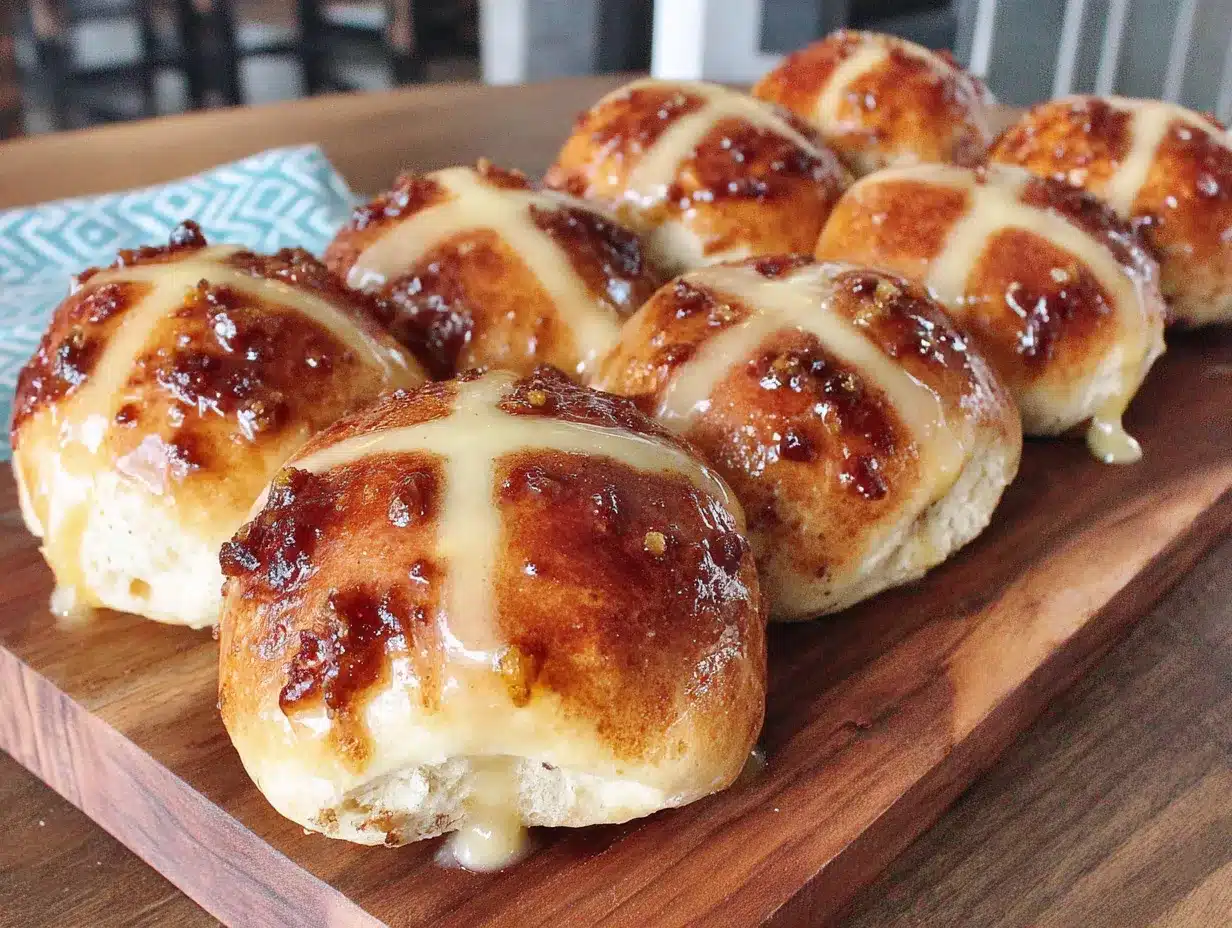
- Unbelievably Delicious: The orange glaze soaks into the top of the bun just enough to make every bite a mix of soft, spiced dough and citrusy sweetness. It’s next-level comfort food.
What makes this recipe different from the rest? It’s the balance. Most hot cross buns lean too heavy on the spice or too sweet on the glaze. This version uses a double hit of orange—zest in the dough and juice in the glaze—so the citrus flavor feels bright and natural, not artificial. Plus, I’ve perfected the proofing time to give you buns that are pillowy soft without being doughy.
These spring orange glazed hot cross buns aren’t just good—they’re the kind that makes you close your eyes after the first bite. It’s comfort food reimagined for the season: lighter, brighter, but with the same soul-soothing satisfaction. Perfect for impressing guests without stress, or turning a simple morning into something memorable.
What Ingredients You Will Need
This recipe uses simple, wholesome ingredients to deliver bold flavor and satisfying texture without the fuss. Most of these are pantry staples, which makes these buns perfect for a spontaneous spring baking project.
For the Dough
- 3 ½ cups (440g) all-purpose flour – I prefer Gold Medal or King Arthur for consistent results. Spoon and level your flour for accuracy.
- ¼ cup (50g) granulated sugar – Just enough sweetness to balance the spice without overwhelming.
- 2 ¼ teaspoons (7g) active dry yeast – One standard packet. Make sure it’s fresh for the best rise.
- 1 teaspoon salt – Fine sea salt works best. Don’t skip it—salt controls yeast activity and enhances flavor.
- 1 teaspoon ground cinnamon – The backbone of the spice blend. I use Saigon cinnamon for its warmth.
- ½ teaspoon ground nutmeg – Freshly grated if you have it. It makes a noticeable difference.
- ½ teaspoon ground allspice – Adds that subtle floral note that makes hot cross buns distinctive.
- ¼ teaspoon ground cloves – Go easy here. Cloves are powerful.
- 1 cup (240ml) whole milk, warmed – About 110°F. Too hot kills the yeast; too cold slows it down.
- ¼ cup (60g) unsalted butter, melted – Adds richness and keeps the buns tender.
- 2 large eggs, room temperature – Cold eggs can shock the dough. Leave them out for 30 minutes before starting.
- Zest of 2 medium oranges – This is where the spring flavor comes from. Use a microplane for the finest zest.
- ½ cup (75g) golden raisins or dried currants – Plump and sweet. Soak them in warm water for 10 minutes if they seem dry.
For the Cross Paste
- ½ cup (60g) all-purpose flour
- 5-6 tablespoons water – Add slowly until you get a pipeable consistency.
For the Spring Orange Glaze
- 1 cup (120g) powdered sugar, sifted – Sifting prevents lumps in your glaze.
- 3 tablespoons fresh orange juice – From the oranges you zested. Fresh is non-negotiable here.
- ½ teaspoon vanilla extract – Rounds out the citrus with a warm note.
Equipment Needed
You don’t need a professional bakery setup for these spring orange glazed hot cross buns, but a few key tools will make your life easier:
- Stand mixer with dough hook – You can knead by hand, but the mixer saves your arms. I use my KitchenAid, and it handles this dough beautifully.
- Large mixing bowl – For the initial mixing and proofing.
- 9×13-inch baking pan – Line it with parchment paper for easy removal.
- Microplane or fine zester – For getting that orange zest without the bitter white pith.
- Citrus juicer – A simple reamer works fine. No need for fancy electric gadgets.
- Piping bag or zip-top bag – For the cross paste. A small round tip helps, but a snipped corner works in a pinch.
- Pastry brush – For the melted butter after baking. Silicone brushes are easier to clean.
- Instant-read thermometer – Not required, but helpful for checking milk temperature and internal bun doneness (should be 190°F).
Budget-friendly tip: If you don’t have a stand mixer, knead by hand for 10-12 minutes. The dough is forgiving, and honestly, the arm workout is worth it for the result.
Preparation Method
- Bloom the yeast. In a small bowl, combine the warmed milk (110°F) with 1 tablespoon of the sugar. Sprinkle the yeast on top and let it sit for 5-7 minutes until foamy. If it doesn’t foam, your yeast might be dead—start over with fresh yeast.
- Mix the dry ingredients. In the bowl of your stand mixer, whisk together the flour, remaining sugar, salt, cinnamon, nutmeg, allspice, and cloves. This ensures the spices are evenly distributed.
- Combine wet ingredients. Add the melted butter, eggs, orange zest, and the yeast mixture to the dry ingredients. Mix on low speed with the dough hook until a shaggy dough forms, about 2 minutes.
- Knead the dough. Increase speed to medium-low and knead for 6-8 minutes. The dough should pull away from the sides of the bowl and feel smooth and elastic. If it’s too sticky, add flour 1 tablespoon at a time. Too dry? Add milk 1 teaspoon at a time.
- Add the dried fruit. With the mixer on low, add the golden raisins or currants. Mix just until distributed—about 30 seconds. Overmixing can break down the fruit.
- First proof. Transfer the dough to a lightly oiled bowl, cover with plastic wrap or a damp kitchen towel, and let it rise in a warm spot for 1-1.5 hours, or until doubled in size. I set my oven to “proof” setting, but a turned-off oven with the light on works too.
- Shape the buns. Punch down the dough and turn it onto a lightly floured surface. Divide into 12 equal pieces (about 80g each). Shape each piece into a smooth ball by tucking the edges under and rolling against the counter with cupped hands.
- Second proof. Place the buns in your prepared 9×13 pan, spacing them evenly—they’ll grow together as they rise. Cover loosely with plastic wrap and let rise for 45-60 minutes, or until puffy and touching each other.
- Preheat and pipe. About 20 minutes before the second proof ends, preheat your oven to 375°F (190°C). Mix the flour and water for the cross paste until smooth. Transfer to a piping bag or zip-top bag with a tiny corner snipped off.
- Pipe the crosses. Pipe thin lines of paste across each row of buns, then perpendicular lines to form crosses. Don’t worry about perfection—rustic is charming.
- Bake. Bake for 20-25 minutes, rotating the pan halfway through. The buns should be golden brown on top and sound hollow when tapped. An instant-read thermometer should read 190°F in the center.
- Cool and glaze. Let the buns cool in the pan for 5 minutes, then transfer to a wire rack. While still warm, whisk together the powdered sugar, orange juice, and vanilla. Brush or drizzle the glaze over the tops. The warmth will help it soak in slightly.
- Serve warm. These are best eaten the day they’re made, still slightly warm from the oven. Pull them apart—the soft, spiced interior with that citrus glaze is pure spring magic.
Cooking Tips & Techniques
I’ve made my share of mistakes with yeast dough, and I’m happy to save you the trouble. Here’s what I’ve learned:
Temperature matters more than you think. Milk that’s too hot kills the yeast; milk that’s too cold makes the dough take forever to rise. I use my instant-read thermometer every time. If you don’t have one, test the milk on your wrist—it should feel like warm bath water, not hot.
Don’t over-flour your surface. The dough should be slightly tacky but not sticky. If you keep adding flour, you’ll end up with dense, dry buns. Trust the process—the dough will become less sticky as it proofs.
That first proof is crucial. I once rushed it because I was short on time, and the buns came out flat and dense. Give it the full hour and a half. Your kitchen should smell yeasty and warm. If it doesn’t, your dough isn’t ready.
Watch the glaze temperature. I learned this the hard way: if the buns are too hot when you glaze them, the glaze will just slide off. If they’re too cool, it won’t soak in at all. The sweet spot is about 10 minutes after they come out of the oven—warm enough to absorb, cool enough to hold.
Multitasking strategy: While the dough is on its first proof, clean your kitchen and prep your pan. During the second proof, make the cross paste and mix your glaze ingredients (keep the glaze dry until you’re ready to use it). This way, everything flows smoothly.
Variations & Adaptations
One of the best things about these spring orange glazed hot cross buns is how adaptable they are. Here are a few variations I’ve tried:
- Dairy-Free Version: Substitute the whole milk with oat milk or almond milk, and use vegan butter. The texture will be slightly less tender, but the flavor is still spot-on.
- Gluten-Free Adaptation: Use a 1:1 gluten-free baking flour blend. Add 1 teaspoon of xanthan gum if your blend doesn’t include it. The dough will be stickier, so wet your hands when shaping.
- Different Citrus: Swap the orange for lemon or grapefruit for a different spring vibe. Lemon pairs beautifully with the warm spices.
- Add Chocolate Chips: Replace the dried fruit with ½ cup of mini chocolate chips. It’s not traditional, but it’s absolutely delicious.
- Spice It Up: Add ¼ teaspoon of cardamom or ginger to the spice blend for an extra layer of warmth.
I once made a batch with blood orange zest and juice when they were in season, and the color of the glaze was stunning—a deep pinkish orange that looked gorgeous on the table. It’s a small change that makes a big visual impact.
Serving & Storage Suggestions
These spring orange glazed hot cross buns are best served warm, straight from the oven, with a pat of butter melting into the soft interior. The glaze should still be slightly tacky, not fully set. I like to serve them on a wooden board with a small dish of extra orange butter (just softened butter mixed with a bit of zest and honey).
For beverages, these buns pair beautifully with a strong cup of black tea—Earl Grey or English Breakfast works wonders. A latte or cappuccino also complements the citrus notes. If you’re serving them for brunch, a glass of fresh orange juice feels almost poetic.
Storage: Keep leftover buns in an airtight container at room temperature for up to 2 days. After that, they start to dry out. To refresh, microwave a single bun for 10-15 seconds or pop them in a 300°F oven for 5 minutes.
Freezing: These freeze beautifully. Wrap cooled, unglazed buns tightly in plastic wrap, then foil. Freeze for up to 3 months. When ready to serve, thaw at room temperature, then warm in the oven and glaze fresh. The glaze doesn’t freeze well, so always add it after reheating.
One thing I’ve noticed: the flavors actually deepen overnight. The spices settle, and the orange becomes more pronounced. So if you can resist eating them all in one sitting, day-old buns are still a treat.
Nutritional Information & Benefits
Per bun (based on 12 servings, with glaze): approximately 280 calories, 7g fat, 48g carbohydrates, 6g protein, 2g fiber, 18g sugar. These are estimates and will vary based on exact ingredients and substitutions.
These buns offer some surprising benefits. The orange zest provides a good dose of vitamin C and antioxidants, while the cinnamon has anti-inflammatory properties. The golden raisins add a small amount of iron and potassium. And honestly, the mental health benefit of spending a morning baking and filling your home with the smell of warm spices? That’s priceless.
If you’re watching your sugar intake, you can reduce the glaze by half or skip it entirely—the buns are still delicious on their own. For a lower-carb option, I’ve had success using a blend of almond flour and coconut flour, though the texture is denser.
Conclusion
These spring orange glazed hot cross buns are the recipe I keep coming back to, year after year. They’re the taste of April mornings, of Easter brunches, of the moment when winter finally loosens its grip. The combination of warm spices and bright citrus is something special—a reminder that the best recipes often come from the most unexpected places (like the DMV, of all places).
I hope you’ll try these buns and make them your own. Maybe you’ll add a little extra orange zest, or swap the raisins for dried cranberries, or serve them with a different glaze. That’s the beauty of baking—it’s personal. And honestly, there’s no wrong way to enjoy a warm, buttery bun.
If you make these, I’d love to hear about it. Drop a comment below or tag me in your photos. Did you try a variation? Did your family fight over the last one? Tell me everything. And if you’re looking for more spring baking inspiration, check out my lemon blueberry scones or carrot cake muffins—they’re both perfect for the season.
Happy baking, friends. Spring is finally here.
Frequently Asked Questions
Can I make the dough the night before?
Absolutely. After the first proof, punch down the dough, cover it tightly, and refrigerate overnight. The next morning, let it sit at room temperature for 30 minutes, then shape and proceed with the second proof. The cold fermentation actually develops more flavor.
Why didn’t my buns rise properly?
Most likely, your yeast was dead or your milk was too hot. Always check the expiration date on your yeast and test your milk temperature with a thermometer. If the yeast doesn’t foam after 5-7 minutes, start over with fresh ingredients.
Can I use bread flour instead of all-purpose flour?
Yes, but the buns will be chewier and slightly denser. Bread flour has more protein, which creates more gluten. If you prefer a softer, more tender bun, stick with all-purpose flour.
How do I get the crosses to look perfect?
Use a piping bag with a small round tip (or a zip-top bag with a tiny corner snipped off). Pipe slowly and steadily. If the paste spreads, it’s too thin—add a little more flour. If it’s too thick to pipe, add a drop more water.
Can I skip the dried fruit?
Of course. The buns will still be delicious without the raisins or currants. You can also substitute chopped dried apricots, dried cranberries, or even chopped nuts for a different texture and flavor.
Pin This Recipe!

Best Spring Orange Glazed Hot Cross Buns
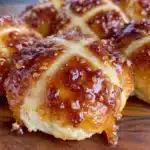
These spring orange glazed hot cross buns are pillowy soft, spiced with cinnamon and nutmeg, and topped with a bright citrus glaze. Perfect for Easter brunch or any spring gathering, they deliver a balance of warm spices and fresh orange flavor in every bite.
- Prep Time: 20 minutes
- Cook Time: 25 minutes
- Total Time: 2 hours 45 minutes (including proofing)
- Yield: 12 servings 1x
- Category: Bread
- Cuisine: British
Ingredients
- 3 ½ cups (440g) all-purpose flour
- ¼ cup (50g) granulated sugar
- 2 ¼ teaspoons (7g) active dry yeast
- 1 teaspoon fine sea salt
- 1 teaspoon ground cinnamon
- ½ teaspoon ground nutmeg
- ½ teaspoon ground allspice
- ¼ teaspoon ground cloves
- 1 cup (240ml) whole milk, warmed to 110°F
- ¼ cup (60g) unsalted butter, melted
- 2 large eggs, room temperature
- Zest of 2 medium oranges
- ½ cup (75g) golden raisins or dried currants
- ½ cup (60g) all-purpose flour (for cross paste)
- 5–6 tablespoons water (for cross paste)
- 1 cup (120g) powdered sugar, sifted (for glaze)
- 3 tablespoons fresh orange juice (for glaze)
- ½ teaspoon vanilla extract (for glaze)
Instructions
- Bloom the yeast: In a small bowl, combine the warmed milk (110°F) with 1 tablespoon of the sugar. Sprinkle the yeast on top and let it sit for 5-7 minutes until foamy.
- Mix the dry ingredients: In the bowl of a stand mixer, whisk together the flour, remaining sugar, salt, cinnamon, nutmeg, allspice, and cloves.
- Combine wet ingredients: Add the melted butter, eggs, orange zest, and the yeast mixture to the dry ingredients. Mix on low speed with the dough hook until a shaggy dough forms, about 2 minutes.
- Knead the dough: Increase speed to medium-low and knead for 6-8 minutes until smooth and elastic. Add flour 1 tablespoon at a time if too sticky, or milk 1 teaspoon at a time if too dry.
- Add the dried fruit: With the mixer on low, add the golden raisins or currants. Mix just until distributed, about 30 seconds.
- First proof: Transfer the dough to a lightly oiled bowl, cover with plastic wrap or a damp towel, and let rise in a warm spot for 1-1.5 hours until doubled in size.
- Shape the buns: Punch down the dough and turn onto a lightly floured surface. Divide into 12 equal pieces (about 80g each). Shape each into a smooth ball.
- Second proof: Place the buns in a parchment-lined 9×13-inch baking pan, spacing evenly. Cover loosely and let rise for 45-60 minutes until puffy and touching.
- Preheat and pipe: About 20 minutes before the second proof ends, preheat oven to 375°F (190°C). Mix the flour and water for the cross paste until smooth. Transfer to a piping bag or zip-top bag with a tiny corner snipped off.
- Pipe the crosses: Pipe thin lines of paste across each row of buns, then perpendicular lines to form crosses.
- Bake: Bake for 20-25 minutes, rotating the pan halfway through, until golden brown and an instant-read thermometer reads 190°F in the center.
- Cool and glaze: Let buns cool in the pan for 5 minutes, then transfer to a wire rack. While still warm, whisk together powdered sugar, orange juice, and vanilla. Brush or drizzle glaze over the tops.
- Serve warm: Best eaten the day they’re made, still slightly warm from the oven.
Notes
For best results, use fresh yeast and warm milk to 110°F. The dough should be slightly tacky but not sticky. Glaze when buns are warm but not hot—about 10 minutes after baking. Buns can be frozen unglazed for up to 3 months; glaze after reheating.
Nutrition
- Serving Size: 1 bun
- Calories: 280
- Sugar: 18
- Sodium: 220
- Fat: 7
- Saturated Fat: 4
- Carbohydrates: 48
- Fiber: 2
- Protein: 6
Keywords: hot cross buns, orange glaze, spring baking, Easter buns, yeast bread, spiced buns, citrus buns