Love this? Save it for later!
Share the inspiration with your friends
I was standing in the fish aisle of my local grocery store last Tuesday—just staring, honestly—when this particular smell hit me. It wasn’t the fish counter itself, but something else, something faint and buttery drifting from the seafood section’s little seasoning display. And suddenly I was seven years old, standing on a wobbly wooden stool in my Aunt Lena’s tiny kitchen, watching her slide a baking dish into the oven. The smell of garlic and butter and something warm and oceanic filled her whole apartment, and I remember thinking, “How can dinner smell this good?” She passed away five years ago, and I haven’t thought about that specific Tuesday evening in decades. But there I was, holding a shopping basket, almost tearing up over a display of garlic powder. Maybe you’ve been there—that random moment when a scent just grabs you and pulls you somewhere else entirely.
I grabbed two salmon fillets without even thinking. I mean, I didn’t even check the price, which is very unlike me. Got home, realized I had no lemons, and had to run back out. Classic me. But that night, I made the closest thing to Aunt Lena’s garlic butter salmon that I’ve managed in all my years of trying. It wasn’t identical—nothing ever is, you know?—but it was close enough that I texted my cousin a photo with the caption “She’s still teaching us.” That’s the thing about a recipe like this. It becomes part of you.
This Guest-Favorite Garlic Butter Baked Salmon is the dish I now bring to every dinner party, every potluck, every gathering where I want to quietly impress without breaking a sweat. It’s simple enough for a Tuesday night but fancy enough that people think you spent hours on it. And honestly? Let them think that. You and I will know the truth.
Why You’ll Love This Recipe
Let me tell you why this particular salmon recipe has become my go-to for every single gathering I host. I’ve tested probably a dozen versions over the years—some too complicated, some too dry, some that just didn’t have that oomph—and this one wins every time. Here’s what makes it special:
- Comes together in under 30 minutes — Perfect for when guests are arriving and you’re still in your apron. The actual prep time is maybe 10 minutes, and the oven does the rest.
- Simple, everyday ingredients — No fancy grocery store trips required. You probably have garlic, butter, and lemon in your kitchen right now. I’m not kidding.
- Perfect for entertaining — This dish looks stunning on a platter, smells incredible while baking, and scales up beautifully for a crowd. Your guests will think you slaved away.
- Always gets rave reviews — I’ve served this to picky eaters, seafood skeptics, and actual chefs. Every single person has asked for the recipe. Every. Single. One.
- Impossibly tender and flaky — The garlic butter keeps the salmon moist while baking, so you get that melt-in-your-mouth texture without any guesswork.
What makes this version different from all the other baked salmon recipes out there? It’s the technique—baking the salmon on a bed of lemon slices with a generous garlic butter topping that bastes the fish as it cooks. No complicated steps, no weird ingredients. Just pure, reliable deliciousness. I’ve served this at birthday dinners, casual Friday night gatherings, and even a Valentine’s Day dinner where I was trying way too hard. It worked every single time.
This isn’t just good salmon. It’s the kind of dish that makes people close their eyes after the first bite. The kind where someone at the table says, “Wait, how did you make this?” and you get to smile and say, “Oh, it’s nothing.” But we both know it’s everything.
What Ingredients You Will Need
This recipe uses simple, honest ingredients that come together to create something truly special. Most of these are probably already in your kitchen—which is exactly what you want when you’re hosting and need to impress without the stress.
For the Salmon
- 4 salmon fillets (6 oz each, skin-on or skinless) — Look for fillets that are similar in thickness for even cooking. I prefer wild-caught when I can find it, but farm-raised works beautifully too.
- 4 tablespoons unsalted butter, softened — I recommend Kerrygold or any European-style butter for richer flavor. Salted butter works if that’s what you have, just reduce the added salt slightly.
- 4 cloves garlic, minced — Fresh garlic is non-negotiable here. The jarred stuff just doesn’t give you that same aromatic punch.
- 1 tablespoon fresh lemon juice (about half a lemon) — Bottled lemon juice works in a pinch, but fresh really makes a difference in brightness.
- 1 teaspoon lemon zest — This adds a layer of citrus flavor that cuts through the richness beautifully.
- 1 teaspoon salt — I use fine sea salt. Adjust based on your preference and whether your butter is salted.
- ½ teaspoon black pepper, freshly ground — Don’t skimp here. Fresh pepper adds warmth that pre-ground just can’t match.
- 1 teaspoon paprika — This is my secret ingredient. It adds color and a subtle smokiness without making it taste like barbecue.
- ½ teaspoon dried parsley (or 1 tablespoon fresh, chopped) — For color and a slight herbaceous note.
For the Lemon Bed
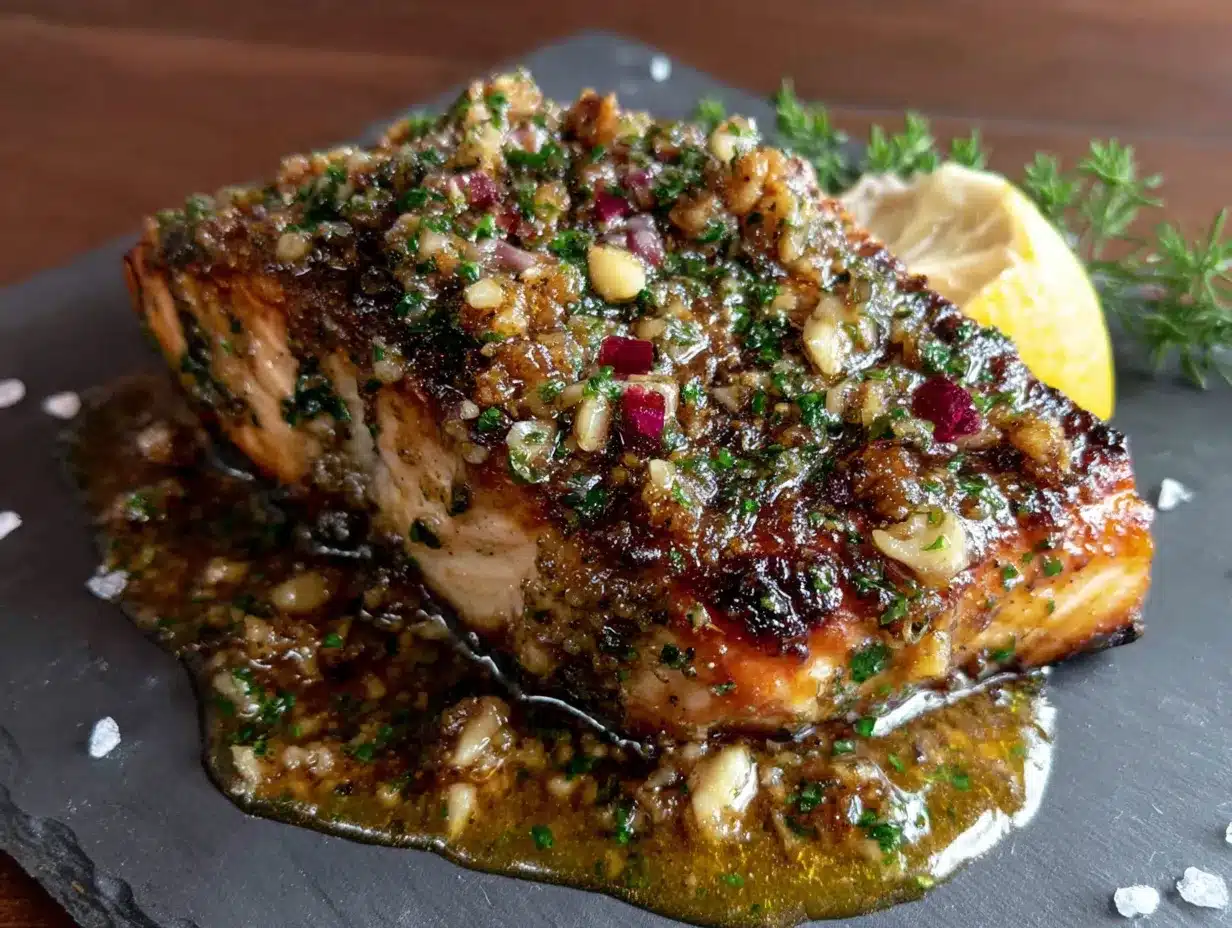
- 1 lemon, thinly sliced into rounds — These create a little steam bath for the salmon and infuse it with citrus as it bakes. Plus they look gorgeous on the plate.
For Garnish
- Fresh parsley or dill — I prefer dill with salmon, but parsley is more universally loved by guests who might be herb-shy.
- Lemon wedges — For squeezing over the top at the table.
Ingredient Selection Tips: When you’re at the fish counter, don’t be shy about asking to smell the salmon. It should smell like the ocean—clean and briny—not fishy or ammonia-like. The flesh should be firm and bounce back when pressed. If the fillets have that white albumin (the white stuff that sometimes seeps out during cooking), don’t worry—that’s just protein, and our garlic butter method actually minimizes it.
Substitution Guidance: If you’re cooking for someone with a dairy sensitivity, you can use vegan butter or ghee (which has less lactose). For a lower-fat option, try using olive oil instead of butter—it won’t be as rich, but it’ll still be delicious. And if you don’t have fresh garlic, use 1 teaspoon of garlic powder per clove. It won’t be quite the same, but it’ll still be good.
Equipment Needed
You don’t need a professional kitchen to make this recipe work. Here’s what you’ll need:
- Baking dish (9×13-inch works perfectly) — Glass or ceramic is ideal because it distributes heat evenly. I use a Pyrex dish that I’ve had for years, and it’s never let me down.
- Small bowl — For mixing the garlic butter. Any small bowl will do.
- Chef’s knife — For mincing garlic and slicing lemons. A sharp knife makes both tasks infinitely easier and safer.
- Cutting board — Preferably one that won’t absorb fish smells. I keep a separate board for seafood.
- Measuring spoons — For the seasonings. Eyeballing works if you’re experienced, but measuring ensures consistency.
- Zester or microplane — For getting that lemon zest without the bitter white pith. If you don’t have one, a vegetable peeler works in a pinch—just chop the zest finely afterward.
- Fork or fish spatula — For checking doneness and serving. A regular spatula works too, but a fish spatula is thinner and more delicate.
- Aluminum foil (optional) — For tenting the salmon if it’s browning too quickly.
If you don’t have a baking dish, a rimmed baking sheet lined with parchment paper works perfectly. I’ve even used a cast-iron skillet in a pinch—it gives the bottom a lovely sear. Just make sure whatever you use is oven-safe up to 400°F.
Preparation Method
Alright, let’s get cooking. This is the part where the magic happens, and I promise it’s easier than you think. Take a deep breath—you’ve got this.
- Preheat your oven to 375°F (190°C). Give it a full 15-20 minutes to come to temperature. An inconsistent oven is the enemy of perfectly cooked salmon, so be patient here.
- Remove the salmon from the refrigerator. Let it sit at room temperature for about 10-15 minutes while you prep everything else. This helps it cook more evenly. Cold salmon straight from the fridge will cook unevenly—the outside will be done while the center is still cold. Trust me, I learned this the hard way during a dinner party where I was trying to impress my husband’s boss. The outside was perfect; the middle was practically raw. Not my finest moment.
- Pat the salmon fillets dry with paper towels. This is crucial—excess moisture will steam the fish instead of baking it, and you want that beautiful flaky texture, not soggy skin. I usually pat each fillet on both sides and then let them sit on a clean towel for a minute.
- Make the garlic butter. In a small bowl, combine the softened butter, minced garlic, lemon juice, lemon zest, salt, pepper, paprika, and dried parsley. Mash it all together with a fork until it’s well combined. The mixture should be spreadable but not runny. If your butter is too hard, let it sit out for another 5 minutes. If it’s too soft, pop it in the fridge for a minute.
- Prepare the lemon bed. Arrange the lemon slices in a single layer in the bottom of your baking dish. Don’t overlap them too much—you want each fillet to have its own little citrus cushion. This is where the magic of steam-baking happens, and the lemon slices keep the salmon from sticking to the dish while infusing it with flavor.
- Place the salmon fillets on top of the lemon slices, skin-side down (if using skin-on fillets). Leave a little space between each fillet so the heat can circulate evenly. Crowding the pan will cause the salmon to steam rather than bake, and you’ll lose that lovely browned butter effect.
- Spread the garlic butter mixture evenly over the top of each fillet. Really get in there—use the back of a spoon or a small offset spatula to coat the entire surface. Don’t be shy. The butter will melt and baste the salmon as it bakes, creating that incredible flavor we’re after.
- Bake for 12-15 minutes, depending on the thickness of your fillets. For 1-inch thick fillets, 13 minutes is usually perfect. The salmon is done when it flakes easily with a fork and the internal temperature reaches 145°F (63°C) at the thickest part. The butter should be bubbly and fragrant, and the edges of the salmon will look slightly opaque.
- Optional: Broil for 1-2 minutes at the end if you want a slightly caramelized top. Watch it carefully—broilers are unpredictable and can go from golden to burnt in seconds. I’ve definitely ruined a batch by walking away “just for a second.” Spoiler: it was more than a second.
- Remove from the oven and let the salmon rest in the dish for 2-3 minutes. This allows the juices to redistribute throughout the fish, keeping it moist and tender. Don’t skip this step—I know you’re hungry, but patience pays off here.
- Transfer to a serving platter using a fish spatula or wide spatula. Garnish with fresh parsley or dill and lemon wedges. Serve immediately while the butter is still warm and glossy.
Visual and Sensory Cues: When the salmon is perfectly cooked, it will look slightly lighter in color and the flakes will separate easily when you press gently with a fork. The garlic butter will be bubbly and golden around the edges, and the lemon slices underneath will be softened and fragrant. If you see white albumin (that white protein stuff) seeping out, you’ve slightly overcooked it—but don’t worry, it’s still delicious, just not quite as pretty.
Cooking Tips & Techniques
After making this recipe more times than I can count (and messing it up plenty along the way), I’ve gathered some tips that will help you nail it every single time.
Don’t overmix the garlic butter. I know it’s tempting to keep stirring until it’s perfectly smooth, but you actually want little pockets of butter and garlic throughout. When it melts in the oven, those pockets create different flavor bursts in each bite. Think of it like a good chocolate chip cookie—the uneven distribution is what makes it interesting.
Room temperature butter is your friend. Cold butter won’t spread evenly over the salmon, and melted butter will just run off into the pan. You want it soft enough to spread like room-temperature butter on toast, but not so soft that it’s liquid. If you forgot to take it out of the fridge, microwave it in 5-second bursts, checking after each one. I’ve definitely nuked butter into a puddle before, and it’s not pretty.
Check for doneness early. Ovens vary wildly—I’ve cooked in apartments where the oven was 25 degrees off from what the dial said. Start checking at 10 minutes if your fillets are on the thinner side. The salmon will continue cooking slightly after you remove it from the oven (carryover cooking), so it’s better to take it out a minute early than a minute late. Dry salmon is sad salmon.
Scale up strategically. If you’re cooking for a crowd, don’t crowd the pan. Use two baking dishes if necessary, or cook in batches. Overcrowding creates steam, which means your salmon will poach rather than bake, and you’ll lose that beautiful butter-basted texture. I learned this the hard way when I tried to cram eight fillets into one dish for a family gathering. It worked, but it wasn’t my best work.
The lemon bed trick works wonders. Those lemon slices aren’t just for show—they create a little steam barrier that keeps the bottom of the salmon from overcooking while the top gets all that buttery goodness. Plus, the lemon flavor infuses up into the fish as it bakes. It’s a two-for-one deal that makes you look like a pro.
Variations & Adaptations
One of the best things about this recipe is how easily it adapts to different tastes and dietary needs. Here are some variations I’ve tried and loved:
Herb-Crusted Version: Mix 2 tablespoons of fresh chopped dill and 1 tablespoon of fresh parsley into the garlic butter before spreading. The herbs get slightly crispy in the oven and add a beautiful green contrast against the orange salmon. I made this for Easter brunch once, and my aunt—who “doesn’t like fish”—asked for seconds.
Spicy Kick: Add ½ teaspoon of red pepper flakes or a pinch of cayenne pepper to the garlic butter mixture. The heat cuts through the richness beautifully and wakes up your taste buds. Just be careful not to overdo it—you want a warm glow, not a five-alarm fire. I once added a full teaspoon of cayenne thinking I was being bold, and let me tell you, my guests were bold too—boldly reaching for their water glasses.
Maple-Dijon Twist: Replace the lemon juice with 1 tablespoon of maple syrup and 1 teaspoon of Dijon mustard. This creates a sweet-savory glaze that caramelizes beautifully under the broiler. It’s unexpected and absolutely delicious. Perfect for fall gatherings when you want something cozy but impressive.
Dairy-Free Adaptation: Use vegan butter or olive oil instead of regular butter. The texture will be slightly different—less rich, more bright—but still incredibly delicious. I’ve served this to dairy-free guests and they’ve never complained (and believe me, they would tell me).
Garlic-Lover’s Dream: Double the garlic. Yes, really. Roast an extra clove or two alongside the salmon for a milder, sweeter garlic flavor. Your breath might suffer, but your taste buds will thank you. Just make sure everyone at the table is on board—garlic breath is real, and not everyone appreciates it.
Serving & Storage Suggestions
Serving Temperature: Serve this salmon warm, straight from the oven. The garlic butter should be glossy and warm, not solidified. If it’s been sitting out for more than 10 minutes, you can pop it back in a 300°F oven for 3-4 minutes to warm through.
What to Serve Alongside: This salmon pairs beautifully with so many sides. I love serving it with:
- Roasted asparagus or green beans (toss them in the same garlic butter for extra flavor)
- Fluffy rice or quinoa to soak up all that buttery sauce
- A simple green salad with lemon vinaigrette
- Crusty bread for dipping into the leftover garlic butter (this is non-negotiable in my house)
- Roasted potatoes—the lemon-garlic flavor complements them perfectly
Beverage Pairing: A crisp white wine like Sauvignon Blanc or Pinot Grigio is perfect here. For non-alcoholic options, sparkling water with lemon or a citrusy iced tea works beautifully. The key is something bright and acidic to cut through the richness of the butter.
Storage Instructions: Store leftover salmon in an airtight container in the refrigerator for up to 3 days. The flavor actually gets better as it sits—the garlic and lemon meld together overnight. Just don’t leave it out at room temperature for more than 2 hours.
Reheating: The best way to reheat is in a 300°F oven for 5-7 minutes, covered loosely with foil to prevent drying out. You can also reheat in a skillet over medium-low heat with a splash of water or lemon juice. Avoid the microwave—it will make the salmon rubbery and dry. Trust me, I’ve tried it in a moment of desperation, and it was not worth it.
Freezing: You can freeze cooked salmon for up to 3 months. Wrap each fillet tightly in plastic wrap, then place in a freezer bag. Thaw overnight in the refrigerator and reheat gently. The texture won’t be quite as perfect as fresh, but it’s still delicious for a quick weeknight meal.
Nutritional Information & Benefits
Here’s the approximate nutritional breakdown for one serving (one fillet with garlic butter):
- Calories: 380-420
- Protein: 34-38g
- Fat: 24-28g (mostly healthy fats from salmon and butter)
- Carbohydrates: 2-4g
- Omega-3 fatty acids: 2-3g
- Vitamin D: 15-20% of daily value
- Vitamin B12: 80-100% of daily value
Salmon is one of the most nutrient-dense foods you can eat. It’s packed with high-quality protein, omega-3 fatty acids that support heart and brain health, and a range of B vitamins that help your body convert food into energy. The garlic in this recipe isn’t just for flavor—it contains compounds that may support immune health and reduce inflammation. And the lemon provides a nice dose of vitamin C, which helps your body absorb the iron in the salmon.
Dietary Considerations: This recipe is naturally gluten-free, low-carb, and keto-friendly. If you’re watching your sodium, you can reduce or omit the added salt. The butter can be swapped for a dairy-free alternative if needed. Just keep in mind that the nutritional values will change slightly with substitutions.
I’m not a nutritionist, but I’ve done enough research to feel good about serving this to my family and friends. It’s real food, made with real ingredients, and that’s something to feel good about.
Conclusion
This Guest-Favorite Garlic Butter Baked Salmon has become my signature dish for a reason. It’s the recipe I turn to when I want to impress without stress, when I want to feed people something that feels special but doesn’t require a culinary degree. It’s the dish that makes people lean in and say, “Okay, seriously, how did you make this?”
I hope you’ll make it your own. Add a little more garlic if that’s your thing. Throw in some fresh herbs from your garden. Serve it with your favorite sides and your favorite people. That’s what cooking is all about, isn’t it? Taking something simple and turning it into a moment.
When you make this—and I know you will—come back and tell me how it went. Did your guests love it? Did someone ask for the recipe? Did you add your own twist? I genuinely want to know. Drop a comment below, share a photo, or tag me on social media. There’s nothing I love more than hearing about someone else falling in love with a recipe that means so much to me.
Now go preheat that oven. Your guests are waiting.
Frequently Asked Questions
Can I use frozen salmon for this recipe?
Yes, absolutely. Just make sure to thaw it completely in the refrigerator overnight before cooking. Pat it very dry with paper towels—frozen salmon tends to hold more moisture, and you want to get rid of that excess water so the garlic butter can do its job. You might need to add 2-3 minutes to the baking time for thicker fillets.
How do I know when the salmon is fully cooked?
The easiest way is to use a fork. Gently press into the thickest part of the fillet—if the flesh flakes easily and looks opaque all the way through, it’s done. For precision, use an instant-read thermometer: 145°F (63°C) at the thickest part. The salmon will continue cooking slightly after you remove it from the oven, so take it out just before it reaches that temperature.
Can I make this recipe ahead of time for a party?
You can prep the garlic butter mixture up to 3 days in advance and keep it in the refrigerator. Let it come to room temperature before spreading on the salmon. You can also arrange the lemon slices in the baking dish ahead of time. But I recommend baking the salmon just before serving—it’s best fresh from the oven. If you need to reheat, do it gently in a low oven.
What if I don’t have fresh garlic?
Fresh garlic really makes a difference here, but if you’re in a pinch, you can use 1 teaspoon of garlic powder per clove of fresh garlic called for. The flavor will be milder and slightly different, but it’ll still be delicious. Avoid garlic salt unless you adjust the added salt in the recipe.
Can I use this recipe with other types of fish?
Absolutely. This garlic butter works beautifully with any firm, flaky fish. Try it with cod, halibut, sea bass, or even trout. Just adjust the cooking time based on the thickness of the fillets—thinner fish like trout will cook faster, while thicker fish like halibut may need a few extra minutes. The lemon bed and garlic butter method works for pretty much any white fish you have on hand.
Pin This Recipe!
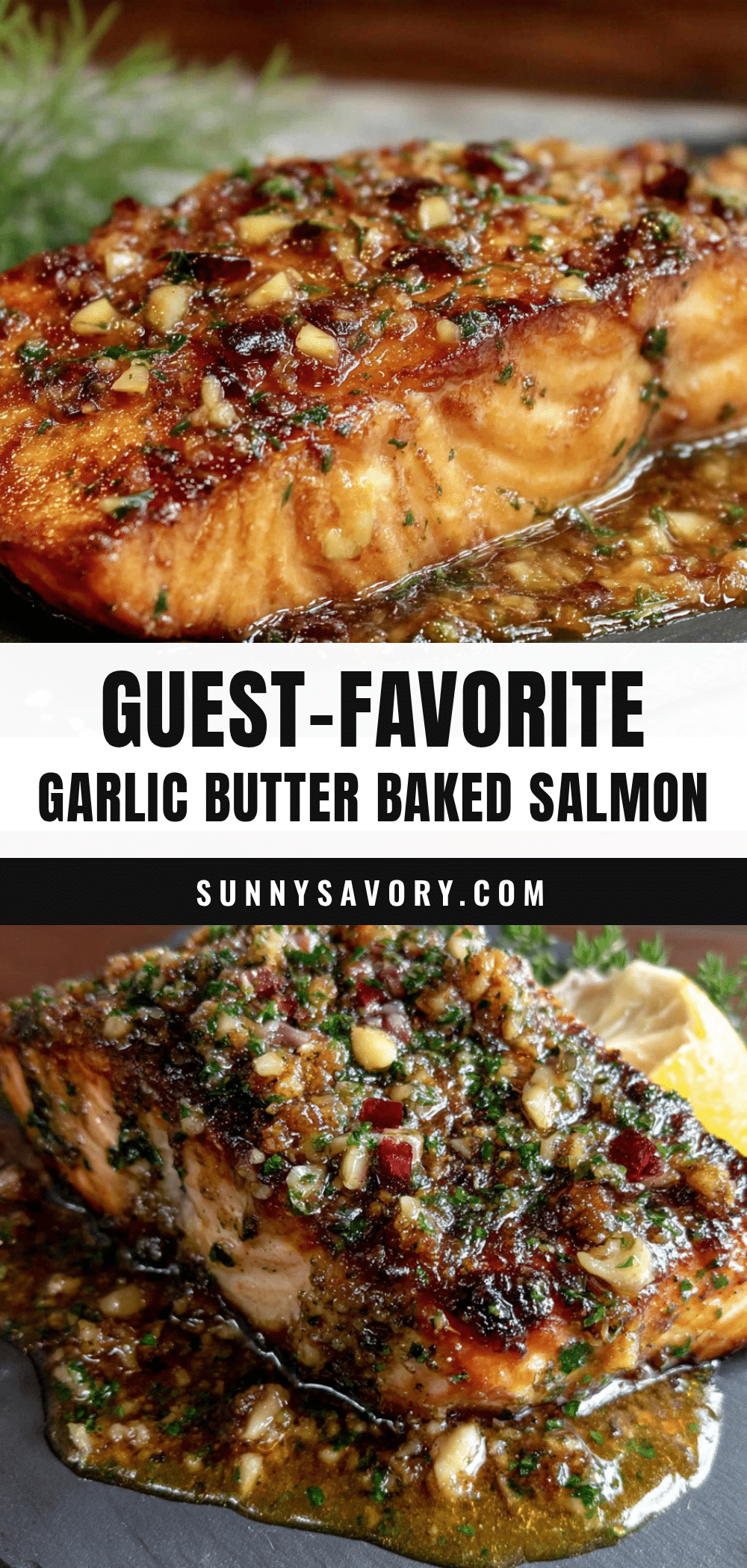
Easy Garlic Butter Baked Salmon | Best Guest-Favorite Recipe
This Guest-Favorite Garlic Butter Baked Salmon is the dish I now bring to every dinner party, every potluck, every gathering where I want to quietly impress without breaking a sweat. It’s simple enough for a Tuesday night but fancy enough that people think you spent hours on it.
- Prep Time: 10 minutes
- Cook Time: 15 minutes
- Total Time: 25 minutes
- Yield: 4 servings 1x
- Category: Main Course
- Cuisine: American
Ingredients
- 4 salmon fillets (6 oz each, skin-on or skinless)
- 4 tablespoons unsalted butter, softened
- 4 cloves garlic, minced
- 1 tablespoon fresh lemon juice
- 1 teaspoon lemon zest
- 1 teaspoon salt
- ½ teaspoon black pepper, freshly ground
- 1 teaspoon paprika
- ½ teaspoon dried parsley (or 1 tablespoon fresh, chopped)
- 1 lemon, thinly sliced into rounds
- Fresh parsley or dill for garnish
- Lemon wedges for serving
Instructions
- Preheat your oven to 375°F (190°C).
- Remove the salmon from the refrigerator and let it sit at room temperature for about 10-15 minutes.
- Pat the salmon fillets dry with paper towels.
- In a small bowl, combine the softened butter, minced garlic, lemon juice, lemon zest, salt, pepper, paprika, and dried parsley. Mash together with a fork until well combined.
- Arrange the lemon slices in a single layer in the bottom of a 9×13-inch baking dish.
- Place the salmon fillets on top of the lemon slices, skin-side down (if using skin-on fillets), leaving space between each fillet.
- Spread the garlic butter mixture evenly over the top of each fillet.
- Bake for 12-15 minutes, depending on thickness, until the salmon flakes easily with a fork and internal temperature reaches 145°F (63°C).
- Optional: Broil for 1-2 minutes for a caramelized top.
- Remove from the oven and let the salmon rest in the dish for 2-3 minutes.
- Transfer to a serving platter, garnish with fresh parsley or dill and lemon wedges, and serve immediately.
Notes
Don’t overmix the garlic butter; little pockets create flavor bursts. Room temperature butter spreads best. Check for doneness early as ovens vary. Scale up by using two baking dishes to avoid overcrowding. The lemon bed creates a steam barrier and infuses flavor.
Nutrition
- Serving Size: 1 fillet with garlic
- Calories: 400
- Sugar: 1
- Sodium: 600
- Fat: 26
- Saturated Fat: 12
- Carbohydrates: 3
- Fiber: 1
- Protein: 36
Keywords: garlic butter salmon, baked salmon, easy salmon recipe, guest favorite, salmon dinner, weeknight dinner, healthy salmon