Love this? Save it for later!
Share the inspiration with your friends
I was supposed to be making a completely different stew that Tuesday afternoon. The kind with wine and mushrooms and a fancy French name I can never pronounce correctly. I had the recipe pulled up on my phone, the good cutting board out, and I was feeling pretty confident about dinner for once. Then I grabbed the wrong bag from the pantry. Instead of the pearled barley I thought I was buying for a side dish later that week, I dumped a full cup of regular hulled barley into the pot before I even realized what happened. And the thing is, I didn’t have any more of the “right” grain. The power was already on high, the beef was sizzling, and I was out of time. I almost dumped the whole thing in the trash, honestly. But I figured, what’s the worst that could happen? I’d just cook it longer and hope for the best.
What came out of that pot was nothing like the recipe I’d planned. It was better. Way better. That stubborn, chewy barley soaked up all the beefy broth in a way the fancy French version never could have. It turned into this thick, hearty, almost porridge-like stew that stuck to your ribs and made the whole apartment smell like Sunday dinner. I stood there eating it straight from the ladle, completely shocked that my mistake had turned into something I’d crave for months. Maybe you’ve been there — the moment when a kitchen flop turns into a new favorite. This cozy one-pot beef and barley stew is that recipe for me.
It’s the kind of meal I make now when I need something reliable. When the weather turns gray or the week has been long, this stew is what I turn to. It’s not fancy. It’s not complicated. It’s just honest, filling food that makes everything feel a little bit better. And honestly, I keep making it because it reminds me that sometimes the best things come from messing up. That, and it saves me from having to wash more than one pot.
Why You’ll Love This Recipe
This isn’t just another beef stew recipe. I’ve tested this one more times than I care to admit, tweaking the liquid ratio and the cooking time until that barley hits the perfect tender-but-chewy texture. It’s the kind of recipe I’d serve to my family without hesitation, and the kind I’d recommend to anyone who wants a hearty meal without spending hours in the kitchen.
- One Pot, No Fuss: Everything cooks in a single Dutch oven or heavy pot. Less cleanup means more time to relax. That’s a win in my book.
- Budget-Friendly Ingredients: You don’t need fancy cuts of meat or exotic produce. Stew beef, carrots, onions, and barley are all easy on the wallet and available at any grocery store.
- Perfect for Meal Prep: This stew tastes even better the next day. Make a big batch on Sunday and enjoy it for lunches all week. The flavors just get deeper and richer overnight.
- Naturally Filling: The barley adds fiber and substance, so you don’t need a side of bread to feel satisfied. It’s a complete meal in a bowl.
- Comfort Food That’s Good For You: It’s packed with vegetables, lean protein, and whole grains. You get the cozy feeling of comfort food without the guilt. It’s the kind of meal that makes you feel good from the inside out.
What really sets this recipe apart is the texture. Most beef stews end up with a thin broth or rely on a flour slurry to thicken them. Here, the barley does all the work. As it simmers, it releases its natural starches, creating a rich, velvety broth that clings to every piece of beef and vegetable. It’s not watery, and it’s not gloppy — it’s just right. Close your eyes after that first bite. You’ll know exactly what I mean.
What Ingredients You Will Need
This recipe relies on simple, wholesome ingredients that work together to create something truly special. Most of these are pantry staples, which makes this stew perfect for those days when you don’t want to make a special trip to the store.
- Stew Beef (1 ½ pounds): Look for chuck or round, cut into 1-inch cubes. The marbling in chuck breaks down during the long simmer, making the meat incredibly tender. I usually buy a pre-cut package from the store to save time, but cutting your own from a chuck roast works great too. Pat the meat dry with paper towels before browning — this is key for a good sear.
- Hulled or Pearled Barley (1 cup): This is the star of the show. Hulled barley has more fiber and a chewier texture, while pearled barley cooks faster and is a bit softer. I’ve used both, and honestly, I prefer hulled barley for this stew because it holds its shape better during the long cooking time. Rinse it in a fine-mesh strainer before adding it to the pot.
- Yellow Onion (1 large, diced): A good, sturdy onion forms the base of the flavor. I like yellow onions for their balance of sweetness and sharpness. Don’t skip this — it’s non-negotiable for a deep, savory broth.
- Carrots (3 medium, peeled and sliced into rounds): Carrots add sweetness and color. I slice them into thick rounds so they don’t disappear into the stew. They soften beautifully but still have a little bite at the end.
- Celery (2 stalks, sliced): Celery adds that subtle, earthy flavor that rounds out the mirepoix. Don’t leave it out. It might seem like a small thing, but it makes a difference.
- Garlic (4 cloves, minced): Fresh garlic is a must. I’ve used the jarred stuff in a pinch, and it’s just not the same. The fresh cloves add a pungent, aromatic note that infuses the whole pot.
- Beef Broth (6 cups): Use a good-quality, low-sodium beef broth. You can control the salt level better this way. I recommend Swanson or Pacific Foods for consistent flavor. If you have homemade beef stock in the freezer, even better.
- Canned Crushed Tomatoes (1 can, 14.5 ounces): These add acidity and a touch of sweetness to balance the richness of the beef. Don’t use diced tomatoes — they won’t break down enough and will leave you with chunky bits. Crushed is the way to go.
- Tomato Paste (2 tablespoons): This is the secret weapon. Tomato paste adds an intense, concentrated tomato flavor that you just can’t get from the canned tomatoes alone. I buy it in a tube so I can use just what I need and keep the rest in the fridge.
- Dried Thyme (1 teaspoon) and Dried Rosemary (1 teaspoon): These herbs are classic with beef. They add an earthy, woodsy aroma that makes the kitchen smell incredible. If you have fresh herbs, use a tablespoon of each, chopped.
- Bay Leaves (2): Bay leaves add a subtle, almost floral note that deepens the flavor. Remember to remove them before serving — they’re not pleasant to bite into.
- Olive Oil (2 tablespoons): For browning the beef and sautéing the vegetables. Use a good extra-virgin olive oil for the best flavor.
- Salt and Black Pepper (to taste): Season as you go. I start with a teaspoon of salt and half a teaspoon of pepper, then adjust at the end. Remember that the broth will reduce and concentrate, so don’t over-salt early on.
- Optional: Worcestershire Sauce (1 tablespoon): This adds a savory, umami punch that I love. It’s not strictly necessary, but it takes the stew to another level. I never skip it.
- Optional: Fresh Parsley (for garnish): A sprinkle of fresh, chopped parsley right before serving adds a pop of color and freshness that brightens up the whole bowl.
Equipment Needed
You don’t need a kitchen full of fancy gadgets for this recipe. A few key pieces of equipment will get the job done beautifully.
- Dutch Oven or Heavy-Bottomed Pot (6-8 quart): This is the most important tool. A Dutch oven distributes heat evenly and retains it well, which is perfect for a long, slow simmer. I use a Lodge enameled cast iron pot, and it’s been worth every penny. If you don’t have one, a heavy stainless steel pot with a tight-fitting lid will work too. Just avoid thin pots that can scorch the bottom.
- Sharp Chef’s Knife: A good knife makes prep work easy and safe. You’ll be cutting beef, onions, carrots, and celery, so a sharp blade is essential. I recommend an 8-inch chef’s knife. Keep it sharpened for clean cuts.
- Cutting Board: A large, sturdy cutting board gives you room to work. I prefer a wooden board because it’s gentle on knives, but plastic is fine too. Just make sure it’s big enough to hold all your chopped vegetables.
- Wooden Spoon or Spatula: You’ll need something sturdy to stir the stew and scrape up the browned bits from the bottom of the pot. A wooden spoon is perfect — it won’t scratch your enameled pot and it’s strong enough to handle the thick stew.
- Measuring Cups and Spoons: Accurate measurements matter, especially for the barley and broth. Use dry measuring cups for the barley and liquid measuring cups for the broth.
- Fine-Mesh Strainer: For rinsing the barley. It’s a small step, but it helps remove any dust or debris from the grain.
- Tongs: For flipping the beef cubes while browning. Tongs give you better control than a fork, which can pierce the meat and release its juices.
If you don’t have a Dutch oven, don’t run out and buy one just for this recipe. A deep skillet or a large saucepan with a lid can work in a pinch, but you’ll need to watch it more closely to prevent burning. I’ve made this stew in a cheap pot before, and it turned out fine — just a little more attention required.
Preparation Method
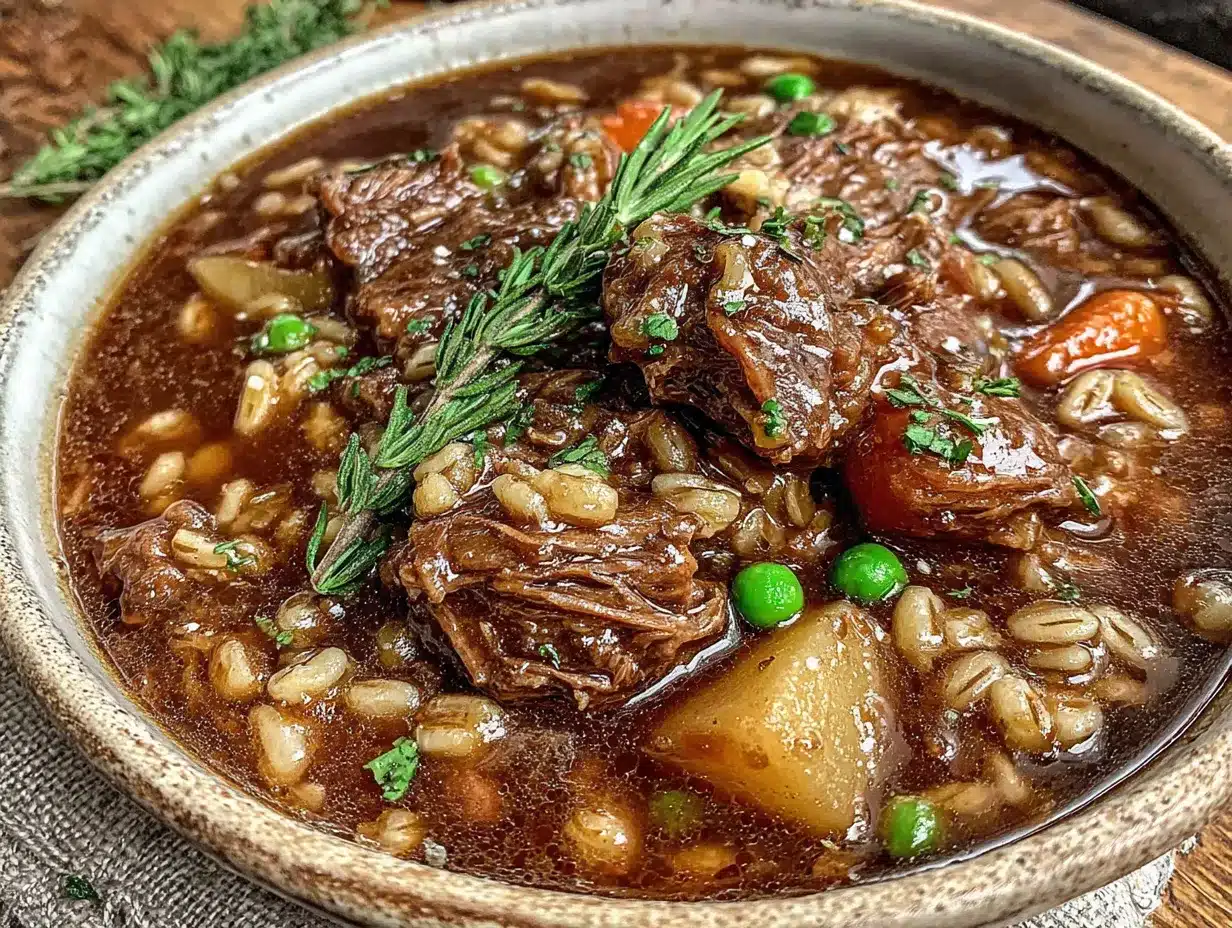
This recipe comes together in about two hours, but most of that time is hands-off simmering. Here’s how to make it, step by step.
- Prep Your Ingredients (15 minutes): Before you start cooking, get everything ready. Dice the onion, slice the carrots and celery, and mince the garlic. Pat the beef cubes dry with paper towels and season them generously with salt and pepper. Rinse the barley in a fine-mesh strainer under cold water and set it aside. Having everything prepped makes the cooking process smooth and stress-free.
- Brown the Beef (10 minutes): Heat 1 tablespoon of olive oil in your Dutch oven over medium-high heat. When the oil is shimmering, add half the beef cubes in a single layer. Don’t overcrowd the pot — if you add all the beef at once, it will steam instead of brown. Let the beef sear without moving it for 3-4 minutes, until a deep brown crust forms. Flip the cubes with tongs and brown the other side. Transfer the browned beef to a plate and repeat with the remaining oil and beef. This step might seem tedious, but it’s where the flavor starts. Those browned bits stuck to the bottom of the pot are pure gold.
- Sauté the Vegetables (5 minutes): Reduce the heat to medium. Add the diced onion to the pot and cook for 2 minutes, stirring occasionally, until it starts to soften. Add the carrots and celery and cook for another 2 minutes, scraping up any browned bits from the bottom of the pot with your wooden spoon. Add the minced garlic and cook for 30 seconds, until fragrant. Your kitchen should smell amazing right about now.
- Bloom the Tomato Paste and Herbs (2 minutes): Push the vegetables to the sides of the pot and add the tomato paste to the center. Cook it for 1-2 minutes, stirring constantly, until it darkens slightly and smells rich and sweet. This step deepens the tomato flavor. Then add the dried thyme, dried rosemary, and a generous pinch of black pepper. Stir everything together.
- Add the Liquids and Barley (2 minutes): Pour in the beef broth and crushed tomatoes, stirring to combine. Add the Worcestershire sauce if you’re using it. Return the browned beef to the pot, along with any juices that accumulated on the plate. Add the rinsed barley and the bay leaves. Stir everything together until it’s well combined. The liquid should cover all the ingredients by about an inch. If it doesn’t, add a little more broth or water.
- Bring to a Simmer (5 minutes): Increase the heat to high and bring the stew to a boil. As soon as it starts boiling, reduce the heat to low so it’s at a gentle simmer. You should see small bubbles breaking the surface, not a rolling boil. Cover the pot with the lid slightly ajar to allow some steam to escape. This helps the stew thicken without becoming too watery.
- Simmer Until Tender (1 hour 15 minutes to 1 hour 30 minutes): Let the stew simmer gently on low heat. Check it every 20 minutes or so, giving it a stir to make sure nothing is sticking to the bottom. After about an hour, start checking the barley and beef for tenderness. The barley should be tender but still have a slight chew, and the beef should be fork-tender. If the stew gets too thick before the barley is done, add a splash of broth or water to loosen it up.
- Finish and Serve (5 minutes): Remove the bay leaves and discard them. Taste the stew and adjust the seasoning with salt and pepper. I usually add another half teaspoon of salt at this point. If you want a brighter flavor, a squeeze of lemon juice or a splash of vinegar can work wonders. Ladle the stew into bowls and garnish with fresh parsley if desired. Serve hot, with crusty bread or a simple side salad.
A quick note: Don’t rush the simmer. That low, gentle heat is what breaks down the collagen in the beef and softens the barley. If you crank up the heat to speed things up, you’ll end up with tough meat and mushy barley. Patience is your friend here.
Cooking Tips & Techniques
After making this stew more times than I can count, I’ve picked up a few tricks that make a real difference. Here are my best tips for getting it right every time.
- Don’t Skip the Browning: I know it’s tempting to just throw everything in the pot and call it a day, but browning the beef is non-negotiable. That deep, caramelized crust adds layers of flavor that you just can’t get from boiling the meat. Take the extra ten minutes. Your taste buds will thank you.
- Toast the Barley (Optional): For an even nuttier flavor, try toasting the barley in the dry pot for 2-3 minutes before adding the liquid. I learned this trick from a friend who makes amazing pilafs, and it works beautifully in stew too. Just stir it constantly so it doesn’t burn.
- Watch the Liquid Level: Barley is a thirsty grain. It absorbs a lot of liquid as it cooks. If your stew looks too thick halfway through cooking, don’t hesitate to add more broth or water. I usually keep an extra cup of hot broth on standby, just in case.
- Season in Layers: Add salt at each stage — when you season the beef, when you sauté the vegetables, and at the end. This builds flavor from the ground up. Just be careful not to overdo it, especially if your broth is already salty.
- Let It Rest: This is the hardest tip to follow, but it’s worth it. Let the stew sit off the heat for 10-15 minutes before serving. This allows the flavors to meld and the stew to thicken slightly. I’ve burned my tongue more than once rushing into a bowl too soon.
- One Mistake I Made: The first time I made this, I added the barley without rinsing it first. The stew turned out a little cloudy and had a slightly dusty taste. Rinsing the barley removes excess starch and any debris, resulting in a cleaner, clearer broth. It’s a small step, but it makes a difference.
If you’re multitasking, start the stew early and let it simmer while you do other things. It’s forgiving enough that you can leave it alone for 20-30 minutes at a time, as long as the heat is low and the lid is on. Just don’t forget about it completely — I’ve had a few close calls with a scorched bottom.
Variations & Adaptations
This recipe is wonderfully flexible. Here are some ways to make it your own.
- Make It Vegetarian: Skip the beef and use vegetable broth instead. Add a can of drained and rinsed chickpeas or white beans along with the barley for protein. You can also add extra mushrooms — cremini or portobello — for a meaty texture. Sauté them with the vegetables for the best flavor.
- Swap the Grain: If you don’t have barley, farro or spelt are excellent substitutes. They have a similar chewy texture and nutty flavor. Adjust the cooking time as needed — farro usually takes about 30-40 minutes, while spelt might take a bit longer. Brown rice works in a pinch, but it won’t thicken the stew the same way.
- Add More Vegetables: This stew is a great way to use up whatever vegetables you have in the fridge. Diced potatoes, parsnips, turnips, or sweet potatoes all work well. Add them along with the carrots and celery. Frozen peas or green beans can be stirred in during the last 10 minutes of cooking for a pop of color and sweetness.
- Spice It Up: For a warmer, more complex flavor, add a teaspoon of smoked paprika or a pinch of red pepper flakes along with the herbs. A dash of cayenne pepper can add a subtle heat that builds as you eat. I’ve also added a cinnamon stick during simmering for a surprisingly delicious twist — just remember to remove it before serving.
- Try a Different Protein: Lamb stew meat is a fantastic substitute for beef. It has a richer, gamier flavor that pairs beautifully with the barley and herbs. You can also use cubed pork shoulder, though it will cook a bit faster. For a lighter option, boneless, skinless chicken thighs work too — just reduce the simmering time to about 45 minutes.
I once made this stew with leftover pot roast and a random bag of mixed grains I found in the back of the pantry. It was a bit of a gamble, but it turned out to be one of the best versions I’ve ever made. Don’t be afraid to experiment. The worst that can happen is you learn something new.
Serving & Storage Suggestions
This stew is a meal in itself, but a few thoughtful accompaniments can turn it into something special.
Serving: Ladle the stew into deep bowls while it’s piping hot. I like to serve it with a thick slice of crusty bread or a warm dinner roll for sopping up every last drop of broth. A simple side salad with a tangy vinaigrette cuts through the richness of the stew nicely. For a truly cozy meal, pair it with a glass of full-bodied red wine, like a Malbec or a Cabernet Sauvignon.
Storage: This stew is a meal prep champion. Let it cool completely, then transfer it to an airtight container. It will keep in the refrigerator for up to 5 days. The flavors actually deepen and meld overnight, so leftovers often taste even better than the first serving. I’ve been known to make a double batch just for this reason.
Freezing: This stew freezes beautifully. Let it cool completely, then portion it into freezer-safe containers or zip-top bags. Leave a little room for expansion. It will keep in the freezer for up to 3 months. Thaw it overnight in the refrigerator before reheating.
Reheating: Reheat the stew gently on the stovetop over medium-low heat, stirring occasionally. You may need to add a splash of broth or water to loosen it up, as the barley will continue to absorb liquid. If you’re in a hurry, you can microwave individual portions in 1-minute intervals, stirring between each. The texture won’t be quite as good as stovetop reheating, but it’s fine for a quick lunch.
One thing I’ve noticed is that this stew thickens significantly as it sits. Don’t be alarmed if it looks more like a porridge than a stew the next day. Just add a little liquid when you reheat it, and it will return to its original consistency.
Nutritional Information & Benefits
This cozy one-pot beef and barley stew isn’t just delicious — it’s packed with nutrients that make it a smart choice for a healthy meal. Here’s a rough estimate per serving (based on 6 servings):
- Calories: ~420
- Protein: 32g
- Fat: 12g
- Carbohydrates: 48g
- Fiber: 10g
- Sugar: 8g
- Sodium: 680mg (varies based on broth and added salt)
Health Benefits: Barley is a whole grain rich in beta-glucan, a type of soluble fiber that can help lower cholesterol and improve heart health. It also provides a steady release of energy, keeping you full and satisfied for hours. The beef is an excellent source of iron and B vitamins, which support energy production and immune function. The carrots and celery add vitamins A and K, along with antioxidants. This stew is naturally high in protein and fiber, making it a balanced, nutrient-dense meal.
Dietary Considerations: This recipe can be made gluten-free by using certified gluten-free oats or brown rice instead of barley. It’s dairy-free as written. For a lower-sodium version, use low-sodium broth and skip the added salt until the end. The stew is also relatively low in sugar, with only the natural sugars from the vegetables and tomatoes.
I love that this stew makes me feel good about eating comfort food. It’s hearty and satisfying, but it’s also genuinely good for you. That’s a rare combination in my book.
Conclusion
This cozy one-pot beef and barley stew is proof that the best recipes often come from the most unexpected places. What started as a pantry mistake turned into a staple in my kitchen, and I have a feeling it will become one in yours too. It’s the kind of meal that fills your home with warmth and your belly with comfort, all from a single pot and a handful of simple ingredients.
I encourage you to make this stew your own. Swap in your favorite vegetables, adjust the herbs to your taste, or try a different grain. Cooking is about experimenting and finding what works for you. And when you do, I’d love to hear about it. Leave a comment below and let me know how your stew turned out, or share your own twist on the recipe. Your version might just become someone else’s new favorite.
So go ahead — grab that pot, take a chance on a happy accident, and make yourself a bowl of something truly special. You deserve it.
Frequently Asked Questions
Can I use quick-cooking barley instead of hulled or pearled barley?
You can, but the texture will be different. Quick-cooking barley is pre-cooked and dried, so it softens much faster and won’t hold its shape as well during a long simmer. If you use it, add it during the last 20-30 minutes of cooking to prevent it from turning mushy.
Can I make this stew in a slow cooker or Instant Pot?
Yes! For a slow cooker, brown the beef and sauté the vegetables on the stovetop first, then transfer everything to the slow cooker. Cook on low for 6-8 hours or on high for 3-4 hours. For an Instant Pot, use the sauté function for browning, then pressure cook on high for 30 minutes with a natural release. The barley may be a bit softer with these methods.
Why is my stew too thick or too thin?
Barley absorbs a lot of liquid, so the thickness can vary. If your stew is too thick, stir in extra broth or water until it reaches your desired consistency. If it’s too thin, let it simmer uncovered for 10-15 minutes to allow some liquid to evaporate. The stew will also thicken as it sits, so keep that in mind.
Can I leave out the tomatoes?
Absolutely. If you’re not a fan of tomatoes or want a different flavor profile, simply omit the crushed tomatoes and tomato paste. Increase the beef broth by about 1 ½ cups to maintain the liquid level. The stew will be lighter in color and have a more straightforward beefy flavor, but it will still be delicious.
How do I prevent the beef from being tough?
Tough beef is usually the result of undercooking or using the wrong cut. Make sure you’re using a tough, collagen-rich cut like chuck or round, and let it simmer long enough for the connective tissue to break down. If your beef is still tough after 1 ½ hours, continue simmering and check every 15 minutes. Low and slow is the key.
Pin This Recipe!
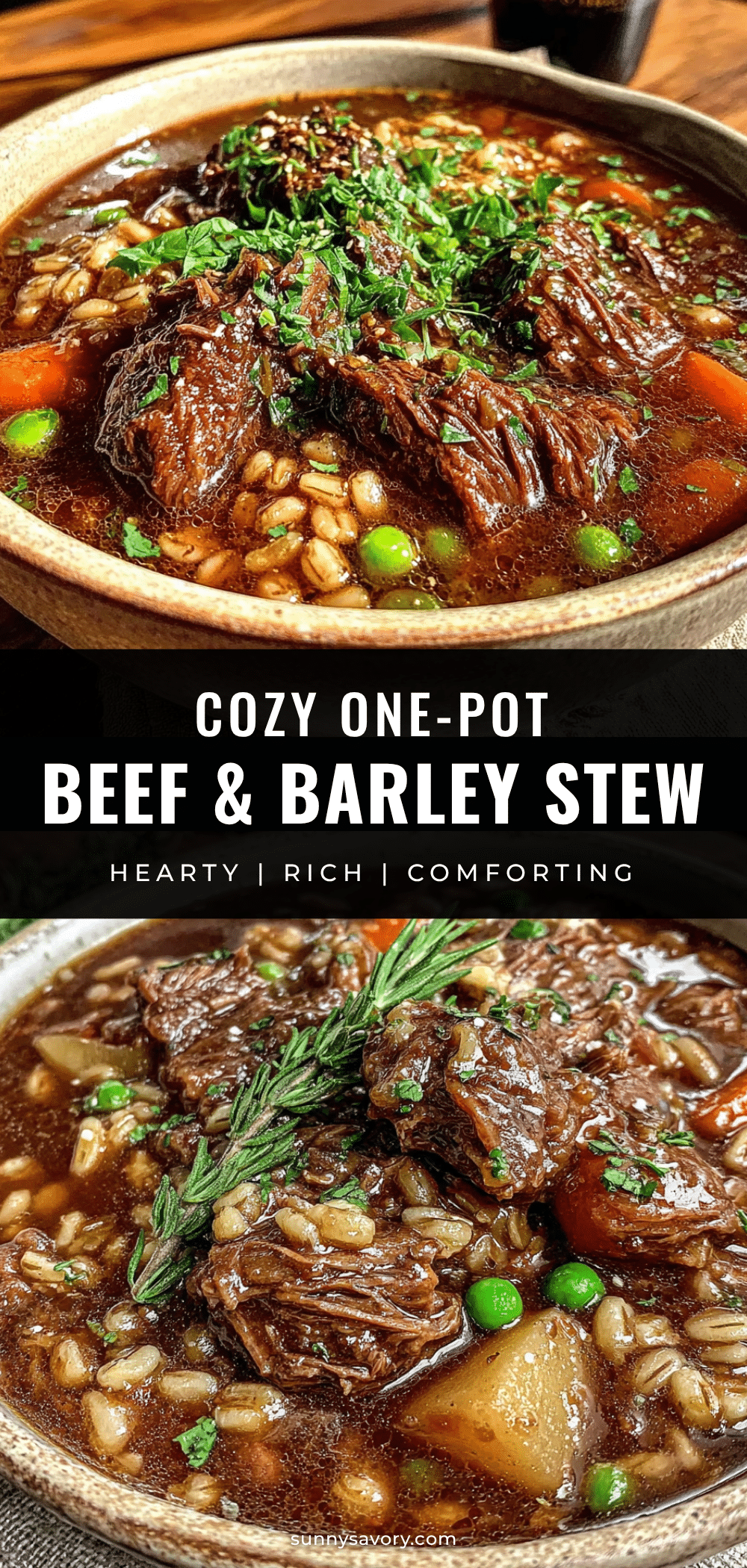
Cozy One-Pot Beef and Barley Stew: Easy Comfort Food Recipe
A hearty, one-pot beef and barley stew that’s perfect for cold days. This comforting recipe features tender beef, wholesome barley, and vegetables in a rich, velvety broth, all made in a single pot for easy cleanup.
- Prep Time: 15 minutes
- Cook Time: 1 hour 30 minutes
- Total Time: 1 hour 45 minutes
- Yield: 6 servings 1x
- Category: Main Course
- Cuisine: American
Ingredients
- 1 ½ pounds stew beef (chuck or round, cut into 1-inch cubes)
- 1 cup hulled or pearled barley, rinsed
- 1 large yellow onion, diced
- 3 medium carrots, peeled and sliced into rounds
- 2 stalks celery, sliced
- 4 cloves garlic, minced
- 6 cups low-sodium beef broth
- 1 can (14.5 ounces) crushed tomatoes
- 2 tablespoons tomato paste
- 1 teaspoon dried thyme
- 1 teaspoon dried rosemary
- 2 bay leaves
- 2 tablespoons olive oil
- Salt and black pepper to taste
- 1 tablespoon Worcestershire sauce (optional)
- Fresh parsley for garnish (optional)
Instructions
- Prep your ingredients: Dice the onion, slice the carrots and celery, and mince the garlic. Pat the beef cubes dry with paper towels and season generously with salt and pepper. Rinse the barley in a fine-mesh strainer under cold water and set aside.
- Heat 1 tablespoon of olive oil in a Dutch oven or heavy-bottomed pot over medium-high heat. Add half the beef cubes in a single layer and sear without moving for 3-4 minutes until a deep brown crust forms. Flip and brown the other side. Transfer to a plate and repeat with the remaining oil and beef.
- Reduce heat to medium. Add the diced onion and cook for 2 minutes until softened. Add the carrots and celery and cook for another 2 minutes, scraping up browned bits from the bottom. Add the minced garlic and cook for 30 seconds until fragrant.
- Push vegetables to the sides of the pot and add the tomato paste to the center. Cook for 1-2 minutes, stirring constantly, until it darkens slightly. Add the dried thyme, dried rosemary, and a generous pinch of black pepper. Stir everything together.
- Pour in the beef broth and crushed tomatoes, stirring to combine. Add the Worcestershire sauce if using. Return the browned beef to the pot along with any accumulated juices. Add the rinsed barley and bay leaves. Stir until well combined.
- Increase heat to high and bring the stew to a boil. As soon as it boils, reduce heat to low for a gentle simmer. Cover the pot with the lid slightly ajar to allow some steam to escape.
- Simmer for 1 hour 15 minutes to 1 hour 30 minutes, stirring every 20 minutes. Check for tenderness: the barley should be tender but still have a slight chew, and the beef should be fork-tender. If the stew gets too thick, add a splash of broth or water.
- Remove the bay leaves and discard. Taste and adjust seasoning with salt and pepper. Ladle into bowls and garnish with fresh parsley if desired. Serve hot with crusty bread or a simple side salad.
Notes
Don’t rush the simmer; low, gentle heat breaks down collagen in the beef and softens the barley. For a nuttier flavor, toast the barley in the dry pot for 2-3 minutes before adding liquid. Let the stew rest off the heat for 10-15 minutes before serving to allow flavors to meld. The stew thickens as it sits; add liquid when reheating.
Nutrition
- Serving Size: 1 bowl (about 1.5 cu
- Calories: 420
- Sugar: 8
- Sodium: 680
- Fat: 12
- Saturated Fat: 3.5
- Carbohydrates: 48
- Fiber: 10
- Protein: 32
Keywords: beef stew, barley stew, one-pot meal, comfort food, hearty stew, winter recipe, easy dinner