Love this? Save it for later!
Share the inspiration with your friends
I was standing in line at the hardware store, of all places, trying to convince myself I didn’t need another set of gardening gloves, when the plumber in front of me turned around and started talking about Thanksgiving. Not the turkey, not the pie, but the stuffing. Specifically, his grandmother’s stuffing balls. He was a big guy with a quiet voice, and he told me how every year, his grandmother would roll the leftover stuffing into perfect little spheres, pan-fry them until they were golden, and serve them with a gravy so good it made people cry. Honestly, I thought he was exaggerating. But I was also holding a bag of light bulbs and feeling suddenly very hungry. He scribbled the basic idea on the back of a receipt he found in his pocket. I shoved it in my purse and didn’t think about it again for six months.
Then, last November, I was staring down a mountain of leftover stuffing and remembered that crumpled receipt. Let me tell you, that moment changed my holiday cooking forever. The first batch I made was a bit of a mess—I used too much broth and they fell apart in the pan. But the flavor? It was there. That deep, savory, herby goodness that makes stuffing the best part of the meal. So I kept tweaking. I added more sausage for richness, perfected the binding, and developed a sage gravy that is, I’m not kidding, the star of the show. Now, I make these sausage stuffing balls for Friendsgiving, Christmas brunch, and random Tuesday nights when I need a little comfort. They are the unexpected hero of my kitchen, and maybe you’ve been there—looking for a way to make a classic side dish feel brand new and completely irresistible.
Why You’ll Love This Recipe
These aren’t just leftover stuffing rolled into balls, I promise you. After testing this recipe about seven times (my family was a very willing test group), I can tell you exactly why these are different. The texture is what gets everyone first—crispy on the outside, incredibly tender and moist on the inside. It’s like the best stuffing you’ve ever had, but portable and twice as flavorful.
- Quick & Easy: From start to table in under 45 minutes. Perfect for busy holiday mornings or a weeknight dinner that feels special.
- Simple Ingredients: You probably have most of these in your pantry right now. No trips to a specialty store required.
- Perfect for Gatherings: Great for Thanksgiving, Friendsgiving, potlucks, or even a cozy Sunday dinner. They disappear fast.
- Crowd-Pleaser: I’ve served these to kids, picky eaters, and serious foodies. Everyone goes back for seconds.
- Unbelievably Delicious: The combo of savory sausage, aromatic herbs, and that rich, silky sage gravy is pure comfort food magic.
What makes this recipe different is the technique. I spent a lot of time figuring out the perfect ratio of bread to broth so the balls hold their shape without being dry. The secret is letting the stuffing mixture rest for a few minutes before rolling. It gives the bread time to absorb all that flavor. Plus, pan-frying them in a bit of butter gives you that gorgeous golden crust that baking just can’t match. This isn’t just another version of stuffing—it’s the version you’ll want to make every single year.
What Ingredients You Will Need
This recipe uses simple, wholesome ingredients that come together to create something truly special. Most are pantry staples, which makes this a great last-minute dish when you need to impress.
For the Sausage Stuffing Balls
- 1 lb ground pork sausage (I prefer Jimmy Dean’s regular or mild—it has the perfect fat content for flavor)
- 1 medium yellow onion, finely diced (about 1 cup)
- 2 celery stalks, finely diced (about 1/2 cup)
- 3 cloves garlic, minced
- 6 cups day-old bread cubes (cubed French bread or sourdough works best; if using fresh bread, toast it lightly first)
- 1/2 cup unsalted butter
- 1 1/2 cups low-sodium chicken broth (plus more if needed for moisture)
- 2 large eggs, lightly beaten
- 1 tablespoon fresh sage, finely chopped (or 1 teaspoon dried)
- 1 teaspoon fresh thyme leaves (or 1/2 teaspoon dried)
- 1/2 teaspoon salt
- 1/2 teaspoon black pepper
- 2 tablespoons olive oil (for frying)
For the Sage Gravy
- 3 tablespoons unsalted butter
- 3 tablespoons all-purpose flour
- 2 cups low-sodium chicken broth
- 1/2 cup heavy cream (or whole milk for a lighter version)
- 1 tablespoon fresh sage, finely chopped
- Salt and pepper to taste
Ingredient Tips: For the bread, day-old or slightly stale bread is key. Fresh bread can turn the balls mushy. If you only have fresh bread, cut it into cubes and spread them on a baking sheet at 300°F for about 10 minutes. Also, look for sage that smells fragrant and slightly peppery—it makes a huge difference in the gravy. You can swap the pork sausage for turkey sausage if you prefer a leaner option, but the flavor will be a bit milder.
Equipment Needed
You don’t need anything fancy for this recipe, which is part of its charm. Here’s what you’ll need:
- Large skillet or frying pan (12-inch is ideal for browning the sausage and later frying the balls)
- Large mixing bowl (for combining the stuffing mixture)
- Medium saucepan (for the gravy)
- Sharp knife and cutting board
- Measuring cups and spoons
- Wooden spoon or spatula
- Whisk (for the gravy, to keep it smooth)
- Baking sheet (to hold the rolled balls before frying)
- Parchment paper (optional, but helpful for easy cleanup)
If you don’t have a large skillet, you can fry the balls in batches in a smaller pan. Just keep the cooked ones warm in a 200°F oven while you finish the rest. I’ve also used a cast-iron skillet for this, and it gives an even better crust. Budget-friendly tip: a basic non-stick skillet works perfectly fine here.
Preparation Method
Let’s get cooking. This method breaks down into two main parts: making the stuffing balls and then the gravy. I like to make the stuffing mixture first, then form the balls while the gravy starts simmering.
-
Cook the sausage and vegetables. In your large skillet over medium heat, add the olive oil. Once it’s shimmering, add the ground pork sausage. Break it up with a wooden spoon and cook until it’s browned and cooked through, about 6-8 minutes. Use a slotted spoon to transfer the sausage to a large mixing bowl, leaving about 2 tablespoons of the rendered fat in the pan. Add the diced onion and celery to the pan. Cook, stirring occasionally, until they’re soft and translucent, about 5 minutes. Add the minced garlic and cook for another 30 seconds until fragrant. Scrape the vegetables into the bowl with the sausage.
-
Prepare the bread mixture. In the same skillet (don’t wash it yet!), melt the 1/2 cup of unsalted butter over medium heat. Once it’s melted and starting to bubble, add the bread cubes. Toss them in the butter for about 2 minutes until they’re lightly coated and starting to toast. This step is crucial—it adds so much flavor and helps the bread hold its shape later. Transfer the buttery bread cubes to the bowl with the sausage and vegetables.
-
Combine and season. Pour the 1 1/2 cups of chicken broth over the bread mixture. Add the beaten eggs, fresh sage, thyme, salt, and pepper. Use your hands (clean ones!) or a large spoon to gently mix everything together. Be careful not to overmix or the bread will break down too much. You want the mixture to be moist but not soggy. If it looks dry, add another 2-3 tablespoons of broth. Let the mixture sit for 5 minutes. This resting time lets the bread absorb all the liquid and flavors.
-
Form the stuffing balls. Using your hands, roll the mixture into golf ball-sized spheres, about 1.5 inches in diameter. You should get around 16-18 balls. Place them on a parchment-lined baking sheet as you go. Don’t pack them too tightly—gentle pressure is all you need. If the mixture feels too sticky, wet your hands slightly with water.
-
Pan-fry the stuffing balls. Wipe out your large skillet and place it over medium-high heat. Add 2 tablespoons of olive oil. Once the oil is hot, carefully place half of the stuffing balls in the pan, making sure not to overcrowd them. Cook for 4-5 minutes, turning occasionally, until they’re golden brown and crispy on all sides. Transfer the cooked balls to a clean baking sheet and keep warm in a 200°F oven. Repeat with the remaining balls.
-
Start the sage gravy. While the last batch of balls is cooking, start the gravy. In a medium saucepan over medium heat, melt the 3 tablespoons of butter. Once it’s melted and bubbling, whisk in the 3 tablespoons of flour. Cook, whisking constantly, for about 1-2 minutes until the mixture turns a light golden color. This is your roux, and it’s the base of a great gravy.
-
Finish the gravy. Slowly pour in the 2 cups of chicken broth while whisking continuously to prevent lumps. Bring the mixture to a simmer, then reduce the heat to low. Stir in the heavy cream and fresh sage. Let the gravy simmer gently for 5-7 minutes, stirring occasionally, until it thickens enough to coat the back of a spoon. Season with salt and pepper to taste. If it gets too thick, whisk in a splash more broth or milk.
-
Serve immediately. Arrange the warm stuffing balls on a serving platter. Pour the sage gravy over the top or serve it on the side for dipping. Garnish with a few fresh sage leaves if you’re feeling fancy.
Cooking Tips & Techniques
I’ve made a lot of mistakes with this recipe so you don’t have to. Here are my best tips for perfect results every time.
Don’t skip the resting time. I know you’re hungry, but letting the stuffing mixture rest for 5-10 minutes before rolling is non-negotiable. The bread needs time to absorb the broth and eggs. If you skip this, your balls will be dry inside and might fall apart in the pan. Trust me on this one—I learned the hard way when I was rushing one Thanksgiving morning.
Watch your heat. Medium-high heat is perfect for getting that golden crust, but if your pan is too hot, the outside will burn before the inside is warm. If you see the butter or oil smoking, turn the heat down. The first batch I made had a few blackened casualties. Now I keep it at a steady medium and adjust as needed.
Use your hands for mixing. A spoon just doesn’t distribute the ingredients as evenly. Get in there with your hands—it’s the best way to feel if the mixture is moist enough. Just make sure your hands are clean and you’ve removed any rings. It’s a little messy, but honestly, that’s part of the fun.
Make ahead tip. You can prepare the stuffing balls up to 24 hours in advance. Form them, place them on the baking sheet, cover with plastic wrap, and refrigerate. When you’re ready to cook, just pan-fry them straight from the fridge. You might need to add an extra minute or two to the cooking time.
Variations & Adaptations
This recipe is wonderfully adaptable. Here are a few ways I’ve changed it up over the years.
Gluten-Free Version: Use gluten-free bread cubes and substitute the all-purpose flour in the gravy with a 1:1 gluten-free flour blend or cornstarch. I’ve tested this with a good quality gluten-free sourdough, and it works beautifully. The texture is slightly more delicate, so handle the balls gently.
Vegetarian Option: Skip the sausage and add an extra cup of finely chopped mushrooms (cremini or baby bella work great) and an extra 1/2 cup of diced celery and onion. Cook the mushrooms until they release their liquid and start to brown. You’ll also want to use vegetable broth instead of chicken broth. The result is still deeply savory and satisfying.
Spicy Kick: Use hot ground pork sausage instead of mild, and add a pinch of red pepper flakes to the gravy. I made this version for a football party once, and it was gone in minutes. The heat pairs surprisingly well with the sage.
Baking Method: If you don’t want to pan-fry, you can bake the stuffing balls at 400°F for 15-18 minutes, flipping halfway through. They won’t be quite as crispy, but they’re still delicious and a bit healthier. I do this when I’m making a huge batch for a crowd.
Serving & Storage Suggestions
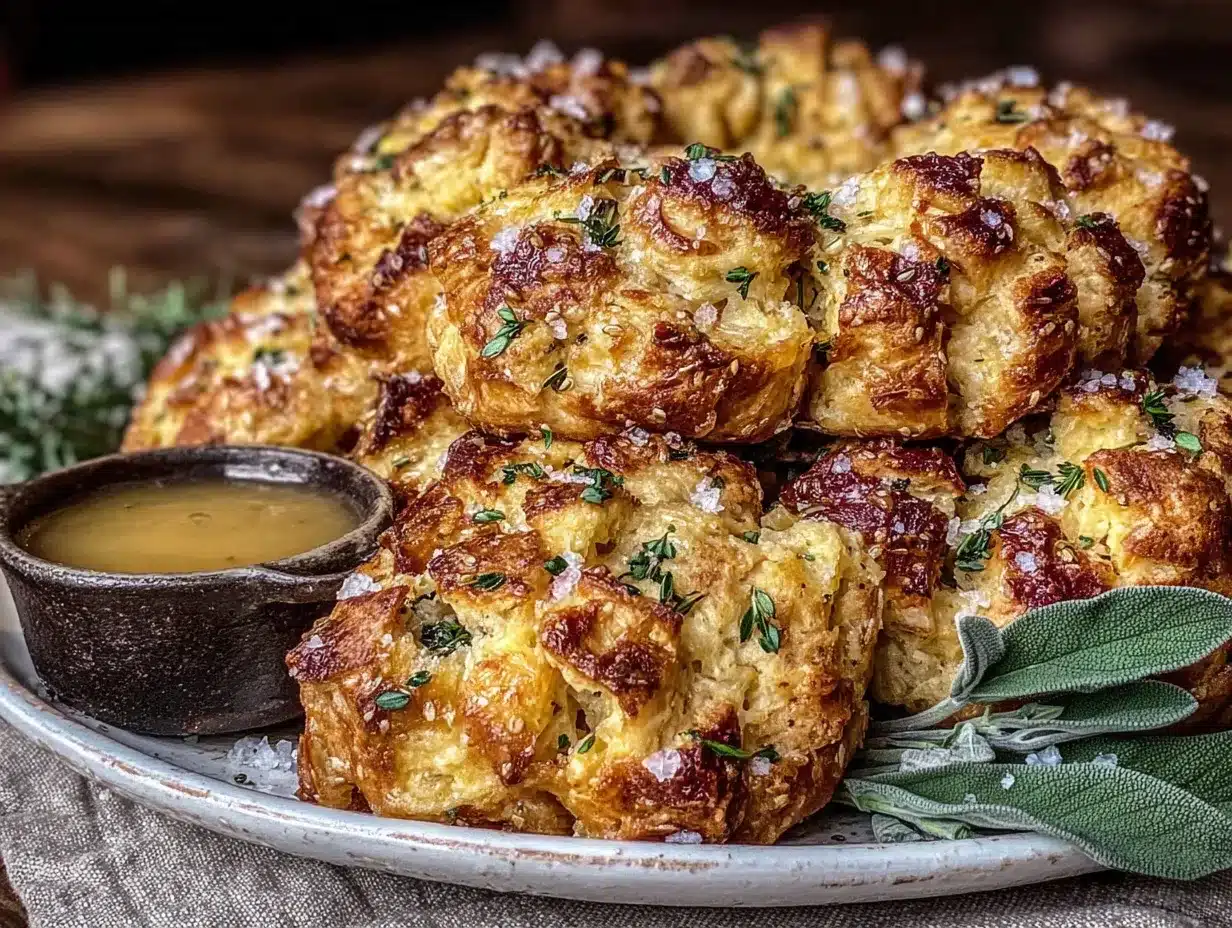
These sausage stuffing balls are best served warm, right after they’re fried. The contrast between the crispy exterior and the tender, flavorful interior is at its peak. I love to arrange them on a big white platter with the sage gravy poured right over the top. A sprinkle of fresh parsley or a few whole sage leaves makes them look stunning.
What to serve with them: They’re a natural side for roasted turkey or chicken, but they also shine alongside a simple green salad or roasted vegetables. For a cozy dinner, I serve them with mashed potatoes and green beans. The gravy is perfect over everything.
Storage: Leftover stuffing balls (if you have any!) can be stored in an airtight container in the refrigerator for up to 3 days. The gravy should be stored separately in a sealed container.
Reheating: The best way to reheat them is in a skillet over medium heat with a splash of broth or water. Cover the pan and let them warm through for 5-7 minutes. This restores some of the crispiness. You can also reheat them in a 350°F oven for 10 minutes. The microwave works in a pinch, but the texture won’t be as good.
Freezing: You can freeze the uncooked stuffing balls on a baking sheet until solid, then transfer them to a freezer bag. They’ll keep for up to 3 months. Cook them straight from frozen, adding a few extra minutes to the pan-frying time. The cooked balls can also be frozen, but I find the texture is best when you freeze them raw.
Flavor development: Honestly, these are even better the next day. The flavors meld together overnight, and the gravy gets even richer. I sometimes make a double batch just for leftovers.
Nutritional Information & Benefits
While these are definitely a comfort food, they do have some redeeming qualities. Here’s a rough estimate per serving (about 3 stuffing balls with gravy):
- Calories: 480
- Protein: 22g
- Fat: 32g
- Carbohydrates: 28g
- Fiber: 2g
- Sugar: 4g
The pork sausage provides a good amount of protein and B vitamins, while the celery and onion add a bit of fiber and antioxidants. Sage is actually a powerhouse herb—it’s known for its anti-inflammatory properties and is rich in vitamin K. The eggs add high-quality protein and healthy fats. If you’re watching your sodium, use low-sodium broth and reduce the added salt. For a lighter version, you can bake the balls instead of frying and use milk instead of cream in the gravy. This recipe is not gluten-free or dairy-free as written, but I’ve included adaptations above for those needs.
Conclusion
These irresistible sausage stuffing balls with sage gravy have become a non-negotiable part of my holiday table and my comfort food rotation. They take everything you love about stuffing—the herbs, the savory goodness, the cozy feeling—and turn it into something even more fun and delicious. I love how they bring people together, how everyone reaches for seconds, and how that plumber’s grandmother’s recipe found its way into my kitchen.
I really hope you give these a try. Don’t be afraid to make them your own—add more sage, use a different sausage, or double the gravy (I won’t judge). And when you make them, I’d love to hear about it. Leave a comment below and tell me how they turned out, or share a photo on Pinterest. Your version might just become someone else’s new favorite tradition. Happy cooking!
Frequently Asked Questions
Can I make these ahead of time for a party?
Absolutely. You can form the stuffing balls up to 24 hours in advance and keep them covered in the fridge. Pan-fry them just before serving for the best texture. You can also make the gravy a day ahead and reheat it gently on the stove.
Why did my stuffing balls fall apart in the pan?
This usually happens if the mixture is too dry or if you didn’t let it rest long enough. Make sure your bread cubes are well-coated with the broth and eggs. If the mixture seems crumbly, add another tablespoon of broth. Also, be gentle when flipping them in the pan.
Can I use store-bought stuffing mix?
You can, but the texture will be different. Boxed stuffing is much finer and drier, so you’ll need to adjust the liquid. I recommend using day-old bread cubes for the best homemade texture and flavor. It’s worth the extra few minutes.
What’s the best way to reheat leftovers?
For the crispiest results, reheat them in a skillet over medium heat with a splash of broth. Cover the pan and let them steam for about 5 minutes. You can also use an air fryer at 350°F for 3-4 minutes. The microwave works but will make them softer.
Can I freeze the sage gravy?
Yes, the gravy freezes well for up to 3 months. Let it cool completely, then store it in a freezer-safe container. Thaw it overnight in the fridge and reheat gently on the stove, whisking to bring it back together. You might need to add a splash of broth if it’s too thick.
Pin This Recipe!
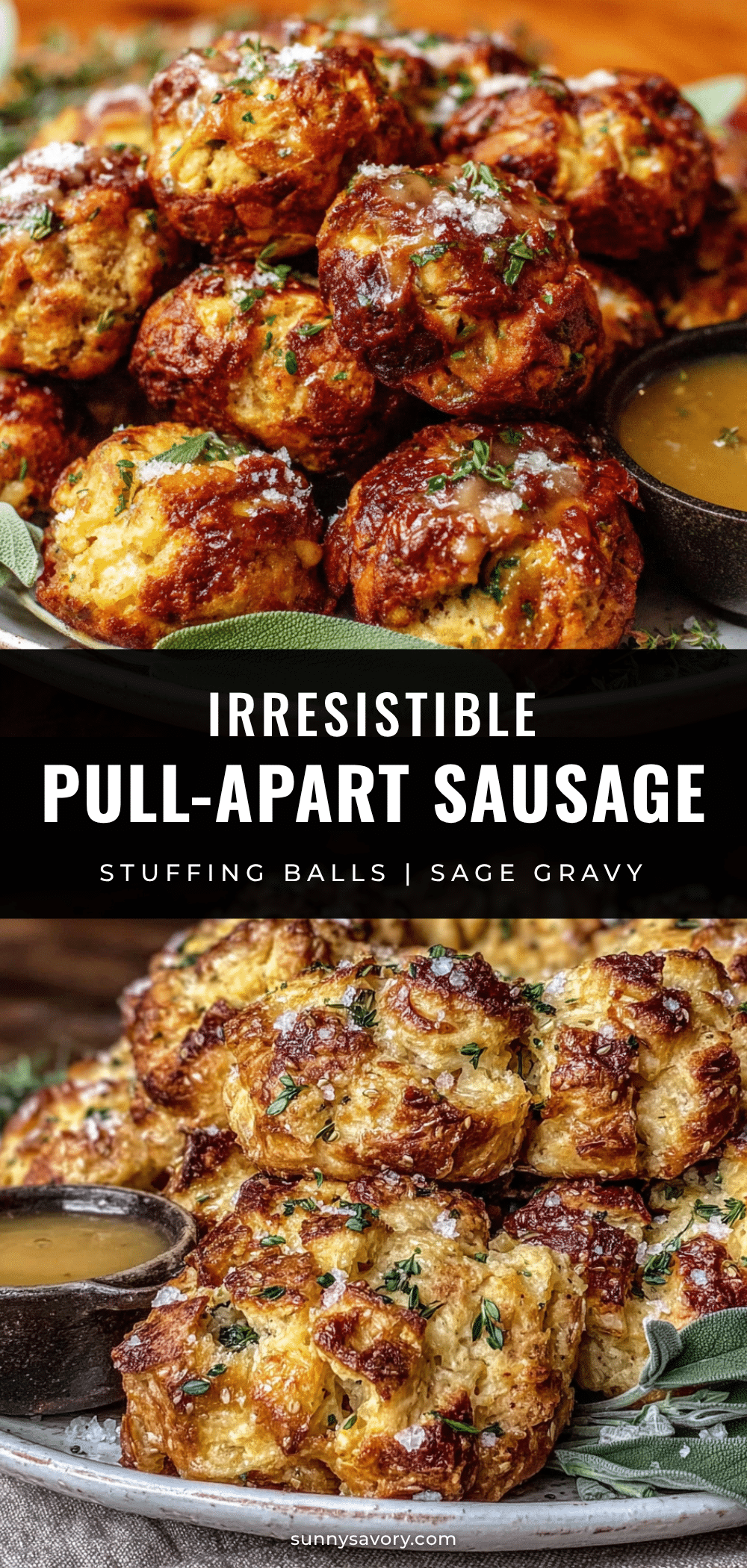
Irresistible Sausage Stuffing Balls with Sage Gravy

Crispy on the outside, tender on the inside, these sausage stuffing balls are a portable, twice-as-flavorful twist on classic stuffing. Served with a rich, silky sage gravy, they’re the unexpected hero of any holiday table or cozy dinner.
- Prep Time: 20 minutes
- Cook Time: 25 minutes
- Total Time: 45 minutes
- Yield: 4 servings 1x
- Category: Main Course
- Cuisine: American
Ingredients
- 1 lb ground pork sausage (regular or mild)
- 1 medium yellow onion, finely diced (about 1 cup)
- 2 celery stalks, finely diced (about 1/2 cup)
- 3 cloves garlic, minced
- 6 cups day-old bread cubes (French bread or sourdough)
- 1/2 cup unsalted butter
- 1 1/2 cups low-sodium chicken broth (plus more if needed)
- 2 large eggs, lightly beaten
- 1 tablespoon fresh sage, finely chopped (or 1 teaspoon dried)
- 1 teaspoon fresh thyme leaves (or 1/2 teaspoon dried)
- 1/2 teaspoon salt
- 1/2 teaspoon black pepper
- 2 tablespoons olive oil (for frying)
- 3 tablespoons unsalted butter (for gravy)
- 3 tablespoons all-purpose flour (for gravy)
- 2 cups low-sodium chicken broth (for gravy)
- 1/2 cup heavy cream (or whole milk for lighter version)
- 1 tablespoon fresh sage, finely chopped (for gravy)
- Salt and pepper to taste (for gravy)
Instructions
- Cook the sausage and vegetables: In a large skillet over medium heat, add olive oil. Add ground pork sausage, break it up, and cook until browned (6-8 minutes). Transfer sausage to a large mixing bowl, leaving 2 tablespoons of fat in the pan. Add diced onion and celery, cook until soft (about 5 minutes). Add minced garlic, cook 30 seconds, then scrape vegetables into the bowl with sausage.
- Prepare the bread mixture: In the same skillet, melt 1/2 cup butter over medium heat. Add bread cubes and toss for 2 minutes until lightly coated and toasting. Transfer buttery bread cubes to the bowl with sausage and vegetables.
- Combine and season: Pour 1 1/2 cups chicken broth over the bread mixture. Add beaten eggs, fresh sage, thyme, salt, and pepper. Gently mix with hands or a spoon until combined but not overmixed. Let mixture rest for 5 minutes to absorb liquid.
- Form the stuffing balls: Roll mixture into golf ball-sized spheres (about 1.5 inches in diameter). Place on a parchment-lined baking sheet. You should get 16-18 balls.
- Pan-fry the stuffing balls: Wipe out the skillet and place over medium-high heat. Add 2 tablespoons olive oil. Cook half the balls for 4-5 minutes, turning occasionally, until golden brown and crispy. Transfer to a clean baking sheet and keep warm in a 200°F oven. Repeat with remaining balls.
- Start the sage gravy: In a medium saucepan over medium heat, melt 3 tablespoons butter. Whisk in 3 tablespoons flour and cook for 1-2 minutes until light golden (roux).
- Finish the gravy: Slowly pour in 2 cups chicken broth while whisking continuously. Bring to a simmer, then reduce heat to low. Stir in heavy cream and fresh sage. Simmer for 5-7 minutes, stirring occasionally, until thickened. Season with salt and pepper to taste.
- Serve immediately: Arrange warm stuffing balls on a platter. Pour sage gravy over the top or serve on the side. Garnish with fresh sage leaves if desired.
Notes
Let the stuffing mixture rest for 5-10 minutes before rolling to ensure the bread absorbs the liquid. Use day-old bread for best texture. For a gluten-free version, use gluten-free bread cubes and a 1:1 gluten-free flour blend or cornstarch for the gravy. For a vegetarian option, skip the sausage and add extra mushrooms and vegetables. To make ahead, form the balls up to 24 hours in advance and refrigerate. For baking instead of frying, bake at 400°F for 15-18 minutes, flipping halfway.
Nutrition
- Serving Size: 3 stuffing balls wit
- Calories: 480
- Sugar: 4
- Fat: 32
- Carbohydrates: 28
- Fiber: 2
- Protein: 22
Keywords: sausage stuffing balls, sage gravy, Thanksgiving stuffing, holiday side dish, comfort food, sausage balls, stuffing recipe