Love this? Save it for later!
Share the inspiration with your friends
This was supposed to be a honey-glazed salmon situation. I had the filets thawing on the counter, the broccoli ready to steam, and a plan that felt almost too organized for a Tuesday night. Then I opened the fridge and realized the salmon was still frozen solid in the back — I’d grabbed the chicken by mistake earlier. And the parsnips? They were sitting there in the crisper drawer, looking at me like, “Well, what about us?”
So I did what any reasonable person does when a dinner plan falls apart: I panicked for about thirty seconds, then decided to roast every root vegetable I could find. The honey Dijon dressing I’d mixed for the salmon was already sitting in a bowl — tangy, sweet, a little punchy. I figured, why not dump it over the carrots and parsnips instead? Honestly, I was half-expecting a sticky, burnt mess. The oven was preheated, the thyme was wilting on the counter, and I was already mentally ordering takeout as a backup.
But then the smell started filling the kitchen. That warm, earthy sweetness mixed with the sharpness of mustard and the piney kick of fresh thyme — it was like my whole apartment turned into a cozy little cabin. When I pulled the pan out, the edges were caramelized, the parsnips had gone tender in the middle, and the carrots had this glossy, sticky finish that looked way fancier than it had any right to. I stood there eating them straight off the pan, burning my fingers a little, and realized I’d accidentally made something I actually wanted to make again. Maybe you’ve been there — when a mistake in the kitchen turns into the dish you keep coming back to.
Why You’ll Love This Recipe
Let me tell you, I’ve tested this recipe about seven times now, tweaking the oven temperature, the cut of the vegetables, and the honey-to-mustard ratio until it felt just right. And every single time, it delivers the same cozy, satisfying result. Here’s why this one sticks:
- Quick & Easy: From chopping to table in about 40 minutes. The oven does most of the work while you relax.
- Simple Ingredients: Carrots, parsnips, honey, Dijon mustard, thyme, olive oil — that’s basically it. No weird grocery store scavenger hunts.
- Perfect for Cozy Evenings: Cold night? Rough day? These roasted veggies feel like a warm blanket on a plate. They’re comfort food disguised as vegetables.
- Crowd-Pleaser: I brought these to a friend’s potluck last month, and even the self-proclaimed “I don’t like cooked carrots” person asked for seconds. True story.
- Unbelievably Delicious: The honey caramelizes into these sticky, golden edges, while the Dijon cuts through the sweetness with just enough bite. Fresh thyme adds that little something you can’t quite name but definitely miss when it’s gone.
What makes this version different from all the other roasted carrot recipes out there? It’s the balance. So many honey-glazed recipes end up cloyingly sweet, like dessert pretending to be dinner. Others go too heavy on the mustard, leaving you with a sinus-clearing sharpness. This one hits that sweet spot — the honey and Dijon work together, not against each other. Plus, roasting the parsnips alongside the carrots adds a nutty, slightly peppery depth that plain carrots just don’t have on their own. It’s not just another side dish — it’s the side dish that steals the show.
What Ingredients You Will Need
This recipe uses simple, honest ingredients that come together to create something surprisingly complex. Most of these are pantry staples or easy to find at any grocery store. Here’s what you’ll need and why each one matters:
- Carrots (1 pound or about 450g), peeled and cut into 3-inch sticks: Go for medium-sized carrots — not the tiny baby ones, not the gigantic farmer’s market monsters. They roast more evenly this way. I usually grab a bunch with the greens still attached if I can find them; they feel fresher.
- Parsnips (1 pound or about 450g), peeled and cut into similar-sized sticks: Don’t skip these. Parsnips have this subtle, almost buttery flavor that gets sweeter and nuttier when roasted. Look for firm, medium-sized parsnips without too many hairy roots. If they’re thicker at the top, cut them in half lengthwise so they cook at the same rate as the carrots.
- Honey (3 tablespoons or 60ml): Use a good-quality honey — something that tastes like actual flowers, not just sugar syrup. I like local wildflower honey for its complexity, but any liquid honey works. Avoid the crystallized stuff unless you warm it up first.
- Dijon mustard (2 tablespoons or 30ml): This is the backbone of the whole dish. Gray Poupon is my go-to for its creamy texture and balanced heat, but any smooth Dijon works. Don’t use yellow mustard here — it’s too sharp and lacks that sophisticated tang.
- Fresh thyme (1 tablespoon leaves, plus extra sprigs for garnish): Fresh is non-negotiable for this one. Dried thyme turns into little woody bits that get stuck in your teeth. Pick the leaves off the stems by running your fingers backward along the branch — it’s oddly satisfying.
- Olive oil (2 tablespoons or 30ml): Extra virgin gives you better flavor, but regular olive oil works fine. The oil helps the honey and mustard coat the vegetables evenly and promotes that gorgeous caramelization.
- Salt (1 teaspoon or 5g): Use flaky sea salt if you have it — Maldon is my favorite. It adds little bursts of saltiness that contrast beautifully with the sweet glaze.
- Black pepper (½ teaspoon or 2g), freshly ground: Freshly ground pepper makes a difference here. The pre-ground stuff is dusty and flat. Give it a few good cranks of the mill.
- Optional — garlic (2 cloves, minced): I add this about half the time, depending on my mood. It’s not traditional, but it adds a savory depth that plays nicely with the thyme. Toss it in with the vegetables before roasting.
Equipment Needed
You don’t need a fancy kitchen to pull this off. Here’s what I use, plus a few alternatives if you’re working with what you’ve got:
- Large baking sheet (half-sheet pan, about 18×13 inches): This is crucial. If you crowd the vegetables into a small pan, they’ll steam instead of roast, and you’ll lose that caramelized magic. I use a Nordic Ware aluminum half-sheet pan — it’s cheap, durable, and heats evenly. If you don’t have one, use two smaller pans instead.
- Parchment paper or silicone baking mat: Not strictly necessary, but it makes cleanup about a thousand times easier. The honey glaze can get sticky and burnt onto the pan. Parchment paper saves you from scrubbing.
- Chef’s knife and cutting board: A sharp knife makes cutting the carrots and parsnips into uniform sticks much easier and safer. Dull knives are more dangerous than sharp ones — they slip.
- Vegetable peeler: I prefer a Y-shaped peeler for speed, but any peeler works. Peel the carrots and parsnips thoroughly; the skins can be tough and bitter.
- Small mixing bowl and whisk: For combining the honey, Dijon, olive oil, salt, and pepper. A fork works in a pinch if you whisk vigorously.
- Measuring spoons: Honey is sticky, so spray your measuring spoon with a little cooking oil first — it slides right off. Trust me on this one.
Preparation Method
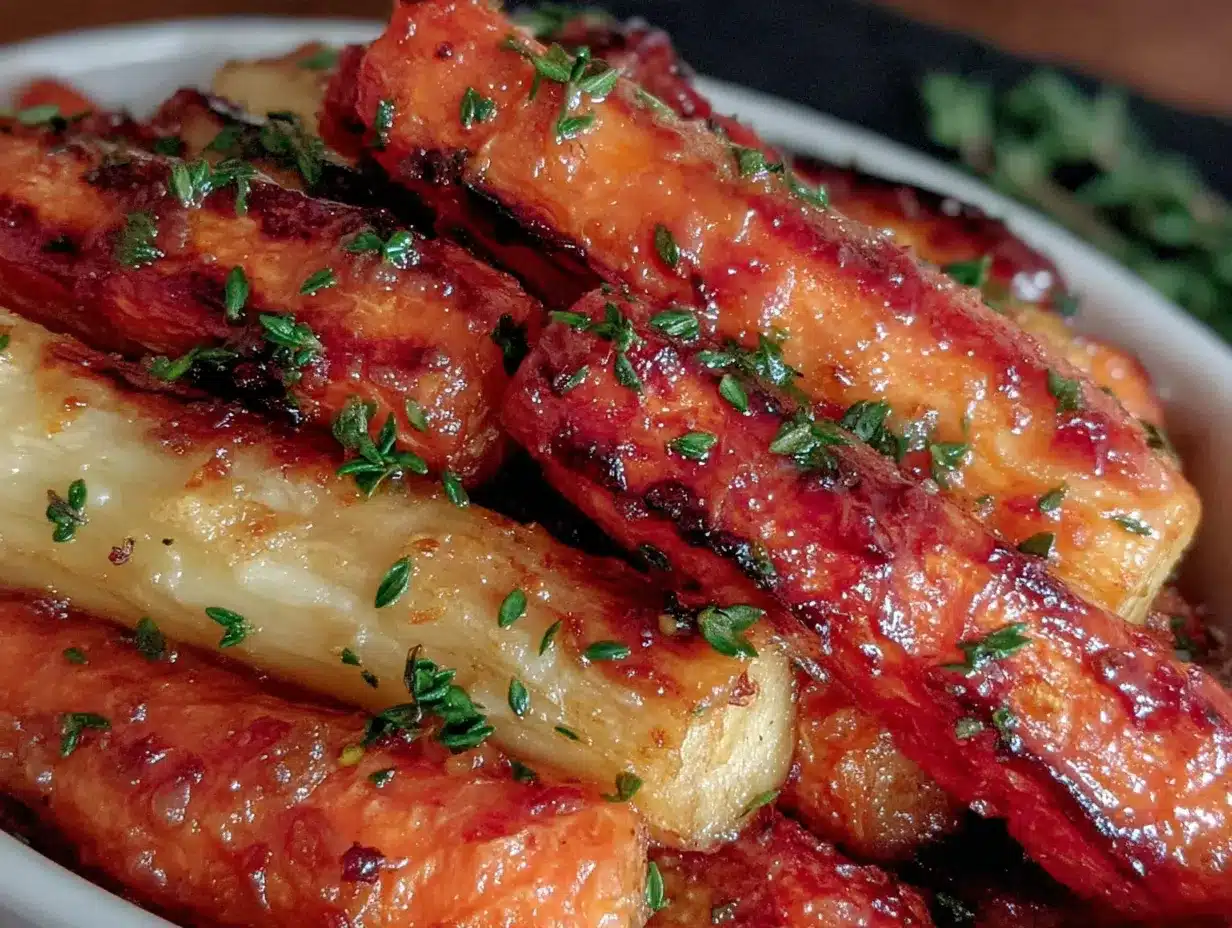
Alright, let’s get cooking. This is straightforward, but I’ll walk you through each step with the little details that make a difference.
- Preheat your oven to 400°F (200°C). Give it a full 15-20 minutes to come to temperature. A properly hot oven is what creates that caramelization. While it’s heating, line your baking sheet with parchment paper.
- Prep the vegetables. Peel the carrots and parsnips. Cut off the tops and tails. Then cut them into sticks about 3 inches long and ½ inch thick. Try to keep them uniform in size — this is the single most important step for even cooking. If some pieces are much thicker than others, they’ll end up either undercooked or burnt. I usually cut the thicker tops of the parsnips in half lengthwise so they match the thinner tails.
- Make the glaze. In your small bowl, whisk together 3 tablespoons honey, 2 tablespoons Dijon mustard, 2 tablespoons olive oil, 1 teaspoon salt, and ½ teaspoon black pepper. Taste it — it should be sweet, tangy, and a little punchy. If it feels too thick, add another teaspoon of oil. If you’re using the optional garlic, whisk it in now.
- Toss the vegetables. Place the carrot and parsnip sticks on the prepared baking sheet. Pour the glaze over them and use your hands (clean ones!) to toss everything together until every piece is coated. Spread them into a single layer — no overlapping. If they’re crowded, use two pans. I cannot stress this enough: single layer or bust.
- Roast for 20 minutes. Slide the pan into the oven and set a timer. Don’t open the door to check too early — you want that heat to stay consistent.
- Flip and add thyme. After 20 minutes, pull the pan out. Use a spatula to flip each piece over. This ensures even browning. Sprinkle the fresh thyme leaves over the top (reserve a little for garnish). Return the pan to the oven.
- Roast for another 15-20 minutes. Start checking at the 15-minute mark. The carrots and parsnips should be tender when pierced with a fork — not mushy, but with no hard resistance in the center. The edges should be caramelized and slightly sticky. If you want deeper browning, give them another 5 minutes, but watch closely — honey can burn quickly.
- Rest and garnish. Let the vegetables sit on the pan for 2-3 minutes after coming out of the oven. This lets the glaze set a little. Transfer to a serving platter, sprinkle with the reserved fresh thyme, and add a few extra sprigs for visual appeal. A final pinch of flaky salt right before serving makes a world of difference.
Cooking Tips & Techniques
I’ve made this recipe enough times to learn a few things the hard way. Here’s what I wish someone had told me:
Don’t skip the flipping step. I know it’s tempting to just let them roast without touching them, but the bottom side won’t caramelize properly if you don’t flip. The first time I made these, I got lazy and ended up with one side beautifully browned and the other side pale and sad. Flipping takes two minutes and makes a noticeable difference.
Cut vegetables on the bias (diagonally). This isn’t just for looks — cutting at an angle creates more surface area, which means more caramelization. Plus, they look fancier on the plate. Win-win.
Watch the honey. Honey burns faster than you think. If your oven runs hot (mine does — it’s an old apartment model), check the vegetables at the 15-minute mark after flipping. Burnt honey tastes bitter and acrid, and there’s no saving it. Better to pull them a minute early than a minute late.
Use room-temperature ingredients. Cold honey straight from the fridge is thick and stubborn. If your honey is crystallized or stiff, warm the jar in a bowl of hot water for a few minutes before measuring. It’ll whisk into the mustard much more smoothly.
Multitask wisely. While the vegetables are roasting, you have about 35 minutes of hands-off time. This is perfect for making a main dish — I often pair these with a simple roasted chicken or pan-seared pork chops. Or just sit on the couch and scroll your phone. No judgment here.
Variations & Adaptations
This recipe is forgiving and flexible. Here are a few ways to change it up:
- Maple Dijon version: Swap the honey for pure maple syrup. The flavor is slightly more woodsy and less floral, which pairs beautifully with roasted turkey or ham. I tried this for Thanksgiving last year and it was a hit.
- Add some heat: Whisk in ½ teaspoon of red pepper flakes or a teaspoon of sriracha to the glaze. The spicy-sweet combo is addictive. My sister-in-law requests this version every time she comes over.
- Roast with other root vegetables: Throw in some cubed sweet potatoes, beets, or turnips. Just be aware that beets will turn everything pink, and sweet potatoes may cook faster, so check them earlier. I once added golden beets and it was gorgeous — like eating a rainbow.
- Herb swap: No fresh thyme? Use rosemary (finely chopped) or sage. Both bring a different but equally delicious earthy note. Rosemary is more piney, sage is more savory. Try them both and see which you prefer.
- Vegan option: This recipe is already vegan if you use maple syrup instead of honey. Some vegans avoid honey, so this is an easy swap that keeps the spirit of the dish intact.
Serving & Storage Suggestions
These roasted carrots and parsnips are best served warm, straight from the oven. The glaze is at its stickiest and most flavorful when fresh. But they’re also surprisingly good at room temperature — I’ve eaten them cold from the fridge as a snack more times than I’d like to admit.
What to serve with them: They’re a natural side for roasted chicken, grilled steak, or baked salmon. For a vegetarian meal, pile them on a bed of quinoa or farro with a dollop of Greek yogurt or tahini sauce. They also work beautifully alongside a holiday roast — think Easter ham or Thanksgiving turkey. The sweetness of the honey and the earthiness of the thyme complement rich meats perfectly.
Storage: Leftovers keep in an airtight container in the refrigerator for up to 4 days. The texture softens a bit over time, but the flavor actually deepens — the honey and mustard meld together even more. To reheat, spread them on a baking sheet and warm in a 350°F (175°C) oven for 5-7 minutes. The microwave works in a pinch, but it makes them soggy. If you’re meal-prepping, roast a double batch and reheat throughout the week.
Freezing: I don’t recommend freezing these. The texture of roasted carrots and parsnips turns mushy and watery after thawing. They’re best enjoyed fresh or within a few days.
Nutritional Information & Benefits
These roasted vegetables are as good for you as they are delicious. Here’s a rough estimate per serving (based on 4 servings):
| Nutrient | Amount per serving |
|---|---|
| Calories | 185 |
| Total Fat | 7g |
| Saturated Fat | 1g |
| Carbohydrates | 30g |
| Fiber | 6g |
| Sugar | 18g |
| Protein | 2g |
| Vitamin A | 340% DV |
| Vitamin C | 25% DV |
| Potassium | 520mg |
Carrots are packed with beta-carotene, which your body converts into vitamin A for healthy vision and immune function. Parsnips are an excellent source of fiber and folate. The honey provides quick energy, while the olive oil delivers heart-healthy monounsaturated fats. This dish is naturally gluten-free, dairy-free, and nut-free, making it a safe choice for many dietary restrictions. If you’re watching your sugar intake, you can reduce the honey to 2 tablespoons — it’ll still be plenty sweet from the caramelized vegetables.
Conclusion
This honey Dijon roasted carrots and parsnips recipe started as a happy accident, but it’s earned a permanent spot in my rotation. There’s something deeply satisfying about taking simple root vegetables and turning them into something that feels special — the way the honey caramelizes into those sticky edges, the way the mustard cuts through the sweetness, the way fresh thyme makes the whole kitchen smell like a cozy Sunday afternoon. It’s the kind of side dish that makes you forget you’re eating vegetables.
I hope you give this recipe a try, whether you’re looking for an easy weeknight side or something impressive for a holiday table. Don’t be afraid to play with the variations — swap the herbs, adjust the sweetness, add some heat. Cooking should feel like your own, not a rigid set of rules. And if you accidentally burn the first batch? Trust me, I’ve been there. Just scrape off the burnt bits and try again. It’s worth it.
I’d love to hear how yours turn out! Drop a comment below and let me know if you tried any fun variations. Did you add garlic? Swap in maple syrup? Roast them with sweet potatoes? Share your wins (and your happy accidents) — we’re all learning together in the kitchen.
Frequently Asked Questions
Can I prepare these ahead of time?
Yes! You can peel and cut the carrots and parsnips up to 24 hours in advance. Store them in a sealed bag or container in the fridge. Make the glaze separately and toss everything together right before roasting. This is a great time-saver for holiday meals.
Why are my roasted vegetables turning out soggy?
The most common culprit is overcrowding the pan. If the vegetables are piled on top of each other, they steam instead of roast. Use a large enough baking sheet and spread everything in a single layer. If necessary, use two pans.
Can I use dried thyme instead of fresh?
You can, but I really recommend fresh here. Dried thyme has a more muted flavor and can be woody. If you must use dried, use about 1 teaspoon and crush it between your fingers before adding. Just know the final dish won’t have the same bright, aromatic quality.
What’s the best way to reheat leftovers?
Reheat them in the oven at 350°F (175°C) for 5-7 minutes. This restores some of the caramelization. The microwave works but will make them softer. I’ve also enjoyed them cold straight from the fridge — they’re oddly addictive that way.
Can I add other vegetables to this recipe?
Absolutely! Sweet potatoes, beets, turnips, and even Brussels sprouts work well. Just cut them to a similar size so they cook evenly. Keep in mind that beets will stain everything pink, and Brussels sprouts may cook faster, so check them a few minutes early.
Pin This Recipe!
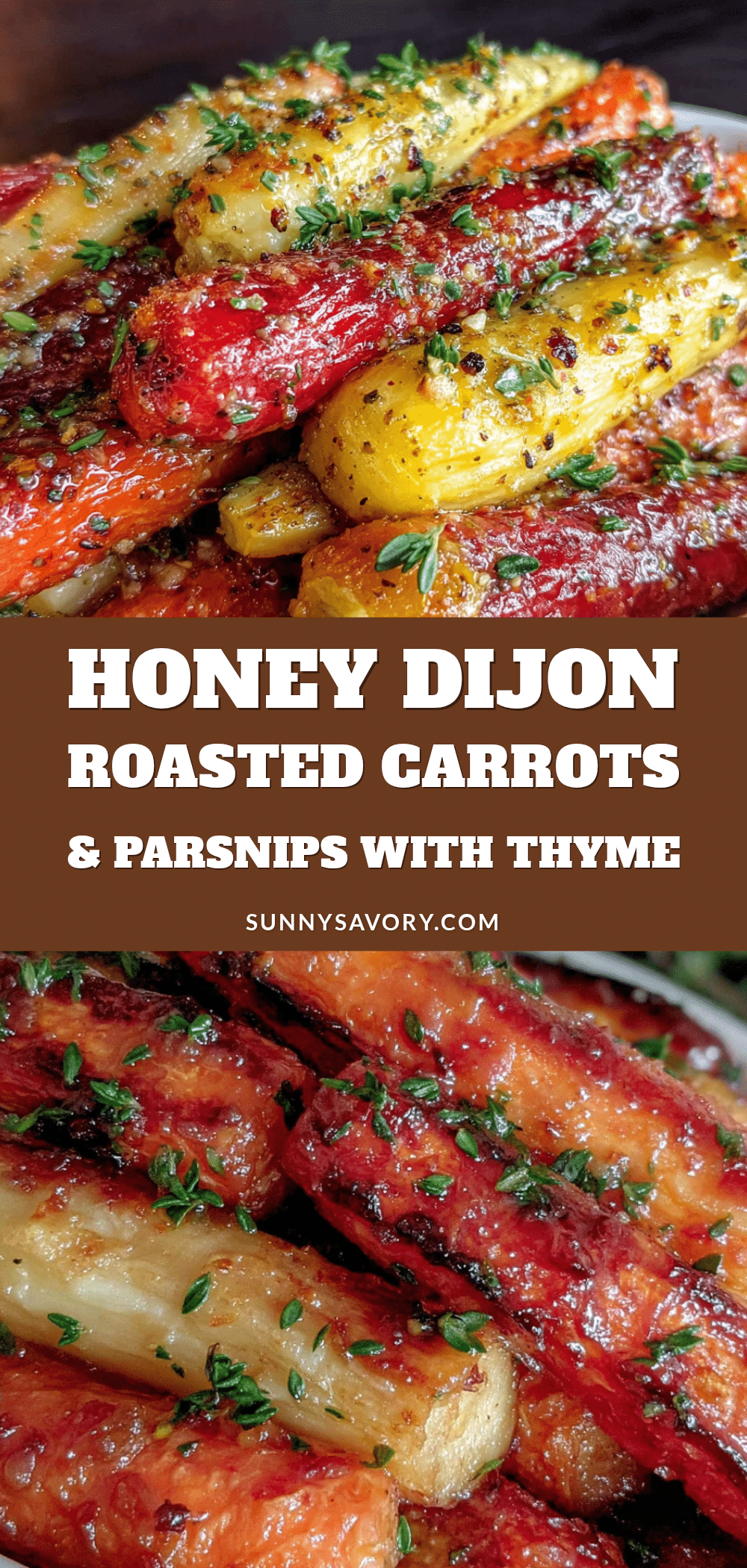
Easy Honey Dijon Roasted Carrots & Parsnips

A simple yet elegant side dish featuring caramelized carrots and parsnips coated in a sweet and tangy honey Dijon glaze with fresh thyme. Perfect for cozy evenings or holiday feasts.
- Prep Time: 10 minutes
- Cook Time: 35-40 minutes
- Total Time: 45-50 minutes
- Yield: 4 servings 1x
- Category: Side Dish
- Cuisine: American
Ingredients
- 1 pound (450g) carrots, peeled and cut into 3-inch sticks
- 1 pound (450g) parsnips, peeled and cut into similar-sized sticks
- 3 tablespoons (60ml) honey
- 2 tablespoons (30ml) Dijon mustard
- 1 tablespoon fresh thyme leaves, plus extra sprigs for garnish
- 2 tablespoons (30ml) olive oil
- 1 teaspoon (5g) salt
- ½ teaspoon (2g) freshly ground black pepper
- 2 cloves garlic, minced (optional)
Instructions
- Preheat your oven to 400°F (200°C). Line a large baking sheet with parchment paper.
- Peel the carrots and parsnips. Cut off the tops and tails, then cut into sticks about 3 inches long and ½ inch thick. Try to keep them uniform in size.
- In a small bowl, whisk together honey, Dijon mustard, olive oil, salt, and black pepper. If using garlic, whisk it in now.
- Place the carrot and parsnip sticks on the prepared baking sheet. Pour the glaze over them and toss with your hands until every piece is coated. Spread into a single layer without overlapping.
- Roast for 20 minutes.
- After 20 minutes, remove the pan from the oven. Flip each piece over with a spatula. Sprinkle fresh thyme leaves over the top (reserve some for garnish). Return to the oven.
- Roast for another 15-20 minutes, until the vegetables are tender when pierced with a fork and the edges are caramelized and sticky.
- Let the vegetables rest on the pan for 2-3 minutes. Transfer to a serving platter, garnish with reserved fresh thyme and extra sprigs. Add a final pinch of flaky salt before serving.
Notes
Don’t skip flipping the vegetables halfway through for even caramelization. Watch the honey closely as it can burn quickly. For best results, cut vegetables on the bias for more surface area. Use room-temperature honey for easier mixing.
Nutrition
- Serving Size: 1 serving (about 1/4
- Calories: 185
- Sugar: 18
- Sodium: 520
- Fat: 7
- Saturated Fat: 1
- Carbohydrates: 30
- Fiber: 6
- Protein: 2
Keywords: roasted carrots, roasted parsnips, honey Dijon, root vegetables, easy side dish, holiday side, gluten-free, vegetarian