Love this? Save it for later!
Share the inspiration with your friends
My roommate asked why I couldn’t just put the eggs in the marinade while they were still warm from boiling. I started to explain why that wouldn’t work — something about thermal shock and the whites not absorbing properly. Then I stopped.
Honestly, I had no real reason. I’d just always done it the other way — cooling them completely, peeling them carefully, then waiting. It was a rule I’d picked up from some blog post years ago, and I’d never questioned it. My roommate, who barely cooks, just shrugged and said, “But wouldn’t they soak up more flavor if they’re warm? Like, pores open up or something?”
I didn’t have an answer for that. So I tried it. And let me tell you — she was completely right. Those warm eggs practically drank the soy marinade. The yolks stayed jammy, the whites took on this deep amber color in half the usual time, and I felt like an absolute fool for all those years of waiting for eggs to cool before marinating them.
That Tuesday night changed how I make ramen eggs forever. These quick soy sauce marinated ramen eggs only need about 8 hours in the fridge — but honestly, they start tasting amazing after just 4. If you’ve been overcooking your eggs and waiting around for them to chill before marinating, I’ve got news for you. You’re making this harder than it needs to be.
Why You’ll Love This Recipe
Let’s be real — you’re here because you want amazing ramen eggs without spending two days planning ahead. These 8-hour soy marinated eggs deliver exactly that. I’ve tested this method more times than I can count, tweaking the marinade ratios and timing until everything clicked.
- Quick & Easy: Active prep time is maybe 10 minutes. The marinade comes together while your eggs boil. You could literally make these on a weeknight and have them ready for tomorrow’s lunch.
- Simple Ingredients: Soy sauce, mirin, sake (or rice vinegar), and sugar. That’s it. You probably have most of this in your pantry already.
- Perfect for Busy Nights: Throw these together after work, let them marinate overnight, and wake up to perfect ramen eggs for your lunch bowl or quick dinner.
- Crowd-Pleaser: I’ve brought these to potlucks and watched people hover around the bowl. Kids love them. Adults love them. Everyone loves a good jammy egg.
- Unbelievably Delicious: The texture is what gets you — that custard-like yolk with the savory-salty-soy exterior. It’s simple comfort food that feels fancy.
What makes these different from other recipes is the warm-egg trick. Most recipes insist on cooling eggs completely before marinating. My accidental discovery (thanks, roommate) means these soak up flavor faster and more deeply. You get richer color, better taste, and you save at least 30 minutes of waiting around. For busy people cooking on weeknights, that’s a game changer.
This isn’t just another soy egg recipe. It’s the one that makes you close your eyes after the first bite and wonder why you ever did it the hard way.
What Ingredients You Will Need
This recipe uses simple pantry staples to create something surprisingly complex. The magic happens when these few ingredients work together — soy brings salt and umami, mirin adds sweetness and shine, and the eggs do all the heavy lifting with their rich, creamy yolks.
- 6 large eggs — Use the freshest eggs you can find for the best yolks. Room temperature eggs cook more evenly, but cold ones work fine if you’re in a hurry.
- ½ cup soy sauce — I prefer Kikkoman or San-J for consistent flavor. Low-sodium works too, but you’ll want to add a pinch more salt to the marinade.
- ½ cup mirin — This sweet rice wine is non-negotiable for authentic flavor. Look for it in the Asian section of your grocery store. If you can’t find it, mix ¼ cup rice vinegar with 2 tablespoons honey as a substitute.
- ¼ cup sake — Cooking sake is fine, but if you don’t have it, use dry sherry or just skip it and add 2 more tablespoons of water. The alcohol cooks off anyway.
- 2 tablespoons sugar — White sugar works perfectly. Brown sugar adds a deeper molasses note if you want to experiment. I’ve tried both and honestly love the brown sugar version for richer ramen bowls.
- ¼ cup water — Just tap water is fine. This dilutes the marinade so it’s not overwhelmingly salty.
That’s literally everything. No fancy ingredients, no special trips to specialty stores. If you make ramen or rice bowls even semi-regularly, you probably have all of this already.
One note on the soy sauce — don’t use the cheap stuff. I learned this the hard way when I made a batch with a generic store brand and the eggs came out tasting metallic and harsh. Spend the extra dollar on a decent soy sauce. Your eggs will thank you.
Equipment Needed
You don’t need much for these quick soy sauce marinated ramen eggs. Here’s what I use:
- Medium saucepan — Big enough to hold 6 eggs in a single layer. A 2-quart pot works perfectly.
- Bowl with ice water — For shocking the eggs after boiling. This stops the cooking immediately and makes peeling easier.
- Small bowl or jar — For mixing the marinade. A 2-cup measuring cup works great too.
- Container for marinating — A shallow dish or quart-sized zip-top bag works best. You want the eggs submerged in marinade, not floating around.
- Slotted spoon — For gently lowering eggs into boiling water and fishing them out.
If you don’t have a slotted spoon, use a regular spoon and be careful. I’ve dropped more eggs than I care to admit. A spider strainer is even better if you have one — it gives you more control.
For the marinating container, I prefer a glass dish because it doesn’t stain like plastic. But honestly, a zip-top bag works perfectly and takes up less space in the fridge. Just make sure it’s sealed tight — soy sauce marinade leaking in your fridge is a nightmare to clean up. Trust me on that one.
Preparation Method
- Bring a pot of water to a rolling boil. Fill your saucepan with enough water to cover the eggs by about an inch. Add a generous pinch of salt — this helps with peeling later. Get the water boiling hard, not just simmering.
- Gently lower the eggs into the water. Use your slotted spoon to carefully place each egg into the boiling water. Don’t drop them in from high up — they’ll crack. I learned this after a spectacular egg explosion that sent shell fragments everywhere. Lower them gently, one at a time.
- Set a timer for exactly 6 minutes and 30 seconds. This gives you perfectly jammy yolks — firm on the outside, liquid and golden in the center. If you want slightly firmer yolks, go for 7 minutes. For softer, try 6 minutes. Write down what works for you because every stove is different.
- Prepare an ice bath while the eggs boil. Fill a medium bowl with cold water and plenty of ice cubes. You want the water to be properly cold, not just cool. This stops the cooking immediately.
- Transfer eggs to the ice bath immediately. When the timer goes off, use your slotted spoon to move the eggs straight into the ice water. Let them sit for at least 5 minutes. The water should feel cold to the touch — if the ice has melted, add more.
- Peel the eggs under running water. This is the most annoying part, I know. Gently crack the shell all over by tapping the egg on the counter, then peel under cool running water. The water helps separate the membrane from the egg white. Start peeling from the wider end where the air pocket is — it’s usually easier there.
- Mix the marinade while the eggs are still warm. In your small bowl, combine ½ cup soy sauce, ½ cup mirin, ¼ cup sake (or substitute), 2 tablespoons sugar, and ¼ cup water. Whisk until the sugar dissolves completely. Taste it — it should be savory with a hint of sweetness. Adjust if needed.
- Place the warm, peeled eggs in the marinade. Here’s the key — don’t wait for the eggs to cool completely. Put them in while they’re still warm. The warmth helps them absorb the marinade faster. Make sure they’re fully submerged. If they float, place a small plate or lid on top to weigh them down.
- Refrigerate for at least 4 hours, ideally 8. The eggs will start taking on color after just 2 hours, but 8 hours gives you that deep amber color and full flavor penetration. I’ve left them for up to 24 hours and they were even better — just don’t go past 48 hours or they get too salty.
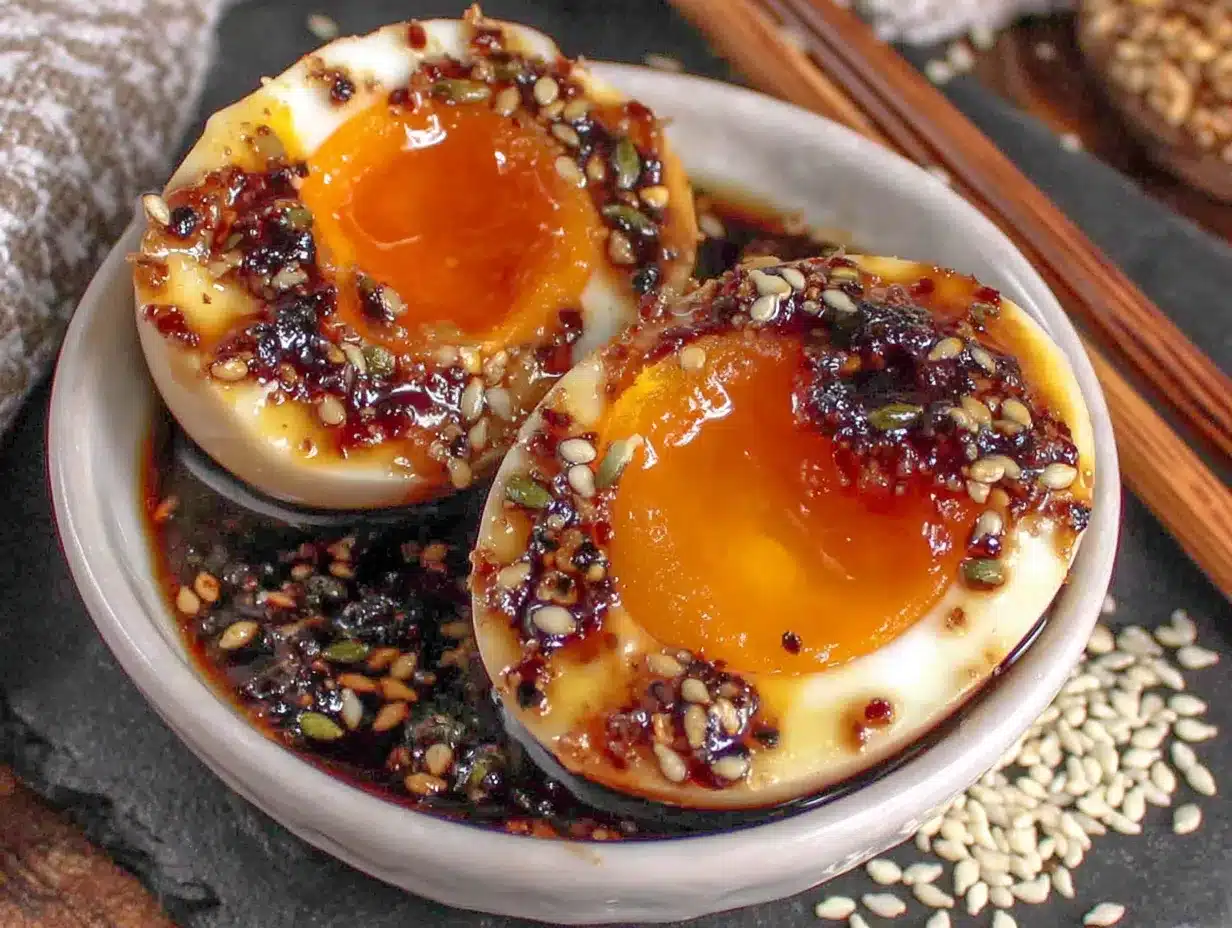
- Remove from marinade and serve. When you’re ready, take the eggs out of the marinade. Pat them dry gently with a paper towel. Slice them in half lengthwise with a sharp knife — wipe the blade between cuts for clean edges. The yolk should be jammy and golden, not runny or hard.
Your kitchen will smell amazing at this point. The soy and mirin create this warm, savory aroma that makes you want to eat everything immediately. But trust the process — let those eggs marinate properly.
Cooking Tips & Techniques
Getting perfect jammy yolks every time takes practice. Here’s what I’ve learned from my failures:
Use older eggs for easier peeling. Fresh eggs are wonderful for baking but terrible for boiling. The membrane clings tighter to fresh egg whites. Eggs that are a week or two old peel much more easily. If you only have fresh eggs, add a teaspoon of baking soda to the boiling water — it helps loosen the membrane.
Don’t skip the ice bath. I know it’s tempting to save time, but skipping this step means the yolks keep cooking from residual heat. You’ll end up with hard, chalky yolks instead of jammy ones. Five minutes in ice water makes all the difference.
The warm-egg trick is real. I was skeptical at first, but putting warm eggs directly into the marinade genuinely works better. The heat opens up the egg white slightly, allowing the marinade to penetrate faster. You get deeper flavor in less time. My roommate was right — and I still tell her that whenever I make these.
Don’t overcrowd the marinade container. The eggs need to be fully submerged. If you stack them on top of each other, the ones on top won’t marinate evenly. Use a container that’s just big enough to hold them in a single layer. I use a 6-inch square glass dish and it works perfectly.
Save the leftover marinade. You can reuse it once or twice. Just bring it to a boil first to kill any bacteria, then cool it down before using again. The flavor gets slightly weaker each time, so add a splash of fresh soy sauce to boost it. I keep a jar of “egg marinade” in my fridge specifically for this purpose.
Variations & Adaptations
These quick soy sauce marinated ramen eggs are endlessly customizable. Here are some variations I’ve tried:
Spicy Version: Add 1 tablespoon of chili oil or sriracha to the marinade. You can also throw in a sliced Thai chili or two. The heat cuts through the richness of the yolk beautifully. I made this version for a friend who loves spicy food and she ate three eggs in one sitting.
Garlic & Ginger: Add 2 crushed garlic cloves and a 1-inch piece of ginger (sliced) to the marinade. Let it steep while the eggs marinate. The aromatics infuse the soy mixture with warmth and depth. This is my go-to version for cold winter nights when I want something extra comforting.
Low-Sodium Option: Use low-sodium soy sauce and reduce the salt. You can also add more water to dilute the marinade. The eggs won’t be as deeply colored, but they’ll still taste great. I’ve made this for friends watching their sodium intake and they didn’t miss the extra salt at all.
Different Vinegars: Swap the mirin for rice vinegar or apple cider vinegar if you want a tangier marinade. Add a teaspoon of honey to balance the acidity. This version is brighter and more refreshing — perfect for summer ramen bowls or cold noodle salads.
Tea-Marinated Eggs: Add 2 tea bags (black tea works best) to the marinade while it heats. Let it steep for 10 minutes before removing the bags. The tea adds a subtle earthiness that pairs beautifully with the soy. This is a traditional Chinese method that takes the eggs in a completely different direction.
Serving & Storage Suggestions
These eggs are incredibly versatile. Here’s how I serve and store them:
Serving Temperature: They’re best at room temperature or slightly chilled straight from the fridge. If you’re adding them to a hot bowl of ramen, the heat from the broth will warm them up perfectly. Don’t microwave them — it ruins the delicate yolk texture.
How to Serve: Slice them in half lengthwise and place them cut-side up on top of your ramen bowl. They also work beautifully on rice bowls, salads, or even just on toast with a sprinkle of sesame seeds and green onions. I’ve eaten them straight from the container as a snack more times than I’d like to admit.
Storage Instructions: Keep the eggs in their marinade in an airtight container in the refrigerator for up to 5 days. The flavor gets stronger the longer they sit, so if you prefer milder eggs, remove them after 8-12 hours and store them separately in a covered container.
Freezing: I don’t recommend freezing these eggs. The texture of the white becomes rubbery and watery when thawed. If you need to make them ahead, just marinate them for the full 8 hours and keep them in the fridge — they’ll be perfect for up to 5 days.
Flavor Development: The eggs actually taste better on day 2 or 3. The marinade continues to penetrate, and the flavors mellow and blend together. If you can plan ahead, make these on Sunday for Wednesday’s ramen night. You won’t regret it.
Nutritional Information & Benefits
Here’s the rough nutritional breakdown for one soy marinated egg:
- Calories: Approximately 80-90 calories per egg
- Protein: 6-7 grams — eggs are a complete protein source
- Fat: 5-6 grams, mostly from the yolk (healthy fats)
- Carbohydrates: 3-4 grams from the marinade sugars
- Sodium: 400-500 mg — this is the main consideration
Eggs are packed with nutrients — vitamin D, B12, choline for brain health, and lutein for eye health. The soy sauce adds some minerals like iron and magnesium, though it’s mostly for flavor.
If you’re watching your sodium, these should be an occasional treat rather than a daily staple. But for a protein boost in your ramen or rice bowl, they’re hard to beat. I personally love having one or two of these as a quick lunch addition — the protein keeps me full for hours without feeling heavy.
For anyone with gluten concerns, use tamari instead of soy sauce. Tamari is typically gluten-free and has a richer, smoother flavor. Just check the label to be sure.
Conclusion
These quick soy sauce marinated ramen eggs are proof that simple ingredients and a smart technique can create something truly special. The warm-egg trick saves time and delivers deeper flavor — and honestly, I’m still a little embarrassed it took my roommate to show me that.
Whether you’re making ramen from scratch or just want to jazz up a quick rice bowl, these eggs are worth the minimal effort. They’re forgiving, customizable, and genuinely impressive for how little work they require. Plus, having a container of these in your fridge makes every meal feel a little more special — like you planned ahead even when you didn’t.
I’d love to hear how these turn out for you! Try the spicy version, the garlic-ginger twist, or just stick with the classic. Leave a comment below and let me know what variations you come up with. And if your roommate suggests something that sounds crazy in the kitchen — maybe give it a shot. They might be onto something.
Frequently Asked Questions
Can I use brown eggs instead of white eggs?
Absolutely. The shell color doesn’t affect the taste or texture at all. Brown eggs and white eggs are nutritionally identical. Use whatever you have on hand.
What if I don’t have mirin?
Mix ¼ cup rice vinegar with 2 tablespoons honey or sugar. It won’t be exactly the same, but it’ll give you that sweet-tangy balance that mirin provides. You can also use sweet sherry in a pinch.
Can I reuse the marinade?
Yes, once or twice. Bring it to a boil first to kill any bacteria, then cool it completely before adding new eggs. The flavor weakens with each use, so add a splash of fresh soy sauce to boost it.
How do I know when the eggs are done marinating?
Check the color. After 4 hours, they’ll be light amber. After 8 hours, they’ll be a deep, rich brown. You can also cut one open — the yolk should be jammy and the white should have absorbed the soy color all the way through.
Can I make these without sake?
Yes, just skip it and add 2 extra tablespoons of water. The sake adds depth but isn’t essential. Dry sherry is a good substitute if you have it, but don’t go out and buy a whole bottle just for this recipe.
Pin This Recipe!
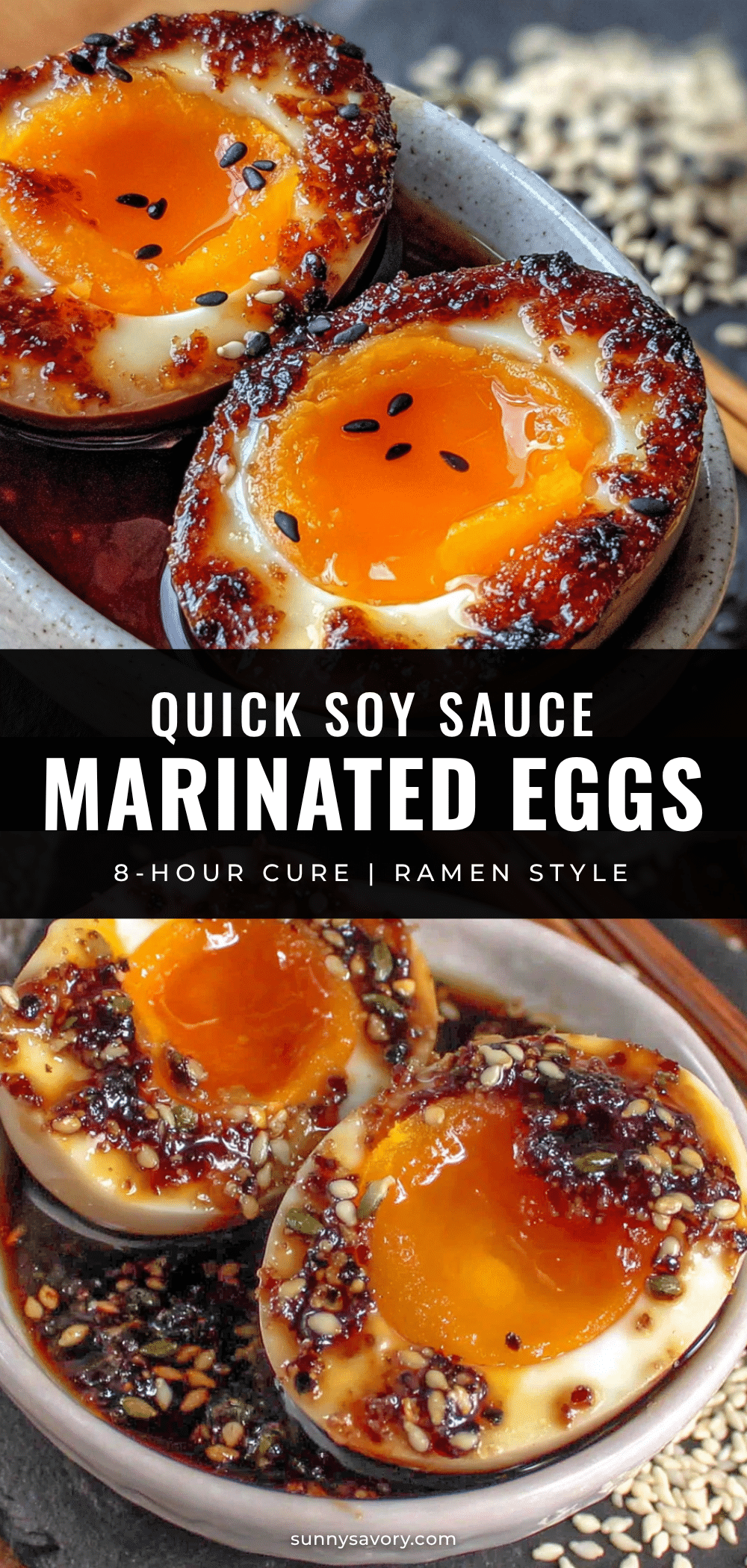
Best 8-Hour Soy Marinated Ramen Eggs – Easy Homemade Recipe

These quick soy sauce marinated ramen eggs only need about 8 hours in the fridge, but they start tasting amazing after just 4. The warm-egg trick saves time and delivers deeper flavor, making them perfect for busy weeknights.
- Prep Time: 10 minutes
- Cook Time: 7 minutes
- Total Time: 8 hours 17 minutes (including marinating time)
- Yield: 6 servings 1x
- Category: Appetizer
- Cuisine: Japanese
Ingredients
- 6 large eggs
- ½ cup soy sauce
- ½ cup mirin
- ¼ cup sake (or substitute with dry sherry or 2 tablespoons water)
- 2 tablespoons sugar
- ¼ cup water
Instructions
- Bring a pot of water to a rolling boil. Fill your saucepan with enough water to cover the eggs by about an inch. Add a generous pinch of salt.
- Gently lower the eggs into the water using a slotted spoon.
- Set a timer for exactly 6 minutes and 30 seconds for jammy yolks.
- Prepare an ice bath while the eggs boil.
- Transfer eggs to the ice bath immediately and let them sit for at least 5 minutes.
- Peel the eggs under running water.
- Mix the marinade while the eggs are still warm: combine ½ cup soy sauce, ½ cup mirin, ¼ cup sake, 2 tablespoons sugar, and ¼ cup water. Whisk until sugar dissolves.
- Place the warm, peeled eggs in the marinade, ensuring they are fully submerged.
- Refrigerate for at least 4 hours, ideally 8 hours.
- Remove from marinade, pat dry, slice in half lengthwise, and serve.
Notes
The warm-egg trick is key: placing warm eggs directly into the marinade helps them absorb flavor faster. Use older eggs for easier peeling. Don’t skip the ice bath to ensure jammy yolks. Marinade can be reused once or twice after boiling.
Nutrition
- Serving Size: 1 egg
- Calories: 85
- Sugar: 3
- Sodium: 450
- Fat: 5.5
- Saturated Fat: 1.6
- Carbohydrates: 3.5
- Protein: 6.5
Keywords: ramen eggs, soy marinated eggs, jammy eggs, quick ramen eggs, easy ramen eggs, 8-hour eggs, soy sauce eggs