Love this? Save it for later!
Share the inspiration with your friends
“You’ve got to watch the skin,” my college roommate Mark said as he effortlessly flipped a salmon fillet in his tiny apartment kitchen. I was skeptical—baking fish always felt like a delicate balancing act better left to the pros. But there he was, turning out perfectly crisp salmon skin, the kind that snaps with every bite, while the flesh remained tender and flaky. That day, I realized baking salmon didn’t have to be intimidating or fussy.
It was a chilly Thursday evening, and the power flickered just as Mark was placing the fish in the oven, forcing us to pause and chat by candlelight. Honestly, the relaxed vibe probably helped the recipe come together better than any strict timing could. I remember the way the kitchen smelled—bright lemon, smoky olive oil, and that unmistakable ocean freshness—while the salmon baked away quietly. I’d never thought salmon skin could be this addictive, but this recipe turned me into a total convert.
Maybe you’ve been there too: staring at a piece of salmon, wondering how to get that perfect crispy skin without overcooking the fish. Well, this recipe is exactly what you need. It’s straightforward, rewarding, and packed with omega-3 goodness to keep things healthy. Let me tell you, once you nail the crispy skin and tender fish texture, you’ll keep coming back to it—like I do every week.
Why You’ll Love This Recipe
This perfect baked salmon recipe with crispy skin and an omega-3 boost is one I’ve tested countless times, tweaking details until everything just clicks. It’s become a staple in my kitchen for good reasons:
- Quick & Easy: Ready in under 30 minutes, making it ideal for busy weeknights or last-minute dinners.
- Simple Ingredients: No need for exotic items; the pantry staples you already have make this dish shine.
- Perfect for Any Occasion: Whether it’s a casual family meal or impressing guests, this baked salmon fits right in.
- Crowd-Pleaser: People often ask for seconds thanks to that irresistible crispy skin and juicy flesh.
- Unbelievably Delicious: The balance of crispy texture and moist, flaky salmon is honestly next-level comfort food.
What sets this recipe apart is the technique I’ve developed to get the skin just right—crispy but not burnt—and the way the fish cooks evenly without drying out. Plus, I always add an omega-3 boost by including a simple flaxseed oil drizzle after baking, which pairs beautifully with the rich salmon flavor and adds a healthful touch. It’s not just another salmon recipe; it’s the one you’ll want to keep coming back to.
And you know that feeling when you take that first bite, close your eyes, and savor the perfect blend of crispy and tender? Yeah, this recipe delivers that every time.
What Ingredients You Will Need
This recipe uses simple, wholesome ingredients to deliver bold flavor and a satisfying texture without fuss. Most are pantry staples, and a few fresh items bring brightness and balance. Here’s what you’ll need:
- Salmon Fillets: Skin-on, preferably wild-caught for the best flavor and omega-3 content (about 6 oz / 170 g per fillet).
- Olive Oil: Extra virgin, for brushing the skin and adding richness (I recommend California Olive Ranch for consistency).
- Fresh Lemon: Zested and juiced, brightens the dish and cuts through the richness.
- Sea Salt: Coarse or flaky, to season and help crisp the skin.
- Freshly Ground Black Pepper: For seasoning.
- Garlic Powder: Just a sprinkle to add subtle depth without overpowering.
- Flaxseed Oil: Optional, for drizzling after baking to boost omega-3s and add a nutty flavor.
- Fresh Herbs (Optional): Dill or parsley finely chopped, for garnish and extra freshness.
Substitution notes: If you can’t find flaxseed oil, a light drizzle of walnut oil works well too. For a dairy-free version, this recipe is naturally compliant, and gluten-free as-is—no flour or breading needed.
Equipment Needed
- Baking Sheet: A rimmed baking sheet is best to catch any drips and make cleanup easier.
- Parchment Paper or Silicone Baking Mat: Helps prevent sticking and promotes even cooking.
- Fish Spatula or Thin Turner: Useful for flipping the salmon if you want to sear the skin first on the stove (optional step).
- Sharp Knife: For trimming any rough edges on the fillets.
- Kitchen Tongs: Handy for gently handling the salmon without breaking the flesh.
If you don’t have a fish spatula, a thin, flexible regular spatula works fine as well. For budget-conscious cooks, disposable parchment paper is fine, but I personally prefer a silicone mat for reusability and less waste. Keeping your baking sheet clean and free of residue helps keep the salmon skin crisp, so I recommend a quick wipe after each use.
Preparation Method
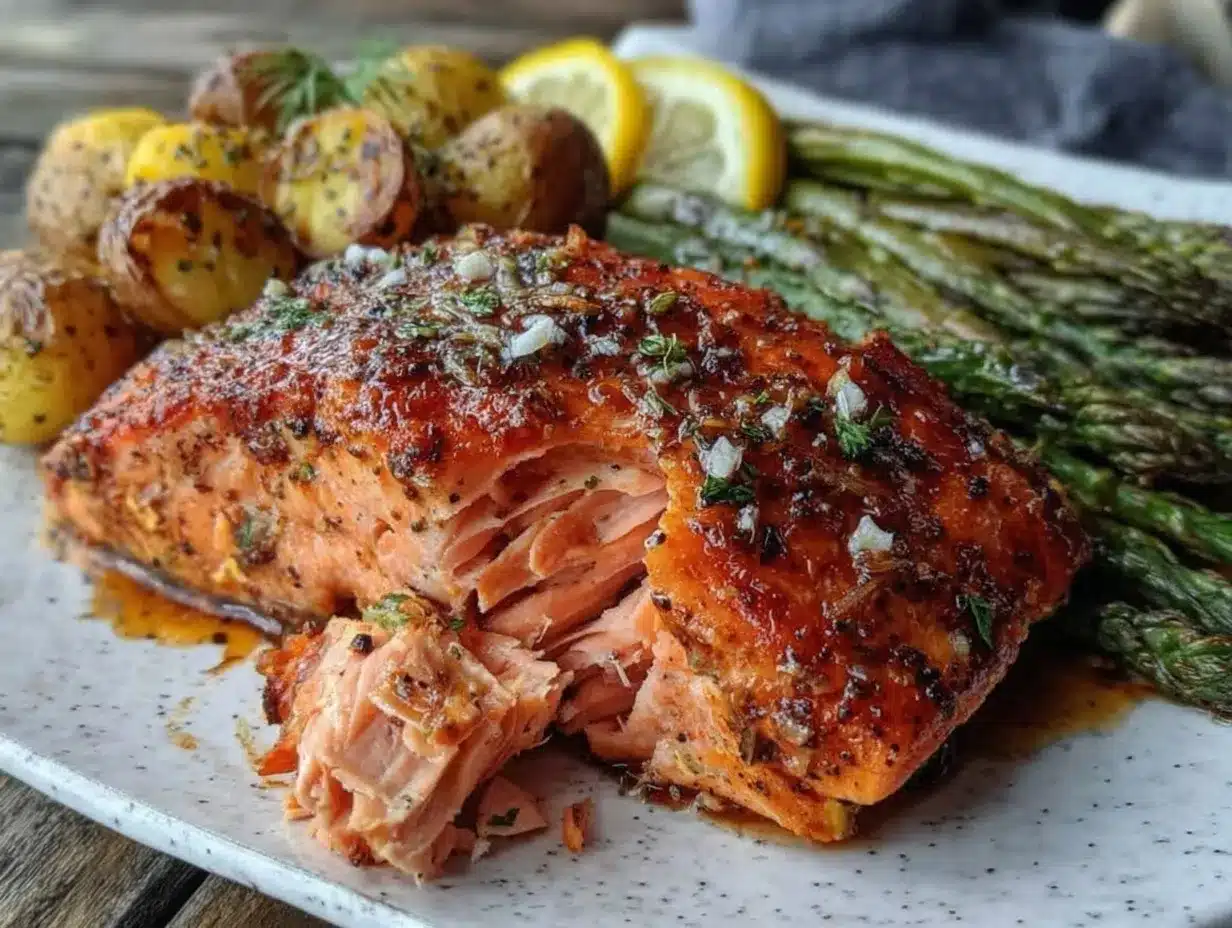
- Preheat your oven to 400°F (200°C). This temperature crisps the skin without drying the fish. Let the oven fully heat before putting the salmon in.
- Prepare the salmon: Pat the fillets dry thoroughly with paper towels—this step is key for crispy skin. Trim any ragged edges if needed. Season both sides with sea salt, black pepper, and a light dusting of garlic powder.
- Line your baking sheet with parchment paper or a silicone mat. Place the salmon fillets skin-side down on the sheet and brush the skin lightly with olive oil. Don’t skip this—the oil helps conduct heat and crisp the skin beautifully.
- Bake the salmon for 10-12 minutes depending on thickness (about 1-inch/2.5 cm thick fillets). You’re aiming for the flesh to be opaque and just start to flake when tested with a fork. Don’t overbake; the fish will continue to cook slightly after coming out.
- Optional step for extra crispiness: Before baking, sear the skin side in a hot non-stick skillet with a little olive oil for 2-3 minutes until crisp, then transfer to the oven to finish cooking. This adds a lovely charred flavor but isn’t necessary if short on time.
- Once baked, remove from the oven and immediately drizzle a small amount of flaxseed oil over the warm salmon. This adds a gentle nutty flavor and boosts omega-3 content without overpowering the dish.
- Finish with a squeeze of fresh lemon juice and sprinkle chopped herbs if using. Serve right away with your favorite sides.
Pro tip: If you notice the skin isn’t crisping up as much as you’d like, try patting it extra dry, and make sure the olive oil is evenly brushed. Also, avoid overcrowding the baking sheet to allow heat to circulate around the fillets.
Cooking Tips & Techniques
Getting that perfect crispy skin on baked salmon can be tricky, but a few tips make all the difference:
- Dry skin is the secret: Moisture is the enemy of crispiness. Pat the skin dry with paper towels before seasoning and oiling.
- Don’t skip the oil: Olive oil helps transfer heat evenly and prevents sticking. A light brush is all you need—too much can make the skin soggy.
- Use a hot oven: Baking at 400°F (200°C) crisps the skin without drying the flesh. Lower temps often give limp skin.
- Timing matters: Salmon cooks quickly. Overbaking results in dry fish. Start checking at 10 minutes if fillets are thin.
- Optional sear for texture: A quick pan sear before baking adds extra crunch and flavor but requires more cleanup.
- Let it rest briefly: Allow the salmon to rest for 2 minutes after baking to let juices redistribute—this keeps it moist.
Once, I tried skipping the drying step and ended up with a sad, soggy skin experience. Lesson learned! Now I never underestimate the importance of prepping the skin properly. Also, multitasking with sides like roasted veggies while the salmon bakes maximizes efficiency without stress.
Variations & Adaptations
This recipe is flexible and forgiving, so you can customize it to your taste or dietary needs:
- Herb Variations: Swap dill for fresh tarragon or basil for a different herbal note.
- Spice it Up: Add a pinch of smoked paprika or cayenne to the seasoning mix for a smoky or spicy kick.
- Cooking Method Swap: Try grilling the salmon skin-side down for 6-8 minutes to get charred skin, then finish in the oven if needed.
- Low-FODMAP Adaptation: Omit garlic powder and use garlic-infused olive oil instead for flavor without discomfort.
- Personal Variation: I once added a honey-mustard glaze brushed on mid-bake for a sweet-savory twist that was a hit at a potluck.
Serving & Storage Suggestions
Serve this perfect baked salmon warm with a simple drizzle of lemon and herbs. It pairs beautifully with light sides like steamed asparagus, quinoa salad, or roasted sweet potatoes. A crisp white wine or sparkling water with lemon complements the flavors nicely.
Leftovers keep well—store the salmon tightly wrapped in the fridge for up to 2 days. To reheat, gently warm in a low oven (300°F / 150°C) for about 10 minutes to preserve moisture and texture. Avoid microwaving, as it can toughen the fish and soften the skin.
Flavors develop slightly as the salmon rests in the fridge, making it a great option for next-day meals, like flaky salmon salads or sandwiches.
Nutritional Information & Benefits
Each serving of this baked salmon delivers a powerhouse of nutrients. A 6 oz (170 g) salmon fillet provides roughly 350 calories, 34 grams of protein, and healthy fats including omega-3 fatty acids EPA and DHA, which support heart and brain health.
Olive oil adds monounsaturated fats and antioxidants, while lemon juice supplies vitamin C. This recipe is naturally gluten-free, low-carb, and dairy-free.
Personally, I find it comforting to enjoy a meal that not only tastes great but supports wellness in such a straightforward way. It’s a meal you can feel good about making and eating regularly.
Conclusion
This perfect baked salmon with crispy skin and omega-3 boost is a recipe I keep coming back to because it strikes that rare balance of ease, flavor, and health benefits. Whether you’re new to cooking salmon or want a reliable method that impresses every time, this recipe fits the bill.
Feel free to tweak the herbs, spices, or cooking style to match your mood or pantry. Honestly, the crispy skin alone makes it worth trying, but the juicy, flaky fish underneath seals the deal.
If you try this recipe, I’d love to hear how it turns out or what twists you add. Drop a comment below or share your variations—let’s keep the conversation tasty and fun!
Remember, good food is about joy and sharing—here’s to many delicious meals ahead!
FAQs
How do I get the salmon skin extra crispy without burning it?
Pat the skin very dry, brush lightly with olive oil, and bake at a high temperature (400°F/200°C). Avoid overcrowding the pan and don’t overbake. Optionally, sear skin in a hot skillet before baking for extra crispness.
Can I use frozen salmon for this recipe?
Yes, but thaw it completely and pat dry before cooking. Frozen salmon tends to release more moisture, so drying is key for crispy skin.
Is flaxseed oil necessary for the omega-3 boost?
Not necessary but recommended. Flaxseed oil adds a mild nutty flavor and extra omega-3s. You can substitute with walnut oil or skip it if preferred.
How do I know when the salmon is done?
The flesh should be opaque and flake easily with a fork. Baking time is usually 10-12 minutes for 1-inch thick fillets. Be careful not to overcook.
Can this recipe be made dairy-free and gluten-free?
Absolutely! This recipe contains no dairy or gluten ingredients, making it naturally suitable for both dietary needs.
PrintPerfect Baked Salmon Recipe with Crispy Skin and Omega-3 Boost

A straightforward and rewarding baked salmon recipe that delivers perfectly crispy skin and tender, flaky flesh, enhanced with a healthy omega-3 boost from flaxseed oil.
- Prep Time: 10 minutes
- Cook Time: 10-12 minutes
- Total Time: 20-22 minutes
- Yield: 2 servings
- Category: Main Course
- Cuisine: American
Ingredients
- Salmon fillets, skin-on, about 6 oz (170 g) each, preferably wild-caught
- Extra virgin olive oil, for brushing
- Fresh lemon, zested and juiced
- Sea salt, coarse or flaky
- Freshly ground black pepper
- Garlic powder, a light sprinkle
- Flaxseed oil, optional, for drizzling after baking
- Fresh herbs (dill or parsley), optional, finely chopped for garnish
Instructions
- Preheat your oven to 400°F (200°C). Let the oven fully heat before placing the salmon inside.
- Pat the salmon fillets dry thoroughly with paper towels. Trim any ragged edges if needed.
- Season both sides of the fillets with sea salt, black pepper, and a light dusting of garlic powder.
- Line a rimmed baking sheet with parchment paper or a silicone baking mat.
- Place the salmon fillets skin-side down on the prepared baking sheet and brush the skin lightly with olive oil.
- Bake the salmon for 10-12 minutes depending on thickness (about 1-inch thick fillets), until the flesh is opaque and flakes easily with a fork.
- Optional: For extra crispiness, sear the skin side in a hot non-stick skillet with a little olive oil for 2-3 minutes before transferring to the oven to finish cooking.
- Remove the salmon from the oven and immediately drizzle a small amount of flaxseed oil over the warm fillets.
- Finish with a squeeze of fresh lemon juice and sprinkle chopped herbs if using.
- Serve immediately with your favorite sides.
Notes
Patting the salmon skin dry is essential for crispiness. Avoid overcrowding the baking sheet to allow heat circulation. Optionally sear the skin in a skillet before baking for extra crispiness. Let the salmon rest for 2 minutes after baking to keep it moist. Leftovers can be stored in the fridge for up to 2 days and reheated gently in a low oven.
Nutrition
- Serving Size: 1 salmon fillet (6 o
- Calories: 350
- Sodium: 400
- Fat: 22
- Saturated Fat: 3
- Carbohydrates: 1
- Protein: 34
Keywords: baked salmon, crispy salmon skin, omega-3 salmon, healthy salmon recipe, easy salmon dinner, gluten-free salmon, dairy-free salmon