Love this? Save it for later!
Share the inspiration with your friends
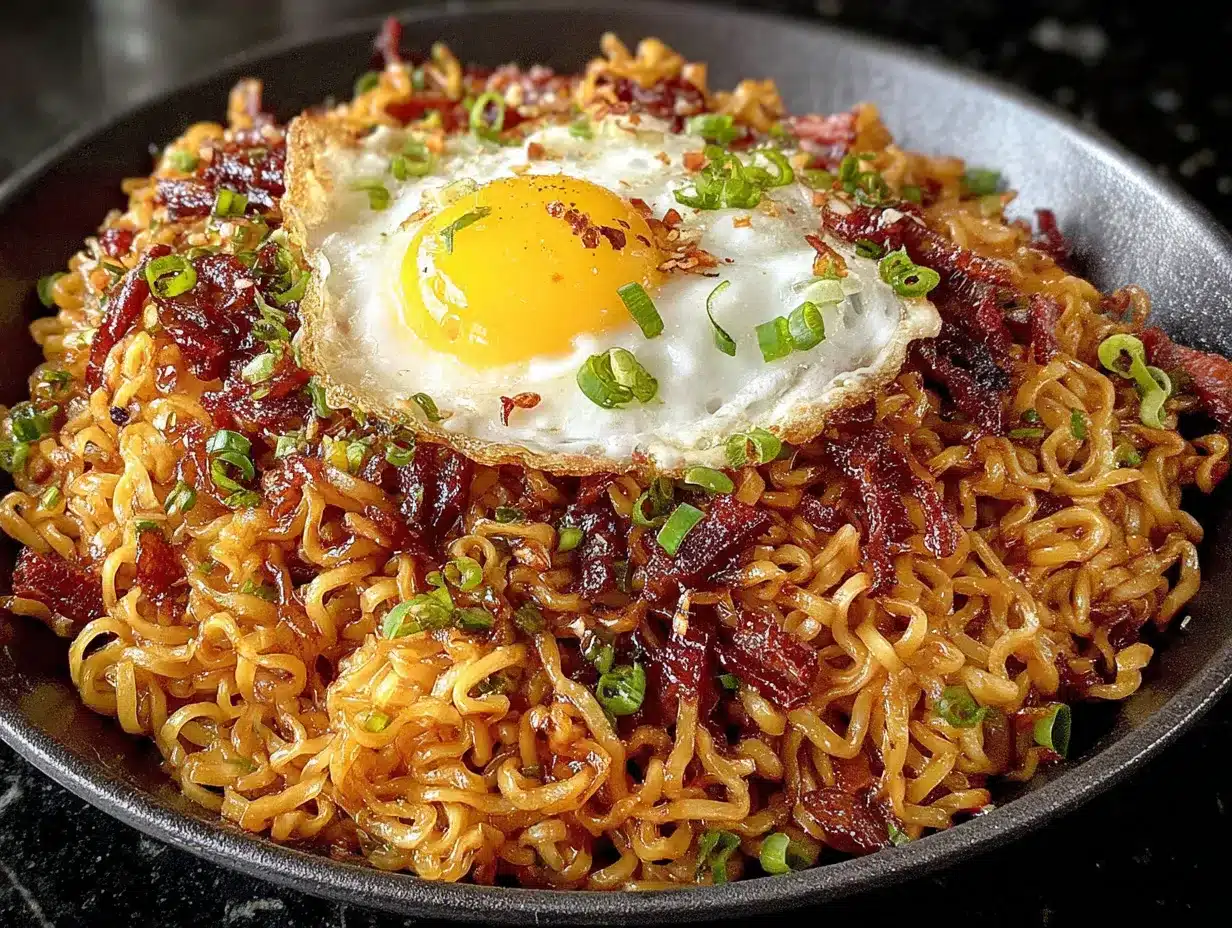
There used to be this tiny ramen shop tucked behind a laundromat on 7th Street that made the most insane spicy stir-fried noodles. When they closed—literally overnight, with a handwritten sign taped to the door that just said “Sorry”—I think I went through all five stages of grief in about twenty minutes. After twelve tries—some burned, some soggy, one that my roommate politely described as “aggressively salty”—I finally got it. This quick spicy one-pan ramen stir-fry is the exact thing I was chasing. Honestly, I still miss that place, but at least now I don’t have to hope they’ll reopen.
The first time I made this version, I actually burned the garlic. Like, blackened it. The smoke alarm went off, my cat hid under the couch, and I ate the results standing over the sink because I refused to admit defeat. But you know what? That failure taught me something important about timing. Now I can nail this spicy one-pan ramen stir-fry with my eyes half-closed on a Tuesday night after work. The noodles come out perfectly chewy, the sauce clings to every strand, and the heat hits that sweet spot where your nose runs just a little but you cannot stop eating.
Maybe you have been there—craving that specific takeout taste but not wanting to wait forty minutes or pay delivery fees. This is faster. It is cheaper. And honestly? It might even be better. Let me show you how to make it.
Why You Will Love This Recipe
I have tested this quick spicy one-pan ramen stir-fry more times than I care to admit. Some batches were too oily. Some were not spicy enough. A few were downright tragic. But this version? This is the one I make for friends who show up hungry, for myself on lazy Sundays, and for anyone who needs dinner on the table in under fifteen minutes without sacrificing flavor.
- Ready in 15 Minutes: From fridge to table faster than delivery. Seriously. By the time you finish reading this paragraph, you could be halfway done.
- One Pan, Minimal Mess: Everything happens in a single skillet. Less dishes, more eating. That is a win in my book.
- Pantry-Friendly Ingredients: Instant ramen, soy sauce, garlic, and a few staples. No fancy grocery trips required.
- Completely Customizable: Add chicken, tofu, shrimp, or keep it vegetarian. The base recipe works with whatever you have.
- That Perfect Spicy-Savory Balance: The sauce is glossy, sticky, and packed with umami. It coats every single noodle without being greasy.
What makes this different from every other ramen stir-fry out there? The technique. I figured out that cooking the ramen just shy of al dente before tossing it in the pan makes all the difference. Most recipes overcook the noodles first, then they turn mushy when stir-fried. Not here. The texture stays bouncy and satisfying, the way good noodles should be.
This is the kind of recipe that makes you close your eyes after the first bite. It is comfort food reimagined—faster, spicier, and with the same soul-soothing satisfaction. Perfect for impressing someone without stress, or just treating yourself to something genuinely delicious on a busy weeknight.
What Ingredients You Will Need
This quick spicy one-pan ramen stir-fry uses simple, wholesome ingredients to deliver bold flavor and satisfying texture without the fuss. Most of these are probably already sitting in your pantry or fridge. Let me walk you through what you need and why each one matters.
For the Noodles
- 2 packages instant ramen noodles (discard the seasoning packets or save them for another use). I prefer the cheap square blocks for this—they have the perfect chewy texture. Maruchan or Nissin work great.
- Water for boiling—enough to cover the noodles in a pot.
For the Spicy Sauce
- 3 tablespoons soy sauce (use low-sodium if you are watching salt). I like Kikkoman for consistent flavor.
- 2 tablespoons gochujang (Korean chili paste)—this is the secret to that deep, complex heat. Find it in the Asian section of most grocery stores or online.
- 1 tablespoon honey or brown sugar—balances the heat with a touch of sweetness. Honey gives a smoother finish, but brown sugar works perfectly too.
- 1 tablespoon rice vinegar—adds acidity that brightens everything up. Apple cider vinegar works in a pinch.
- 1 teaspoon sesame oil—for that nutty, toasty aroma. Do not skip this one; it makes the dish taste complete.
- 1 teaspoon sriracha or chili garlic sauce (optional, for extra heat). I add this when I want my sinuses cleared.
For the Stir-Fry
- 2 tablespoons vegetable oil or avocado oil—something with a high smoke point. Olive oil can burn here.
- 4 cloves garlic, minced—fresh is non-negotiable. Pre-minced stuff from a jar tastes flat in this recipe.
- 1 tablespoon fresh ginger, grated—adds warmth and zing. I keep a knob of ginger in the freezer so it is always ready to grate.
- 1 cup mixed vegetables—bell peppers, snap peas, shredded carrots, or broccoli. Use whatever you have. Frozen vegetables work if you thaw them first.
- 2 green onions, sliced—for garnish and a fresh, mild onion kick.
- 1 tablespoon sesame seeds—toasted ones add a nice crunch and visual appeal.
Optional Protein Add-Ins
- 1 cup cooked chicken, shredded or diced—rotisserie chicken makes this even faster.
- ½ block firm tofu, cubed—pan-fry it first for extra texture.
- ½ cup cooked shrimp—adds sweetness that pairs beautifully with the spicy sauce.
Ingredient Selection Tip: Look for gochujang in the red tub with Korean writing—it is usually the most authentic. If you cannot find it, mix 1 tablespoon miso paste with 1 teaspoon chili flakes and a pinch of sugar as a substitute. It will not be exactly the same, but it will still be delicious.
Substitution Guidance: Use tamari or coconut aminos instead of soy sauce for a gluten-free option. Swap honey with maple syrup for a vegan version. If you are avoiding spicy food, reduce the gochujang to 1 tablespoon and skip the sriracha entirely. The dish will still have plenty of flavor.
Equipment Needed
You do not need a professional kitchen to make this quick spicy one-pan ramen stir-fry. Here is exactly what you will need:
- Large skillet or wok (12-inch recommended): A non-stick skillet makes cleanup effortless, but a stainless steel or cast iron pan works beautifully too. I use my trusty carbon steel wok for this—it gets screaming hot and gives the noodles that slight charred flavor.
- Small pot for boiling noodles: Any saucepan will do. You only need it for about 3 minutes.
- Cutting board and sharp knife: For mincing garlic, grating ginger, and slicing vegetables. A dull knife makes prep frustrating.
- Measuring spoons: The sauce is small-batch, so precise measurements matter here.
- Wooden spoon or spatula: Something sturdy enough to toss noodles without breaking them.
- Colander: For draining the noodles. If you do not have one, use a lid to hold the noodles back while pouring out the water.
- Small bowl: For mixing the sauce before cooking. This saves time and prevents scrambling.
Budget-Friendly Tip: Do not own a wok? Your largest non-stick frying pan works perfectly. The key is having enough surface area so the noodles do not steam instead of fry. If your pan is too small, cook in batches.
Personal Experience: I tried making this in a tiny 8-inch skillet once. It was a disaster. The noodles piled up, the sauce did not coat evenly, and everything turned into a mushy clump. Use the biggest pan you own. Trust me on this one.
Preparation Method
Let me walk you through this quick spicy one-pan ramen stir-fry step by step. The whole process takes about 15 minutes from start to finish. I have timed it. Multiple times. While hungry.
- Boil the ramen noodles (3 minutes): Bring a small pot of water to a rolling boil. Add both blocks of ramen noodles and cook for exactly 2 minutes—one minute less than the package directions. You want them slightly underdone because they will finish cooking in the pan. Drain immediately and rinse with cold water to stop the cooking process. Drizzle with a tiny bit of sesame oil and toss to prevent sticking. Set aside.
- Mix the sauce (1 minute): In a small bowl, whisk together the soy sauce, gochujang, honey or brown sugar, rice vinegar, sesame oil, and sriracha if using. Stir until the gochujang is fully dissolved. Taste it. It should be spicy, salty, and slightly sweet all at once. Adjust anything if needed. Set the bowl near the stove so you can grab it fast.
- Prep your aromatics and vegetables (2 minutes): Mince the garlic, grate the ginger, and slice the green onions. Cut your vegetables into bite-sized pieces so they cook evenly. If you are adding protein, have it cooked and ready to go. This is not the time to be chopping things mid-cook—trust me, I have burned garlic more times than I want to admit.
- Heat the pan (1 minute): Place your skillet or wok over medium-high heat. Add the vegetable oil and swirl to coat the surface. Wait until the oil shimmers—that is your cue that it is hot enough. If you see smoke, the heat is too high. Back it off a notch.
- Cook the aromatics (30 seconds): Add the minced garlic and grated ginger to the hot oil. Stir constantly for about 20-30 seconds until fragrant but not browned. The smell will hit you immediately—that warm, punchy aroma means you are doing it right. If the garlic starts turning brown, pull the pan off the heat for a second.
- Add the vegetables (2 minutes): Toss in your mixed vegetables. Stir-fry for 1-2 minutes until they are crisp-tender. Bell peppers should still have a little crunch. Snap peas should be bright green. Do not overcook them—they will continue softening slightly when you add the sauce.
- Add the noodles and sauce (2 minutes): Add the drained ramen noodles to the pan. Pour the sauce over the top. Use your spatula or tongs to toss everything together, making sure every noodle gets coated. The sauce will bubble and thicken almost immediately. Keep tossing for about 1-2 minutes until the noodles are heated through and slightly caramelized in spots.
- Add protein if using (1 minute): If you are adding chicken, tofu, or shrimp, toss it in now. Stir everything together for another 30-60 seconds until the protein is warmed through and coated in sauce.
- Finish and garnish (30 seconds): Remove the pan from heat. Sprinkle sliced green onions and sesame seeds over the top. Give it one final toss or just leave the garnish on top for presentation.
- Serve immediately: This dish waits for no one. The noodles will continue absorbing sauce and can become dry if left sitting. Divide into bowls and eat right away. You will thank yourself.
Sensory Cue: When the sauce hits the hot pan, it should sizzle loudly and smell intensely savory and spicy. The noodles should look glossy, not soupy. If there is liquid pooling at the bottom of the pan, your heat was too low or you did not cook the sauce down enough. Crank the heat and toss for another 30 seconds.
Personal Tip: I always taste a noodle before serving. If the sauce needs more kick, I add another drizzle of sriracha directly into the pan. If it is too salty, a squeeze of lime juice balances it out beautifully. Cooking is about adjusting as you go.
Cooking Tips & Techniques
After making this quick spicy one-pan ramen stir-fry roughly thirty-seven times (yes, I counted), I have learned a few things the hard way. Here is what I wish someone had told me before I started.
Undercook the noodles every single time. This is the most important tip I can give you. Ramen noodles cook fast, and they keep cooking even after you drain them. If you follow the package directions, they will turn into soft, sad noodles the moment they hit the sauce. Cook them one minute less than directed. They should feel firm with a tiny white core when you bite into one. That is the sweet spot.
Your pan needs to be hot. Not medium heat. Not “I think it is ready.” Hot. The oil should shimmer and move like water in the pan. If you toss a garlic clove in and it sizzles immediately, you are good. If it just sits there looking sad, wait another 30 seconds. A hot pan creates that slightly charred, smoky flavor that makes stir-fry taste like takeout.
Do not crowd the pan. If you are doubling the recipe, cook in two batches. When too many noodles pile up, they steam instead of fry. The texture goes from chewy to gummy. I learned this lesson when I tried to feed four people with one batch and ended up with a sticky, clumpy mess. Use the biggest pan you have, or split it up.
Prep everything before you turn on the stove. This recipe moves fast. Once that garlic hits the oil, you do not have time to chop vegetables or mix sauce. I keep a little bowl system going—sauce in one bowl, vegetables in another, garnishes in a third. It makes the whole process feel effortless.
The sauce will thicken as it sits. That is normal and actually good. If you are meal prepping, store the sauce separately from the noodles and combine them when reheating. Otherwise, the noodles absorb all the liquid and turn dry. Learned that one the hard way during a particularly sad work lunch.
One mistake I still make: Adding too much gochujang because I think I want more heat, then spending the whole meal sweating and reaching for milk. Gochujang varies in spiciness between brands. Start with 1 tablespoon, taste, and add more if you need it. You can always increase heat, but you cannot take it out.
Variations & Adaptations
This quick spicy one-pan ramen stir-fry is endlessly adaptable. I have made it so many different ways depending on what is in my fridge. Here are some of my favorite variations.
Vegetarian Version: Skip the meat and load up on vegetables. I love adding shiitake mushrooms for their meaty texture, along with bok choy and bean sprouts. The mushrooms soak up the spicy sauce beautifully. For extra protein, toss in some edamame or a soft-boiled egg on top.
Peanut Butter Twist: Add 1 tablespoon of creamy peanut butter to the sauce before mixing. It sounds weird, I know, but it creates this rich, nutty, slightly spicy sauce that coats the noodles like a dream. Top with crushed peanuts and fresh cilantro. My friend Sarah tried this once and now refuses to eat it any other way.
Low-Carb Option: Swap the ramen noodles for zucchini noodles or shirataki noodles. The cooking time changes significantly—zucchini noodles only need about 1 minute in the pan, and shirataki noodles should be dry-fried first to remove excess moisture. The sauce works exactly the same way.
Extra Spicy Version: Double the gochujang, add 1 teaspoon of gochugaru (Korean red pepper flakes), and finish with a drizzle of chili oil. This is what I make when I want my sinuses completely cleared. Warning: it is not for the faint of heart. Have a glass of milk nearby.
Breakfast Ramen: Yes, this is a thing. Make the stir-fry without vegetables, then crack an egg into the pan during the last minute of cooking. Stir it in so it scrambles and coats the noodles. Top with crispy bacon bits and a dash of furikake. I discovered this variation at 2 AM after a late shift, and it changed my life.
Cold Noodle Salad: Let the cooked noodles cool completely, then toss with the sauce and serve cold or at room temperature. Add cucumber ribbons, shredded chicken, and fresh mint. Perfect for hot summer days when you want something spicy but refreshing.
Serving & Storage Suggestions
This quick spicy one-pan ramen stir-fry is best served immediately, but I have figured out a few tricks for leftovers that actually work.
Serving Temperature: Serve steaming hot straight from the pan. The noodles should be glossy and the sauce should cling to every strand. If it sits too long, the sauce thickens and the noodles start sticking together. Eat it right away for the best experience.
Presentation Tips: Pile the noodles into a bowl, then top with the garnishes so they stay fresh and colorful. A sprinkle of sesame seeds and a few extra sliced green onions make it look restaurant-quality. I sometimes add a lime wedge on the side for squeezing over the top—the acidity cuts through the richness beautifully.
What to Serve With It: This dish is hearty enough to stand alone, but it pairs wonderfully with a simple cucumber salad dressed with rice vinegar and sesame oil. If you want something more substantial, serve it alongside steamed edamame or a bowl of miso soup. For drinks, an ice-cold beer or sparkling water with lime balances the heat perfectly.
Storage Instructions: Store leftovers in an airtight container in the refrigerator for up to 3 days. The noodles will soften and absorb more sauce overnight, so do not expect the same texture as fresh. To reheat, add a splash of water or soy sauce to a hot pan and toss the noodles until warmed through. Avoid the microwave—it makes the noodles rubbery and unevenly hot.
Freezer Tips: This recipe does not freeze well in its finished state. The noodles become mushy when thawed. However, you can freeze the sauce separately in an ice cube tray for up to 3 months. Pop out a cube whenever you want a quick spicy stir-fry. Just cook fresh noodles and vegetables, then toss with the frozen sauce.
Flavor Development: Interesting thing—the flavors actually meld together and deepen after a few hours in the fridge. Some people prefer leftover ramen stir-fry because the sauce has had time to penetrate every noodle. If you are one of those people, make it a few hours ahead and reheat gently. I will not judge.
Nutritional Information & Benefits
Here is a rough estimate of the nutritional content per serving (based on the base recipe without added protein). Keep in mind that these numbers vary depending on the specific brands and vegetables you use.
| Nutrient | Amount Per Serving |
|---|---|
| Calories | 420-480 |
| Protein | 10-12g |
| Carbohydrates | 55-65g |
| Fat | 16-20g |
| Fiber | 4-6g |
| Sodium | 900-1100mg |
Health Benefits: This quick spicy one-pan ramen stir-fry actually has some surprising nutritional upsides. Ginger and garlic are both known for their anti-inflammatory properties. Gochujang contains capsaicin, which can boost metabolism slightly. The vegetables add fiber and essential vitamins. If you add protein, you get a more balanced meal with staying power.
Dietary Considerations: This recipe is dairy-free and nut-free as written. To make it gluten-free, use tamari instead of soy sauce and ensure your ramen noodles are gluten-free (many brands offer this option now). For a lower-sodium version, use low-sodium soy sauce and reduce the added salt. The gochujang already contains some salt, so taste before adding more.
Potential Allergens: Wheat (from ramen noodles and soy sauce), sesame (from sesame oil), and soy (from soy sauce and gochujang). Check your specific ingredients if you have sensitivities. I always read labels carefully, especially with gochujang, as some brands contain unexpected additives.
My Personal Perspective: I do not pretend this is a health food. It is comfort food that happens to have some redeeming qualities. But honestly? Sometimes you need a meal that comes together in 15 minutes, tastes incredible, and makes you feel satisfied. That has its own kind of wellness value. Balance is everything.
Conclusion
This quick spicy one-pan ramen stir-fry has become my go-to for those nights when I want something fast, flavorful, and deeply satisfying. It is the recipe I turn to after long days, lazy weekends, and everything in between. The fact that it comes together in one pan with minimal cleanup is just a bonus.
I love how forgiving this recipe is. You can swap vegetables based on what is wilting in your fridge. You can adjust the spice level to match your mood. You can add protein or keep it simple. It adapts to you, not the other way around. That is the kind of cooking I believe in—practical, flexible, and always delicious.
If you make this (and I really hope you do), let me know how it turns out. Did you add something unexpected? Did you crank up the heat? Did you burn the garlic like I did the first time? I want to hear about it. Leave a comment below or tag me in your photos. Nothing makes me happier than seeing someone else fall in love with a recipe I worked so hard to perfect.
Now go make some noodles. You deserve them.
Frequently Asked Questions
Can I use the seasoning packet from the ramen?
You can, but I do not recommend it. The seasoning packets are very salty and often contain MSG and artificial flavors. The homemade sauce in this recipe is fresher, more balanced, and lets you control the heat and salt levels. Save the packets for another use—they are great for seasoning soups or popcorn.
What if I cannot find gochujang?
Gochujang is becoming more widely available, but if you cannot find it, mix 1 tablespoon of miso paste with 1 teaspoon of chili flakes and a pinch of sugar. It will not be exactly the same, but it will give you a similar fermented, savory, spicy flavor. Sriracha mixed with a little miso also works in a pinch.
Can I make this ahead of time for meal prep?
Sort of. The noodles will absorb the sauce and soften over time, so the texture changes. For best results, store the sauce and noodles separately in the fridge, then combine and reheat in a hot pan when you are ready to eat. The sauce keeps for up to a week, and the noodles keep for about 3 days.
How do I keep the noodles from sticking together after draining?
Rinse them with cold water immediately after draining to stop the cooking process and remove excess starch. Then toss them with a tiny drizzle of sesame oil or vegetable oil. This creates a light coating that prevents clumping. Do not skip the rinsing step—it makes a big difference.
Is this recipe very spicy?
It has a moderate kick—enough to be noticeable but not overwhelming for most people. The gochujang provides a warm, building heat rather than an immediate burn. If you are sensitive to spice, start with 1 tablespoon of gochujang and skip the extra sriracha. If you love heat, double everything. You do you.
Pin This Recipe!
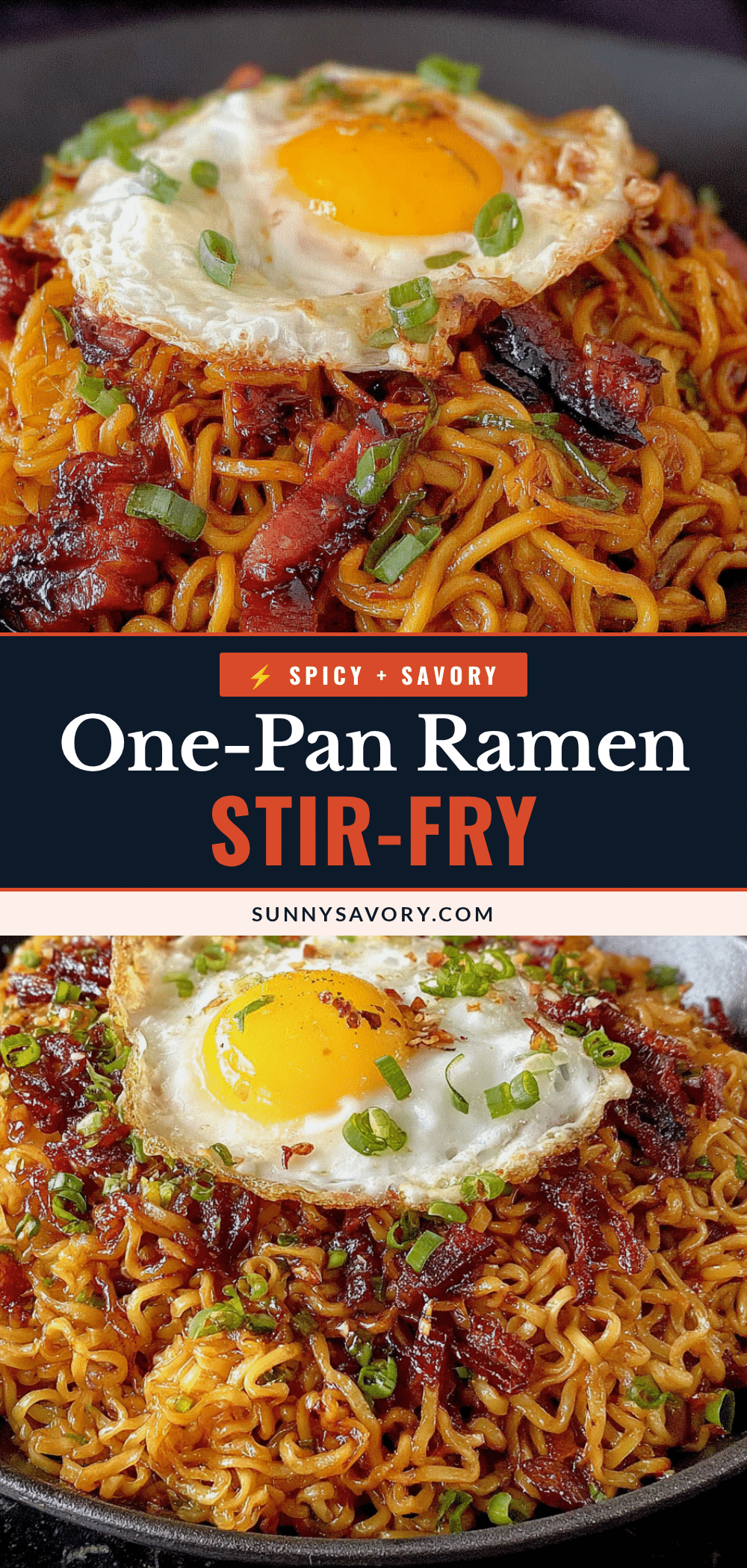
Quick & Easy Spicy One-Pan Ramen Stir-Fry in 15 Minutes
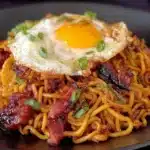
A quick and easy spicy one-pan ramen stir-fry ready in 15 minutes. Perfect for busy weeknights, this dish features chewy noodles coated in a glossy, spicy-savory sauce with vegetables and optional protein.
- Prep Time: 5 minutes
- Cook Time: 10 minutes
- Total Time: 15 minutes
- Yield: 2 servings 1x
- Category: Main Course
- Cuisine: Korean-inspired
Ingredients
- 2 packages instant ramen noodles (discard seasoning packets)
- Water for boiling
- 3 tablespoons soy sauce (low-sodium if desired)
- 2 tablespoons gochujang (Korean chili paste)
- 1 tablespoon honey or brown sugar
- 1 tablespoon rice vinegar
- 1 teaspoon sesame oil
- 1 teaspoon sriracha or chili garlic sauce (optional, for extra heat)
- 2 tablespoons vegetable oil or avocado oil
- 4 cloves garlic, minced
- 1 tablespoon fresh ginger, grated
- 1 cup mixed vegetables (bell peppers, snap peas, shredded carrots, or broccoli)
- 2 green onions, sliced
- 1 tablespoon sesame seeds (toasted)
- 1 cup cooked chicken, shredded or diced (optional)
- ½ block firm tofu, cubed (optional)
- ½ cup cooked shrimp (optional)
Instructions
- Boil the ramen noodles: Bring a small pot of water to a rolling boil. Add both blocks of ramen noodles and cook for exactly 2 minutes (one minute less than package directions). Drain immediately and rinse with cold water to stop cooking. Drizzle with a tiny bit of sesame oil and toss to prevent sticking. Set aside.
- Mix the sauce: In a small bowl, whisk together soy sauce, gochujang, honey or brown sugar, rice vinegar, sesame oil, and sriracha (if using) until fully dissolved. Set near the stove.
- Prep aromatics and vegetables: Mince garlic, grate ginger, slice green onions, and cut vegetables into bite-sized pieces. If adding protein, have it cooked and ready.
- Heat the pan: Place a large skillet or wok over medium-high heat. Add vegetable oil and swirl to coat. Wait until the oil shimmers.
- Cook the aromatics: Add minced garlic and grated ginger to the hot oil. Stir constantly for 20-30 seconds until fragrant but not browned.
- Add the vegetables: Toss in mixed vegetables and stir-fry for 1-2 minutes until crisp-tender.
- Add noodles and sauce: Add drained ramen noodles and pour sauce over the top. Toss everything together for 1-2 minutes until noodles are heated through and slightly caramelized.
- Add protein (if using): Toss in cooked chicken, tofu, or shrimp and stir for 30-60 seconds until warmed through.
- Finish and garnish: Remove from heat. Sprinkle sliced green onions and sesame seeds over the top. Toss or leave as garnish.
- Serve immediately: Divide into bowls and eat right away.
Notes
Undercook the noodles by 1 minute to prevent mushiness. Prep all ingredients before starting to cook. For meal prep, store sauce separately from noodles. Adjust spice level by varying gochujang and sriracha. Use the largest pan you have to avoid steaming the noodles.
Nutrition
- Serving Size: 1 serving
- Calories: 420480
- Sugar: 812
- Sodium: 9001100
- Fat: 1620
- Saturated Fat: 23
- Carbohydrates: 5565
- Fiber: 46
- Protein: 1012
Keywords: spicy ramen stir-fry, one-pan ramen, quick ramen recipe, 15-minute dinner, easy stir-fry, gochujang noodles