Love this? Save it for later!
Share the inspiration with your friends
My friend Jenna asked why I couldn’t just pour apple cider into the slow cooker with the roast instead of beef broth. I started to explain why that wouldn’t work—something about acidity and tough meat. Then I stopped. Honestly, I had no real reason except that I’d always done it the other way. So I shrugged and said, “Let’s try it.”
That was on a Tuesday in late October. The leaves were coming down hard, and I had a three-pound chuck roast sitting on the counter, defrosted and ready. I’d planned to make my usual pot roast—onions, carrots, garlic, beef broth, a little thyme. The reliable one. The one my family never complained about. But Jenna had this idea, and I figured, what’s the worst that could happen? A ruined dinner? We’d order pizza.
I dumped the cider in, felt a little twinge of doubt as the liquid pooled around the meat, then added a cinnamon stick because it felt right. The slow cooker did its thing for eight hours while I worked from home, and around 4 p.m., the smell started drifting up the stairs. It wasn’t just beefy and savory—it was sweet and spiced, like someone was baking apples and braising meat at the same time. My husband texted from the living room: “What is that? It smells amazing.”
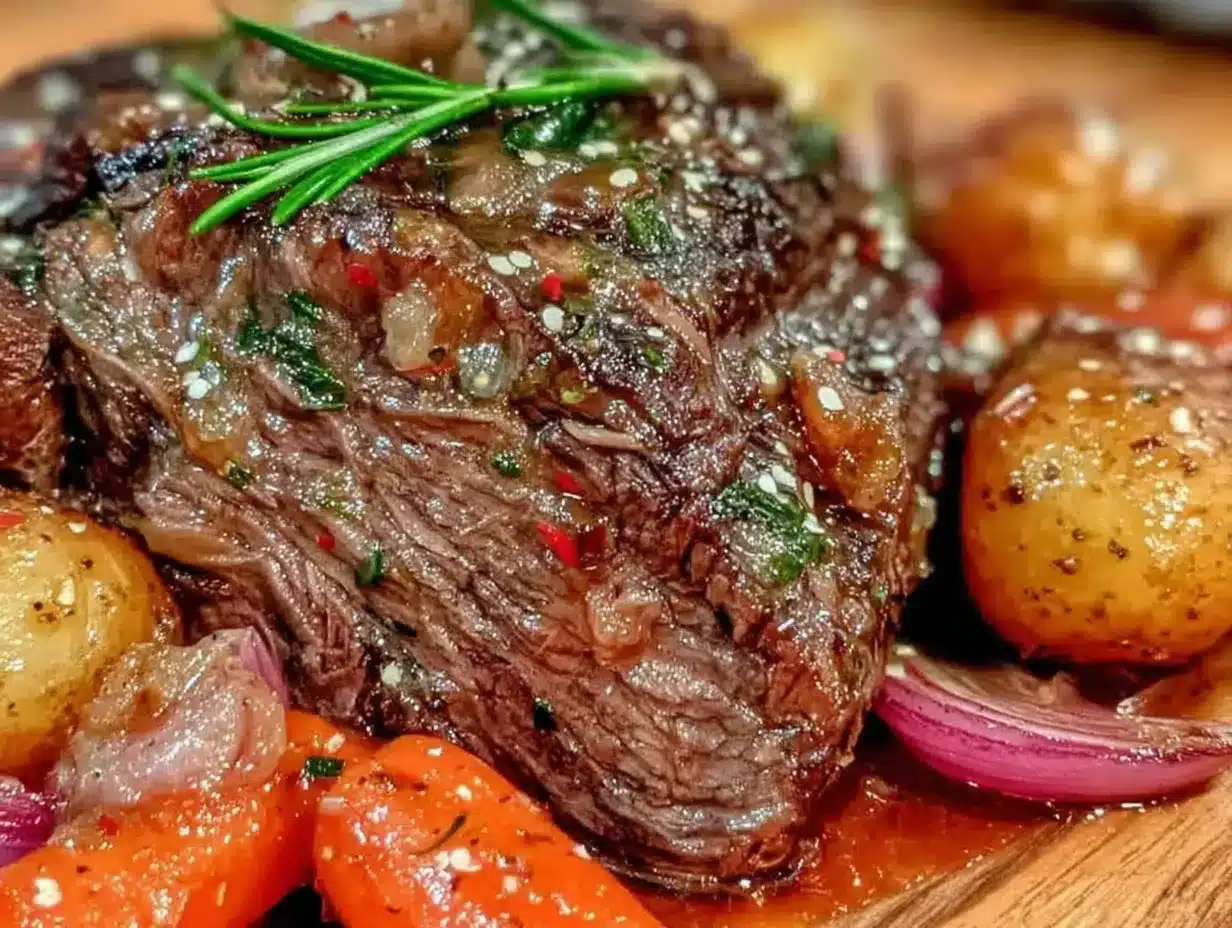
When I finally pulled the roast apart with two forks, it fell into tender, glistening shreds. The meat had taken on this subtle sweetness that made the savory flavors pop even more. I mean, I couldn’t believe it. I’d been making pot roast for fifteen years, and here was a version that made my old recipe feel, well, boring. The apple cider did exactly what Jenna thought it would—it tenderized the meat, added depth, and made the whole dish taste like fall in a bowl. I ate my words along with a second serving of that tender slow cooker apple cider pot roast.
Maybe you’ve been there—stuck in a cooking rut, making the same thing because it works. I get it. But this recipe changed how I think about pot roast entirely. It’s the one I make now when I want something that feels special but requires almost no effort. And every time I take that first bite, I think about how being wrong can taste so right.
Why You’ll Love This Recipe
This isn’t just another pot roast recipe that promises tender meat and delivers dry, stringy disappointment. I’ve tested this one multiple times—yes, I made it three times in two weeks—to get the proportions exactly right. The apple cider isn’t there for show; it actually breaks down the connective tissue in the chuck roast while adding a gentle sweetness that complements the savory herbs. You won’t end up with a dessert-like roast, I promise. The balance is spot on.
- Set It and Forget It: Fifteen minutes of prep, then your slow cooker does the heavy lifting. Perfect for busy weekdays or lazy Sunday afternoons when you want the house to smell incredible without hovering over the stove.
- Pantry-Friendly Ingredients: Besides the beef, you probably have most of this stuff already—onions, garlic, carrots, apple cider (or apple juice in a pinch), and basic dried herbs. No specialty grocery trips required.
- Perfect for Fall Gatherings: This is the dish you bring to a Friendsgiving, serve at a cozy dinner party, or make on a chilly Sunday when you want leftovers for the week. It feeds a crowd without breaking the bank.
- Kid-Approved and Guest-Impressing: The sweetness from the cider makes it surprisingly appealing to picky eaters, while the rich, complex flavor wows adults. My nephew, who “doesn’t like beef,” asked for seconds.
- Leftovers That Get Better: I’m not kidding—this roast tastes even better the next day. The flavors meld overnight, and the meat gets even more tender. Make extra on purpose.
What makes this version different from every other pot roast recipe out there? It’s the apple cider, yes, but also the technique. I sear the meat first—don’t skip this—and I use a specific ratio of cider to broth that keeps the meat moist without making it soggy. The result is fork-tender beef with a glossy, flavorful sauce that’s begging to be spooned over mashed potatoes or crusty bread. This is comfort food reimagined—faster, simpler, but with the same soul-soothing satisfaction that makes you close your eyes after the first bite.
What Ingredients You Will Need
This recipe uses simple, wholesome ingredients to deliver bold flavor and satisfying texture without the fuss. Most of these are pantry staples or easy to find at any grocery store, especially during apple season.
For the Roast
- 3 to 4 pounds chuck roast (look for good marbling—this is key for tenderness; I prefer Certified Angus Beef if available)
- 2 tablespoons olive oil (for searing; avocado oil works too)
- 1 teaspoon salt (I use kosher salt; Diamond Crystal is my go-to for even seasoning)
- 1/2 teaspoon black pepper (freshly ground, please—it makes a difference)
- 1 large yellow onion (sliced into thick rings; sweet onion works too)
- 4 cloves garlic (minced; don’t skip this—it adds backbone to the flavor)
- 4 large carrots (peeled and cut into 2-inch chunks)
- 3 celery stalks (cut into 2-inch pieces; optional but adds depth)
For the Braising Liquid
- 1 1/2 cups apple cider (unfiltered is best for flavor; not apple cider vinegar—that’s a different thing entirely)
- 1 cup beef broth (low-sodium so you can control the salt; I like Better Than Bouillon for richer flavor)
- 2 tablespoons apple cider vinegar (a little acidity balances the sweetness and helps tenderize the meat)
- 2 tablespoons Worcestershire sauce (adds umami depth; Lea & Perrins is my pick)
- 2 tablespoons brown sugar (light or dark; this enhances the caramelization and rounds out the cider flavor)
For the Aromatics
- 2 sprigs fresh rosemary (or 1 teaspoon dried; fresh is better here if you can get it)
- 3 sprigs fresh thyme (or 1 teaspoon dried)
- 2 bay leaves (dried is fine; remove before serving)
- 1 cinnamon stick (trust me—it doesn’t make it taste like dessert, just adds warmth)
- 1 teaspoon whole black peppercorns (optional but nice for extra spice)
Ingredient Tip: If you can’t find apple cider, good-quality apple juice works in a pinch, but reduce the brown sugar by half since juice is sweeter. For a gluten-free version, double-check your Worcestershire sauce—some brands contain gluten. I recommend Annie’s or Lea & Perrins, which are both gluten-free.
Equipment Needed
You don’t need a fancy kitchen to pull this off. Here’s what you’ll actually use:
- 6-quart slow cooker (or larger; if yours is smaller, just reduce the veggies slightly or use a 4-pound roast max)
- Large heavy-bottomed skillet or Dutch oven (for searing the meat; cast iron is ideal, but any oven-safe pan works)
- Tongs (for flipping the roast without piercing it—juice loss is real)
- Sharp chef’s knife (for cutting veggies; a dull knife is more dangerous than a sharp one, I learned this the hard way)
- Cutting board (preferably one with a juice groove)
- Measuring cups and spoons (for the liquid ingredients)
- Two forks (for shredding the meat at the end)
- Slotted spoon (for removing veggies from the liquid)
Budget-Friendly Tip: If you don’t have a Dutch oven, a regular nonstick skillet works fine for searing—just be careful not to overcrowd the pan. And if your slow cooker is older, check the temperature with a meat thermometer; some older models run hot and can dry out the meat.
Preparation Method
- Pat the roast dry with paper towels. This is crucial—excess moisture prevents browning. Season generously on all sides with salt and pepper. Let it sit at room temperature for 20 minutes while you prep the veggies. (Don’t skip the resting step; it helps the seasoning penetrate.)
- Heat olive oil in a large skillet over medium-high heat. Wait until the oil shimmers—about 2 minutes. Carefully place the roast in the pan. Sear for 4-5 minutes per side without moving it. You want a deep, dark crust. I know it’s tempting to peek, but let it be. Flip using tongs and repeat on all sides, including the ends. This takes about 15 minutes total. (Pro tip: If the roast sticks, it’s not ready to flip—give it another minute.)
- Transfer the seared roast to a plate and set aside. Don’t clean the skillet—those browned bits on the bottom are flavor gold. Reduce heat to medium and add the sliced onions. Cook for 3-4 minutes, scraping up the browned bits with a wooden spoon. Add the minced garlic and cook for 30 seconds until fragrant. (Be careful not to burn the garlic; it turns bitter fast.)
- Pour about 1/2 cup of the apple cider into the skillet. Stir and scrape to deglaze the pan completely. Let it bubble for 1 minute, then pour the entire mixture—onions, garlic, and liquid—into the slow cooker.
- Place the seared roast in the slow cooker on top of the onions. Arrange the carrot and celery chunks around the sides. Tuck the rosemary, thyme, bay leaves, and cinnamon stick into the liquid. Sprinkle the whole peppercorns around if using.
- In a measuring cup, whisk together the remaining 1 cup apple cider, beef broth, apple cider vinegar, Worcestershire sauce, and brown sugar. Pour this mixture over the roast and veggies. The liquid should come about halfway up the sides of the roast—if it doesn’t, add a little more broth or water.
- Cover and cook on LOW for 8-10 hours or on HIGH for 5-6 hours. I strongly recommend LOW—it gives the connective tissue more time to break down, resulting in that fall-apart tenderness. (Note: Every slow cooker runs differently. If yours runs hot, check at 7 hours on LOW.)
- About 30 minutes before serving, carefully remove the roast and veggies from the slow cooker. Use tongs and a slotted spoon. Place the roast on a cutting board and let it rest for 5 minutes. Discard the herb sprigs, bay leaves, and cinnamon stick.
- Shred the roast using two forks. It should pull apart with almost no resistance—if it doesn’t, it needs more time. Return the shredded meat to the slow cooker with the cooking liquid. Stir gently to coat.
- Taste and adjust seasoning. Add salt and pepper if needed. If the sauce seems thin, mix 2 tablespoons cornstarch with 2 tablespoons cold water to make a slurry, stir it into the liquid, and cook on HIGH for 15 minutes until thickened.
- Serve immediately. Spoon the meat and veggies over mashed potatoes, egg noodles, or polenta. Ladle extra sauce on top. Garnish with fresh parsley if you’re feeling fancy—but honestly, it’s gorgeous as is.
Cooking Tips & Techniques
I’ve made this tender slow cooker apple cider pot roast at least a dozen times now, and I’ve learned a few things the hard way so you don’t have to. Here’s what I wish someone had told me:
Don’t skip the sear. I know it’s an extra step, and yes, it dirties a pan. But the Maillard reaction—that browning—creates a depth of flavor that you simply cannot get from just dumping meat into a slow cooker. I tried it once without searing, and the result was edible but flat. The seared version? Richer, more complex, and worth every minute of standing at the stove.
Low and slow is non-negotiable here. Cooking on HIGH might save you two hours, but the meat won’t be as tender. The collagen in chuck roast breaks down at around 160-170°F, and that process takes time. Eight hours on LOW gives you that melt-in-your-mouth texture. Five hours on HIGH gives you something closer to pot roast that’s trying to be tender but isn’t quite there yet.
Watch your liquid level. Too much liquid and you’ll end up with boiled meat instead of braised meat. The roast should be about halfway submerged. If you’re using a smaller slow cooker, adjust accordingly. I once used a 4-quart cooker with too much cider, and the meat was swimming. It turned out okay, but the sauce was thin and the meat was less flavorful.
Let it rest before shredding. This is a mistake I made the first time—I was so excited that I shredded the roast straight out of the slow cooker. The meat fell apart, sure, but it also released a lot of juice onto the cutting board instead of staying in the meat. Letting it rest for 5-10 minutes allows the juices to redistribute. Your shredding will be cleaner, and your meat will be juicier.
Taste the sauce before serving. The apple cider adds sweetness, but depending on the brand, some ciders are sweeter than others. If your sauce tastes too sweet, add a splash more apple cider vinegar or a pinch of salt to balance it. If it’s too tart, a little more brown sugar will fix it. Trust your taste buds—they know what they’re doing.
Variations & Adaptations
One of the best things about this recipe is how flexible it is. Here are some variations I’ve tried and loved:
Dietary Adaptations: For a gluten-free version, use tamari instead of Worcestershire sauce (or check that your Worcestershire is gluten-free—Lea & Perrins is). Skip the flour slurry at the end and use cornstarch instead. For a dairy-free meal, this recipe is naturally dairy-free as written, so you’re good.
Seasonal Twists: In the fall, add a diced apple (Honeycrisp or Granny Smith) to the slow cooker during the last hour of cooking. It softens and adds little pockets of apple flavor. In the winter, swap the fresh herbs for dried and add a star anise pod for a warm, spiced note. In the spring, replace the carrots with parsnips and add fresh fennel for a lighter, anise-like flavor.
Different Cooking Methods: If you don’t have a slow cooker, this works beautifully in a Dutch oven. Sear the roast in the same pot, then add all the ingredients, cover, and braise in a 300°F oven for 3-4 hours. Check the liquid level occasionally and add more broth if needed. The result is equally tender, with a slightly more concentrated sauce.
Flavor Profile Swaps: Want a smoky twist? Add 1 teaspoon smoked paprika and 1/2 teaspoon chipotle powder to the seasoning. For an herby version, double the rosemary and add fresh sage. I once made this with hard cider instead of regular apple cider, and it added a subtle boozy depth that was fantastic—just make sure it’s not too bitter.
Personal Variation I Love: I sometimes add a handful of dried cherries or cranberries during the last hour of cooking. They plump up and add little bursts of tart-sweetness that play beautifully against the savory beef. My family fights over them, so I always add extra.
Serving & Storage Suggestions
This tender slow cooker apple cider pot roast is a meal in itself, but the right sides can make it unforgettable.
Serving Temperature and Presentation: Serve the roast hot, straight from the slow cooker. Pile the shredded meat onto a platter with the carrots and celery arranged around it. Ladle a generous amount of sauce over everything. I like to garnish with a sprinkle of fresh parsley or thyme leaves for color. A little goes a long way visually.
Complementary Dishes: Mashed potatoes are the classic pairing—the creamy texture soaks up the sauce beautifully. Buttered egg noodles, creamy polenta, or crusty sourdough bread are also excellent choices. For a vegetable side, roasted Brussels sprouts with balsamic glaze or a simple green salad with apple cider vinaigrette (use the same cider!) round out the meal nicely. A glass of dry hard cider or a light red wine like Pinot Noir pairs perfectly.
Storage Instructions: Store leftovers in an airtight container in the refrigerator for up to 4 days. The flavors actually deepen overnight, so don’t be surprised if you like it even better the next day. To freeze, place the cooled roast and sauce in a freezer-safe container or zip-top bag. It freezes well for up to 3 months. Thaw overnight in the refrigerator before reheating.
Reheating Methods: The best way to reheat is in a covered skillet over medium-low heat, with a splash of beef broth or apple cider to loosen the sauce. Stir occasionally until heated through—about 10 minutes. You can also reheat in the microwave in 30-second bursts, but the texture won’t be as good. Avoid boiling, which can toughen the meat.
Flavor Development Note: This roast is one of those rare dishes that genuinely improves with time. The apple cider and spices continue to meld, and the meat absorbs more flavor. I often make it a day ahead on purpose, then reheat it for dinner. It’s a great make-ahead option for entertaining.
Nutritional Information & Benefits
Here’s the approximate nutritional breakdown for one serving (about 6 ounces of meat with sauce and vegetables, based on 8 servings):
Calories: 385 | Protein: 34g | Fat: 18g | Carbohydrates: 18g | Fiber: 3g | Sugar: 12g | Sodium: 680mg
Chuck roast is an excellent source of high-quality protein, iron, and B vitamins, especially B12, which supports energy metabolism and red blood cell formation. The carrots provide beta-carotene (converted to vitamin A in the body), while the onions and garlic offer prebiotic fibers that support gut health.
Apple cider contains antioxidants like quercetin, which may help reduce inflammation. And here’s a fun fact: the cinnamon in this recipe has been shown to help stabilize blood sugar levels, which is a nice bonus when you’re eating something this comforting. Just keep in mind that the brown sugar and cider do add natural sugars, so this is best enjoyed as part of a balanced meal.
Dietary Notes: This recipe is naturally dairy-free, egg-free, and nut-free. For a lower-sodium version, use low-sodium beef broth and reduce the added salt. For a lower-carb option, serve over cauliflower mash instead of potatoes.
Conclusion
This tender slow cooker apple cider pot roast is the kind of recipe that makes you look forward to fall all year. It’s proof that sometimes the best dishes come from trying something a little different—even if it means proving yourself wrong. The meat is impossibly tender, the sauce is rich and slightly sweet, and the whole thing comes together with almost no effort. Honestly, what more could you want from a weeknight dinner?
I hope you make this recipe your own. Maybe you’ll add extra garlic, swap in sweet potatoes for the carrots, or throw in a whole star anise like I sometimes do. That’s the beauty of a good pot roast—it’s forgiving, flexible, and always delicious. And if you do try something different, I’d love to hear about it. Drop a comment below and tell me how it went, or share a photo of your roast on Pinterest. There’s nothing I love more than seeing someone else fall in love with a recipe that started as a happy accident.
So go ahead—grab a chuck roast, pour yourself a glass of cider (the drinking kind), and let your slow cooker do the rest. Your kitchen will smell amazing, your family will be impressed, and you’ll wonder why you didn’t try this sooner. Happy cooking, friend.
Frequently Asked Questions
Can I use a different cut of beef for this recipe?
Absolutely. While chuck roast is ideal for its marbling and tenderness after slow cooking, you can also use brisket, bottom round, or even a rump roast. Just keep in mind that leaner cuts may turn out slightly drier, so check for doneness earlier and consider adding a little extra broth to keep things moist.
Can I make this in an Instant Pot instead of a slow cooker?
Yes, you can! Use the sauté function to sear the meat and cook the onions, then add all the ingredients. Pressure cook on HIGH for 60-70 minutes (depending on the size of your roast), then let the pressure release naturally for 15 minutes before manually releasing the rest. The texture will be slightly different—less fall-apart tender than slow cooking—but it’s still delicious and much faster.
Do I have to use apple cider, or can I substitute it?
Apple cider is best for this recipe because it has a rich, slightly tangy flavor that apple juice doesn’t quite match. However, if you’re in a pinch, good-quality apple juice works—just reduce the brown sugar by half since juice is sweeter. You can also try pear cider or even a dry hard cider for a different flavor profile.
Why did my pot roast turn out dry?
Dry pot roast usually means one of two things: either the meat was cooked on HIGH for too long, or there wasn’t enough liquid in the slow cooker. Make sure the liquid comes about halfway up the sides of the roast, and always cook on LOW if possible. Also, don’t skip the searing step—it locks in moisture and builds flavor.
Can I add potatoes to the slow cooker?
Yes, but add them during the last 2-3 hours of cooking, not at the beginning. Potatoes cook faster than beef and can turn mushy if left in for the full 8 hours. Yukon Gold or red potatoes hold up best. Cut them into 1-inch chunks and tuck them around the roast for the last few hours of cooking.
Pin This Recipe!
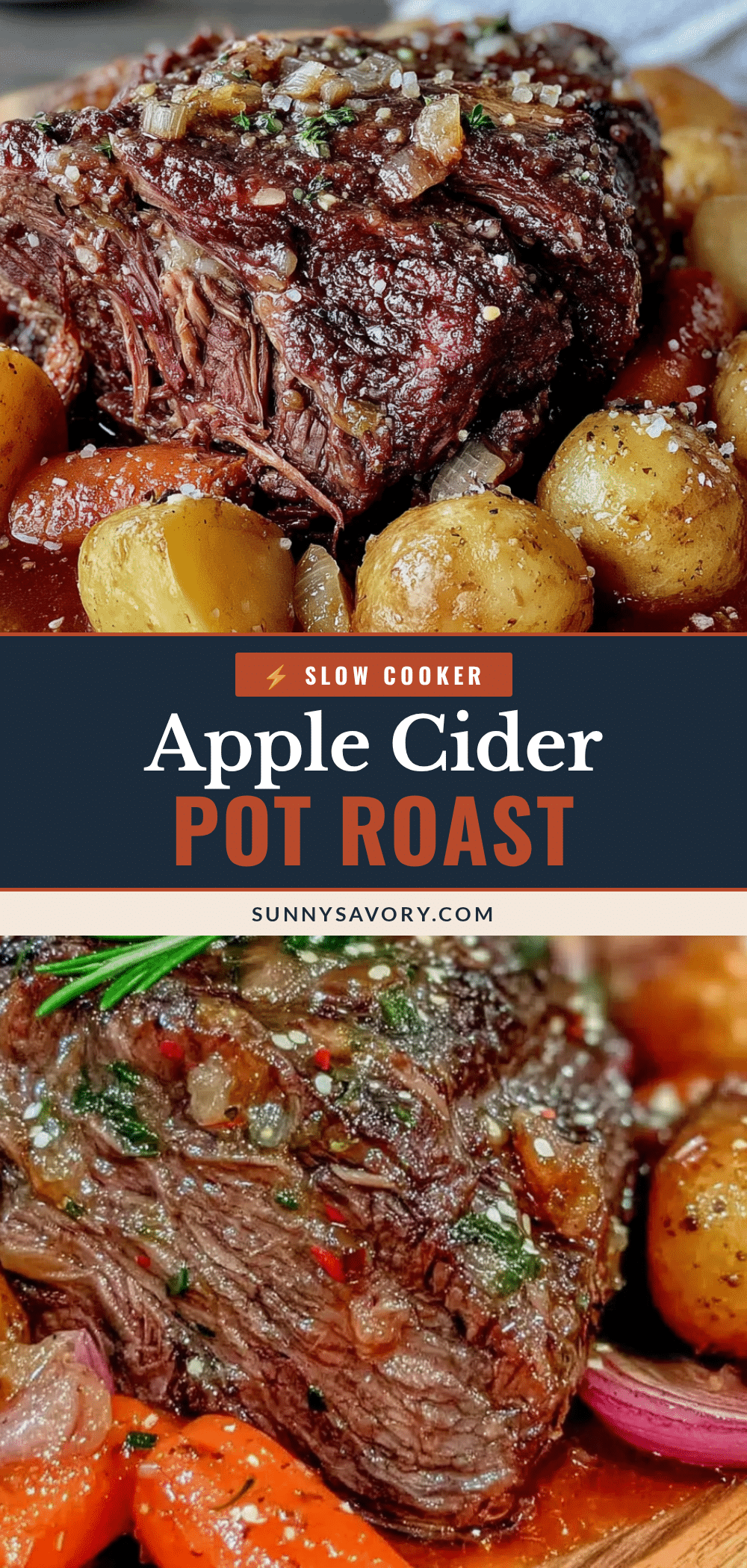
Tender Slow Cooker Apple Cider Pot Roast – Easy Fall Dinner
This tender slow cooker apple cider pot roast is the kind of recipe that makes you look forward to fall all year. It’s proof that sometimes the best dishes come from trying something a little different—even if it means proving yourself wrong.
- Prep Time: 20 minutes
- Cook Time: 8 hours
- Total Time: 8 hours 20 minutes
- Yield: 8 servings 1x
- Category: Main Course
- Cuisine: American
Ingredients
- 3 to 4 pounds chuck roast
- 2 tablespoons olive oil
- 1 teaspoon kosher salt
- 1/2 teaspoon freshly ground black pepper
- 1 large yellow onion, sliced into thick rings
- 4 cloves garlic, minced
- 4 large carrots, peeled and cut into 2-inch chunks
- 3 celery stalks, cut into 2-inch pieces (optional)
- 1 1/2 cups apple cider (unfiltered preferred)
- 1 cup low-sodium beef broth
- 2 tablespoons apple cider vinegar
- 2 tablespoons Worcestershire sauce
- 2 tablespoons brown sugar (light or dark)
- 2 sprigs fresh rosemary (or 1 teaspoon dried)
- 3 sprigs fresh thyme (or 1 teaspoon dried)
- 2 bay leaves (dried)
- 1 cinnamon stick
- 1 teaspoon whole black peppercorns (optional)
Instructions
- Pat the roast dry with paper towels. Season generously on all sides with salt and pepper. Let it sit at room temperature for 20 minutes.
- Heat olive oil in a large skillet over medium-high heat until shimmering. Sear the roast for 4-5 minutes per side without moving it, including the ends, until a deep dark crust forms. Transfer to a plate and set aside.
- Reduce heat to medium. Add sliced onions to the skillet and cook for 3-4 minutes, scraping up browned bits. Add minced garlic and cook for 30 seconds until fragrant.
- Pour about 1/2 cup of the apple cider into the skillet. Stir and scrape to deglaze. Let bubble for 1 minute, then pour the entire mixture (onions, garlic, and liquid) into the slow cooker.
- Place the seared roast in the slow cooker on top of the onions. Arrange carrot and celery chunks around the sides. Tuck rosemary, thyme, bay leaves, and cinnamon stick into the liquid. Sprinkle whole peppercorns around if using.
- In a measuring cup, whisk together remaining 1 cup apple cider, beef broth, apple cider vinegar, Worcestershire sauce, and brown sugar. Pour over the roast and veggies. Liquid should come about halfway up the sides of the roast; add more broth or water if needed.
- Cover and cook on LOW for 8-10 hours or on HIGH for 5-6 hours. LOW is recommended for best tenderness.
- About 30 minutes before serving, carefully remove the roast and veggies from the slow cooker using tongs and a slotted spoon. Place roast on a cutting board and let rest for 5 minutes. Discard herb sprigs, bay leaves, and cinnamon stick.
- Shred the roast using two forks. It should pull apart easily. Return shredded meat to the slow cooker with the cooking liquid. Stir gently to coat.
- Taste and adjust seasoning with salt and pepper. If sauce is thin, mix 2 tablespoons cornstarch with 2 tablespoons cold water to make a slurry, stir into liquid, and cook on HIGH for 15 minutes until thickened.
- Serve immediately over mashed potatoes, egg noodles, or polenta. Ladle extra sauce on top. Garnish with fresh parsley if desired.
Notes
Don’t skip the sear—it builds deep flavor. Low and slow is key for tenderness. Let the roast rest before shredding to retain juices. Taste the sauce before serving and adjust sweetness or acidity as needed. Leftovers taste even better the next day.
Nutrition
- Serving Size: 6 ounces of meat wit
- Calories: 385
- Sugar: 12
- Sodium: 680
- Fat: 18
- Saturated Fat: 6
- Carbohydrates: 18
- Fiber: 3
- Protein: 34
Keywords: slow cooker pot roast, apple cider pot roast, fall dinner, comfort food, beef roast, easy dinner