Love this? Save it for later!
Share the inspiration with your friends
My sister-in-law, Jen, wasn’t trying to impress me. I’d stopped by to drop off a birthday present for my nephew and the smell of melted cheese and savory sausage hit me before I even got my coat off. It was a random Tuesday morning, the house was a little messy, and she was in her pajamas. She just shrugged and said, “Oh, that? It’s just something I threw together for the week.”
“Just something” turned out to be the most incredible breakfast casserole I’d ever tasted. It was fluffy, packed with flavor, and had this perfect golden crust on top. I asked for the recipe, and she scribbled it on a sticky note while simultaneously wrangling a toddler and answering a work call. That’s when I knew it was a keeper—born from real life, not a test kitchen.
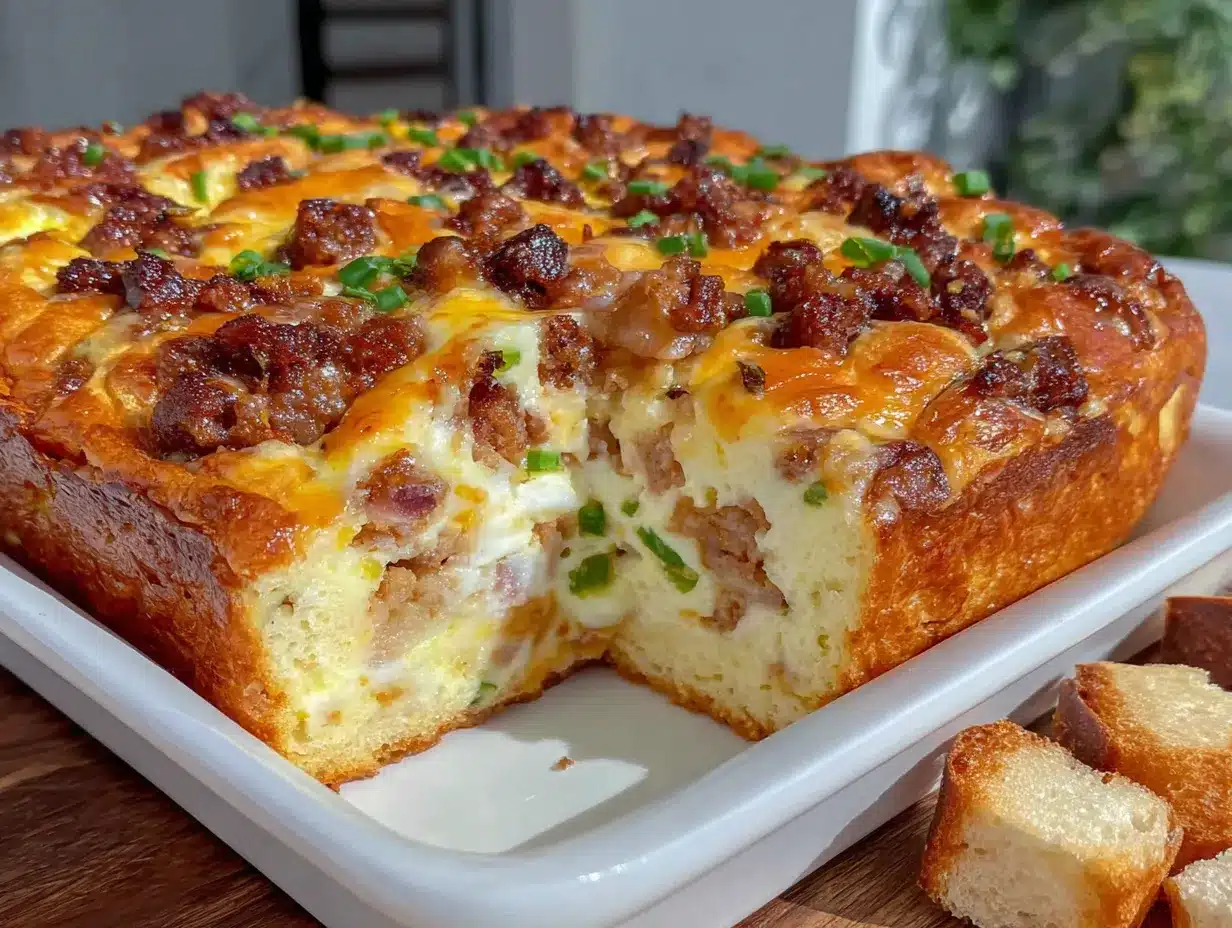
I’ve since made this Easy Freezer-Friendly Egg & Sausage Breakfast Casserole more times than I can count. It’s become my secret weapon for busy mornings, holiday brunches, and those weeks when you just need breakfast to be one less thing to think about. Honestly, if you haven’t tried making a freezer breakfast casserole yet, you’re in for a treat. Maybe you’ve been there—staring into the fridge at 7 AM wondering what to feed a hungry family. This recipe is the answer.
Why You’ll Love This Recipe
Let me tell you why this breakfast casserole has earned a permanent spot in my weekly meal prep rotation. After testing it at least a dozen times (much to my neighbors’ delight), I can confidently say this version is special.
- Make-Ahead Magic: Assemble it the night before or a month ahead—it works beautifully either way. The flavors actually get better as they meld together in the fridge or freezer.
- Simple Ingredients: No fancy grocery trips needed. Eggs, sausage, cheese, bread, and milk—that’s the backbone. You probably have everything already.
- Perfect for Busy Mornings: Whether it’s a chaotic school day or a lazy Sunday brunch, this casserole delivers. Just pop it in the oven and go about your morning.
- Crowd-Pleaser: I’ve served this to picky kids, breakfast snobs, and even my mother-in-law. Every single time, the dish comes back empty.
- Freezer-Friendly: This is the star feature. Make one now, freeze one for later. It’s like finding money in your winter coat pocket.
What makes this recipe different from the dozens of breakfast casseroles out there? It’s the texture. The bread-to-egg ratio is perfectly calibrated so you get a custardy, tender bite every time—never soggy or dry. Plus, the sausage is pre-cooked and drained, so you don’t end up with a greasy mess. I’ve tested it with different breads, cheeses, and add-ins, and this version is my absolute best.
This isn’t just another breakfast casserole—it’s the kind that makes you close your eyes after the first bite. It’s comfort food that feels like a warm hug on a plate, but without the stress of morning prep. Perfect for impressing overnight guests or simply treating yourself to a hot breakfast on a Tuesday.
What Ingredients You Will Need
This recipe uses simple, wholesome ingredients that work together to create something truly special. Most are pantry staples, and the ones that aren’t are easy to find at any grocery store.
For the Casserole Base
- 1 pound breakfast sausage (I prefer Jimmy Dean or Johnsonville for consistent flavor; use mild, spicy, or maple depending on your mood)
- 10 large eggs (room temperature if possible—they incorporate better into the custard)
- 2 cups whole milk (2% works too, but whole milk gives the richest texture)
- 1 teaspoon salt (kosher salt preferred, but table salt works—just use a little less)
- 1/2 teaspoon black pepper (freshly ground if you have it)
- 1/2 teaspoon garlic powder (adds depth without being overpowering)
- 1/2 teaspoon onion powder (optional but recommended)
For the Bread and Cheese Layer
- 6 cups cubed bread (about 6-8 slices; day-old or slightly stale bread works best—I use Texas toast or a crusty French loaf)
- 2 cups shredded cheddar cheese (sharp cheddar gives the most flavor; you can also use a mix of cheddar and Monterey Jack)
- 1 cup shredded mozzarella cheese (adds that beautiful stretch when you pull it apart)
Optional Add-Ins
- 1/2 cup diced bell peppers (any color—adds color and a slight crunch)
- 1/4 cup chopped green onions (for freshness on top)
- 1 cup fresh spinach (wilt it slightly before adding to avoid excess water)
A quick note on substitutions: You can use turkey or chicken sausage for a lighter option. For a gluten-free version, swap the bread for gluten-free bread or even cubed cooked potatoes. If you’re dairy-free, use unsweetened almond milk and dairy-free cheese shreds—just know the texture will be slightly less creamy.
Equipment Needed
You don’t need a professional kitchen to pull this off. Here’s what you’ll need:
- 9×13-inch baking dish (glass or ceramic works best; metal can work but may cook faster)
- Large skillet (for browning the sausage)
- Large mixing bowl (for whisking the egg mixture)
- Whisk (a fork works in a pinch, but a whisk gives you a smoother custard)
- Measuring cups and spoons (accuracy matters for the egg-to-milk ratio)
- Spatula or wooden spoon (for breaking up the sausage)
- Aluminum foil or plastic wrap (for covering before baking or freezing)
- Freezer-safe container or extra baking dish (if you’re making one to freeze)
I’ve made this in a disposable aluminum pan before—perfect for giving to a friend or taking to a potluck. Just keep an eye on the bake time as metal conducts heat differently. If you don’t have a 9×13, you can use two 8×8 dishes and adjust the time slightly. Trust me, I’ve done it when my main dish was in the dishwasher!
Preparation Method
Let’s walk through this step by step. I’ll include all the little details I’ve learned from making this dozens of times.
- Preheat your oven to 350°F (175°C). While it’s heating, grease your 9×13 baking dish with butter or non-stick spray. Don’t skip this—even with the egg mixture, things can stick.
- Cook the sausage. In your large skillet over medium-high heat, break up the sausage with a spatula. Cook until browned and no longer pink, about 6-8 minutes. Drain the grease (I pour it into an empty can or a heat-safe bowl—never down the sink!). Let the sausage cool slightly while you prep the other ingredients. Pro tip: If you’re adding bell peppers or onions, throw them in the pan with the sausage for the last 2 minutes.
- Arrange the bread. Spread the cubed bread evenly in your greased baking dish. Don’t press it down—you want some air pockets for the custard to seep into. If you’re using fresh bread, toast it lightly first or let it sit out for an hour to dry out a bit. This prevents sogginess.
- Layer the sausage and cheese. Sprinkle the cooked sausage evenly over the bread. Then top with both cheeses. Reserve about 1/2 cup of cheese for the top later—it makes for a prettier presentation.
- Make the custard. In your large mixing bowl, whisk together the eggs, milk, salt, pepper, garlic powder, and onion powder. Whisk until the eggs are fully broken up and the mixture is uniform—about 30 seconds of vigorous whisking. You want it smooth, not frothy.
- Pour and soak. Slowly pour the egg mixture evenly over the bread, sausage, and cheese. Use a fork or your fingers to gently press down on the bread to help it absorb the liquid. Let it sit for 10 minutes at room temperature. This is crucial—it gives the bread time to soak up all that custard goodness. If you’re making it the night before, cover and refrigerate at this point.
- Top and bake. Sprinkle the reserved cheese on top. Bake uncovered for 35-40 minutes, or until the center is set and the top is golden brown. You’ll know it’s done when a knife inserted in the center comes out clean and the edges are pulling away from the dish slightly. The internal temperature should reach 160°F (71°C).
- Rest before serving. Let the casserole rest for 5-10 minutes. This allows the custard to set completely and makes slicing much cleaner. I know it’s hard to wait, but trust me on this one.
For the freezer version: Assemble the casserole completely (steps 1-6) in a freezer-safe dish, but don’t bake it. Wrap tightly with plastic wrap, then a layer of aluminum foil. Freeze for up to 3 months. When ready to bake, thaw overnight in the refrigerator, then bake as directed—you may need to add 10-15 minutes since it’s starting cold.
Cooking Tips & Techniques
I’ve made every mistake in the book with breakfast casseroles so you don’t have to. Here’s what I’ve learned:
The soggy casserole problem. If your casserole turns out watery, you’re probably using fresh bread that’s too soft. Day-old bread or bread that’s been toasted lightly soaks up the custard without turning to mush. I’ve forgotten to dry out my bread before and ended up with a casserole that was more like bread pudding—delicious but not what I wanted.
Overcooking is sneaky. Eggs continue to cook after you pull them from the oven. Take the casserole out when the center still has a slight jiggle—like a cheesecake. It will set as it rests. I once left mine in an extra 5 minutes “just to be safe” and ended up with a dry, rubbery texture. Learn from my impatience.
Multitasking like a pro. While the sausage is cooking, cube your bread and shred your cheese. Pre-shredded cheese from the bag works in a pinch, but freshly shredded melts so much better. The anti-caking agents in bagged cheese can make your custard slightly grainy.
Room temperature matters. Cold eggs and milk straight from the fridge can shock the dish and lead to uneven cooking. Let them sit on the counter for 15-20 minutes before whisking. If you forgot, place the eggs in a bowl of warm water for 5 minutes.
Don’t skip the rest. That 10-minute soak before baking? Non-negotiable. It’s the difference between a casserole that holds together beautifully and one that falls apart on the plate. I learned this the hard way when I rushed it and ended up serving breakfast soup.
Variations & Adaptations
One of the best things about this recipe is how adaptable it is. Here are some variations I’ve tried and loved:
Vegetarian Version: Skip the sausage and add 2 cups of sautéed mushrooms, bell peppers, and onions. The mushrooms provide that savory, umami flavor that mimics meat. I’ve also added a can of drained black beans for extra protein and texture.
Southwest Style: Use chorizo instead of breakfast sausage, add 1 can of drained diced green chiles, and swap the cheddar for pepper jack cheese. Top with fresh cilantro and a dollop of sour cream after baking. My husband requests this version every football Sunday.
Low-Carb Option: Replace the bread with 4 cups of frozen hash browns (thawed and patted dry) or 3 cups of riced cauliflower (squeezed dry in a kitchen towel). The texture is different but still delicious—more like a crustless quiche. I’ve made this for my keto friends and they always ask for seconds.
Holiday Brunch Upgrade: Add 1 cup of cooked, crumbled bacon and 1/2 cup of caramelized onions. Use a mix of gruyere and cheddar cheese. This version is fancy enough for Christmas morning but still comes together with minimal effort.
Spicy Kick: Use hot breakfast sausage, add 1/2 teaspoon of red pepper flakes to the egg mixture, and throw in some diced jalapeños. This is my personal favorite when I need a little wake-up call in the morning.
Serving & Storage Suggestions
This casserole is incredibly versatile when it comes to serving. Here’s how I handle it:
Serving: Serve warm, straight from the oven. I like to cut it into squares and serve with a side of fresh fruit or a simple green salad to balance the richness. A drizzle of hot sauce or salsa on top is never a bad idea. For brunch spreads, I’ll also set out bowls of fresh berries, yogurt, and maybe some cinnamon rolls if I’m feeling extra.
Storage: Leftovers keep beautifully in the refrigerator for up to 4 days. Store in an airtight container or tightly covered with foil. The flavors actually meld together and taste even better the next day—if you can resist eating it all right away.
Reheating: Individual slices microwave beautifully in 30-second intervals. For larger portions, reheat in a 350°F oven for 10-15 minutes covered with foil. If it seems dry, sprinkle a tablespoon of milk or water over the top before reheating. I’ve also reheated slices in an air fryer at 300°F for 5 minutes—the edges get wonderfully crispy.
Freezer Instructions: For the fully baked casserole, let it cool completely, then cut into individual portions. Wrap each piece in plastic wrap and place in a freezer bag. They’ll keep for up to 3 months. To reheat from frozen, unwrap and microwave for 2-3 minutes, or reheat in a 350°F oven for 20 minutes. This is my go-to for easy breakfasts during busy weeks.
Nutritional Information & Benefits
Here’s the estimated nutritional breakdown per serving (based on 8 servings):
| Nutrient | Amount Per Serving |
|---|---|
| Calories | 385 |
| Protein | 24g |
| Fat | 26g |
| Carbohydrates | 18g |
| Fiber | 1g |
| Sugar | 4g |
| Sodium | 820mg |
This breakfast casserole is packed with protein from the eggs and sausage, keeping you full and satisfied until lunch. Eggs are a fantastic source of choline, which supports brain health. The calcium from the cheese is great for bones. If you use whole wheat bread, you’ll add a bit more fiber. For a lower-sodium version, use reduced-sodium sausage and cheese, and cut back on the added salt.
This recipe is naturally gluten-free if you use gluten-free bread. It’s also easy to make dairy-free with appropriate substitutions. Just be mindful of the protein content if you have kidney concerns—this is a high-protein dish.
Conclusion
This Easy Freezer-Friendly Egg & Sausage Breakfast Casserole has become a staple in my kitchen for a reason. It’s forgiving, adaptable, and delivers comfort food at its finest without demanding hours of your morning. Whether you’re feeding a crowd, meal prepping for a busy week, or just want to wake up to the smell of a hot breakfast, this recipe delivers every single time.
I love that I can make it when I have energy on a Sunday and then enjoy it on a chaotic Wednesday when I barely have time to pour my coffee. It’s like a little gift to my future self. The best recipes are the ones that make life easier without sacrificing flavor, and this one does exactly that.
Now I’d love to hear from you! Have you tried making a freezer breakfast casserole before? What’s your favorite add-in? Drop a comment below and share your version—I’m always looking for new ideas to try. And if you make this recipe, tag me in your photos. Nothing makes my day like seeing someone else fall in love with a recipe that started with a sticky note in my sister-in-law’s messy kitchen.
Happy cooking, friends. Your future self will thank you for having this one in the freezer.
Frequently Asked Questions
Can I use frozen sausage instead of fresh?
Absolutely. Just thaw it completely in the refrigerator overnight before cooking. You can also cook it from frozen in the skillet—just break it up as it thaws and cook a few minutes longer to ensure it’s fully browned.
How do I prevent my casserole from getting soggy?
The key is using day-old or slightly stale bread that’s been dried out. Fresh bread absorbs too much liquid and turns mushy. Also, make sure to drain the sausage grease thoroughly and let the assembled casserole sit for 10 minutes before baking so the bread absorbs the custard evenly.
Can I make this egg-free or dairy-free?
For an egg-free version, you can try using a commercial egg replacer or a mixture of flax eggs and extra milk, but the texture will be significantly different. For dairy-free, use unsweetened almond milk, dairy-free cheese shreds, and a dairy-free butter substitute for greasing the dish. The texture won’t be as rich, but it’s still delicious.
How long does this casserole last in the freezer?
Properly wrapped, this casserole will maintain its best quality for up to 3 months. After that, it’s still safe to eat but may develop freezer burn or lose some texture. Always wrap tightly in plastic wrap followed by a layer of aluminum foil or use a vacuum sealer for best results.
Can I add vegetables without making it watery?
Yes! Just make sure to cook watery vegetables like mushrooms, zucchini, or spinach first to release their moisture. For bell peppers and onions, sauté them with the sausage. Frozen vegetables should be thawed and patted dry with paper towels before adding. This extra step makes all the difference.
Pin This Recipe!
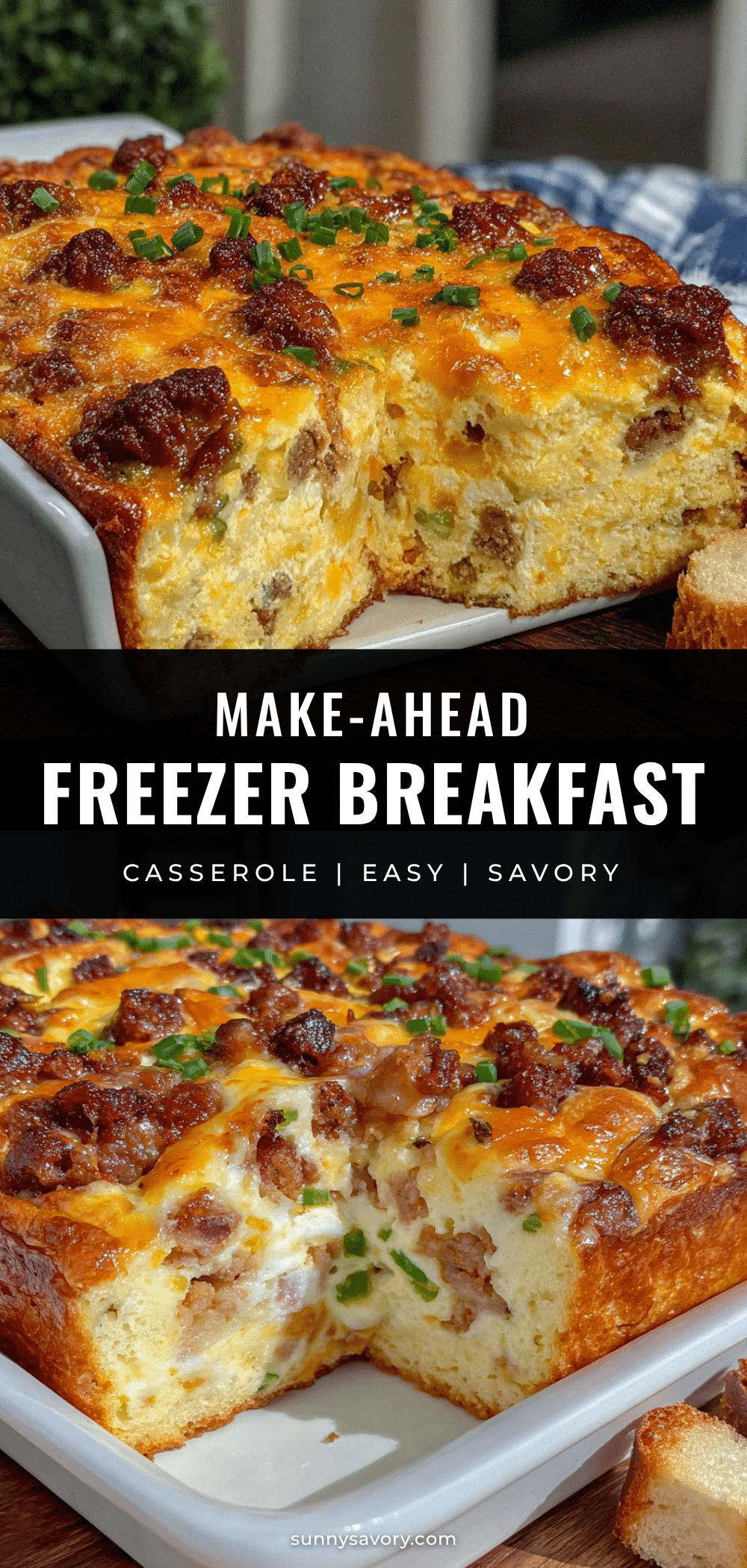
Easy Freezer-Friendly Egg & Sausage Breakfast Casserole

A fluffy, savory breakfast casserole packed with sausage, cheese, and eggs. Perfect for make-ahead meal prep, busy mornings, or holiday brunches, and it freezes beautifully for up to 3 months.
- Prep Time: 20 minutes
- Cook Time: 40 minutes
- Total Time: 1 hour (plus 10 minutes resting)
- Yield: 8 servings 1x
- Category: Breakfast / Brunch
- Cuisine: American
Ingredients
- 1 pound breakfast sausage (mild, spicy, or maple)
- 10 large eggs (room temperature preferred)
- 2 cups whole milk (2% works, but whole milk is richest)
- 1 teaspoon kosher salt (or 3/4 teaspoon table salt)
- 1/2 teaspoon black pepper (freshly ground preferred)
- 1/2 teaspoon garlic powder
- 1/2 teaspoon onion powder (optional)
- 6 cups cubed bread (about 6–8 slices, day-old or slightly stale; Texas toast or crusty French loaf)
- 2 cups shredded sharp cheddar cheese
- 1 cup shredded mozzarella cheese
- 1/2 cup diced bell peppers (optional, any color)
- 1/4 cup chopped green onions (optional, for garnish)
- 1 cup fresh spinach (optional, wilted before adding)
Instructions
- Preheat oven to 350°F (175°C). Grease a 9×13-inch baking dish with butter or non-stick spray.
- Cook sausage in a large skillet over medium-high heat, breaking it up with a spatula, until browned and no longer pink (6-8 minutes). Drain grease. If using bell peppers or onions, add them for the last 2 minutes.
- Spread cubed bread evenly in the greased baking dish. Do not press down.
- Sprinkle cooked sausage evenly over the bread. Top with both cheeses, reserving 1/2 cup for later.
- In a large mixing bowl, whisk together eggs, milk, salt, pepper, garlic powder, and onion powder until smooth (about 30 seconds).
- Slowly pour the egg mixture evenly over the bread, sausage, and cheese. Gently press down on the bread with a fork or fingers to help it absorb the liquid. Let sit for 10 minutes at room temperature. (If making ahead, cover and refrigerate at this point.)
- Sprinkle reserved cheese on top. Bake uncovered for 35-40 minutes, until center is set and top is golden brown. A knife inserted in the center should come out clean, and internal temperature should reach 160°F (71°C).
- Let casserole rest for 5-10 minutes before serving. For freezer version: Assemble completely (steps 1-6) in a freezer-safe dish, do not bake. Wrap tightly with plastic wrap then foil. Freeze up to 3 months. Thaw overnight in refrigerator before baking; add 10-15 minutes to bake time.
Notes
For best texture, use day-old or slightly stale bread. Let the assembled casserole sit for 10 minutes before baking to allow bread to absorb custard. To prevent sogginess, drain sausage grease thoroughly and cook watery vegetables first. For a vegetarian version, substitute sausage with sautéed mushrooms, bell peppers, and onions. For a low-carb option, replace bread with thawed and dried hash browns or riced cauliflower.
Nutrition
- Serving Size: 1 square (1/8 of cas
- Calories: 385
- Sugar: 4
- Sodium: 820
- Fat: 26
- Saturated Fat: 12
- Carbohydrates: 18
- Fiber: 1
- Protein: 24
Keywords: breakfast casserole, egg casserole, sausage casserole, freezer-friendly, make-ahead breakfast, holiday brunch, meal prep