Love this? Save it for later!
Share the inspiration with your friends
The heavy oak door of the community hall was propped open just enough to let the autumn chill seep in, but the warmth inside was another story entirely. I had only meant to grab a quick pretzel from the vendor before the beer garden opened for the evening. That was my plan, anyway. Then, the scent hit me. It wasn’t just the typical smell of roasted nuts or spilled lager. It was deep, savory, and tangy, pulling me toward a folding table tucked in the back corner where an older man named Hans was working.
Hans wasn’t trying to impress anyone. He was just wiping down a stainless steel counter with a rag that had seen better days. I’d stopped by to escape the wind and maybe buy a ticket for the raffle, but the aroma of caramelized onions and sour cabbage kept me rooted to the spot. He glanced up, saw me staring, and didn’t even pause his chopping. He just nodded toward the skillet on the portable burner. “Smell that?” he asked, his voice rough like gravel. “That is the only way to do it.”
I watched him toss bratwurst into the pan with a casual indifference that felt almost rude. These weren’t fancy, artisanal sausages from a high-end butcher. They were standard, plump German brats, scored lightly with a knife. He threw in a massive handful of sauerkraut, drained but not rinsed, letting it sizzle alongside the meat. There was no wine, no fancy beer reduction, no complicated spice rub. Just fat, acid, and heat. The brats browned in their own juices while the kraut softened, absorbing every drop of that rendered pork fat. It was messy. A drop of grease landed on his shirt, and he didn’t even blink.
I ended up buying two sausages because I couldn’t walk away. They were served on a paper plate with a slice of dark rye bread, no frills. The first bite was a shock to the system. The snap of the casing gave way to juicy, seasoned meat, while the sauerkraut provided this bright, acidic punch that cut through the richness perfectly. It tasted like comfort, like history, like something that had been made exactly this way for a hundred years. Hans went back to wiping his counter as if he hadn’t just fed me the best meal of my trip.
I keep making this skillet because it reminds me of that simplicity. In a world of complicated dietary restrictions and gourmet twists, there is something grounding about a meal that doesn’t try to be anything other than what it is. You know that feeling when you finally stop overthinking dinner and just let the ingredients do the work? That’s what this is. It’s honest food. It’s the kind of recipe that sticks with you long after the last bite is gone, making you want to recreate that exact moment of casual perfection in your own kitchen.
Why You’ll Love This Recipe
There is a specific kind of magic that happens when you combine high-quality sausage with fermented cabbage. It sounds simple, maybe even basic, but trust me, this is where the real flavor lives. I’ve spent years testing different methods for cooking bratwurst, from boiling them in beer to grilling them over open flames. But honestly? Nothing beats the one-pan convenience and intense flavor development of the skillet method. This isn’t just another dinner idea; it’s a lesson in balance.
Here is why this Classic Oktoberfest Bratwurst and Sauerkraut Skillet deserves a spot in your weekly rotation:
- Quick & Easy: You can have this meal on the table in under 30 minutes. It is perfect for busy weeknights when you are tired but still want something hot and hearty. The skillet does all the heavy lifting while you relax.
- Simple Ingredients: No fancy grocery trips needed. You likely already have onions, butter, and spices in your kitchen. The brats and sauerkraut are staples that you can find in any supermarket, frozen or refrigerated section.
- Perfect for Autumn: This dish screams cozy. It is great for potlucks, game day parties, or just a rainy Sunday dinner. The warm spices and savory elements are ideal for cooling weather.
- Crowd-Pleaser: Kids and adults alike love this combination. The sweetness of the onions appeals to picky eaters, while the tang of the kraut satisfies those who love bold flavors. It rarely leaves any leftovers.
- Unbelievably Delicious: The texture and flavor combo is next-level comfort food. The crispy edges of the sausage contrast with the tender, tangy cabbage. It is savory, salty, and slightly sweet all at once.
What makes this recipe different from the rest? Many people rinse their sauerkraut, which removes the beneficial bacteria and the sharp, tangy flavor that defines the dish. I don’t. By keeping the brine, you get that authentic sour kick that balances the rich fat of the bratwurst. Also, scoring the sausages before cooking allows the flavor to penetrate deeper and prevents them from bursting. It’s a small technique, but it makes a huge difference. This isn’t just boiled sausages with a side of cabbage. It is a unified dish where every element complements the other. It’s the kind of meal that makes you close your eyes after the first bite. It’s comfort food reimagined—fast, easy, but with the same soul-soothing satisfaction as a meal cooked for hours. Perfect for impressing guests without stress, or turning a simple meal into something memorable.
What Ingredients You Will Need
This recipe uses simple, wholesome ingredients to deliver bold flavor and satisfying texture without the fuss. The beauty of this dish lies in its minimalism. You don’t need a pantry full of exotic spices to make it work. The quality of your main components matters most, especially the sausage and the cabbage.
Here is what you will need to make this Classic Oktoberfest Bratwurst and Sauerkraut Skillet:
- Bratwurst Sausages (8-12 links): Look for high-quality pork bratwurst. I recommend brands like Hillshire Farm or local butcher shop sausages for the best snap and flavor. Avoid pre-cooked smoked sausages if you want that fresh, juicy texture. The fat content is important for flavor.
- Sauerkraut (1 large jar or bag): This is the star of the show. Use raw, refrigerated sauerkraut if you can find it, as it has a brighter flavor. If using shelf-stable jarred kraut, drain it well but do not rinse it. Rinsing washes away the tanginess. The brine is essential for the sauce.
- Yellow Onions (2 large): Yellow onions are best for cooking because they caramelize well and add a natural sweetness. You want them soft and translucent, not burnt. They balance the acidity of the kraut.
- Unsalted Butter (2 tablespoons): Butter adds a rich, creamy mouthfeel that oil alone can’t provide. It helps brown the sausages and adds depth to the onions. You can use olive oil if you prefer, but butter is traditional here.
- Dijon Mustard (1 tablespoon): A good quality Dijon adds a sharp, tangy note that cuts through the richness. It also helps emulsify the juices in the pan into a nice glaze. Don’t skip this; it’s the secret weapon.
- Caraway Seeds (1 teaspoon): This is the classic spice pairing for sauerkraut. It adds an earthy, slightly peppery flavor that defines the German profile. If you don’t have caraway, fennel seeds can work, but caraway is the authentic choice.
- Garlic (2 cloves): Fresh garlic adds a pungent aroma that brightens the dish. Minced finely so it doesn’t burn. It pairs perfectly with the onions.
- Worcestershire Sauce (1 teaspoon): A few dashes add umami and depth. It’s a liquid seasoning that enhances the savory notes without overpowering the dish. You won’t taste it directly, but you will miss it if it’s gone.
- Salt and Black Pepper: To taste. Remember that the sauerkraut and sausages are already salty, so taste before adding extra salt.
If you are looking to substitute, you can use turkey bratwurst for a lighter option, though the flavor will be less rich. For a gluten-free version, ensure your mustard and Worcestershire sauce are certified gluten-free, as some brands contain barley vinegar. In summer, you could swap the heavy onions for fresh apples, which adds a nice crunch and sweetness. But for this classic version, stick to the basics.
Equipment Needed
You don’t need a lot of fancy gear to pull this off. A large skillet is the most important tool. I prefer a cast-iron skillet because it retains heat well and helps get that nice crust on the sausages. However, a heavy-bottomed stainless steel or non-stick skillet works just as well. If you don’t have a skillet large enough to hold all the sausages in a single layer, you may need to cook them in batches.
- Large Skillet (10-12 inches): Essential for browning and simmering. Cast iron is ideal for its heat retention.
- Sharp Knife: For slicing the sausages and mincing the garlic. A dull knife is dangerous and inefficient.
- Cutting Board: Keep one for veggies and one for meat to avoid cross-contamination, or wash thoroughly in between.
- Wooden Spoon or Spatula: For stirring the onions and kraut without scratching your pan.
- Colander: If your sauerkraut is very watery, you may want to drain it before adding to the pan.
If you are cooking for a large crowd, consider using two pans. It speeds up the process and ensures everything cooks evenly. Also, make sure your skillet is clean before starting. Leftover bits from previous meals can burn and add bitter flavors. A quick wipe-down with soap and water is enough. No need for special maintenance, just keep it dry to prevent rust if you use cast iron.
Preparation Method
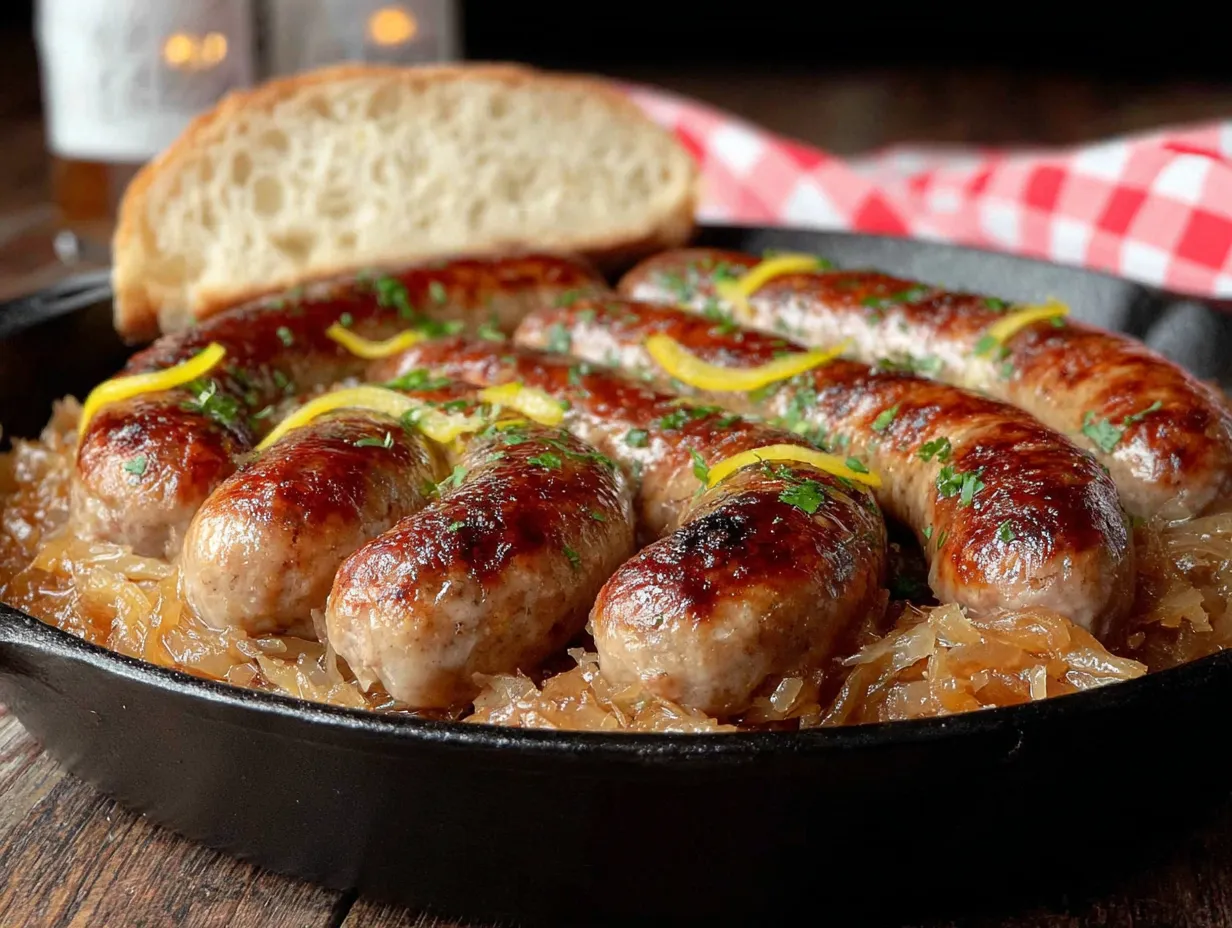
Getting this right is about timing and heat management. Follow these steps closely for the best results.
- Prepare the Sausages (5 minutes): Take the bratwursts out of the fridge and let them sit for 10 minutes to take the chill off. Cold sausages hit a hot pan and can shrink or burst. Use a sharp knife to score the sausages lengthwise, about 1/4 inch deep. Do this 2-3 times per sausage. This allows the fat to render out and the flavor to penetrate. It also prevents them from exploding.
- Slice the Onions (3 minutes): Peel the onions and slice them into half-moons, about 1/4 inch thick. Try to keep the pieces uniform so they cook evenly. Mince the garlic cloves finely.
- Brown the Sausages (8-10 minutes): Heat your skillet over medium-high heat. Add the butter and let it melt until it foams slightly. Place the sausages in the pan in a single layer. Do not overcrowd the pan. Cook for 3-4 minutes per side until they are deeply browned and have a nice crust. If the pan gets too hot, reduce the heat slightly. You want color, not burning. Remove the sausages to a plate and set aside.
- Cook the Onions (5 minutes): In the same pan, with the rendered fat, add the sliced onions. Reduce heat to medium. Cook, stirring occasionally, until the onions are soft and starting to turn golden. This should take about 5 minutes. Add the minced garlic in the last minute so it doesn’t burn.
- Add the Sauerkraut (2 minutes): Add the drained sauerkraut to the pan with the onions. Sprinkle the caraway seeds over the top. Stir everything together. Let it cook for 2 minutes to heat through and combine the flavors. The kraut should start to sizzle and slightly caramelize.
- Simmer and Glaze (5 minutes): Return the sausages to the pan, nestling them into the kraut mixture. Pour in the Dijon mustard, Worcestershire sauce, and about 1/4 cup of water (or beer if you have it). Stir gently to coat the sausages. Cover the pan with a lid and reduce heat to medium-low. Let it simmer for 5 minutes. This steams the sausages through and infuses them with the kraut flavor.
- Final Brown (2 minutes): Remove the lid. If there is still excess liquid, let it cook uncovered for another 2 minutes to evaporate. You want a thick, glossy glaze, not a soup. The sausages should be hot throughout and the kraut should be tender but not mushy.
- Serve: Plate the sausages on top of the sauerkraut mixture. Serve immediately with crusty bread or mustard on the side.
Cooking Tips & Techniques
I learned this technique the hard way. Early on, I just threw everything in the pan and ended up with gray, soggy sausages and watery cabbage. It was disappointing. Here are some tips to avoid that fate.
- Don’t Skip the Scoring: I know it takes an extra minute, but scoring the sausages is crucial. It increases the surface area for browning and allows the fat to escape, which crisps up the exterior. It also helps the seasoning penetrate.
- Manage the Heat: Medium-high heat is best for browning, but medium is better for simmering. If you leave it on high, the sugars in the kraut and onions will burn before the sausages are cooked through. Patience pays off.
- Drain the Kraut Well: Sauerkraut comes in brine, which can be very watery. If you don’t drain it, you will end up boiling your sausages instead of pan-frying them. Use a colander and press down gently to remove excess liquid.
- Use the Right Pan: A non-stick pan is easier for cleanup, but cast iron gives you better browning. If you use non-stick, you may need to add a little more butter to get that crust.
- Taste as You Go: Sauerkraut salt content varies by brand. Taste the mixture before adding extra salt. The sausages are usually salty enough on their own.
Common mistakes include rushing the browning step or adding too much liquid. Remember, the goal is a glaze, not a stew. If it looks too dry, add a splash more water. If it looks too wet, cook it uncovered longer.
Variations & Adaptations
While the classic version is hard to beat, there are fun ways to tweak this recipe to suit your taste or dietary needs.
- Spicy Kick: Add a diced jalapeño or a teaspoon of red pepper flakes when you add the garlic. This adds a nice heat that contrasts with the tangy kraut.
- Apple & Onion Twist: Swap half the onions for diced apples, like Granny Smith or Honeycrisp. The sweetness of the apples pairs beautifully with the pork and cabbage. This is a very traditional German combination.
- Beer Reduction: Instead of water, use a light lager or pilsner. Simmer the beer for a minute before adding the kraut to reduce the alcohol and concentrate the flavor. This adds a subtle maltiness.
- Vegetarian Option: Use high-quality plant-based bratwursts. They often have a different texture, so you may need to cook them slightly longer to get a good crust. The rest of the method remains the same.
- Garlic Herb Boost: Add a teaspoon of dried thyme or rosemary when cooking the onions. This adds an earthy, aromatic note that complements the caraway seeds.
I once tried this with smoked sausage instead of fresh bratwurst. It was good, but different. The smoke flavor overpowered the kraut. Stick to fresh brats for the best balance. You can also use chicken bratwurst for a lighter option, though they lack the rich fat content of pork.
Serving & Storage Suggestions
This dish is best served immediately while the sausages are hot and the kraut is sizzling. I recommend serving it on a large platter with crusty sourdough bread or pretzel rolls on the side. A dollop of whole-grain mustard is essential for dipping. You can also serve it over a bed of creamy mashed potatoes to soak up the juices.
For leftovers, store them in an airtight container in the refrigerator for up to 3 days. The flavors actually get better after a day or two as the kraut continues to absorb the sausage fat. To reheat, use a skillet over medium heat with a splash of water to steam them back to life. Avoid the microwave, as it can make the sausages rubbery. You can also freeze this dish, though the texture of the kraut may become softer upon thawing. Reheat gently on the stove.
Nutritional Information & Benefits
This dish is hearty and satisfying, but it’s worth noting the nutritional aspects. Bratwurst is high in protein and fat, providing sustained energy. Sauerkraut is rich in probiotics, which are good for gut health, and vitamin C. Onions provide fiber and antioxidants. While it is not a low-calorie meal, it is nutrient-dense. It is gluten-free if you use gluten-free sausages and mustard. It is also dairy-free if you omit the butter or use olive oil. I enjoy this as a balanced meal when paired with a side salad or steamed vegetables to add fiber and freshness.
Conclusion
This Classic Oktoberfest Bratwurst and Sauerkraut Skillet is more than just dinner. It is a reminder that simple ingredients, cooked with care, can create something extraordinary. It’s easy, flavorful, and deeply comforting. I hope you try this recipe and find your own version of that moment at Hans’ table. Feel free to adjust the spices or add your favorite veggies to make it your own. I love this recipe because it brings people together around a warm, savory table. Please leave a comment below and let me know how it turned out for you. Share your photos on social media and tag me. Happy cooking, and enjoy every bite.
FAQs
Can I use pre-cooked sausages?
Yes, you can use pre-cooked smoked sausages, but they won’t have the same juicy texture as fresh bratwurst. You will need to brown them quickly just to get some color, as they are already cooked through. Fresh brats are highly recommended for the best result.
Do I need to rinse the sauerkraut?
No, do not rinse the sauerkraut. Rinsing removes the tangy flavor and the beneficial bacteria. Drain the excess liquid, but keep the kraut as is. The brine adds essential acidity to balance the rich sausage fat.
What beer goes best with this dish?
A light lager or pilsner is the traditional choice. It complements the maltiness of the sausages without overpowering the flavors. You can also use the beer in the cooking liquid for extra depth.
How do I prevent the sausages from bursting?
Score the sausages with a knife before cooking. This allows the steam and fat to escape in a controlled way. Also, avoid piercing them with a fork, which can cause them to leak juices and dry out.
Can I make this in a slow cooker?
Yes, you can. Brown the sausages first for flavor, then add them to the slow cooker with the onions, kraut, and liquid. Cook on low for 4-6 hours. The texture will be softer, but the flavor will still be delicious.
PrintClassic Oktoberfest Bratwurst and Sauerkraut Skillet

A simple, one-pan German dish featuring browned bratwurst sausages simmered with caramelized onions, tangy sauerkraut, and savory spices for a comforting autumn meal.
- Prep Time: 8 minutes
- Cook Time: 22 minutes
- Total Time: 30 minutes
- Yield: 4 servings 1x
- Category: Main Course
- Cuisine: German
Ingredients
- 8–12 links pork bratwurst sausages
- 1 large jar or bag sauerkraut (drained, not rinsed)
- 2 large yellow onions, sliced into half-moons
- 2 tablespoons unsalted butter
- 1 tablespoon Dijon mustard
- 1 teaspoon caraway seeds
- 2 cloves garlic, minced
- 1 teaspoon Worcestershire sauce
- Salt and black pepper to taste
- 1/4 cup water or beer (optional)
Instructions
- Remove bratwursts from the fridge and let sit for 10 minutes to take the chill off. Score the sausages lengthwise 2-3 times with a sharp knife to prevent bursting and allow fat to render.
- Slice onions into half-moons and mince garlic cloves finely.
- Heat a large skillet over medium-high heat. Add butter and let it melt until foaming. Place sausages in the pan in a single layer and cook for 3-4 minutes per side until deeply browned. Remove sausages to a plate and set aside.
- In the same pan with rendered fat, add sliced onions. Reduce heat to medium and cook for 5 minutes until soft and golden. Add minced garlic in the last minute.
- Add drained sauerkraut and caraway seeds to the pan. Stir to combine and cook for 2 minutes to heat through and caramelize slightly.
- Return sausages to the pan, nestling them into the kraut mixture. Pour in Dijon mustard, Worcestershire sauce, and 1/4 cup water or beer. Stir gently to coat.
- Cover the pan with a lid, reduce heat to medium-low, and simmer for 5 minutes to steam the sausages through.
- Remove the lid and cook uncovered for another 2 minutes to evaporate excess liquid and create a glaze. Ensure sausages are hot and kraut is tender.
- Serve immediately with crusty bread or mustard on the side.
Notes
Do not rinse the sauerkraut to preserve the tangy flavor and beneficial bacteria. Scoring the sausages is crucial to prevent them from bursting and to allow fat to render. Taste before adding extra salt as both the kraut and sausages are salty. For a spicy kick, add jalapeño or red pepper flakes. For a vegetarian option, use plant-based bratwursts.
Nutrition
- Serving Size: 2 sausages with saue
- Calories: 650
- Sugar: 8
- Sodium: 1200
- Fat: 45
- Saturated Fat: 15
- Carbohydrates: 25
- Fiber: 6
- Protein: 35
Keywords: Oktoberfest, Bratwurst, Sauerkraut, German Recipe, Skillet, One-Pan Meal, Comfort Food, Autumn Dinner, Sausage, Cabbage