Love this? Save it for later!
Share the inspiration with your friends
Introduction
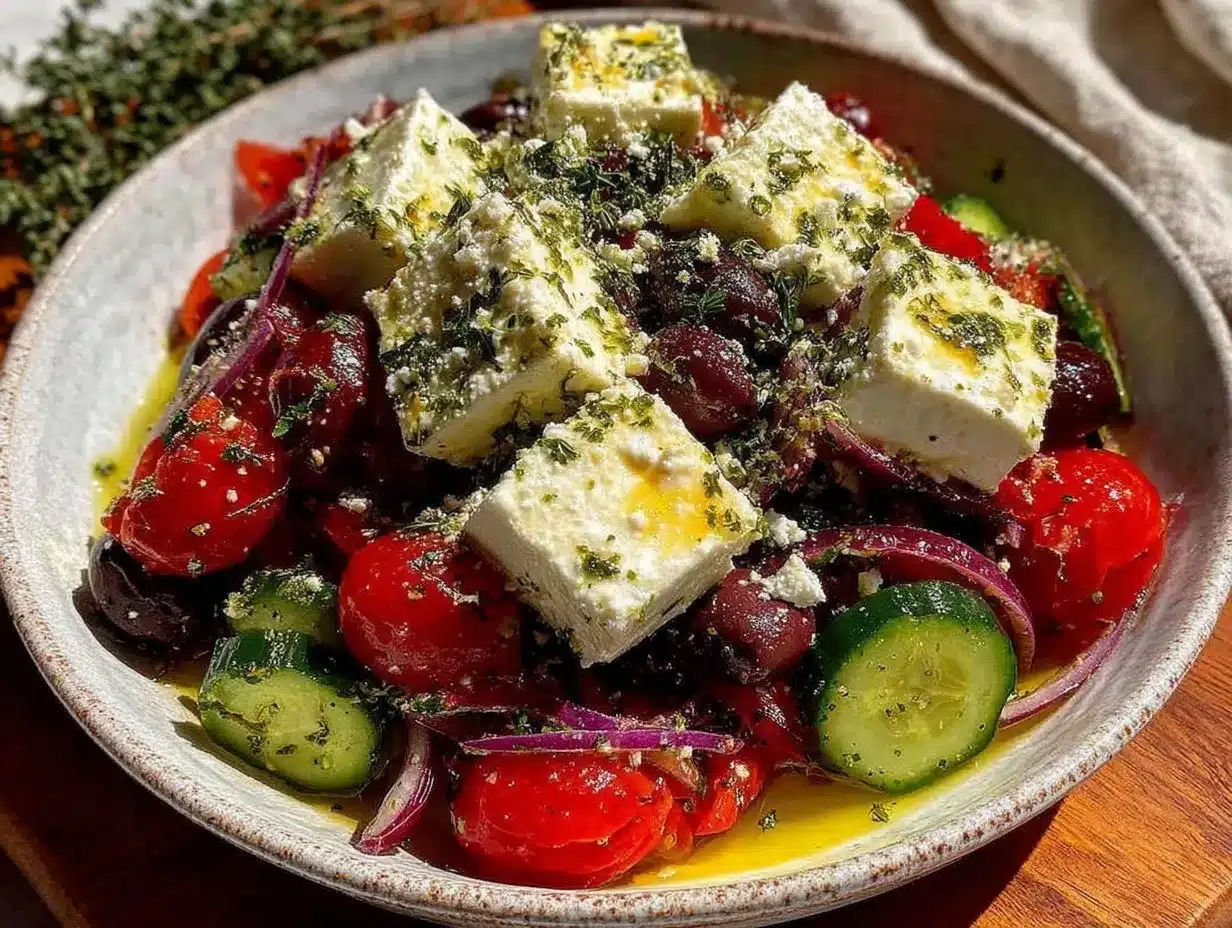
“You know, I never thought a salad could stop me in my tracks, but that’s exactly what happened last summer,” I told my friend as we sat on her sun-dappled porch. It was a random Tuesday afternoon, and she’d just tossed together a bowl of what she called her go-to fresh Greek salad. Honestly, the way she chopped the cucumbers and olives, the tang of the feta, and that drizzle of olive oil—it was like a little Mediterranean vacation on a plate.
What’s funny is that this recipe wasn’t born in some fancy restaurant or grand family gathering. It came from a small farmers market stall run by an elderly Greek couple who insisted I try their salad dressing. I was skeptical at first, juggling bags of fresh veggies and overheated from the July sun. But one bite, and I was hooked. The salad was crisp, vibrant, and had this perfect balance of flavors that made me forget the sweltering heat and my long day.
Since then, I’ve made this fresh Greek salad a staple in my kitchen, especially when I want something light but satisfying. Maybe you’ve been there—craving something healthy that doesn’t feel like a chore to eat. This salad fits that bill perfectly. Plus, it’s heart-healthy, so you can feel good about diving in for seconds (or thirds!). I mean, who wouldn’t want a little Mediterranean sunshine in their meal, right?
Why You’ll Love This Recipe
Over the years, I’ve tested many versions of Greek salad, tweaking ingredients and ratios until this fresh Greek salad became my absolute favorite. It’s simple to make but packs a punch in taste and nutrition. Here’s why this recipe stands out:
- Quick & Easy: Ready in under 15 minutes, making it perfect for busy weeknights or spontaneous lunch plans.
- Simple Ingredients: Uses pantry staples and easily found fresh produce—no need for specialty stores.
- Perfect for Heart-Healthy Mediterranean Diet: Loaded with heart-friendly olive oil, fresh veggies, and wholesome feta cheese.
- Crowd-Pleaser: Whether it’s a casual backyard dinner or a potluck, this salad always gets compliments.
- Unbelievably Delicious: The combination of briny olives, crisp cucumbers, and tangy feta creates a texture and flavor duo that’s hard to beat.
This isn’t just another Greek salad recipe you find online. I’ve balanced the dressing just right—not too oily, not too tart—and use small-curd feta for that creamy, melt-in-your-mouth feel. Plus, adding fresh herbs like oregano gives it an authentic burst that makes you pause and savor each bite. Honestly, this recipe has become my go-to when I want healthful comfort food without fuss. If you’ve ever tried a Greek salad that felt flat or one-note, give this one a shot—it might just change your mind about salads for good.
What Ingredients You Will Need
This fresh Greek salad uses wholesome ingredients that work together to deliver bold flavors and satisfying crunch without any complicated steps. Most of these are pantry or farmers market staples, and you can swap or tweak a few depending on what you have on hand.
- Fresh Vegetables:
- 2 large ripe tomatoes, chopped (I prefer vine-ripened for sweetness)
- 1 medium cucumber, peeled and diced (English cucumbers work great)
- 1 small red onion, thinly sliced (soaked in cold water to cut sharpness)
- 1 green bell pepper, deseeded and sliced
- Cheese & Olives:
- 6 oz (170g) feta cheese, crumbled (I recommend a small-curd feta for creaminess; Dodoni is a favorite brand)
- 1/2 cup Kalamata olives, pitted and halved (adds that signature briny punch)
- Dressing:
- 3 tablespoons extra virgin olive oil (choose a fruity, cold-pressed variety for best flavor)
- 1 tablespoon red wine vinegar (balances the olive oil with acidity)
- 1 teaspoon dried oregano (or 1 tablespoon fresh, finely chopped)
- 1/2 teaspoon sea salt (adjust to taste)
- Freshly ground black pepper to taste
- Optional: 1 small garlic clove, minced (adds a subtle kick)
- Fresh Herbs (optional but recommended):
- Handful of fresh parsley or mint, chopped
Seasonal Tip: In summer months, you can swap tomatoes for heirloom varieties or add fresh cucumbers from your garden. For a dairy-free twist, skip feta or use a plant-based cheese alternative, though it won’t have quite the same tang.
Equipment Needed
- A sharp chef’s knife for clean chopping of vegetables
- A large mixing bowl to toss the salad without spillage
- A small bowl or jar for whisking the dressing (I like using a mason jar with a lid for quick shaking)
- Cutting board (preferably wood or bamboo for ease)
- Measuring spoons and cups for accurate dressing ingredients
- Optional: Salad spinner for drying vegetables, especially cucumbers and herbs, if you want to avoid sogginess
I personally avoid plastic cutting boards for this recipe because they can retain odors from onions. Also, using a sharp knife really makes a difference—dull knives bruise the veggies and mess with the texture. If you don’t have a mason jar for the dressing, a fork and bowl combo works just fine; just whisk until emulsified.
Preparation Method
- Prep the Vegetables (10 minutes): Rinse all fresh produce under cold water. Peel and dice the cucumber into bite-sized pieces. Chop the tomatoes into roughly 1-inch chunks and thinly slice the red onion. To mellow the onion’s sharpness, soak the slices in a bowl of cold water for about 5 minutes, then drain thoroughly.
- Slice the Bell Pepper: Remove the seeds and slice the green bell pepper into thin strips or small pieces, depending on your preference. The pepper adds a nice crunch and sweetness.
- Prepare the Dressing (5 minutes): In a small bowl or jar, combine the extra virgin olive oil, red wine vinegar, dried oregano, sea salt, pepper, and minced garlic if using. Whisk or shake vigorously until the dressing is well emulsified and slightly thickened. The garlic infuses a mild heat without overpowering the salad.
- Assemble the Salad: In the large mixing bowl, gently combine the tomatoes, cucumber, red onion, bell pepper, and Kalamata olives. Toss lightly to distribute the ingredients evenly without crushing the tomatoes.
- Add the Feta Cheese: Crumble the feta cheese over the salad. If you’re using fresh herbs like parsley or mint, sprinkle those on top now. The fresh herbs add a burst of brightness and a hint of earthiness.
- Dress the Salad: Pour the dressing over the salad and toss gently but thoroughly to coat everything. Be careful not to overmix, or the feta might start breaking down into the veggies too much.
- Final Taste & Adjustments: Give the salad a quick taste test. Add more salt, pepper, or vinegar if you want it tangier. Sometimes I forget the salt (oops!) and it really makes a difference.
- Serve Immediately: This salad is best enjoyed fresh to keep the veggies crisp and the flavors lively. If you must wait, cover and refrigerate for no more than 30 minutes to avoid sogginess.
Cooking Tips & Techniques
One thing I learned from making this salad over and over—don’t rush the onion prep. Soaking those slices in cold water really cuts back on bitterness and sharpness, making the salad more balanced. Also, when chopping tomatoes, try to handle them gently; bruised tomatoes leak juice and can make the salad watery.
Using a good quality extra virgin olive oil is key here. Cheap olive oils tend to be bitter or flat, which can throw off the dressing’s flavor. I usually keep a fruity Greek brand on hand—trust me, it’s worth it.
Another tip: crumble the feta by hand instead of using a knife. It keeps the cheese in uneven, rustic chunks that melt just right with the veggies.
I once tried adding lettuce to this salad, and honestly, it diluted the character of the dish. The fresh Greek salad shines on its own with those core ingredients.
Lastly, timing is everything. This salad is a snap to make, but if you let it sit too long, the veggies lose their crunch and the dressing can overpower the cheese. So, prep and serve soon after mixing.
Variations & Adaptations
This fresh Greek salad is quite versatile and welcomes tweaks depending on your mood, dietary needs, or what’s in season.
- Protein Boost: Add grilled chicken, shrimp, or chickpeas for a more filling meal.
- Seasonal Twists: Swap cucumbers for zucchini ribbons in spring or add roasted red peppers in fall for a smoky depth.
- Dairy-Free Option: Skip feta or replace with a tangy vegan cheese to keep it dairy-free while maintaining creaminess.
- Low-Sodium: Use reduced-sodium olives and cut back on added salt in the dressing.
- Spicy Kick: Toss in a pinch of red pepper flakes or a dash of cayenne for a little heat.
Once, I tried swapping the red wine vinegar for lemon juice to brighten it up. It was a nice change, but the vinegar’s tang really is classic. Feel free to play around, though—you might stumble on your own signature version!
Serving & Storage Suggestions
This fresh Greek salad is best served chilled or at room temperature, just after tossing with the dressing. The colors and textures really pop when the veggies are crisp and fresh.
It pairs beautifully with grilled dishes like lamb chops, or alongside your favorite crispy garlic chicken for a balanced meal. A chilled glass of dry white wine or sparkling water with lemon complements the flavors nicely.
If you have leftovers, store the salad in an airtight container in the refrigerator for up to 24 hours. The veggies will soften a bit, and the dressing will soak in, making the salad more mellow but still tasty. Avoid freezing as fresh veggies lose their texture.
For reheating, this salad isn’t suited for heat, but you can use leftover components—like the feta and olives—in warm dishes or wraps the next day.
Nutritional Information & Benefits
This fresh Greek salad is a nutrient-dense choice ideal for a heart-healthy Mediterranean diet. A typical serving (about 1.5 cups) offers:
- Calories: ~220 kcal
- Healthy fats: primarily from olive oil and feta, supporting cardiovascular health
- Rich in fiber and antioxidants from fresh vegetables
- Moderate protein from feta cheese
- Low in added sugars and refined carbs
Olive oil in this salad is a star ingredient known for its anti-inflammatory properties and ability to improve cholesterol levels. The fresh vegetables provide vitamins A and C, plus potassium. If you’re watching sodium, just mind the olives and feta, which are naturally salty but can be balanced with more fresh veggies.
Conclusion
If you’re looking for a fresh, flavorful salad that fits perfectly into a heart-healthy Mediterranean lifestyle, this fresh Greek salad is a winner. It’s easy to make, packed with wholesome ingredients, and offers a satisfying crunch and tang that invites you back for more. I love this recipe because it reminds me of sunny afternoons and simple pleasures, and it never fails to make me feel nourished and satisfied.
Feel free to customize it with your favorite veggies, herbs, or protein additions. And hey, if you give it a try, I’d love to hear what you think or how you made it your own—drop a comment below or share your tweaks!
Here’s to fresh flavors and healthy eating made easy!
FAQs
What makes a Greek salad heart-healthy?
It’s the combination of fresh vegetables, heart-friendly olive oil, and moderate amounts of feta cheese that provide healthy fats, fiber, and antioxidants beneficial for heart health.
Can I make this salad ahead of time?
It’s best enjoyed fresh, but you can prepare the veggies and dressing separately and combine them just before serving to keep everything crisp.
What can I substitute if I don’t like feta cheese?
Try goat cheese, halloumi, or a dairy-free cheese alternative for different flavors and textures.
Is this salad suitable for a gluten-free diet?
Yes, all ingredients are naturally gluten-free.
How can I reduce the saltiness in this Greek salad?
Rinse the olives to remove excess brine and choose a lower-sodium feta. You can also reduce added salt in the dressing to balance the flavors.
Pin This Recipe!
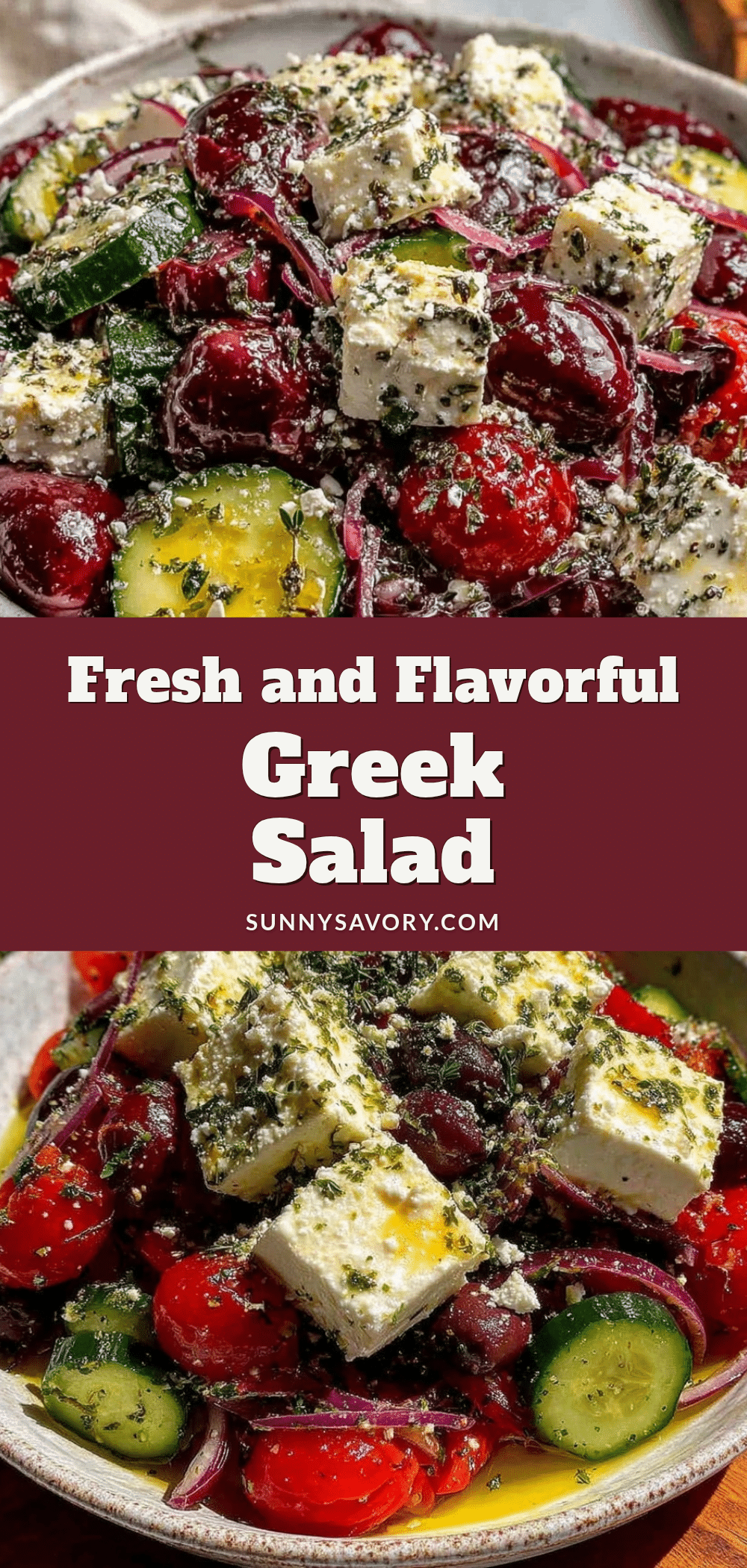
Fresh Greek Salad Recipe Easy Heart-Healthy Mediterranean Diet Guide

A crisp and vibrant Greek salad featuring fresh vegetables, briny Kalamata olives, creamy feta cheese, and a perfectly balanced olive oil dressing. This heart-healthy Mediterranean dish is quick to prepare and packed with bold flavors.
- Prep Time: 10 minutes
- Cook Time: 0 minutes
- Total Time: 15 minutes
- Yield: 4 servings 1x
- Category: Salad
- Cuisine: Mediterranean
Ingredients
- 2 large ripe tomatoes, chopped
- 1 medium cucumber, peeled and diced
- 1 small red onion, thinly sliced and soaked in cold water
- 1 green bell pepper, deseeded and sliced
- 6 oz (170g) feta cheese, crumbled
- 1/2 cup Kalamata olives, pitted and halved
- 3 tablespoons extra virgin olive oil
- 1 tablespoon red wine vinegar
- 1 teaspoon dried oregano (or 1 tablespoon fresh, finely chopped)
- 1/2 teaspoon sea salt (adjust to taste)
- Freshly ground black pepper to taste
- Optional: 1 small garlic clove, minced
- Optional: Handful of fresh parsley or mint, chopped
Instructions
- Rinse all fresh produce under cold water. Peel and dice the cucumber into bite-sized pieces. Chop the tomatoes into roughly 1-inch chunks and thinly slice the red onion. Soak the onion slices in cold water for about 5 minutes, then drain thoroughly.
- Remove the seeds and slice the green bell pepper into thin strips or small pieces.
- In a small bowl or jar, combine the extra virgin olive oil, red wine vinegar, dried oregano, sea salt, black pepper, and minced garlic if using. Whisk or shake vigorously until the dressing is well emulsified and slightly thickened.
- In a large mixing bowl, gently combine the tomatoes, cucumber, red onion, bell pepper, and Kalamata olives. Toss lightly to distribute the ingredients evenly without crushing the tomatoes.
- Crumble the feta cheese over the salad. If using fresh herbs like parsley or mint, sprinkle them on top.
- Pour the dressing over the salad and toss gently but thoroughly to coat everything, being careful not to overmix.
- Taste the salad and adjust seasoning with more salt, pepper, or vinegar if desired.
- Serve immediately to enjoy the crispness and fresh flavors. If needed, cover and refrigerate for no more than 30 minutes.
Notes
Soaking the red onion slices in cold water reduces sharpness and bitterness. Use a good quality extra virgin olive oil for best flavor. Crumble feta by hand for rustic texture. Serve immediately for best texture; refrigerate no longer than 30 minutes to avoid sogginess. For dairy-free option, substitute feta with plant-based cheese.
Nutrition
- Serving Size: About 1.5 cups per s
- Calories: 220
- Sugar: 5
- Sodium: 520
- Fat: 18
- Saturated Fat: 5
- Carbohydrates: 8
- Fiber: 2
- Protein: 6
Keywords: Greek salad, fresh salad, Mediterranean diet, heart-healthy, feta cheese, Kalamata olives, easy salad recipe