Love this? Save it for later!
Share the inspiration with your friends
I was standing in the frozen foods aisle last November, staring at a box of stuffing mix like it had personally offended me. The air conditioning hummed overhead, and somewhere a kid was whining about wanting sugary cereal. But all I could smell—or rather, all I could remember smelling—was my aunt Carol’s kitchen, twenty years ago. The scent of sage, sausage, and something deeply savory that no box could ever replicate. It hit me so hard I almost laughed out loud. I mean, here I was, a grown adult with my own kitchen and my own opinions about poultry seasoning, and I was about to settle for dehydrated bread cubes in a bag. That moment changed everything. I put the box back, grabbed a loaf of sourdough from the bakery section, and decided I was going to figure out how to make that stuffing myself. Honestly, it took me three tries to get it right. The first batch was too dry, the second was a soggy mess. But that third attempt? That was the one. The one where the sourdough soaked up all that savory sausage fat and the sage made the whole house smell like Thanksgiving had arrived early. This recipe is the result of those trials, and let me tell you—it’s worth every single failed batch. Maybe you’ve been there, standing in a grocery store aisle, trying to decide between convenience and the real thing. This make-ahead sourdough stuffing is the real thing, and it’s so much easier than you think.
Why You’ll Love This Recipe
I’ve tested this make-ahead sourdough stuffing more times than I care to admit. I’ve made it with fresh sourdough from the bakery, with day-old sourdough from the clearance rack, and even with that half-stale loaf that was hiding in the back of my pantry. Every single time, it delivered. Here’s why this recipe stands out from the crowd.
- Truly Make-Ahead: You can assemble this stuffing a full two days before you need it. The flavors actually get better as they meld together in the fridge. That’s a game-changer for holiday cooking, trust me.
- Simple Ingredients: No weird cream-of-anything cans or mysterious seasoning packets. You probably already have most of these ingredients in your kitchen right now. The sourdough, the sausage, the sage—it’s all real food.
- Perfect for Thanksgiving or Any Gathering: This stuffing is the star of the holiday table, but it’s also fantastic alongside a roast chicken on a random Sunday. It’s that good.
- Crowd-Pleaser: I brought this to a potluck last year, and three separate people asked for the recipe before the night was over. Kids ate it. Adults ate it. Even my picky uncle who “doesn’t do stuffing” went back for seconds.
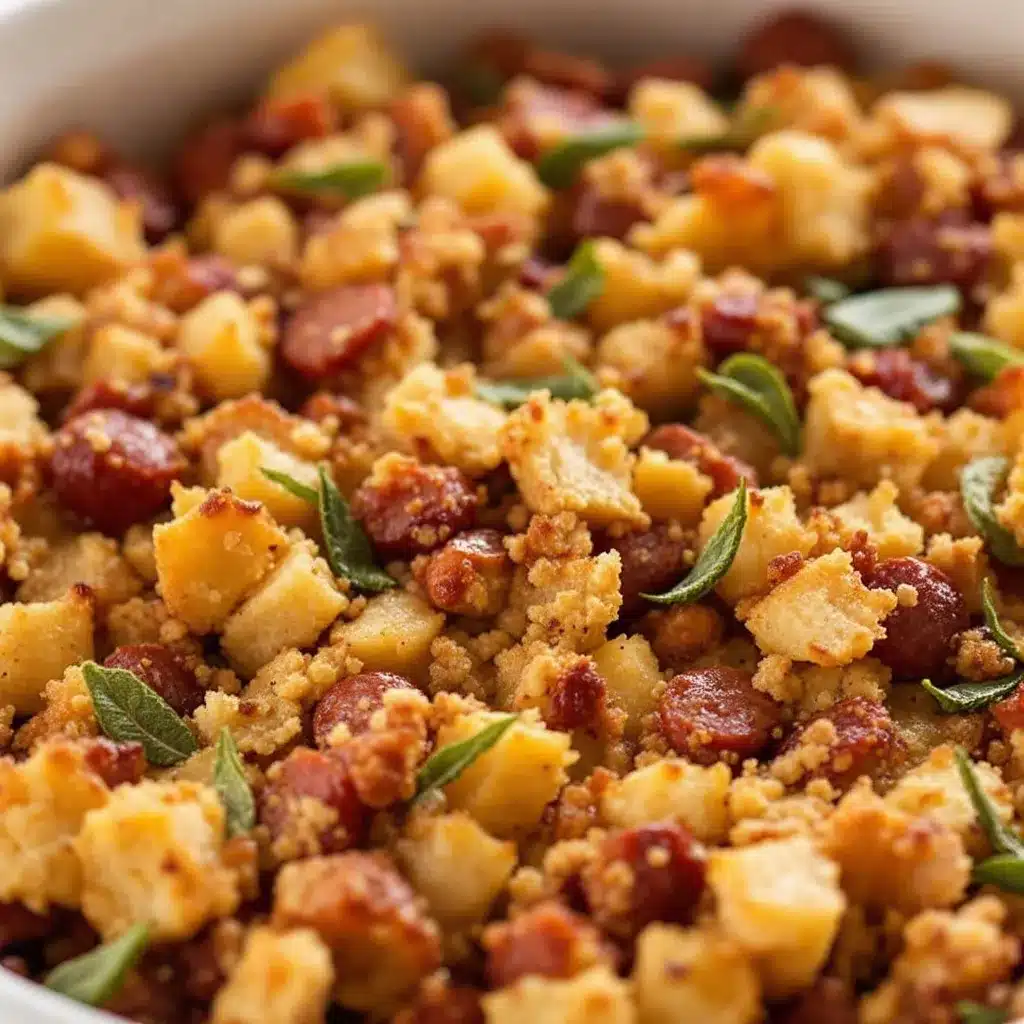
- Unbelievably Delicious: The combination of tangy sourdough, savory sausage, and aromatic sage is next-level comfort food. The edges get all crispy and golden, while the inside stays soft and custardy. It’s the texture contrast that keeps me coming back.
What makes this recipe different from the rest is the technique. Instead of just tossing everything together, we toast the sourdough cubes first to dry them out properly. That little step makes a huge difference—it prevents the dreaded soggy stuffing syndrome. Plus, using high-quality sausage with fennel or sage already in it adds layers of flavor without extra work. This isn’t just another stuffing recipe; it’s the one you’ll make every year from now on.
What Ingredients You Will Need
This recipe uses simple, wholesome ingredients to deliver bold flavor and satisfying texture without the fuss. Most of these are pantry staples or easy to find at any grocery store. Let me walk you through each one.
- Sourdough bread (1 large loaf, about 1 pound): Use a good-quality sourdough from a bakery or the bakery section of your grocery store. The tanginess of the sourdough is key here—it balances the richness of the sausage and butter. I recommend getting a loaf that’s a day or two old for better texture. If your bread is fresh, just cube it and let it sit out overnight to dry out a bit.
- Italian sausage (1 pound, casings removed): I prefer mild Italian sausage for this, but hot Italian works if you want some heat. Look for sausage that has fennel seeds already in it—that adds another layer of flavor. Johnsonville or your local butcher’s house-made sausage are both excellent choices.
- Unsalted butter (4 tablespoons, or 1/2 stick): We need this for sautéing the vegetables. Using unsalted butter lets you control the salt level, which is important since the sausage and broth already have salt in them.
- Yellow onion (1 large, diced): About 1 1/2 cups of diced onion. This provides the savory base for the stuffing. Dice it fairly small so it cooks evenly and doesn’t leave big chunks.
- Celery (3 ribs, diced): About 1 cup of diced celery. Celery is non-negotiable in stuffing—it adds that classic crunch and freshness. Make sure to include the leaves if your celery has them; they’re full of flavor.
- Fresh sage (2 tablespoons, chopped): Fresh sage is miles better than dried for this recipe. It has a softer, more aromatic flavor that infuses the stuffing beautifully. Roll the leaves up like a cigar and slice them thinly for perfect ribbons.
- Fresh thyme (1 tablespoon, leaves stripped from stems): Thyme adds a subtle earthiness that complements the sage. If you only have dried thyme, use 1 teaspoon instead.
- Low-sodium chicken broth (2 to 2 1/2 cups): The amount of broth you need depends on how dry your bread is and how moist you like your stuffing. Start with 2 cups and add more if needed. Low-sodium is important so you don’t end up with overly salty stuffing.
- Eggs (2 large): Eggs help bind the stuffing together and give it that custard-like texture. Make sure they’re at room temperature so they incorporate smoothly.
- Salt and black pepper (to taste): Go easy on the salt at first—the sausage and broth provide plenty. But don’t skip the pepper; it adds a nice little kick.
- Fresh parsley (1/4 cup, chopped, for garnish): This is optional but adds a pop of color and freshness right before serving. I never skip it because it makes the dish look so much more inviting.
Substitution Notes
If you need a gluten-free option, use a high-quality gluten-free sourdough bread. The texture will be slightly different, but it still works wonderfully. For a vegetarian version, swap the sausage for a plant-based Italian sausage and use vegetable broth instead of chicken broth. I’ve tried both variations, and they’re genuinely delicious.
Equipment Needed
You don’t need any fancy gadgets for this make-ahead sourdough stuffing. Here’s what you’ll need, along with a few tips from my own kitchen experience.
- Large baking sheet: For toasting the sourdough cubes. A rimmed baking sheet works best to prevent cubes from rolling off. If you don’t have one, any large oven-safe pan will do.
- Large skillet or sauté pan: For cooking the sausage and vegetables. I use a 12-inch cast-iron skillet for this—it gives great browning and even heat. A stainless steel pan works well too.
- Large mixing bowl: You need a big bowl to combine all the ingredients. I use my grandmother’s old ceramic mixing bowl, but any large bowl will do.
- 9×13-inch baking dish: This is the perfect size for this recipe. A 3-quart casserole dish also works. If you’re using a glass dish, just keep in mind that it might need a few extra minutes in the oven.
- Chef’s knife and cutting board: A sharp knife makes dicing the onion and celery so much easier. Trust me, a dull knife is a recipe for frustration.
- Measuring cups and spoons: For accuracy, especially with the broth and herbs. I’ve eyeballed it before and regretted it.
- Wooden spoon or spatula: For stirring the sausage and vegetables. A wooden spoon won’t scratch your pans and gives you good control.
If you don’t have a 9×13-inch dish, you can use two smaller dishes or even a deep-dish pie plate. The baking time might vary slightly, so just keep an eye on it. And if you’re making this for a crowd, you can easily double the recipe and use a larger roasting pan.
Preparation Method
Let me walk you through this step by step. I’ve included all the little details I wish someone had told me the first time I made this. Take your time, and don’t rush the toasting step—it’s where the magic starts.
Step 1: Toast the sourdough cubes. Preheat your oven to 375°F (190°C). Cut the sourdough loaf into 1-inch cubes—you should have about 10 to 12 cups. Spread them in a single layer on your large baking sheet. Bake for 15 to 20 minutes, stirring halfway through, until the cubes are dry and lightly golden. They should feel crisp on the outside but still have a little give when you squeeze them. Don’t over-toast them or they’ll be too hard. Let them cool completely on the baking sheet. This step can be done up to 3 days ahead; just store the toasted cubes in an airtight container at room temperature.
Step 2: Cook the sausage. While the bread is toasting, heat a large skillet over medium-high heat. Add the Italian sausage (casings removed) and cook, breaking it up with your wooden spoon, until it’s browned and cooked through. This takes about 8 to 10 minutes. The sausage should be in small, crumbly pieces—not big chunks. Use a slotted spoon to transfer the cooked sausage to a plate, leaving about 2 tablespoons of the rendered fat in the pan. If your sausage is lean and doesn’t render much fat, add a tablespoon of olive oil.
Step 3: Sauté the vegetables. Reduce the heat to medium and add the butter to the same skillet. Once it’s melted, add the diced onion and celery. Cook for 6 to 8 minutes, stirring occasionally, until the vegetables are soft and translucent. The onions should look like they’re starting to caramelize around the edges—that’s where the sweetness comes from. Add the chopped sage and thyme, and cook for another minute until fragrant. Your kitchen should smell incredible at this point. Season lightly with salt and pepper.
Step 4: Combine the base. In your large mixing bowl, combine the toasted sourdough cubes, cooked sausage, and sautéed vegetables. Toss everything together gently with your hands or a large spoon until it’s evenly distributed. This is your stuffing base. At this point, you can cover the bowl and refrigerate it for up to 2 days if you’re making it ahead. Just bring it to room temperature before proceeding.
Step 5: Make the custard. In a separate small bowl, whisk together the eggs and 2 cups of the chicken broth until well combined. Pour this mixture over the stuffing base and toss gently until all the bread cubes are moistened. The mixture should look wet but not soupy. If it seems dry, add the remaining 1/2 cup of broth. The bread should absorb the liquid without pooling at the bottom of the bowl. Let the mixture sit for 10 minutes so the bread can absorb the custard. This resting time is crucial—don’t skip it.
Step 6: Bake the stuffing. Preheat your oven to 375°F (190°C). Transfer the stuffing mixture to your greased 9×13-inch baking dish and spread it into an even layer. Cover the dish with foil and bake for 30 minutes. Then, remove the foil and bake for another 20 to 25 minutes, until the top is golden brown and crispy. The edges should look caramelized and the center should be set—not jiggly. If you want extra crispy edges, you can broil it for the last 2 to 3 minutes, but watch it carefully so it doesn’t burn.
Step 7: Rest and serve. Let the stuffing rest for 5 to 10 minutes before serving. This allows the custard to set completely and makes it easier to scoop. Garnish with fresh parsley and serve warm. The first time I made this, I was so impatient that I burned my tongue on the first bite. Worth it, but don’t be like me.
Cooking Tips & Techniques
I’ve made this make-ahead sourdough stuffing at least a dozen times, and I’ve learned a few things the hard way. Here are my best tips to ensure success every time.
Don’t skip toasting the bread. I know it feels like an extra step, but it’s the difference between perfect stuffing and a soggy mess. Toasting dries out the bread so it can absorb the custard without turning into mush. If your bread is already stale, you can toast it for less time, but still toast it. Trust me on this one.
Use a thermometer for accuracy. The stuffing is done when it reaches an internal temperature of 165°F (74°C). This is especially important if you’re making it ahead and reheating it. I use an instant-read thermometer for peace of mind. Nothing ruins a holiday meal like undercooked stuffing.
Watch your salt levels. Sausage and broth both contain salt, so go easy when seasoning. I learned this lesson after making a batch that was practically inedible because I added salt at every step. Taste the sausage and vegetables before you add any extra salt. You can always add more later, but you can’t take it out.
Let the stuffing rest before serving. This is a tip I picked up from a chef friend. Letting the stuffing rest for 5 to 10 minutes after baking allows the custard to set and the flavors to meld. It also makes serving much easier—no more falling-apart scoops of stuffing.
Multitask like a pro. While the bread is toasting, cook the sausage and chop the vegetables. You can even prep the herbs while the sausage browns. This recipe comes together in about 45 minutes of active time, but with good multitasking, you can cut that down to 30 minutes.
One of my biggest failures? I once forgot to remove the casings from the sausage. I was in a rush and just tossed the whole sausages into the pan. They didn’t break up properly, and I ended up with weird sausage balls in my stuffing. Not my finest moment. So, double-check that you’ve removed the casings before you start cooking.
Variations & Adaptations
This make-ahead sourdough stuffing is incredibly versatile. I’ve tried several variations over the years, and they’ve all been delicious in their own way. Here are a few of my favorites.
Vegetarian version: Replace the Italian sausage with a plant-based sausage or add an extra cup of sautéed mushrooms for that umami flavor. Use vegetable broth instead of chicken broth. I made this for a vegetarian friend last Thanksgiving, and she said it was the best stuffing she’d ever had. The mushrooms add a meaty texture that’s really satisfying.
Apple and cranberry twist: Add 1 cup of diced apple (I prefer Honeycrisp or Granny Smith) and 1/2 cup of dried cranberries to the vegetable mixture. The sweetness of the apple and the tartness of the cranberries pair beautifully with the savory sausage and sage. This is my go-to variation for Christmas dinner—it feels extra festive.
Gluten-free option: Use a high-quality gluten-free sourdough bread. I’ve tested this with several brands, and the one from my local bakery works best. The texture is slightly more crumbly, but the flavor is still fantastic. Just make sure to toast the bread a little longer to compensate for the different moisture content.
Extra herby version: Double the fresh herbs and add 1 tablespoon of fresh rosemary, finely chopped. Rosemary and sage are a classic combination, and the extra herbs make the stuffing incredibly aromatic. This is perfect if you’re a herb lover like me.
Spicy kick: Use hot Italian sausage instead of mild, and add 1/2 teaspoon of red pepper flakes to the vegetable mixture. The heat cuts through the richness of the stuffing beautifully. I made this for a game day party, and it was a huge hit with the crowd.
Serving & Storage Suggestions
This make-ahead sourdough stuffing is best served warm, straight from the oven. The contrast between the crispy top and the soft, custardy interior is what makes it so special. I like to garnish it with fresh parsley and a few extra sage leaves for a pop of color.
What to serve with it: This stuffing is a natural partner for roasted turkey or chicken. It also pairs wonderfully with a simple green salad dressed with vinaigrette to cut through the richness. For a holiday spread, serve it alongside mashed potatoes, green bean casserole, and cranberry sauce. The stuffing is hearty enough to be a main dish on its own, especially with a side of roasted vegetables.
Storage instructions: Leftover stuffing can be stored in an airtight container in the refrigerator for up to 4 days. The flavors actually continue to develop as it sits, so it might taste even better the next day. I’ve been known to eat cold stuffing straight from the fridge for breakfast—no judgment, please.
Reheating tips: To reheat, place the stuffing in a baking dish, cover with foil, and warm in a 350°F (175°C) oven for 15 to 20 minutes. If it seems dry, add a splash of chicken broth before reheating. You can also reheat individual portions in the microwave for 1 to 2 minutes, but the texture won’t be as good. I prefer the oven method for the best results.
Freezing instructions: You can freeze this stuffing for up to 3 months. Assemble the stuffing completely, but don’t bake it. Wrap the dish tightly in plastic wrap and then in foil. When you’re ready to bake, thaw it in the refrigerator overnight, then bake as directed. You might need to add 10 to 15 minutes to the baking time since it’s starting from cold. I’ve done this several times for busy holiday seasons, and it works like a charm.
Nutritional Information & Benefits
Here’s the approximate nutritional breakdown for one serving (about 1 cup) of this make-ahead sourdough stuffing. Keep in mind that these values can vary based on the specific ingredients you use.
| Nutrient | Amount per Serving |
|---|---|
| Calories | 320 |
| Total Fat | 18g |
| Saturated Fat | 7g |
| Cholesterol | 65mg |
| Sodium | 680mg |
| Total Carbohydrates | 28g |
| Dietary Fiber | 2g |
| Sugars | 3g |
| Protein | 14g |
This stuffing provides a good amount of protein from the sausage and eggs, which helps keep you full. The sourdough bread offers some fiber and complex carbohydrates for sustained energy. Sage is known for its antioxidant properties, and celery provides vitamin K and potassium. While this isn’t a low-calorie dish, it’s made with whole, real ingredients that nourish your body. I always feel satisfied after eating it—not heavy and bloated like with some boxed stuffings.
If you’re watching your sodium, use low-sodium broth and sausage, and go easy on the added salt. You can also use turkey sausage instead of pork to reduce the fat content. For a lighter option, reduce the butter to 2 tablespoons and use a mix of broth and white wine for moisture.
Conclusion
This make-ahead sourdough stuffing with sage and sausage has become a non-negotiable part of my holiday table. It’s the recipe that made me stop buying boxed stuffing forever, and I honestly can’t imagine going back. The combination of tangy sourdough, savory sausage, and aromatic herbs is just perfection. And the fact that you can make it ahead of time? That’s the kind of kitchen magic that saves your sanity on busy cooking days.
I love how adaptable this recipe is. You can make it your own by swapping in different herbs, adding fruit, or adjusting the spice level. That’s the beauty of homemade stuffing—it reflects your taste and your story. My version has evolved over the years, and I’m sure yours will too.
So here’s my challenge to you: try this recipe for your next gathering. Make it ahead, take the stress off your cooking day, and watch everyone go back for seconds. And when they ask for the recipe (and they will), send them my way. I’d love to hear how it turns out for you. Drop a comment below or tag me in your photos—I’m always excited to see your creations. Happy cooking, friend!
Frequently Asked Questions
Can I use dried herbs instead of fresh?
Yes, you can substitute dried herbs for fresh. Use about 1 teaspoon of dried sage and 1 teaspoon of dried thyme instead of the fresh amounts. Just keep in mind that dried herbs are more concentrated, so you might want to add them earlier in the cooking process to let them rehydrate and release their flavor.
Can I make this stuffing completely vegan?
Absolutely! Use plant-based Italian sausage, vegan butter, and vegetable broth. Replace the eggs with a flax egg (1 tablespoon ground flaxseed mixed with 3 tablespoons water per egg, let sit for 5 minutes). The texture will be slightly different, but the flavor is still fantastic. I’ve tested this version, and it holds together beautifully.
Why is my stuffing soggy?
Soggy stuffing usually happens when the bread isn’t toasted enough or when too much liquid is added. Make sure your sourdough cubes are thoroughly dried out in the oven before combining. Also, add the broth gradually—you might not need the full 2 1/2 cups. The bread should be moist but not swimming in liquid.
Can I stuff a turkey with this recipe?
Technically yes, but I don’t recommend it. Stuffing cooked inside a turkey can be a food safety risk because it takes longer to reach a safe internal temperature. Plus, the texture is different—it’s more dense and less crispy. I always bake this stuffing separately for the best results. If you do stuff the turkey, make sure the stuffing reaches 165°F (74°C) before serving.
How far ahead can I make this stuffing?
You can assemble the stuffing (through step 4) up to 2 days in advance. Just cover and refrigerate it. When you’re ready to bake, let it sit at room temperature for 30 minutes, then add the egg and broth mixture and bake as directed. You can also bake the stuffing completely, then reheat it the next day. The flavors actually get better with time!
Pin This Recipe!
Best Make-Ahead Sourdough Stuffing with Sausage & Sage Recipe

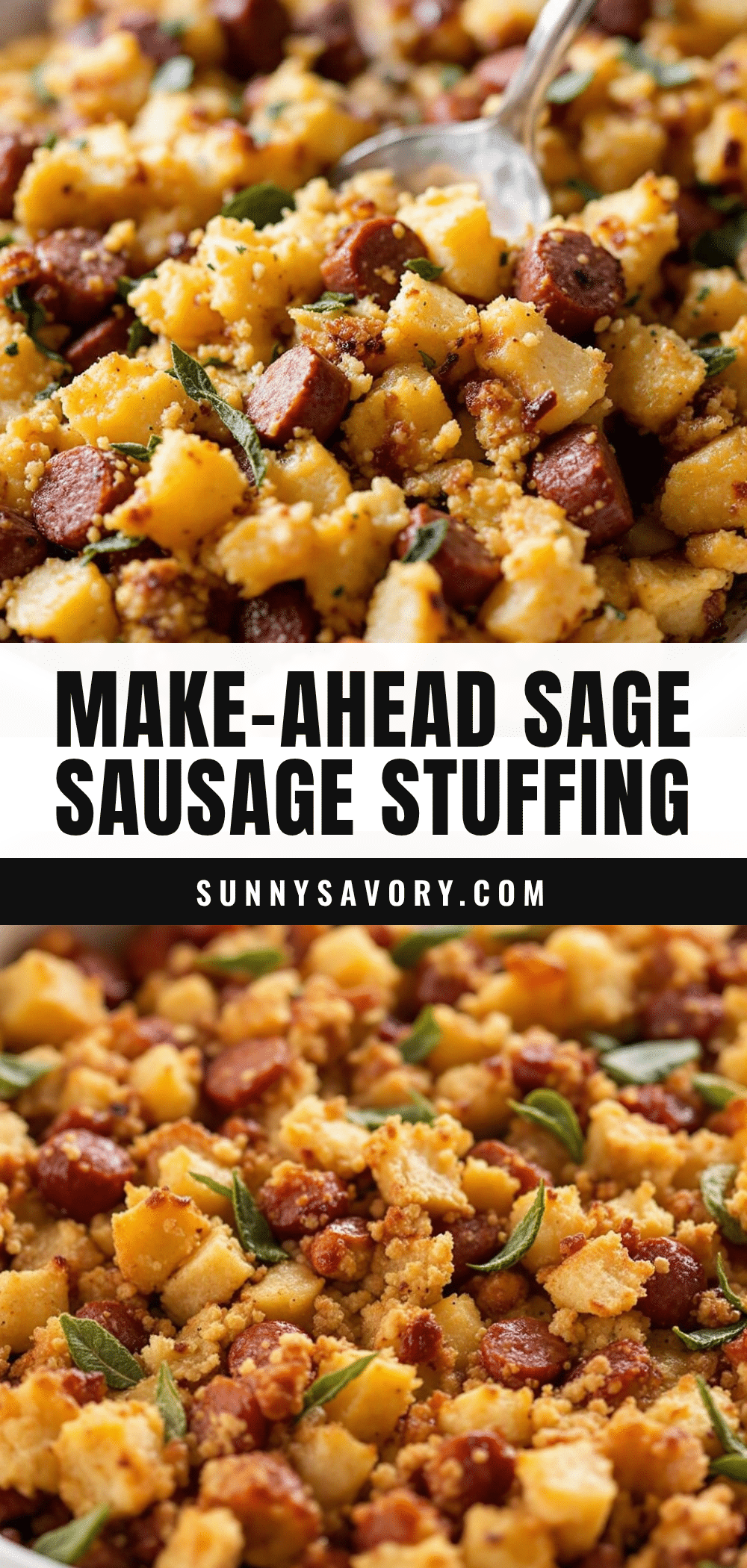
This make-ahead sourdough stuffing with sausage and sage is the ultimate holiday side dish. Tangy sourdough, savory Italian sausage, and aromatic herbs come together in a perfectly crispy-on-the-outside, custardy-on-the-inside stuffing that can be assembled up to two days in advance.
- Prep Time: 30 minutes
- Cook Time: 50 minutes
- Total Time: 1 hour 20 minutes
- Yield: 8 servings 1x
- Category: Side Dish
- Cuisine: American
Ingredients
- 1 large loaf sourdough bread (about 1 pound), cut into 1-inch cubes (10–12 cups)
- 1 pound Italian sausage, casings removed
- 4 tablespoons unsalted butter
- 1 large yellow onion, diced (about 1 1/2 cups)
- 3 ribs celery, diced (about 1 cup)
- 2 tablespoons fresh sage, chopped
- 1 tablespoon fresh thyme leaves
- 2 to 2 1/2 cups low-sodium chicken broth
- 2 large eggs, room temperature
- Salt and black pepper to taste
- 1/4 cup fresh parsley, chopped (for garnish)
Instructions
- Preheat oven to 375°F (190°C). Spread sourdough cubes in a single layer on a large baking sheet. Bake for 15-20 minutes, stirring halfway, until dry and lightly golden. Let cool completely. (Can be done up to 3 days ahead; store in an airtight container at room temperature.)
- While bread toasts, heat a large skillet over medium-high heat. Add Italian sausage (casings removed) and cook, breaking it up, until browned and cooked through, about 8-10 minutes. Transfer sausage to a plate with a slotted spoon, leaving about 2 tablespoons of rendered fat in the pan.
- Reduce heat to medium. Add butter to the skillet. Once melted, add diced onion and celery. Cook for 6-8 minutes, stirring occasionally, until soft and translucent. Add chopped sage and thyme; cook 1 minute more until fragrant. Season lightly with salt and pepper.
- In a large mixing bowl, combine toasted sourdough cubes, cooked sausage, and sautéed vegetables. Toss gently to distribute evenly. (At this point, you can cover and refrigerate for up to 2 days; bring to room temperature before proceeding.)
- In a small bowl, whisk together eggs and 2 cups chicken broth. Pour over the stuffing base and toss gently until all bread cubes are moistened. If mixture seems dry, add remaining 1/2 cup broth. Let sit for 10 minutes to allow bread to absorb the custard.
- Preheat oven to 375°F (190°C). Transfer stuffing to a greased 9×13-inch baking dish and spread evenly. Cover with foil and bake for 30 minutes. Remove foil and bake for another 20-25 minutes, until top is golden brown and crispy. For extra crispy edges, broil for 2-3 minutes, watching carefully.
- Let stuffing rest for 5-10 minutes before serving. Garnish with fresh parsley and serve warm.
Notes
For best texture, do not skip toasting the bread. Use low-sodium broth and go easy on added salt since sausage and broth already contain salt. Let stuffing rest before serving to allow custard to set. For a vegetarian version, use plant-based sausage and vegetable broth. For gluten-free, use gluten-free sourdough bread.
Nutrition
- Serving Size: 1 cup
- Calories: 320
- Sugar: 3
- Sodium: 680
- Fat: 18
- Saturated Fat: 7
- Carbohydrates: 28
- Fiber: 2
- Protein: 14
Keywords: sourdough stuffing, make-ahead stuffing, sausage stuffing, Thanksgiving stuffing, sage stuffing, holiday side dish