Love this? Save it for later!
Share the inspiration with your friends
This was supposed to be a classic deviled eggs platter for a casual fall get-together. I had the eggs boiling, the mayo ready, and I was feeling pretty good about myself. Then the power flickered. Not a full outage, just enough to reset my timer and leave me guessing how long those eggs had actually been bubbling away. I grabbed them out in a panic, ran them under cold water, and started peeling. Half of them came out looking like a battlefield—pockmarked, torn, absolutely not guest-worthy. I stood there, staring at this sad pile of egg carnage, and I was already picturing my friends’ polite smiles as they reached for a different appetizer. Honestly, I almost just trashed the whole thing and ordered pizza. But then I spotted the black olives I’d bought on a whim, and a ridiculous idea started forming. What if I didn’t try to hide the imperfections? What if I leaned into the chaos and made them look like something creepy instead? Let me tell you, that first batch of spider deviled eggs was born from pure kitchen desperation, and somehow, they became the very thing everyone talked about all night. I keep making them because every Halloween party needs that one dish that makes people stop, laugh, and then take a second (and third) helping.
Why You’ll Love This Recipe
After years of testing every trick in the book, I can tell you this spider deviled eggs recipe is the one that actually delivers. It is the perfect balance of spooky and delicious, and it always steals the show at any Halloween gathering.
- Quick & Easy: Comes together in under 30 minutes, perfect for last-minute Halloween party prep or when you are short on time.
- Simple Ingredients: No fancy grocery trips needed; you likely already have eggs, mayo, and mustard in your kitchen.
- Perfect for Halloween Parties: Great for potlucks, spooky buffets, or as a creepy appetizer that wows a crowd.
- Crowd-Pleaser: Always gets rave reviews from kids and adults alike. I have seen grown-ups actually hesitate before biting into a spider—and then grab three more.
- Unbelievably Delicious: The creamy, tangy filling paired with the salty olive “spiders” is next-level comfort food with a playful twist.
What makes this recipe different from the rest? It is not just about cutting olives into spider shapes. It is about the perfectly seasoned filling—I use a pinch of smoked paprika and a splash of pickle juice that makes people ask, “What is in this?” The texture is silky smooth, thanks to a trick I learned from an old cookbook: pressing the yolks through a sieve instead of just mashing them. This spider deviled eggs recipe is the kind that makes you close your eyes after the first bite. It is comfort food reimagined—creepy, fun, but with the same soul-soothing satisfaction. Perfect for impressing guests without stress, or turning a simple appetizer into something memorable.
What Ingredients You Will Need
This spider deviled eggs recipe uses simple, wholesome ingredients to deliver bold flavor and satisfying texture without the fuss. Most of these are pantry staples, which is exactly what you want when you are hosting a party.
- For the Eggs:
- 12 large eggs, hard-boiled and peeled (room temperature works best for smooth peeling)
- For the Filling:
- 1/3 cup mayonnaise (I recommend Duke’s or Hellmann’s for the creamiest texture)
- 1 teaspoon yellow mustard (adds a tangy kick)
- 1 tablespoon pickle juice (trust me on this—it brightens the whole filling)
- 1/4 teaspoon smoked paprika (plus extra for garnish)
- 1/8 teaspoon salt (or to taste)
- 1/8 teaspoon black pepper (freshly ground is best)
- For the Spider Decorations:
- 1 can (6 ounces) large black olives, drained (look for whole, pitted olives for easier slicing)
- 1 can (6 ounces) sliced black olives (for the spider bodies)
For the eggs, I always use large eggs because they have the perfect yolk-to-white ratio. If you are using extra-large eggs, you might need a bit more mayo to get the right consistency. For the olives, I prefer the brand Lindsay—they hold their shape well when you cut them. If you are feeling adventurous, you can use green olives stuffed with pimento for a different color contrast, but black olives give that authentic spider look.
Substitution guidance: Use vegan mayo and a pinch of kala namak (black salt) for a plant-based version. For a dairy-free option, this recipe is already dairy-free. If you do not have pickle juice, a splash of white vinegar or lemon juice works in a pinch.
Equipment Needed
You do not need any fancy gadgets for this spider deviled eggs recipe. Here is what you will need:
- Large pot for boiling eggs
- Mixing bowl
- Fork or potato masher for mashing yolks
- Fine-mesh sieve (optional but recommended for silky filling)
- Piping bag or zip-top bag with the corner snipped off
- Sharp paring knife for cutting olive spiders
- Serving platter
If you do not have a piping bag, do not worry. A zip-top bag works just as well. I have used both, and honestly, the bag method is easier to clean up. For the olive spiders, a sharp knife is non-negotiable—dull blades will squish the olives. I learned that the hard way after ruining an entire can of olives. Budget-friendly tip: skip the fancy deviled egg carrier and just use a flat plate with a paper towel underneath to keep them from sliding.
Preparation Method
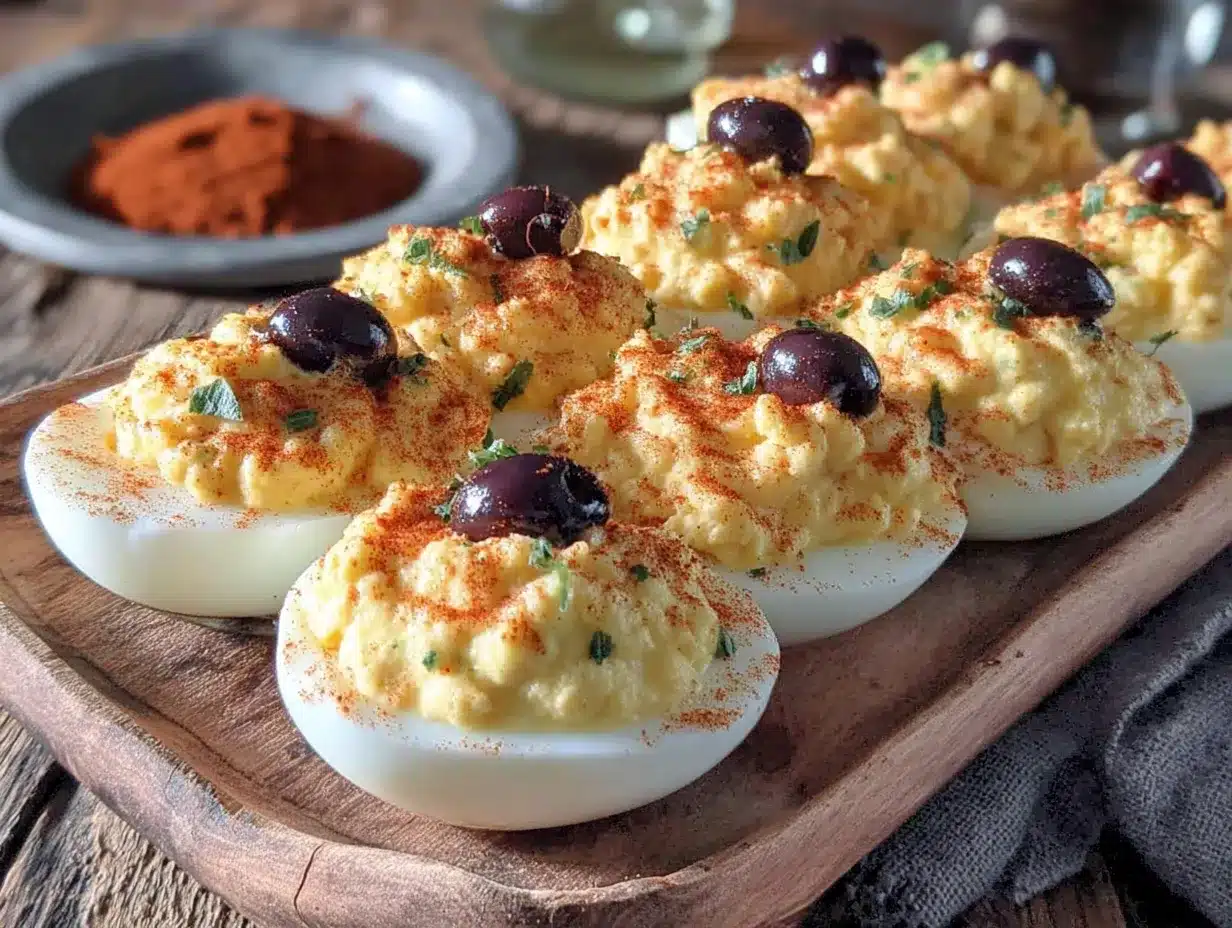
Follow these steps carefully, and you will have the most talked-about appetizer at your Halloween party.
-
Hard-Boil the Eggs: Place the 12 large eggs in a single layer in a large pot. Cover them with cold water by about 1 inch. Bring the water to a rolling boil over high heat. Once boiling, cover the pot, remove it from the heat, and let it sit for exactly 12 minutes. While the eggs are resting, prepare an ice bath by filling a large bowl with ice and cold water. After 12 minutes, transfer the eggs to the ice bath using a slotted spoon. Let them cool for at least 10 minutes. This method gives you perfectly cooked yolks without that green ring.
-
Peel the Eggs: Gently tap each egg on a hard surface to crack the shell all over. Start peeling from the wider end where the air pocket is—the membrane tends to be looser there. If the shell sticks, run the egg under cold water. I have found that older eggs (about a week old) peel much easier than fresh ones. Do not worry if some eggs come out imperfect—remember, this recipe was born from ugly eggs.
-
Prepare the Filling: Slice each egg in half lengthwise. Gently pop the yolks into a mixing bowl. Arrange the egg white halves on your serving platter. Mash the yolks with a fork until they resemble fine crumbs. For an ultra-smooth texture, press the yolks through a fine-mesh sieve using the back of a spoon. This step takes an extra minute but makes the filling incredibly silky. Add 1/3 cup mayonnaise, 1 teaspoon yellow mustard, 1 tablespoon pickle juice, 1/4 teaspoon smoked paprika, 1/8 teaspoon salt, and 1/8 teaspoon black pepper. Mix until completely smooth and creamy. Taste and adjust seasoning—you might want a pinch more salt or another splash of pickle juice.
-
Fill the Egg Whites: Transfer the filling to a piping bag or a zip-top bag. If using a zip-top bag, snip off about 1/2 inch from one corner. Pipe the filling into each egg white half, mounding it slightly. You want a nice, generous swirl of filling. Do not overfill, though—you need room for the spider legs. If you do not have a piping bag, you can use a small spoon to dollop the filling, but piping gives a much prettier presentation.
-
Create the Spider Legs: Take the whole black olives and slice them in half lengthwise. You should have two oval-shaped pieces. From each half, cut 4 thin strips lengthwise, leaving them attached at one end so they fan out like spider legs. This takes a steady hand and a sharp knife. If your first few attempts look messy, just eat the evidence and try again. I usually practice on one or two olives before I get into a rhythm.
-
Create the Spider Bodies: Use the sliced black olives for the bodies. Each spider body is just one olive slice. You want the round, flat slices that look like little black disks.
-
Assemble the Spiders: Gently place one olive slice (the body) on top of the filling in the center of each egg half. Then, carefully position two of the leg pieces on either side of the body, pressing them slightly into the filling so they stay upright. Each egg should have a total of 8 legs—4 on each side. The legs should curve outward like a real spider. Take your time with this step. It is the most fun part of making spider deviled eggs.
-
Garnish and Serve: Lightly sprinkle the assembled spider deviled eggs with a pinch of smoked paprika for color contrast. You can also add tiny dots of mustard or hot sauce for “eyes” if you want extra creepiness. Serve immediately or refrigerate until ready to serve. These are best served chilled.
Cooking Tips & Techniques
Over the years, I have made more batches of spider deviled eggs than I can count, and I have picked up a few tricks along the way.
The perfect hard-boiled egg is the foundation of this recipe. I used to overcook my eggs all the time, ending up with that gray-green ring around the yolk. The trick is to not boil them forever. Twelve minutes off the heat is the sweet spot. Also, shocking them in an ice bath stops the cooking immediately and makes peeling so much easier.
Peeling without destroying the egg is a skill that takes practice. I have had days where I lost half the egg white to the shell. The game-changer for me was starting the peel from the wider end. There is a small air pocket there, and if you get under the membrane first, the rest of the shell comes off in big pieces. If you are in a rush, you can also peel the eggs under running water—the water helps separate the membrane from the white.
Getting the filling just right is about balance. Too much mayo and it gets greasy. Too little and it is dry and crumbly. I aim for a texture that is creamy but still holds its shape when piped. The pickle juice is my secret weapon—it adds acidity that cuts through the richness of the yolks and mayo. Do not skip it.
Cutting olive spiders is the most finicky part. I learned the hard way that you need a very sharp knife. A dull blade will squish the olive and make a mess. Also, do not cut the legs too thin—they will break off. Aim for strips about 1/8 inch wide. If a leg breaks, just eat it and cut another one. No one will know.
Timing and multitasking: You can boil and peel the eggs a day ahead. Store them unpeeled in the fridge, then peel them right before you assemble. This saves a ton of time on party day. You can also make the filling a day ahead and store it in a piping bag in the fridge. Just pipe and decorate right before serving.
Variations & Adaptations
This spider deviled eggs recipe is endlessly adaptable. Here are some of my favorite variations:
- Spicy Spider Eggs: Add 1/2 teaspoon of sriracha or a pinch of cayenne pepper to the filling. The heat pairs surprisingly well with the creamy texture. I tried this for a Halloween party where everyone wanted something with a kick, and they disappeared fast.
- Herb-Infused Filling: Mix in 1 tablespoon of finely chopped fresh chives or dill. It adds a fresh, bright flavor that cuts through the richness. This is my go-to for a more sophisticated version.
- Gluten-Free and Keto-Friendly: This recipe is naturally gluten-free and low-carb. For a keto version, use full-fat mayo and add an extra splash of pickle juice. It fits perfectly into a low-carb lifestyle.
- Vegan Spider Deviled Eggs: Substitute the eggs with halved boiled potatoes or tofu halves. Use vegan mayo and a pinch of kala namak for that eggy flavor. It is not exactly the same, but it is a fun plant-based alternative.
- Colorful Spiders: Use green olives stuffed with pimento for a different look. The red pimento adds a pop of color that is surprisingly festive. I did this for a non-Halloween party and everyone loved the contrast.
Serving & Storage Suggestions
Spider deviled eggs are best served chilled, straight from the refrigerator. The cold filling holds its shape better, and the olives stay firm. Arrange them on a large platter in a circular pattern or in rows—either way, they look impressive. For a Halloween party, I like to place them on a black platter or a dark-colored serving board to make the spiders pop.
These pair beautifully with other finger foods. Serve them alongside a creepy Halloween dip with crackers, or next to a platter of spooky chicken wings. For drinks, a crisp white wine or a dark beer complements the creamy, tangy filling. If you are hosting a kids’ party, serve them with apple cider or punch.
For storage, place any leftover spider deviled eggs in an airtight container and refrigerate for up to 2 days. The flavors actually meld together overnight, making them even more delicious the next day. However, the olive legs may soften a bit, so if you are making them ahead, I recommend adding the spider decorations right before serving. To reheat (if you prefer them at room temperature), let them sit out for 10 minutes before serving. Do not microwave them—the eggs will become rubbery.
One note: if you are transporting these to a party, keep them on a flat surface and cover them loosely with plastic wrap. The spiders are delicate, and jostling can knock the legs off. I learned this the hard way when I arrived at a party with a platter of legless spiders.
Nutritional Information & Benefits
Each spider deviled egg (one half) contains approximately 70 calories, 5g fat, 1g carbohydrates, and 4g protein. These numbers are estimates and will vary based on the specific ingredients you use.
Eggs are a fantastic source of high-quality protein and contain essential nutrients like vitamin B12, vitamin D, and choline, which is important for brain health. The olive spiders add healthy monounsaturated fats and antioxidants. This recipe is naturally low in carbohydrates, making it suitable for low-carb and keto diets. It is also gluten-free and dairy-free.
If you are watching your sodium intake, you can use low-sodium olives or reduce the added salt in the filling. I have made this recipe for friends with various dietary restrictions, and it is always a hit. It is one of those rare appetizers that feels indulgent but is actually quite balanced.
Conclusion
This spider deviled eggs recipe is more than just a Halloween appetizer—it is a conversation starter. It is the dish that makes people smile, take photos, and ask for the recipe. Whether you are hosting a spooky party or just want to add some fun to your fall gathering, these little spiders deliver every time.
I encourage you to make this recipe your own. Adjust the seasoning, try different olive shapes, or add your own creepy twist. The beauty of this spider deviled eggs recipe is that it is forgiving and fun. Do not stress about perfection—remember, mine were born from a batch of ugly eggs, and they turned out to be the star of the show.
I would love to hear how your spider deviled eggs turn out. Leave a comment below and let me know if your guests were brave enough to take the first bite. Share this recipe with your friends, and do not forget to tag me in your photos. Happy Halloween, and happy cooking!
Frequently Asked Questions
Can I make spider deviled eggs ahead of time?
Yes, you can boil and peel the eggs up to 2 days in advance. Store them unpeeled in the fridge. You can also make the filling a day ahead and pipe it into the eggs on party day. Add the olive spiders right before serving for the best presentation.
How do I keep the olive spider legs from falling off?
Press the legs gently into the filling so they are anchored. If the filling is too firm, let the eggs sit at room temperature for 5 minutes to soften slightly. You can also use a tiny dab of mayo as “glue” to hold the legs in place.
What if my eggs are hard to peel?
Use eggs that are at least a week old—they peel much easier than fresh eggs. Also, shocking them in an ice bath immediately after boiling helps loosen the membrane. If all else fails, peel them under running water.
Can I use a different type of olive?
Absolutely. Green olives stuffed with pimento work well, though they create a less “spooky” look. Kalamata olives can also be used, but they are softer and harder to cut into clean leg shapes. Stick with firm black olives for the best results.
How many spider deviled eggs does this recipe make?
This recipe uses 12 large eggs, which yields 24 deviled egg halves. Each half gets one spider. If you are serving a large crowd, you can easily double the recipe. Just make sure you have a big enough platter!
Pin This Recipe!

Best Spider Deviled Eggs Recipe for Halloween

These spider deviled eggs are the perfect Halloween appetizer—creepy, fun, and delicious. Born from a kitchen mishap, they feature a creamy, tangy filling topped with olive spiders that will be the talk of any party.
- Prep Time: 15 minutes
- Cook Time: 12 minutes
- Total Time: 27 minutes
- Yield: 24 deviled egg halves 1x
- Category: Appetizer
- Cuisine: American
Ingredients
- 12 large eggs, hard-boiled and peeled
- 1/3 cup mayonnaise (Duke’s or Hellmann’s recommended)
- 1 teaspoon yellow mustard
- 1 tablespoon pickle juice
- 1/4 teaspoon smoked paprika, plus extra for garnish
- 1/8 teaspoon salt, or to taste
- 1/8 teaspoon black pepper, freshly ground
- 1 can (6 ounces) large black olives, drained (whole, pitted)
- 1 can (6 ounces) sliced black olives
Instructions
- Hard-boil the eggs: Place eggs in a single layer in a large pot, cover with cold water by 1 inch. Bring to a rolling boil over high heat, cover, remove from heat, and let sit for exactly 12 minutes. Meanwhile, prepare an ice bath. Transfer eggs to ice bath and cool for at least 10 minutes.
- Peel the eggs: Gently tap each egg to crack the shell, starting from the wider end. Peel under cold water if needed.
- Prepare the filling: Slice eggs in half lengthwise, pop yolks into a bowl, and arrange whites on a platter. Mash yolks with a fork or press through a fine-mesh sieve for silky texture. Add mayonnaise, mustard, pickle juice, smoked paprika, salt, and pepper. Mix until smooth and creamy. Adjust seasoning to taste.
- Fill the egg whites: Transfer filling to a piping bag or zip-top bag with a corner snipped off. Pipe filling into each egg white half, mounding slightly.
- Create spider legs: Slice whole black olives in half lengthwise. From each half, cut 4 thin strips lengthwise, leaving them attached at one end to fan out like legs.
- Create spider bodies: Use sliced black olives for the bodies—each body is one olive slice.
- Assemble the spiders: Place one olive slice (body) on the filling in the center of each egg half. Position two leg pieces on each side of the body, pressing gently into the filling so they stay upright (8 legs total per egg).
- Garnish and serve: Sprinkle with smoked paprika. Optionally add tiny dots of mustard or hot sauce for eyes. Serve immediately or refrigerate until ready to serve.
Notes
For best peeling, use eggs that are at least a week old. The pickle juice brightens the filling—don’t skip it. Olive legs may soften if stored; add decorations just before serving for best presentation. To make ahead, boil and peel eggs up to 2 days in advance, or prepare filling a day ahead.
Nutrition
- Serving Size: 1 deviled egg half
- Calories: 70
- Sodium: 180
- Fat: 5
- Saturated Fat: 1.5
- Carbohydrates: 1
- Protein: 4
Keywords: spider deviled eggs, Halloween appetizer, deviled eggs recipe, spooky eggs, Halloween party food, easy deviled eggs