Love this? Save it for later!
Share the inspiration with your friends
There used to be a little diner on the corner of Elm and 4th, right by the old hardware store, that made a beef stew that was pure magic. When they closed down back in 2018—turned into a vape shop of all things—I honestly felt a little pang of loss. It wasn’t just the stew; it was the whole feeling of walking in on a cold, rainy Tuesday and knowing that bowl of rich, savory comfort was waiting for you. After maybe five or six tries—some of them pretty sad, let me tell you—I finally cracked the code.
That first bite of my homemade version, I actually closed my eyes. The beef was so tender it just fell apart, the gravy was thick and glossy, and the carrots had soaked up all that beefy goodness. The secret, I found, wasn’t some fancy cut of meat or a bottle of wine. It was all about browning the beef properly and letting the slow cooker do its thing. Honestly, it was a revelation. You know that feeling when you finally get a recipe exactly right? That was this moment.
The best part? This isn’t a “special occasion” stew. This is a Tuesday night, everyone’s-hungry-and-the-fridge-looks-sad kind of stew. It uses cheap cuts of beef, basic veggies, and pantry staples you probably already have. I mean, the whole point was to make it affordable for my family of five without skimping on flavor. And let me tell you, it works. This recipe has saved me more times than I can count, and I’m pretty sure it’s going to become a staple in your kitchen, too.
Why You’ll Love This Recipe
This isn’t just another beef stew recipe you’ll find online. I’ve tested this version on my own picky eaters, my neighbor who claims she “doesn’t like stew,” and even my dad, who is notoriously hard to impress. It passed every single test with flying colors. Here’s why this one is different:
- Budget-Friendly: We’re using chuck roast or even stew meat from the discount bin. No expensive cuts needed. This whole pot costs less than a fast-food run for a family of four.
- Set It and Forget It: About 20 minutes of prep in the morning, and then your slow cooker does all the heavy lifting. Dinner is ready when you are, no stress.
- Picky Eater Approved: The gravy is so rich and the veggies get so soft that even my youngest, who swears she hates carrots, cleans her bowl. The secret is in the slow simmer.
- Leftovers That Get Better: Honestly, this stew is even better the next day. The flavors meld together overnight into something truly special. Perfect for meal prep.
- No Fancy Ingredients: You won’t need to hunt down anything weird. Beef, potatoes, carrots, onions, and a few spices. That’s it. Simple, honest food.
What really sets this apart is the browning step. I know, I know—it’s tempting to just dump everything in the slow cooker and walk away. But taking those ten extra minutes to sear the beef creates a deep, savory crust that transforms the whole dish. It’s the difference between a good stew and a “close your eyes and savor it” stew.
This is the kind of meal that makes you feel like a hero after a long day. It fills your house with that amazing, cozy smell, and it fills your family’s bellies with something warm and satisfying. It’s comfort food that works for your budget and your schedule. What’s not to love?
What Ingredients You Will Need
This recipe uses simple, honest ingredients that you can find at any grocery store. The beauty of it is that most of these are probably already in your pantry or fridge, just waiting to be turned into something magical. Let’s break down what you’ll need and why each ingredient matters.
For the Beef and Browning
- 2 pounds beef chuck roast or stew meat: This is your budget-friendly hero. Chuck roast has great marbling, which means it gets incredibly tender when cooked low and slow. I usually buy it when it’s on sale and freeze it. (Look for a roast with good fat marbling for the best flavor.)
- 2 tablespoons olive oil or vegetable oil: You need a high smoke-point oil for browning the beef. Olive oil works great, but avocado oil is my go-to because it can handle the heat without burning.
- 1 teaspoon salt: This is for seasoning the beef before searing. Don’t skip this step—it builds the flavor from the ground up.
- 1/2 teaspoon black pepper: Freshly ground is always better, but pre-ground works in a pinch.
For the Aromatics and Vegetables
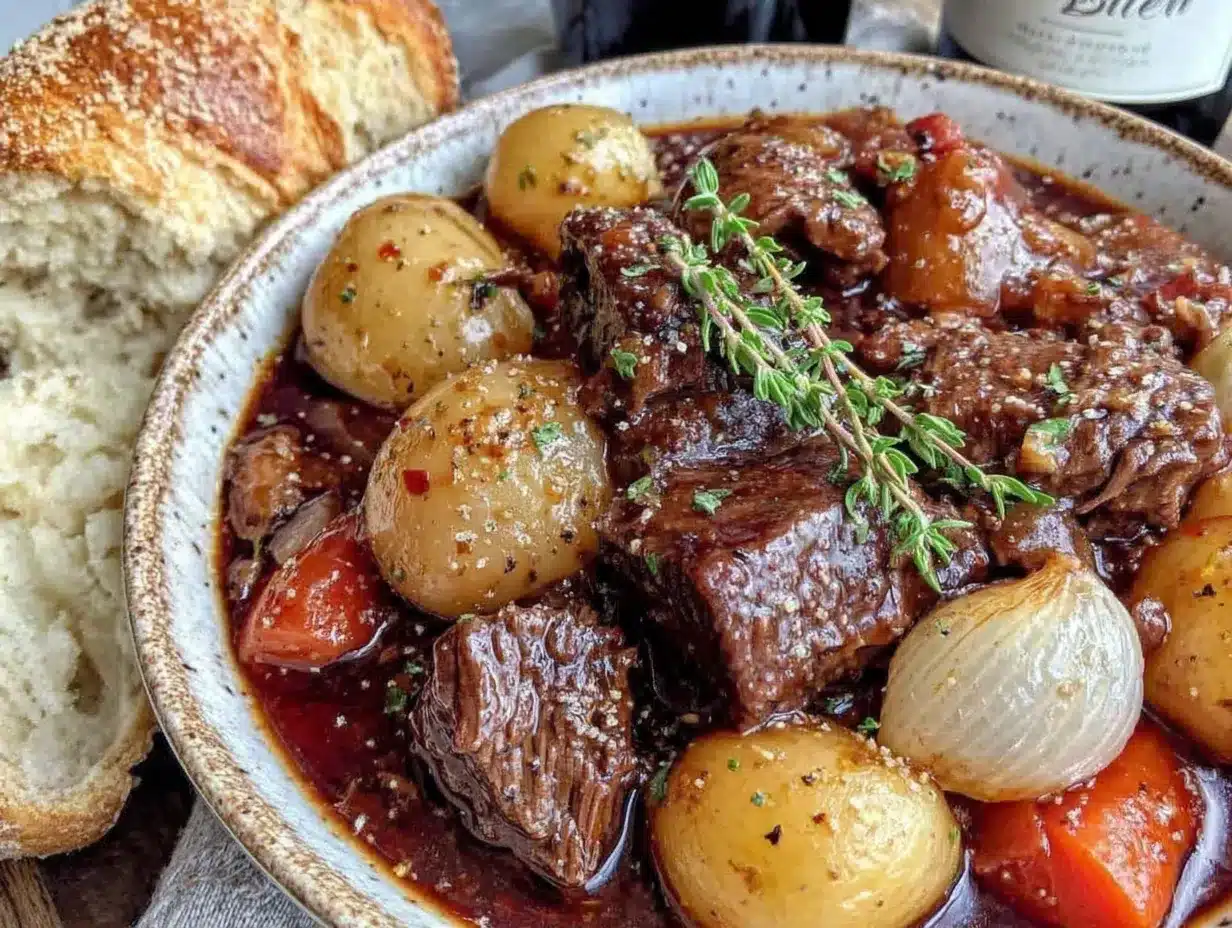
- 1 large yellow onion, diced: Onions are the backbone of this stew. They add sweetness and depth as they cook down. I like yellow onions for their balanced flavor.
- 4 cloves garlic, minced: Fresh garlic is non-negotiable here. It adds that punch of savory goodness that makes the stew so addictive.
- 4 large carrots, peeled and cut into 1-inch chunks: Carrots add sweetness and color. I cut them into hearty chunks so they hold their shape during the long cooking time.
- 3 stalks celery, sliced: Celery adds a subtle earthiness and a bit of texture. Don’t skip it—it’s part of the classic mirepoix base.
- 1.5 pounds Yukon Gold or red potatoes, cut into 1-inch cubes: Yukon Golds are my favorite because they hold their shape well and have a buttery texture. Red potatoes work great too. Russets will get a bit mushy, so I’d avoid those here.
For the Broth and Gravy
- 4 cups low-sodium beef broth: Use low-sodium so you can control the salt level. I really like the Better Than Bouillon beef base—it has a richer flavor than most boxed broths. Just mix a couple of teaspoons with hot water.
- 1 can (14.5 ounces) diced tomatoes, undrained: This adds a little acidity and depth that balances the richness of the beef. Fire-roasted tomatoes are a nice upgrade if you have them.
- 2 tablespoons tomato paste: This is the secret weapon for a deep, dark gravy. It adds umami and a beautiful color. I buy the tube kind so I can just squeeze out what I need.
- 1 tablespoon Worcestershire sauce: This adds a savory, slightly tangy kick that makes the beef taste even beefier. Lea & Perrins is my go-to brand.
- 2 bay leaves: These add a subtle herbal note as they simmer. Remember to fish them out before serving—no one wants to bite into a bay leaf.
- 1 teaspoon dried thyme: Thyme is the classic herb for beef stew. It’s earthy and aromatic. If you have fresh, use a few sprigs instead.
- 1/2 teaspoon dried rosemary: Rosemary and beef are a match made in heaven. It adds a piney, fragrant note that’s just lovely.
For Thickening (Optional but Recommended)
- 2 tablespoons cornstarch mixed with 2 tablespoons cold water: This is your slurry for thickening the stew at the end. You can skip it if you like a thinner broth, but I love a nice, thick gravy that coats the back of a spoon.
Substitution Guidance: If you’re gluten-free, you can swap the Worcestershire sauce for a gluten-free version (some brands use malt vinegar). For a dairy-free option, this recipe is naturally dairy-free as written. If you don’t have Yukon Gold potatoes, sweet potatoes or parsnips make a lovely substitute for a slightly different flavor.
Equipment Needed
You don’t need a ton of fancy gadgets for this recipe, which is exactly how I like it. Here’s what you’ll need:
- A 6-quart or larger slow cooker: This is the star of the show. I use a Crock-Pot brand slow cooker I got on sale years ago, and it’s still going strong. If you have a smaller one, just halve the recipe.
- A large, heavy-bottomed skillet or Dutch oven: You need this for browning the beef. A cast-iron skillet is perfect, but any heavy pan will do. Don’t use nonstick—you want those browned bits to stick to the pan.
- A sharp chef’s knife: A good knife makes prepping the veggies so much faster and safer. I use a 8-inch Wusthof, but any sharp knife will work.
- A cutting board: I prefer a large wooden board, but plastic is fine too. Just make sure it’s stable.
- Measuring cups and spoons: For accuracy, especially with the broth and spices.
- A wooden spoon or spatula: For stirring and scraping up those delicious browned bits from the pan.
- A small bowl: For making your cornstarch slurry.
Budget-Friendly Tip: If you don’t have a slow cooker, you can absolutely make this in a Dutch oven on the stove or in the oven at 325°F for about 2.5 to 3 hours. Just keep an eye on the liquid level. And if you don’t have a Dutch oven, a heavy-bottomed pot with a tight-fitting lid will work just fine.
Preparation Method
Alright, let’s get cooking. This might look like a lot of steps, but I promise it’s mostly hands-off time. The key is to take your time with the browning—it’s the most important part.
- Prep your beef: Pat the beef dry with paper towels. This is crucial—dry beef browns, wet beef steams. Cut the chuck roast into 1.5-inch cubes, trimming off any large pieces of hard fat. Season generously with 1 teaspoon salt and 1/2 teaspoon pepper.
- Brown the beef in batches: Heat 1 tablespoon of olive oil in your large skillet over medium-high heat until it’s shimmering. Add half the beef in a single layer—don’t overcrowd the pan! Let it sear without moving for about 3-4 minutes, until a deep brown crust forms. Flip and brown the other side for another 2-3 minutes. Transfer the browned beef to your slow cooker. Repeat with the remaining oil and beef. (This is where the magic happens—those browned bits are pure flavor.)
- Sauté the aromatics: Reduce the heat to medium. Add the diced onion to the same skillet (don’t wipe it clean!) and cook for about 5 minutes, scraping up any browned bits from the bottom. Add the minced garlic and cook for another 30 seconds, until fragrant. Transfer the onions and garlic to the slow cooker.
- Deglaze the pan: Pour about 1/2 cup of the beef broth into the hot skillet and scrape up all those delicious browned bits with your wooden spoon. This is called deglazing, and it’s liquid gold. Pour this into the slow cooker.
- Layer the vegetables: Add the carrots, celery, and potatoes to the slow cooker on top of the beef and onions. Don’t stir them in yet—keeping the veggies on top helps them stay a bit firmer during the long cook time.
- Add the liquids and seasonings: Pour in the remaining beef broth, the undrained diced tomatoes, tomato paste, Worcestershire sauce, bay leaves, thyme, and rosemary. Give everything a gentle stir, making sure the tomato paste dissolves a bit. The liquid should come about halfway up the ingredients—if it looks a little dry, add another 1/2 cup of water or broth.
- Cook low and slow: Cover the slow cooker and cook on LOW for 8 hours or on HIGH for 4-5 hours. I strongly prefer low and slow—it gives the beef more time to break down and become meltingly tender. Your house is going to smell incredible.
- Thicken the stew (optional but recommended): About 30 minutes before serving, remove the bay leaves. In a small bowl, whisk together the cornstarch and cold water until smooth. Stir this slurry into the stew. Let it cook uncovered for the last 30 minutes to thicken up. The gravy will go from thin and brothy to thick and luscious.
- Season and serve: Taste the stew and add more salt and pepper if needed. Sometimes it needs a little extra punch—a dash more Worcestershire sauce or a pinch of salt can make all the difference. Serve hot with crusty bread or over mashed potatoes.
Pro Tip: If your stew tastes a little flat at the end, don’t panic. A splash of apple cider vinegar or a squeeze of lemon juice will brighten everything up. Acidity is often the missing piece in slow cooker dishes.
Cooking Tips & Techniques
I’ve made this stew more times than I can count, and I’ve definitely learned a few things the hard way. Here are my best tips to make sure yours turns out perfect every time.
Don’t skip the browning. I know it’s tempting to just dump everything in the slow cooker and save time. But trust me on this one—browning the beef is the single most important step. It creates a deep, caramelized crust that adds layers of flavor you just can’t get otherwise. The first time I made this, I was in a rush and skipped it. The stew was fine, but it was boring. Never again.
Cut your vegetables uniformly. This isn’t just for looks—it’s for even cooking. If some carrot chunks are tiny and some are huge, you’ll end up with mushy bits and crunchy bits. Aim for 1-inch pieces across the board. Your potatoes should be roughly the same size as your carrots.
Resist the urge to peek. Every time you lift that lid, you release heat and steam, which adds about 20-30 minutes to your cooking time. I know it’s hard—the smell is intoxicating—but keep the lid on. Your patience will be rewarded.
Season in layers. Don’t just dump all the salt in at the end. Season the beef before browning, season the onions as they cook, and then taste and adjust at the end. Layering the seasoning creates a more complex, well-rounded flavor profile.
The cornstarch slurry trick. If you want a thick, luxurious gravy, the cornstarch slurry is your best friend. But don’t add it at the beginning—cornstarch loses its thickening power if it cooks for too long. Add it in the last 30 minutes and let it simmer uncovered to reach the perfect consistency.
My biggest failure: I once tried to rush this recipe by cooking it on HIGH for 3 hours instead of LOW for 8. The beef was tough and chewy, and the vegetables were mushy on the outside but still hard in the middle. It was a total disaster. That’s when I learned that low and slow isn’t just a suggestion—it’s the whole point of using a slow cooker.
Variations & Adaptations
One of the best things about this stew is how adaptable it is. Here are some of my favorite variations to keep things interesting.
Hearty Mushroom and Beef Stew: Add 8 ounces of sliced cremini mushrooms along with the onions. They add an earthy, umami flavor that makes the stew even more satisfying. I love this version on cold, rainy days.
Lighter, Herb-Forward Version: Swap the potatoes for parsnips and add a cup of frozen peas in the last 30 minutes. Use fresh dill and parsley instead of thyme and rosemary. This version feels brighter and more spring-like, perfect for when you want comfort food without the heaviness.
Spicy Chipotle Beef Stew: Add 1-2 chipotle peppers in adobo sauce (minced) along with the broth. This gives the stew a smoky, spicy kick that’s absolutely addictive. My husband requests this version all the time. Serve with a dollop of sour cream to cool things down.
Gluten-Free Adaptation: This recipe is naturally gluten-free as long as you use a gluten-free Worcestershire sauce (like Lea & Perrins, which is gluten-free in the US). The cornstarch slurry is already gluten-free, so you’re all set.
Instant Pot Version: If you’re short on time, you can make this in an Instant Pot. Use the sauté function to brown the beef and onions, then add all the ingredients (except the cornstarch slurry). Pressure cook on HIGH for 35 minutes with a natural release. Then use the sauté function to simmer and thicken with the slurry. It’s not quite as tender as the slow cooker version, but it’s pretty close.
My personal favorite twist: I sometimes add a cup of dark beer (like a stout or porter) in place of 1 cup of the beef broth. The beer adds a rich, malty depth that’s incredible. Just make sure to let it cook off for a few minutes before adding the rest of the liquid. It’s a game-changer.
Serving & Storage Suggestions
This stew is a complete meal on its own, but here are some ways to serve it that will make it even more special.
Serving Temperature and Presentation: Serve the stew piping hot in deep bowls. I like to ladle it over a scoop of creamy mashed potatoes or egg noodles—the gravy soaks into them and it’s pure heaven. A sprinkle of fresh parsley on top adds a pop of color and freshness. Crusty bread for dipping is non-negotiable in my house.
Complementary Dishes: A simple green salad with a tangy vinaigrette is the perfect counterpoint to the rich stew. I also love serving it with roasted broccoli or green beans on the side. If you’re feeling fancy, a slice of cornbread or a fluffy dinner roll is always welcome.
Storage Instructions: This stew is a meal prep superstar. Let it cool completely, then transfer it to an airtight container. It will keep in the refrigerator for up to 4 days. The flavors actually get better as they meld together, so don’t be surprised if day 2 is even better than day 1.
Freezing Instructions: This stew freezes beautifully. Portion it into freezer-safe bags or containers, leaving a little room for expansion. It will keep for up to 3 months. To thaw, just move it to the refrigerator overnight. To reheat, warm it gently on the stove or in the microwave, adding a splash of broth or water if it’s too thick.
Reheating Tips: The best way to reheat this stew is on the stovetop over medium-low heat, stirring occasionally. If it’s too thick, add a little beef broth or water. If it’s too thin, let it simmer uncovered for a few minutes to reduce. The microwave works in a pinch, but the stovetop gives you more control over the texture.
How flavors develop over time: Honestly, this stew is at its absolute best on day 2 or 3. The beef has had time to absorb all the flavors, the gravy has thickened perfectly, and everything has melded together into one harmonious dish. It’s a beautiful thing.
Nutritional Information & Benefits
This stew is packed with good-for-you ingredients that make it a nourishing meal for the whole family. Here’s a rough estimate of the nutritional values per serving (based on 8 servings):
- Calories: Approximately 380-420 per serving
- Protein: 32-35 grams
- Carbohydrates: 30-35 grams
- Fat: 15-18 grams
- Fiber: 5-6 grams
- Sodium: 650-750 mg (varies based on broth and added salt)
Health Benefits of Key Ingredients: Beef is an excellent source of high-quality protein, iron, and B vitamins, which are essential for energy and red blood cell production. Carrots are packed with beta-carotene, which your body converts into vitamin A for healthy vision and immune function. Potatoes provide potassium and vitamin C, and the onions and garlic are known for their anti-inflammatory and immune-boosting properties.
Dietary Considerations: This recipe is naturally gluten-free (with the right Worcestershire sauce), dairy-free, and nut-free. It’s also low in added sugars. If you’re watching your sodium intake, use low-sodium broth and adjust the salt at the end. For a lower-carb option, you can swap the potatoes for cauliflower florets or turnips—just add them in the last 2 hours of cooking so they don’t get mushy.
My personal wellness perspective: I love that this stew is a true one-pot meal that’s packed with nutrients. It’s the kind of food that makes you feel good from the inside out—warm, satisfied, and nourished. It’s not about deprivation; it’s about eating real, whole foods that taste amazing and support your health.
Conclusion
This budget-friendly slow cooker beef stew is more than just a recipe—it’s a solution to those busy weeknights when you need a win. It’s affordable, it’s forgiving, and it’s absolutely delicious. The beef gets melt-in-your-mouth tender, the gravy is rich and velvety, and the whole thing comes together with minimal effort on your part.
I honestly believe this is one of those recipes that every home cook should have in their back pocket. It’s the kind of meal that brings your family to the table, fills your home with that incredible aroma, and leaves everyone satisfied and happy. And the best part? It’s all made with simple, budget-friendly ingredients that won’t break the bank.
I’d love to hear how this turns out for you! Did you add any twists? Did your picky eaters clean their bowls? Drop a comment below and let me know. And if you share a photo on Pinterest, tag me—I always love seeing your creations. Happy cooking, friend!
Frequently Asked Questions
Can I use a different cut of beef?
Absolutely! Chuck roast is my top pick for its tenderness and flavor, but you can also use bottom round, brisket, or even stew meat from the store. Just avoid lean cuts like sirloin—they’ll end up dry and tough. The key is to look for well-marbled meat.
Can I add frozen vegetables to the slow cooker?
You can, but I’d recommend adding them in the last 30 minutes of cooking. Frozen vegetables are already blanched, so they’ll get mushy if they cook for the full 8 hours. I love adding frozen peas or green beans right at the end for a pop of color and freshness.
Why is my stew watery?
This usually happens for one of two reasons: either you added too much liquid at the start, or you didn’t let it cook long enough to reduce. Next time, try using only 3.5 cups of broth instead of 4, and make sure to let it cook uncovered for the last 30 minutes after adding the cornstarch slurry. That should thicken it right up.
Can I make this in a Dutch oven instead of a slow cooker?
Yes, absolutely! Brown the beef and sauté the aromatics in the Dutch oven, then add the remaining ingredients. Bring it to a simmer, cover, and transfer to a 325°F oven for about 2.5 to 3 hours, or until the beef is fork-tender. Check the liquid level halfway through and add a splash of broth if needed.
How do I make this stew dairy-free?
This recipe is naturally dairy-free as written! There’s no milk, cream, or butter in the ingredients list. Just make sure to check your Worcestershire sauce—some brands are gluten-free and dairy-free, but it’s always good to double-check the label.
Pin This Recipe!
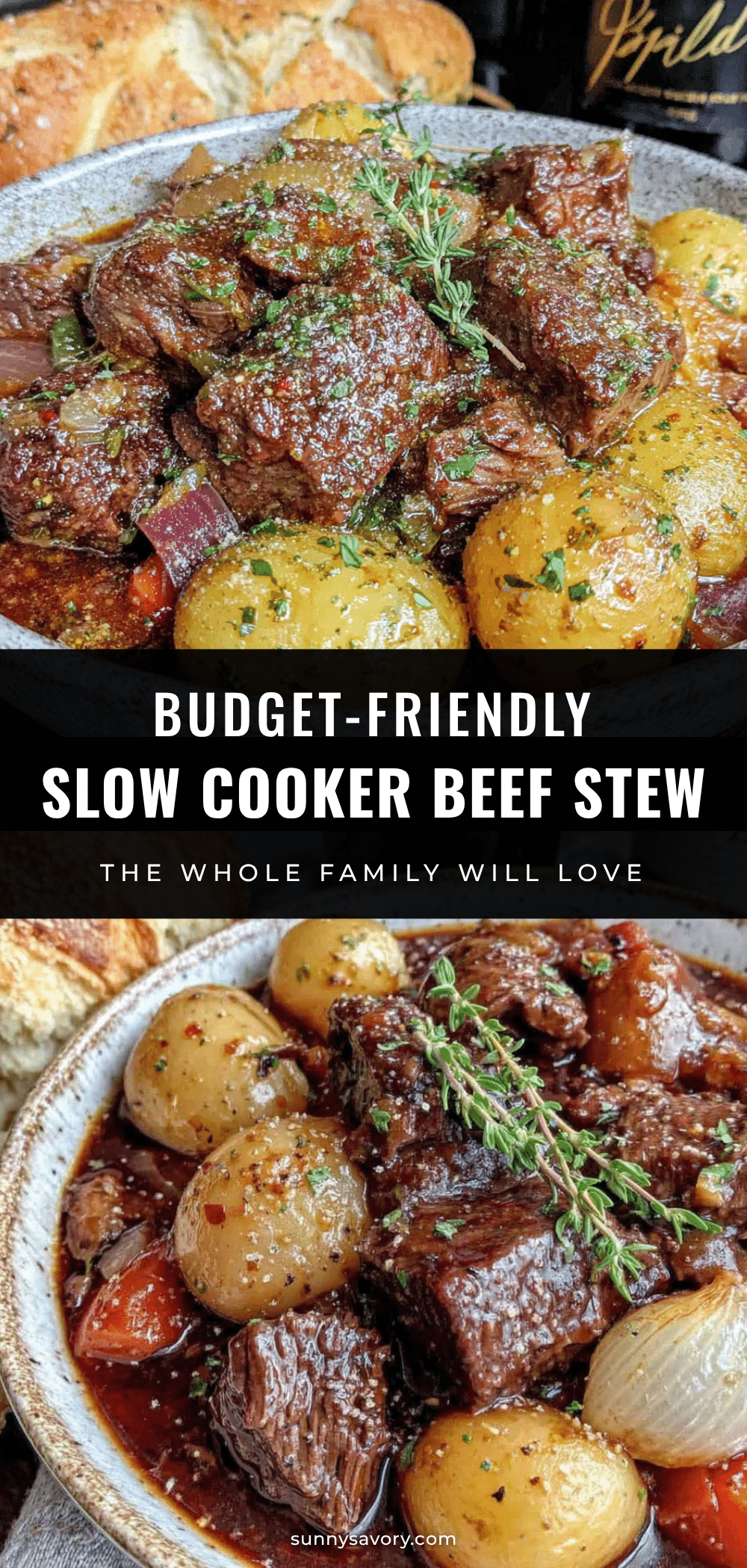
Budget-Friendly Slow Cooker Beef Stew: Easy Family Dinner
A rich, savory beef stew made with budget-friendly ingredients and a slow cooker. The beef becomes melt-in-your-mouth tender, and the gravy is thick and glossy, perfect for a cozy family dinner.
- Prep Time: 20 minutes
- Cook Time: 8 hours (LOW) or 4-5 hours (HIGH)
- Total Time: 8 hours 20 minutes (LOW) or 4 hours 25 minutes (HIGH)
- Yield: 8 servings 1x
- Category: Main Course
- Cuisine: American
Ingredients
- 2 pounds beef chuck roast or stew meat
- 2 tablespoons olive oil or vegetable oil
- 1 teaspoon salt
- 1/2 teaspoon black pepper
- 1 large yellow onion, diced
- 4 cloves garlic, minced
- 4 large carrots, peeled and cut into 1-inch chunks
- 3 stalks celery, sliced
- 1.5 pounds Yukon Gold or red potatoes, cut into 1-inch cubes
- 4 cups low-sodium beef broth
- 1 can (14.5 ounces) diced tomatoes, undrained
- 2 tablespoons tomato paste
- 1 tablespoon Worcestershire sauce
- 2 bay leaves
- 1 teaspoon dried thyme
- 1/2 teaspoon dried rosemary
- 2 tablespoons cornstarch mixed with 2 tablespoons cold water (optional, for thickening)
Instructions
- Prep your beef: Pat the beef dry with paper towels. Cut the chuck roast into 1.5-inch cubes, trimming off any large pieces of hard fat. Season generously with 1 teaspoon salt and 1/2 teaspoon pepper.
- Brown the beef in batches: Heat 1 tablespoon of olive oil in a large skillet over medium-high heat until shimmering. Add half the beef in a single layer and sear without moving for about 3-4 minutes until a deep brown crust forms. Flip and brown the other side for another 2-3 minutes. Transfer the browned beef to the slow cooker. Repeat with the remaining oil and beef.
- Sauté the aromatics: Reduce the heat to medium. Add the diced onion to the same skillet and cook for about 5 minutes, scraping up any browned bits. Add the minced garlic and cook for another 30 seconds until fragrant. Transfer the onions and garlic to the slow cooker.
- Deglaze the pan: Pour about 1/2 cup of the beef broth into the hot skillet and scrape up all the browned bits with a wooden spoon. Pour this into the slow cooker.
- Layer the vegetables: Add the carrots, celery, and potatoes to the slow cooker on top of the beef and onions. Do not stir.
- Add the liquids and seasonings: Pour in the remaining beef broth, undrained diced tomatoes, tomato paste, Worcestershire sauce, bay leaves, thyme, and rosemary. Gently stir to combine, ensuring the tomato paste dissolves. The liquid should come about halfway up the ingredients; if it looks dry, add another 1/2 cup of water or broth.
- Cook low and slow: Cover the slow cooker and cook on LOW for 8 hours or on HIGH for 4-5 hours. Low and slow is preferred for the most tender beef.
- Thicken the stew (optional): About 30 minutes before serving, remove the bay leaves. In a small bowl, whisk together the cornstarch and cold water until smooth. Stir this slurry into the stew. Let it cook uncovered for the last 30 minutes to thicken.
- Season and serve: Taste the stew and add more salt and pepper if needed. Serve hot with crusty bread or over mashed potatoes.
Notes
For best results, do not skip browning the beef. Cut vegetables uniformly for even cooking. Avoid lifting the lid during cooking. Season in layers for complex flavor. Add cornstarch slurry only in the last 30 minutes. If stew tastes flat, add a splash of apple cider vinegar or lemon juice.
Nutrition
- Serving Size: 1 bowl (about 1.5 cu
- Calories: 400
- Sugar: 8
- Sodium: 700
- Fat: 16
- Saturated Fat: 5
- Carbohydrates: 33
- Fiber: 5
- Protein: 34
Keywords: beef stew, slow cooker, budget-friendly, easy dinner, comfort food, family meal