Love this? Save it for later!
Share the inspiration with your friends
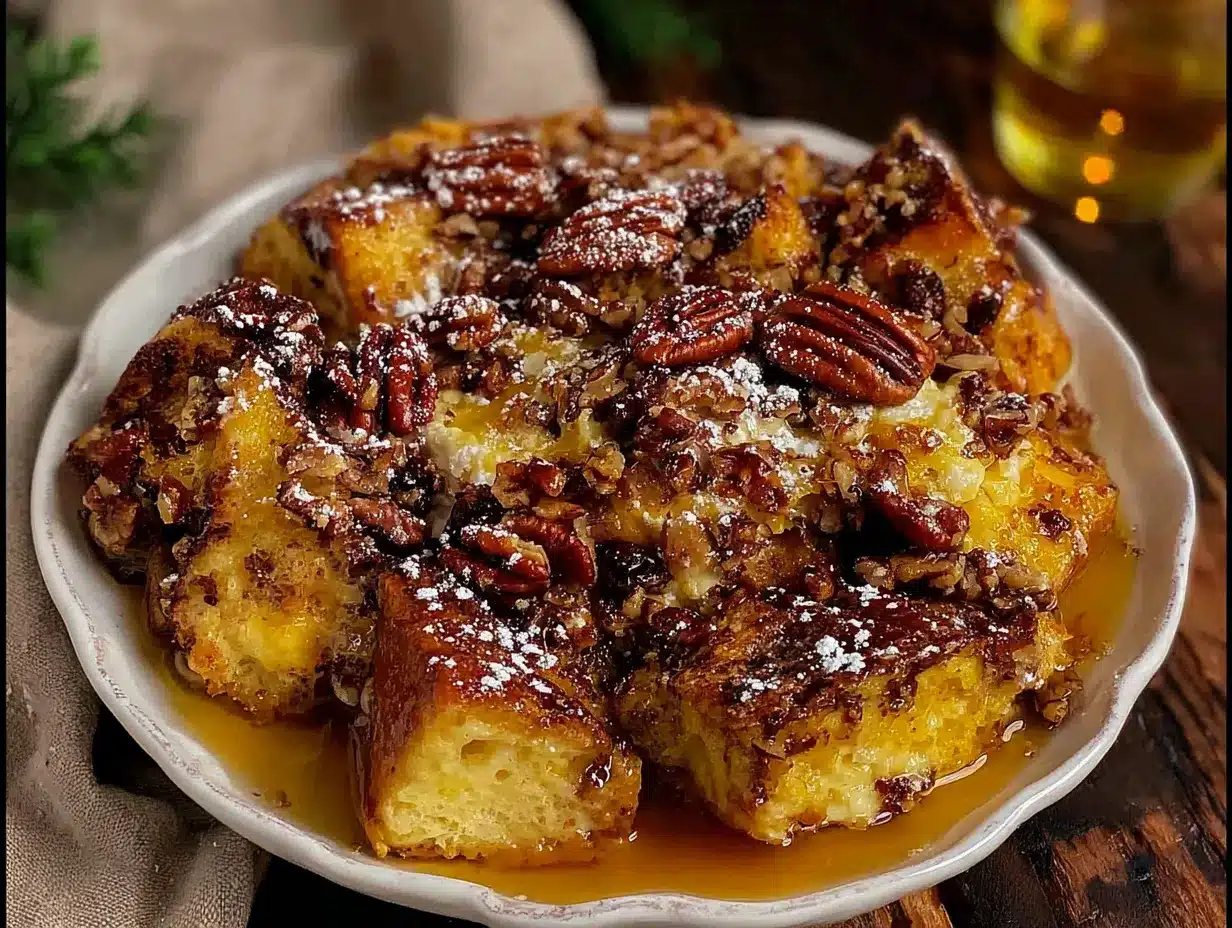
This was supposed to be a simple batch of stovetop French toast. I had the bread cubed, the eggs cracked, and I was reaching for the milk when my hand closed around a carton of eggnog instead. It was two days before Christmas, the kitchen was a disaster zone of cookie sprinkles and wrapping paper, and I was already running late for a neighbor’s gift exchange. I didn’t have time to run to the store. So I poured the eggnog in anyway, muttered a little prayer to the breakfast gods, and threw the whole thing into a baking dish instead of fussing with a skillet. Honestly, I expected a soggy, overly-sweet mess. What came out was nothing like the plan — and better. The top was golden and slightly crisp, the inside was custardy and rich, and that nutmeg scent filled every corner of the house. I stood there eating straight from the dish with a fork, still in my pajamas, and realized I’d accidentally stumbled onto something I’d be making every single holiday season.
That first bite had this unexpected warmth — the eggnog didn’t just add sweetness, it brought this creamy, spiced depth that regular milk never could. The bread soaked up every drop overnight, turning into something between a bread pudding and the best French toast you’ve ever had. I mean, I’ve made a lot of breakfast casseroles in my time, but this one felt different. It felt like Christmas morning in a dish. You know that feeling when you take a bite and everything just clicks? That was this casserole. It’s become my go-to for holiday mornings, lazy weekends, and any time I want to feel like I have my life together (even when I clearly don’t). It’s forgiving, it’s indulgent, and it’s the kind of recipe that makes people think you spent hours in the kitchen when really, you just got lucky with a happy accident.
Why You’ll Love This Recipe
Let me tell you why this eggnog French toast casserole has earned a permanent spot in my holiday rotation. I’ve tested it with different breads, various soaking times, and even a few questionable substitutions, and it always delivers. Here’s what makes it stand out:
- Make-Ahead Magic: Assemble it the night before, pop it in the fridge, and bake it the next morning. No early morning scrambling or last-minute stress. This is a lifesaver on Christmas morning when you’ve got presents to open and coffee to drink.
- Simple Ingredients: You probably have most of these in your kitchen right now. The eggnog is the star, but everything else is pantry basics. No fancy grocery trips required.
- Perfect for Holiday Brunch: It serves a crowd beautifully, looks impressive on a buffet table, and pairs perfectly with mimosas or hot cocoa. It’s the centerpiece your holiday brunch deserves.
- Crowd-Pleaser: I’ve served this to kids who swear they don’t like “fancy breakfast” and adults who go back for thirds. The eggnog flavor is festive but not overpowering, and everyone loves the soft, custardy texture with those slightly crisp edges.
- Unbelievably Delicious: The eggnog creates a richer, creamier custard than regular milk or cream. Combined with the warm spices and a buttery brown sugar topping, it’s next-level comfort food that feels special without being complicated.
What makes this recipe different from the rest? It’s the overnight soak. Most French toast casseroles are good, but this one becomes great after the bread has had time to fully absorb that spiced eggnog custard. The result is a casserole that’s perfectly tender throughout, with none of the dry spots you sometimes get with quick versions. It’s comfort food reimagined — richer, more festive, but with the same soul-soothing satisfaction that makes you close your eyes after the first bite.
What Ingredients You Will Need
This recipe uses simple, wholesome ingredients to deliver bold flavor and satisfying texture without the fuss. Most of these are holiday pantry staples, which means you can whip this up even when the stores are packed and you’re short on time.
For the Casserole
- 1 loaf (about 14-16 ounces) day-old French bread or brioche, cut into 1-inch cubes (stale bread soaks up the custard better without turning mushy; I prefer brioche for extra richness)
- 2 cups eggnog (full-fat works best for the creamiest texture; I like using a good quality brand like Organic Valley or local dairy)
- 4 large eggs, room temperature (cold eggs can seize the custard, so let them sit out for 20 minutes)
- 1/2 cup granulated sugar (adds just enough sweetness without overpowering the eggnog)
- 1 teaspoon vanilla extract (pure vanilla makes a difference here)
- 1/2 teaspoon ground cinnamon (warm, comforting flavor)
- 1/4 teaspoon ground nutmeg (freshly grated if you have it — it’s a game-changer)
- 1/4 teaspoon salt (balances the sweetness and enhances all the flavors)
- 2 tablespoons unsalted butter, melted (for greasing the dish and adding richness)
For the Topping
- 1/4 cup packed brown sugar (creates that gorgeous caramelized crust)
- 2 tablespoons unsalted butter, cold and cut into small pieces
- 1/4 cup all-purpose flour (helps create a crumbly streusel)
- 1/4 cup chopped pecans or walnuts (optional, but adds wonderful crunch; toast them first for extra flavor)
- Pinch of cinnamon
Ingredient Tips: For the bread, day-old or slightly stale is ideal. Fresh bread can work, but it tends to get too soft. If all you have is fresh, cube it and let it sit out on a baking sheet for an hour or two to dry out slightly. For the eggnog, don’t use the light or low-fat version — the richness is what makes this casserole so special. And if you’re feeling fancy, a splash of dark rum or bourbon in the custard (about 1 tablespoon) adds a lovely grown-up twist.
Substitution Guidance: Need a dairy-free option? Use a good quality dairy-free eggnog and substitute the butter with coconut oil or a plant-based butter. For a gluten-free version, use a sturdy gluten-free bread like a rustic sourdough style — avoid anything too airy or it will fall apart. If you don’t have eggnog, you can use a mixture of 1 3/4 cups whole milk plus 1/4 cup heavy cream, and add an extra 1/2 teaspoon of nutmeg and 1/4 teaspoon of cinnamon. It won’t be quite the same, but it will still be delicious.
Equipment Needed
You don’t need anything fancy for this recipe, which is part of its beauty. Here’s what you’ll need:
- 9×13-inch baking dish (glass or ceramic works best; metal can sometimes react with the custard)
- Large mixing bowl (for whisking the custard)
- Whisk (a sturdy one that can handle the thick eggnog)
- Measuring cups and spoons
- Knife and cutting board (for cubing the bread)
- Small bowl (for mixing the topping)
- Plastic wrap or aluminum foil (for covering the dish overnight)
- Pastry cutter or fork (for cutting butter into the topping; your fingers work fine too)
If you don’t have a 9×13 dish, you can use a similar-sized baking dish or even two smaller ones. Just keep an eye on the baking time — smaller dishes may need a few extra minutes. I’ve also made this in a cast iron skillet for a rustic look, and it turned out beautifully. For the topping, if you don’t have a pastry cutter, just use two forks or your fingertips to work the butter into the flour mixture. It’s not fussy — just get it to a coarse crumb texture and you’re good.
Preparation Method
This recipe comes together in two easy stages: the overnight assembly and the morning bake. Trust me, the overnight soak is where the magic happens.
Step 1: Prep the Bread (5 minutes)
Cut your day-old bread into 1-inch cubes. Don’t stress about perfect uniformity — rustic chunks are fine. Spread the cubes evenly in your greased 9×13 baking dish. If you’re using fresh bread, spread the cubes on a baking sheet and let them dry out for an hour or two. You want them slightly firm so they absorb the custard without disintegrating.
Step 2: Make the Custard (10 minutes)
In a large mixing bowl, whisk together the 2 cups of eggnog, 4 large eggs, 1/2 cup granulated sugar, 1 teaspoon vanilla extract, 1/2 teaspoon cinnamon, 1/4 teaspoon nutmeg, and 1/4 teaspoon salt. Whisk until everything is smooth and the sugar has mostly dissolved. The mixture should look pale and slightly frothy. Give it a sniff — that eggnog and spice aroma is pure holiday magic.
Step 3: Soak the Bread (5 minutes + overnight)
Pour the custard evenly over the bread cubes in the baking dish. Use a spatula or your hands to gently press the bread down, making sure every piece gets soaked. Don’t worry if some cubes stick up a bit — those will become deliciously crispy on top. Cover the dish tightly with plastic wrap and refrigerate for at least 4 hours, but ideally overnight (8-12 hours). This is the crucial step that makes this casserole so tender and flavorful.
Step 4: Make the Topping (5 minutes)
In a small bowl, combine 1/4 cup packed brown sugar, 1/4 cup all-purpose flour, and a pinch of cinnamon. Add 2 tablespoons of cold butter (cut into small pieces) and use a pastry cutter, fork, or your fingers to work the butter into the dry ingredients until the mixture resembles coarse crumbs. Stir in 1/4 cup chopped pecans or walnuts if using. Set aside in the fridge until morning.
Step 5: Bake the Casserole (45-55 minutes)
In the morning, preheat your oven to 350°F (175°C). Remove the casserole from the fridge and let it sit on the counter while the oven heats up — about 15 minutes. This helps it bake more evenly. Sprinkle the topping evenly over the soaked bread. Bake for 45-55 minutes, until the top is golden brown and the center is set (it should jiggle just slightly when you shake the dish). A knife inserted into the center should come out clean, or with just a few moist crumbs.
Step 6: Rest and Serve (10 minutes)
Let the casserole rest for 10 minutes after it comes out of the oven. This allows the custard to set up fully and makes it easier to cut clean squares. Serve warm, dusted with a little extra cinnamon or powdered sugar if you’re feeling fancy. A drizzle of maple syrup is never a bad idea either.
Cooking Tips & Techniques
After making this casserole more times than I can count (including a few memorable failures), I’ve learned a few things that make a real difference. Let me share them so you can skip the mistakes I made.
Don’t skip the overnight soak. I know, sometimes you forget or you’re short on time. I’ve tried the 2-hour soak version, and it’s just not the same. The bread needs time to fully absorb that spiced custard, and the result is a casserole that’s creamy throughout rather than having dry pockets. If you’re really in a pinch, aim for at least 4 hours.
Watch your oven temperature. Ovens vary wildly — I learned this the hard way when I burned the topping on my first attempt. If your casserole is browning too quickly on top but the center is still jiggly, tent it loosely with foil for the last 15-20 minutes of baking. Conversely, if it’s not browning at all, you might need to increase the temperature to 375°F for the last 10 minutes.
Use room temperature eggs. This is one of those tips that sounds fussy but actually matters. Cold eggs can cause the custard to seize up a bit, resulting in a less creamy texture. Just let your eggs sit on the counter for 20 minutes before you start. Easy.
Don’t overmix the custard. Whisk until everything is combined, but don’t go crazy. Over-whisking can incorporate too much air, which can make the casserole puff up in the oven and then deflate. You want a smooth, homogenous mixture, not a frothy one.
Press the bread down gently. After you pour the custard, give the bread a gentle press with a spatula. This ensures even absorption. But don’t mash it — you want the cubes to keep their shape.
Variations & Adaptations
This recipe is wonderfully flexible, and I’ve tried several variations over the years. Here are some of my favorites:
Boozy Holiday Version: Add 2 tablespoons of dark rum, bourbon, or brandy to the custard mixture. The alcohol mostly burns off during baking, leaving behind a lovely warmth that complements the eggnog beautifully. I made this for a New Year’s brunch once, and it was a huge hit.
Chocolate Lover’s Twist: Sprinkle 1/2 cup of semi-sweet chocolate chips over the bread before pouring the custard. The chocolate melts into little pockets of richness throughout the casserole. My kids go crazy for this version, and honestly, so do I.
Dairy-Free Adaptation: Use a high-quality dairy-free eggnog (I like the one from So Delicious) and substitute the butter with coconut oil or a plant-based butter. For the topping, use a gluten-free flour blend. The texture will be slightly less creamy, but it’s still incredibly satisfying. I’ve served this to dairy-free guests who couldn’t tell the difference.
Fruit-Studded Version: Add 1 cup of fresh or frozen cranberries (halved) or diced apples to the bread before pouring the custard. The tart fruit cuts through the richness of the eggnog beautifully. I made this for Thanksgiving morning once, and the cranberries added such a lovely pop of color and flavor.
Savory-Sweet Hybrid: Reduce the sugar to 1/4 cup and add 1/2 teaspoon of black pepper and a pinch of cayenne to the custard. The heat plays against the sweet eggnog in a surprisingly addictive way. This is a weird one, I’ll admit, but if you like sweet-and-spicy combinations, give it a try.
Serving & Storage Suggestions
This casserole is best served warm, straight from the oven, when the top is still crisp and the inside is soft and custardy. Here’s how to make the most of it:
Serving Suggestions: Cut the casserole into squares and serve on warm plates. A dusting of powdered sugar adds a beautiful snowy effect. Maple syrup is the classic pairing, but I also love it with a drizzle of warm caramel sauce or a dollop of whipped cream. For a brunch spread, serve it alongside crispy bacon or breakfast sausage, fresh fruit, and mimosas or hot coffee. The sweetness of the casserole balances beautifully with salty, savory sides.
Storage Instructions: Leftovers keep well in the refrigerator for up to 3 days. Cover the dish tightly with plastic wrap or transfer individual portions to an airtight container. The casserole will soften slightly as it sits, but the flavor actually improves as the spices meld together.
Reheating Tips: The best way to reheat is in the oven at 300°F for about 10-15 minutes, which helps restore some of the crispness to the topping. The microwave works in a pinch (about 45 seconds per serving), but the texture won’t be as good. For individual portions, I like to reheat them in a toaster oven — it’s the perfect compromise between speed and quality.
Freezer Instructions: You can freeze the unbaked casserole (before adding the topping) for up to 3 months. Assemble it in the dish, cover tightly with plastic wrap and foil, and freeze. When you’re ready to bake, thaw it overnight in the refrigerator, add the topping, and bake as directed. You can also freeze baked leftovers — just wrap individual portions tightly and reheat in the oven.
Nutritional Information & Benefits
Let’s be honest — this is a holiday indulgence, not a health food. But it does have a few redeeming qualities worth mentioning. Here’s the estimated nutritional breakdown per serving (based on 12 servings):
- Calories: Approximately 320-350
- Protein: 9-10 grams
- Carbohydrates: 38-42 grams
- Fat: 15-18 grams
- Fiber: 1-2 grams
- Sugar: 20-24 grams
Health Highlights: Eggs provide high-quality protein and important nutrients like choline, which supports brain health. Eggnog is typically made with milk and cream, offering calcium and vitamin D. The cinnamon and nutmeg aren’t just for flavor — they have anti-inflammatory properties and can help regulate blood sugar. And if you add nuts to the topping, you’ll get healthy fats and a little extra protein.
Dietary Considerations: This recipe contains dairy, eggs, gluten (from the bread and flour), and nuts (if using). For a gluten-free version, use gluten-free bread and flour. For a dairy-free version, use dairy-free eggnog and plant-based butter. Unfortunately, it’s difficult to make this recipe vegan because the eggs are essential for the custard structure.
My personal perspective? This is a treat for special occasions. I don’t worry about the nutritional profile when I’m serving it on Christmas morning or for a holiday brunch. It’s meant to be enjoyed, savored, and shared with people you love. Balance it with lighter meals the rest of the day and enjoy every single bite.
Conclusion
This eggnog French toast casserole started as a happy accident, but it’s become a beloved tradition in my kitchen. It’s the kind of recipe that makes holiday mornings feel magical without requiring hours of work. The make-ahead convenience means you can actually enjoy the morning instead of stressing over the stove. And that first bite — warm, custardy, spiced, and sweet — is pure comfort.
I hope you’ll try this recipe and make it your own. Add your favorite nuts, swap in different spices, or leave it exactly as written. The beauty of this casserole is that it’s forgiving and adaptable. It’s meant to be shared, so don’t be shy about bringing it to a holiday brunch or serving it to overnight guests.
If you make this cozy holiday eggnog French toast casserole, I’d love to hear about it. Leave a comment below and let me know how it turned out — did you add any twists? Did your family love it? Your stories and feedback make this community so special. And if you’re looking for more holiday breakfast inspiration, check out my cranberry orange scones or gingerbread pancakes for more festive morning treats.
Happy holidays, and happy cooking! Remember, the best recipes often come from the moments when things don’t go according to plan. So pour that eggnog, trust the process, and enjoy every delicious bite.
Frequently Asked Questions
Can I use low-fat or light eggnog?
You can, but I don’t recommend it. Full-fat eggnog provides the richness and creamy texture that makes this casserole so special. Light eggnog has a thinner consistency and less fat, which can result in a less tender, less flavorful casserole. If you’re watching calories, I’d suggest using full-fat eggnog and serving smaller portions instead.
How far in advance can I assemble the casserole?
You can assemble the casserole (without the topping) up to 24 hours in advance. The longer it soaks, the more flavorful and tender it becomes. If you’re going beyond 24 hours, I’d recommend waiting to add the topping until just before baking, as the topping can become soggy if it sits on the custard for too long.
Can I make this without an overnight soak?
Yes, but the texture won’t be as good. If you’re short on time, let the casserole sit at room temperature for at least 1-2 hours before baking. The bread won’t absorb as much custard, so the casserole may be slightly drier and less cohesive. For best results, plan ahead and give it the full overnight soak.
What’s the best bread to use for this recipe?
Day-old French bread or brioche are my top choices. French bread holds its shape well and has a nice chewy texture. Brioche is richer and more tender, resulting in a softer casserole. Challah also works beautifully. Avoid very soft sandwich bread, which can become mushy, and very dense breads like sourdough, which may not absorb enough custard.
Can I freeze the baked casserole?
Absolutely! Let the baked casserole cool completely, then cut it into individual portions. Wrap each portion tightly in plastic wrap and then foil, and freeze for up to 3 months. To reheat, unwrap and place in a 300°F oven for about 15-20 minutes, or microwave for 1-2 minutes. The texture won’t be quite as good as fresh, but it’s still delicious and perfect for busy mornings.
Pin This Recipe!
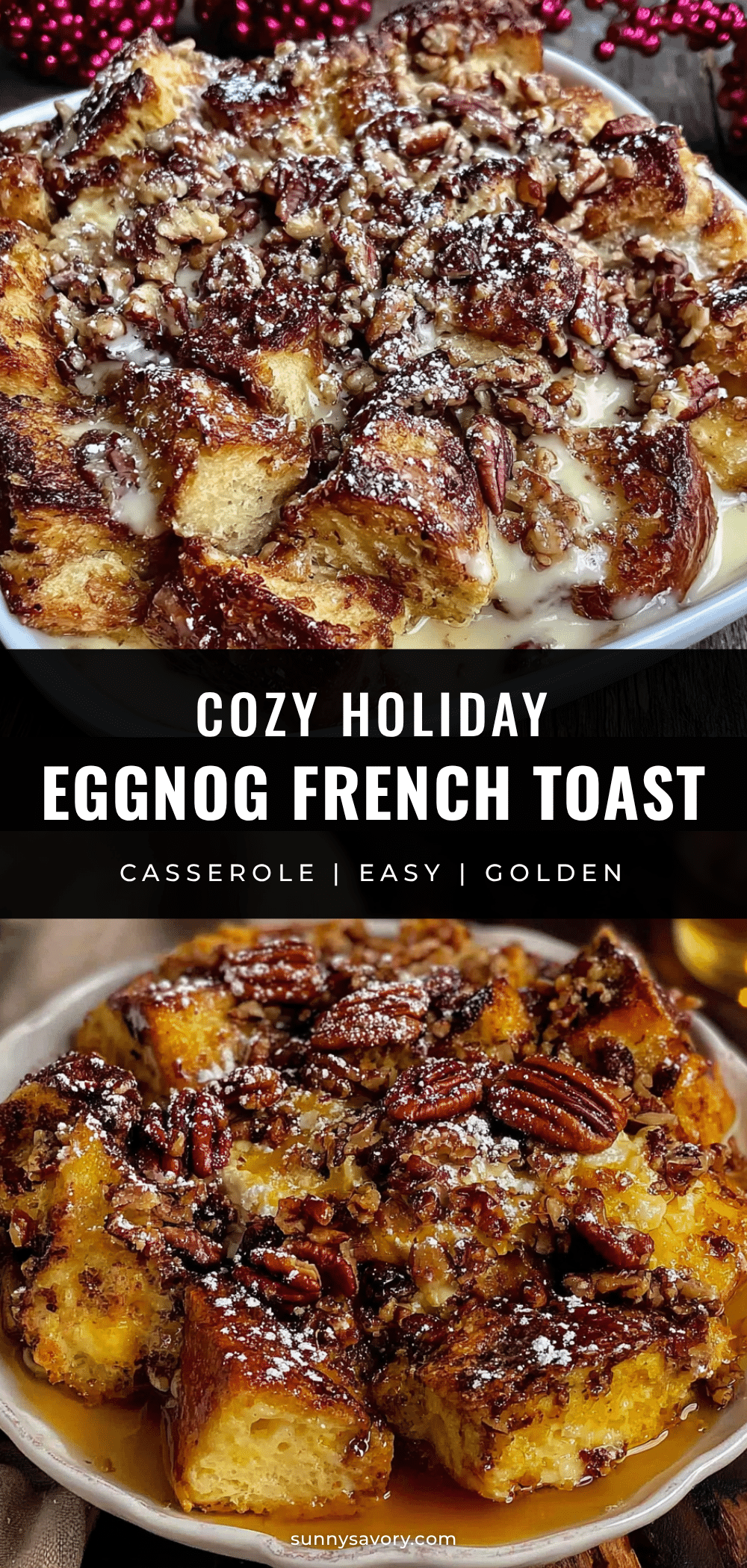
Cozy Holiday Eggnog French Toast Casserole – Easy Make Ahead

A rich, custardy French toast casserole made with eggnog, perfect for holiday mornings. Assemble it the night before and bake in the morning for a stress-free, indulgent breakfast.
- Prep Time: 15 minutes
- Cook Time: 50 minutes
- Total Time: 8 hours 15 minutes (includes overnight soak)
- Yield: 12 servings 1x
- Category: Breakfast / Brunch
- Cuisine: American
Ingredients
- 1 loaf (14-16 ounces) day-old French bread or brioche, cut into 1-inch cubes
- 2 cups eggnog (full-fat)
- 4 large eggs, room temperature
- 1/2 cup granulated sugar
- 1 teaspoon vanilla extract
- 1/2 teaspoon ground cinnamon
- 1/4 teaspoon ground nutmeg
- 1/4 teaspoon salt
- 2 tablespoons unsalted butter, melted (for greasing dish)
- 1/4 cup packed brown sugar
- 2 tablespoons unsalted butter, cold and cut into small pieces
- 1/4 cup all-purpose flour
- 1/4 cup chopped pecans or walnuts (optional)
- Pinch of cinnamon
Instructions
- Cut day-old bread into 1-inch cubes and spread evenly in a greased 9×13-inch baking dish.
- In a large bowl, whisk together eggnog, eggs, granulated sugar, vanilla, cinnamon, nutmeg, and salt until smooth.
- Pour custard evenly over bread cubes, pressing gently to ensure all pieces are soaked. Cover with plastic wrap and refrigerate for at least 4 hours, preferably overnight (8-12 hours).
- In a small bowl, combine brown sugar, flour, and a pinch of cinnamon. Cut in cold butter until mixture resembles coarse crumbs. Stir in nuts if using. Refrigerate until morning.
- Preheat oven to 350°F (175°C). Remove casserole from fridge and let sit 15 minutes. Sprinkle topping evenly over soaked bread.
- Bake for 45-55 minutes until golden brown and center is set (slightly jiggly). Let rest 10 minutes before serving.
- Serve warm, dusted with cinnamon or powdered sugar, and drizzle with maple syrup if desired.
Notes
For best results, use day-old bread and full-fat eggnog. The overnight soak is crucial for texture. If browning too quickly, tent with foil. For a boozy version, add 2 tablespoons dark rum or bourbon to the custard.
Nutrition
- Serving Size: 1 square (1/12 of ca
- Calories: 335
- Sugar: 22
- Sodium: 280
- Fat: 16
- Saturated Fat: 8
- Carbohydrates: 40
- Fiber: 1
- Protein: 9
Keywords: eggnog French toast casserole, make ahead breakfast, holiday brunch, overnight French toast casserole, Christmas breakfast