Love this? Save it for later!
Share the inspiration with your friends
This was supposed to be a crusty artisan loaf. I had my sourdough starter bubbling away on the counter, my kitchen scale ready, and a whole Sunday afternoon with nothing but good intentions. Then my toddler woke up from his nap after only twenty minutes, the phone rang twice, and I grabbed the wrong amount of water. Too much, way too much. The dough was a soupy, sticky mess that would never hold its shape for a boule. I stood there staring at this puddle of flour and water, ready to dump the whole thing down the sink. Honestly, I almost did.
But I remembered a friend once saying that focaccia is the most forgiving bread there is. So I just poured the whole sloppy mess into a well-oiled baking pan, drizzled more olive oil on top, and figured I would see what happened. I poked it with my fingers, threw some rosemary on top, and walked away. Two hours later, what came out of the oven was nothing like the plan — and better. The bottom was shatteringly crisp, the inside was light and airy, and those little pools of olive oil had created the most incredible golden crust. I mean, I actually laughed out loud when I pulled it out.
That accidental focaccia has become my go-to bread, and I have made it at least twice a week since then. There is something about the crispy no-knead sourdough focaccia with rosemary and sea salt that just hits different. Maybe you have been there — a recipe fails, and you end up with something better than what you were chasing. That is exactly what this bread is. It is the happy accident that turned into a staple, and I keep making it because it never gets old.
Why You’ll Love This Recipe
This isn’t just another focaccia recipe. It is the one that changed how I think about bread baking. Here is why you will fall for this crispy no-knead sourdough focaccia with rosemary and sea salt:
- No Kneading Required : You do not need a stand mixer, a bread machine, or strong arms. Just a bowl, a spoon, and some patience. The sourdough starter does all the work for you.
- That Crispy Bottom : Most focaccia recipes give you a soft, bready base. This one creates a crackling, golden crust on the bottom that sounds like stepping on autumn leaves. It is everything.
- Simple Ingredients : Flour, water, olive oil, salt, rosemary, and your sourdough starter. That is it. No fancy equipment or trips to specialty stores.
- Perfect for Beginners : If you have ever been intimidated by sourdough, start here. This recipe forgives over-proofing, under-proofing, and general kitchen chaos. Trust me, I have tested it.
- Crowd-Pleaser : I brought this to a potluck last month, and three people asked for the recipe before I even sat down. It disappears fast.
What makes this recipe different from the rest is the technique. Most focaccia recipes use commercial yeast and call for a wet dough, but they skip the critical step of using enough olive oil in the pan. I use a generous layer of good olive oil, almost like shallow frying the bottom of the dough as it bakes. That is what creates the crispy, crunchy texture that makes this bread unforgettable. Plus, the sourdough fermentation adds a subtle tang that balances beautifully with the earthy rosemary and flaky sea salt.
This bread makes you close your eyes after the first bite. It is comfort food reimagined — healthier, simpler, but with the same soul-soothing satisfaction. Perfect for impressing dinner guests without stress, or turning a simple soup into a memorable meal.
What Ingredients You Will Need
This crispy no-knead sourdough focaccia with rosemary and sea salt uses simple, wholesome ingredients to deliver bold flavor and satisfying texture without the fuss. Most of these are pantry staples, and the ones that are not are easy to find at any grocery store.
- Bread flour (500g / about 4 cups) — I prefer King Arthur or Bob’s Red Mill for consistent protein content. Do not use all-purpose flour here; bread flour gives the structure needed for that crispy crust.
- Active sourdough starter (200g / about 1 cup) — Make sure it is bubbly and has been fed within the last 8-12 hours. A hungry starter will not give you the same rise.
- Warm water (400g / about 1 3/4 cups) — About 90°F (32°C). Too hot will kill the starter; too cold will slow fermentation.
- Extra-virgin olive oil (1/2 cup, plus more for drizzling) — Use a good quality one here. It is not just for flavor; it is what creates that crispy bottom. I like California Olive Ranch for everyday baking.
- Fresh rosemary (2-3 sprigs, leaves stripped and roughly chopped) — Dried rosemary works in a pinch, but fresh gives a brighter, more aromatic flavor.
- Flaky sea salt (1-2 teaspoons, for topping) — Maldon or any flaky finishing salt. Do not use regular table salt for the topping; it will be too salty and not crunchy enough.
- Fine sea salt (10g / about 2 teaspoons, for the dough) — This gets mixed into the flour.
Ingredient Selection Tips : Look for bread flour with at least 12% protein content. If you cannot find bread flour, you can use all-purpose flour, but the texture will be slightly less chewy and the crust may not be as crispy. For a gluten-free option, use a 1:1 gluten-free flour blend, though the texture will be denser and less airy.
Substitution Guidance : No sourdough starter? You can use 1 teaspoon of active dry yeast dissolved in the warm water with 1 tablespoon of sugar, and let it sit for 10 minutes before mixing. The flavor will be milder, but the texture will still be excellent. For a dairy-free version, just use more olive oil — this recipe is naturally dairy-free anyway.
Equipment Needed
You do not need a lot of fancy gear for this crispy no-knead sourdough focaccia with rosemary and sea salt. Here is what I use:
- Large mixing bowl (at least 4-quart capacity) — Glass or ceramic works best. Avoid metal if your starter is very acidic.
- Digital kitchen scale — Honestly, this is non-negotiable for consistent results. Measuring flour by volume is too inconsistent. A $15 scale from Amazon works perfectly.
- 9×13-inch baking pan (metal or dark non-stick) — Metal pans conduct heat better and give a crisper bottom than glass or ceramic. I use a half-sheet pan sometimes for a thinner, crispier focaccia.
- Bench scraper or silicone spatula — For mixing and folding the sticky dough.
- Plastic wrap or a reusable bowl cover — To keep the dough from drying out during proofing.
- Cooling rack — Essential for keeping the bottom crispy after baking. If you let it cool in the pan, steam will soften the crust.
- Pastry brush (optional) — For brushing olive oil on top before baking.
Budget-Friendly Options : If you do not have a baking pan, a cast-iron skillet works beautifully. Just make sure it is well-seasoned. No scale? Use the spoon-and-level method for flour, but expect slightly different results. I have done it both ways, and the scale is worth the investment.
Preparation Method
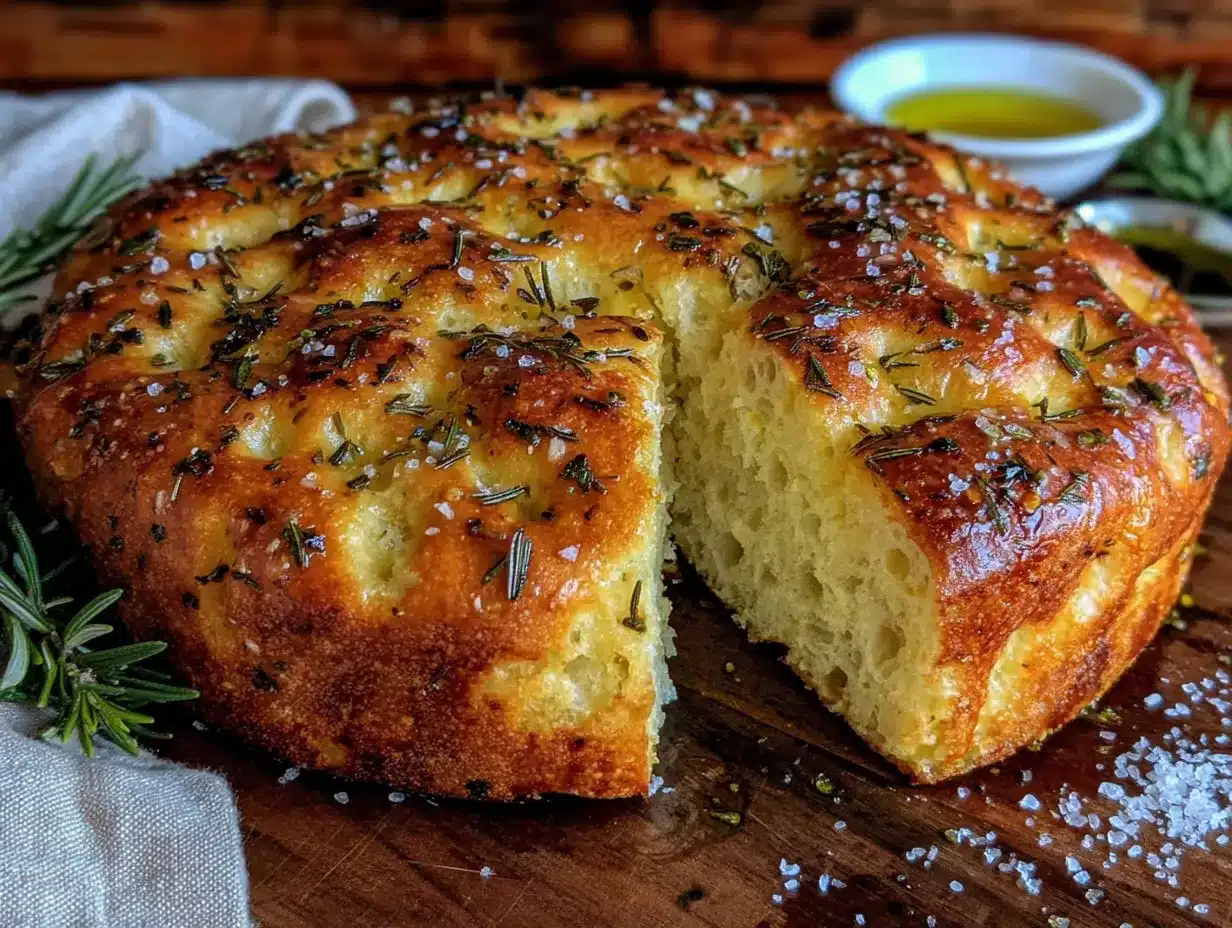
Making this crispy no-knead sourdough focaccia with rosemary and sea salt is more about patience than skill. Here is how I do it:
- Mix the dough (10 minutes) : In your large bowl, combine 500g bread flour and 10g fine sea salt. Whisk them together. In a separate measuring cup, mix 200g active sourdough starter with 400g warm water (about 90°F). Stir until the starter dissolves into the water — it should look milky. Pour the wet ingredients into the dry ingredients and stir with a spatula or your hand until no dry flour remains. The dough will be sticky and shaggy. That is normal. Cover the bowl with plastic wrap and let it rest for 30 minutes.
- Stretch and fold (15 minutes total, over 2 hours) : After the rest, perform a series of stretch and folds. Wet your hand slightly, grab one side of the dough, stretch it up, and fold it over the center. Rotate the bowl a quarter turn and repeat. Do this 4 times total (one full rotation). Cover and rest 30 minutes. Repeat this process 3 more times, for a total of 4 sets of stretch and folds over 2 hours. You will feel the dough tighten and become smoother with each fold. This builds strength without kneading.
- Bulk fermentation (4-6 hours at room temperature) : After the last fold, cover the bowl and let the dough rise at room temperature (70-75°F is ideal). It should double in size and look bubbly on the surface. In cooler weather, this can take up to 8 hours. In warmer weather, check it at 3 hours. The dough should jiggle when you shake the bowl.
- Prepare the pan (5 minutes) : About 30 minutes before the dough is ready, pour 1/4 cup of olive oil into your 9×13-inch baking pan. Spread it evenly across the bottom and up the sides. This is not just for flavor — it creates that crispy bottom.
- Transfer the dough (5 minutes) : Gently scrape the dough into the oiled pan. It will look deflated and that is okay. Do not punch it down. Let it sit for 10 minutes to relax.
- Stretch and dimple (10 minutes) : Using oiled fingertips, gently stretch the dough to fill the corners of the pan. If it resists, let it rest 10 minutes and try again. Once it fills the pan, dimple the surface aggressively — push your fingers all the way to the bottom of the pan. You want those signature focaccia craters. Drizzle another 2 tablespoons of olive oil over the top, making sure it pools in the dimples.
- Second proof (2-3 hours) : Cover the pan loosely with plastic wrap and let the dough rise again. It should become puffy and jiggle when you shake the pan. The dimples will fill in slightly — that is fine.
- Preheat and top (15 minutes) : About 30 minutes before baking, preheat your oven to 450°F (230°C) with a rack in the middle. Sprinkle the chopped fresh rosemary evenly over the dough. Finish with a generous sprinkle of flaky sea salt — be bold here, it needs enough salt to balance the bread.
- Bake (25-30 minutes) : Place the pan in the oven and bake until the top is deep golden brown and the bottom sounds hollow when tapped. Rotate the pan halfway through for even browning. The edges should be darker and almost caramelized from the olive oil.
- Cool (10 minutes, then transfer) : Let the focaccia cool in the pan for 10 minutes. Then use a spatula to loosen the edges and transfer it to a cooling rack. Do not skip this step! If you leave it in the pan, the bottom will steam and lose its crispiness.
Sensory Cues : During bulk fermentation, the dough should smell slightly sour and yeasty, like a bakery. When you dimple the dough, you should hear a soft popping sound from the air bubbles releasing. The finished focaccia should sound hollow when you tap the bottom, and the crust should crackle when you squeeze it gently.
Cooking Tips & Techniques
I have made this crispy no-knead sourdough focaccia with rosemary and sea salt at least fifty times, and I have learned a few things the hard way. Here are my best tips:
Use enough oil. This is the biggest mistake people make. The olive oil is not just for flavor — it fries the bottom of the dough as it bakes, creating that shatteringly crispy crust. Do not skimp. If you are nervous about using too much, remember that most of it stays in the pan.
Do not rush the bulk fermentation. I once tried to speed things up by using warmer water and a shorter rise. The focaccia came out dense and gummy. The sourdough needs time to develop flavor and structure. If your kitchen is cold, find a warm spot — on top of the refrigerator, near a sunny window, or in the oven with the light on (but not the heat).
Dimple with confidence. I used to be too gentle, just pressing lightly. Now I push my fingers all the way to the bottom of the pan. Those deep dimples are what catch the olive oil and salt, creating those irresistible crispy, salty pockets. Do not be shy.
Watch the salt. Flaky sea salt varies in intensity. I have ruined a batch by using too much. Start with 1 teaspoon, taste a corner after baking, and adjust next time. You can always add more, but you cannot take it away.
Multitasking strategy : I usually mix the dough in the morning, do the stretch and folds while making breakfast, let it bulk ferment through the day, and bake it before dinner. It fits naturally into a routine without taking over your day.
Variations & Adaptations
One of the best things about this crispy no-knead sourdough focaccia with rosemary and sea salt is how adaptable it is. Here are some variations I have tried:
- Garlic and Herb : Add 3-4 cloves of thinly sliced garlic to the olive oil in the pan before adding the dough. The garlic infuses the oil and creates these amazing roasted garlic pockets. I also add fresh thyme and oregano along with the rosemary.
- Everything Bagel : Skip the rosemary and top with everything bagel seasoning (sesame seeds, poppy seeds, dried garlic, dried onion, and salt). This version disappears fastest at brunch.
- Caramelized Onion and Gruyère : Spread 1 cup of caramelized onions over the dough before the second proof, then sprinkle 1/2 cup of grated Gruyère cheese on top before baking. The cheese gets crispy and the onions add sweetness.
- Gluten-Free Version : Substitute a high-quality 1:1 gluten-free flour blend. Add 1 teaspoon of xanthan gum if your blend does not already include it. The texture will be more cake-like, but still delicious.
- Whole Wheat : Replace half the bread flour with whole wheat flour. Add an extra 2 tablespoons of water, as whole wheat absorbs more liquid. The flavor will be nuttier and more complex.
My personal favorite variation is the garlic and herb version. I once made it for a dinner party and served it alongside a simple tomato soup. People were eating it like it was the main course, not the side dish.
Serving & Storage Suggestions
This crispy no-knead sourdough focaccia with rosemary and sea salt is best served warm, right after baking. The contrast between the crispy bottom and the soft, airy interior is at its peak within the first hour. I usually let it cool for 10 minutes on a rack, then slice it and serve it in a basket lined with a clean kitchen towel to catch any oil drips.
Serving Ideas : It is incredible dipped in balsamic vinegar and olive oil, slathered with salted butter, or used for sandwiches. I love making panini with leftover focaccia — the crispy crust holds up beautifully to pressing. It also pairs perfectly with soups, salads, and pasta dishes. For breakfast, try it toasted with a fried egg on top.
Storage : Store leftovers in an airtight container at room temperature for up to 2 days. Do not refrigerate — it will dry out. To reheat, place slices directly on the oven rack at 350°F for 5-7 minutes, or toast them. The microwave will make it soggy.
Freezing : This focaccia freezes beautifully. Wrap the fully cooled loaf tightly in plastic wrap, then aluminum foil, and freeze for up to 3 months. To serve, thaw at room temperature and reheat in a 350°F oven for 10 minutes. The crispy bottom comes back perfectly.
Flavor Development : Honestly, this bread is even better the next day if you reheat it properly. The flavors meld and deepen overnight. I sometimes make it a day ahead on purpose.
Nutritional Information & Benefits
Here is the approximate nutritional breakdown for one serving (1/8 of the recipe) of this crispy no-knead sourdough focaccia with rosemary and sea salt:
| Nutrient | Amount per Serving |
|---|---|
| Calories | 280 |
| Total Fat | 14g |
| Saturated Fat | 2g |
| Carbohydrates | 34g |
| Fiber | 2g |
| Protein | 6g |
| Sodium | 480mg |
Health Benefits : Sourdough fermentation breaks down phytic acid in the flour, making the minerals more bioavailable. It also produces beneficial lactic acid bacteria that support gut health. The olive oil provides heart-healthy monounsaturated fats, and rosemary is rich in antioxidants. This is not health food, but it is certainly better for you than most store-bought breads.
Dietary Considerations : This recipe is dairy-free and can be made vegan (it already is). For gluten-free, see the variations section. It contains wheat and may contain traces of other allergens depending on your flour source.
Conclusion
This crispy no-knead sourdough focaccia with rosemary and sea salt started as a mistake, but it has become the bread I turn to again and again. It is forgiving, foolproof, and produces results that look and taste like you spent hours in the kitchen. The crispy bottom, the airy crumb, the pools of olive oil and salt — it is everything I want in a bread.
I encourage you to make this your own. Change the toppings, play with the herbs, experiment with different flours. That is the beauty of this recipe — it is a canvas, not a rigid formula. And if you mess it up? Honestly, you probably will still end up with something delicious. That is how this whole thing started.
I would love to hear how yours turns out. Drop a comment below with your favorite variation, or share a photo on social media and tag me. Happy baking, friends!
Frequently Asked Questions
Can I use all-purpose flour instead of bread flour?
Yes, but the texture will be slightly less chewy and the crust may not be as crispy. Bread flour has more protein, which gives the focaccia better structure. If you only have all-purpose, it will still be delicious, just different.
My dough is very sticky. Is that normal?
Absolutely. This is a high-hydration dough, meaning it has a lot of water. That is what creates the airy, open crumb. Do not add more flour. Use wet hands or a wet bench scraper to handle it, and trust the process.
Can I make this without a sourdough starter?
Yes. Substitute 1 teaspoon of active dry yeast dissolved in the warm water with 1 tablespoon of sugar. Let it sit for 10 minutes until foamy, then proceed with the recipe. The flavor will be milder and less tangy, but the texture will still be excellent.
Why is my focaccia not crispy on the bottom?
Most likely, you did not use enough olive oil in the pan, or you let it cool in the pan instead of on a rack. The oil creates a frying effect on the bottom. Next time, use a generous 1/4 cup and make sure it coats the entire bottom of the pan.
How do I know when the focaccia is fully baked?
The top should be deep golden brown, the edges should be darker and almost caramelized, and the bottom should sound hollow when you tap it. If you have an instant-read thermometer, the internal temperature should be 200-210°F (93-99°C).
Pin This Recipe!

Crispy No-Knead Sourdough Focaccia with Rosemary & Sea Salt
This crispy no-knead sourdough focaccia with rosemary and sea salt is a forgiving, foolproof bread that produces a shatteringly crisp bottom and light, airy interior. Made with simple ingredients and no kneading required, it’s perfect for beginners and crowd-pleasers alike.
- Prep Time: 15 minutes
- Cook Time: 30 minutes
- Total Time: 45 minutes
- Yield: 8 servings 1x
- Category: Bread
- Cuisine: Italian
Ingredients
- 500g bread flour (about 4 cups)
- 200g active sourdough starter (about 1 cup)
- 400g warm water (about 1 3/4 cups, 90°F/32°C)
- 1/2 cup extra-virgin olive oil, plus more for drizzling
- 2–3 sprigs fresh rosemary, leaves stripped and roughly chopped
- 1–2 teaspoons flaky sea salt (for topping)
- 10g fine sea salt (about 2 teaspoons, for the dough)
Instructions
- Mix the dough: In a large bowl, combine 500g bread flour and 10g fine sea salt. Whisk together. In a separate measuring cup, mix 200g active sourdough starter with 400g warm water (about 90°F). Stir until the starter dissolves. Pour wet into dry and stir with a spatula until no dry flour remains. Cover and rest for 30 minutes.
- Stretch and fold: After the rest, wet your hand slightly, grab one side of the dough, stretch it up, and fold it over the center. Rotate the bowl a quarter turn and repeat. Do this 4 times total. Cover and rest 30 minutes. Repeat this process 3 more times (total of 4 sets over 2 hours).
- Bulk fermentation: Cover the bowl and let the dough rise at room temperature (70-75°F) for 4-6 hours, until doubled in size and bubbly on the surface.
- Prepare the pan: About 30 minutes before the dough is ready, pour 1/4 cup olive oil into a 9×13-inch baking pan. Spread evenly across the bottom and up the sides.
- Transfer the dough: Gently scrape the dough into the oiled pan. Let it sit for 10 minutes to relax.
- Stretch and dimple: Using oiled fingertips, gently stretch the dough to fill the corners of the pan. Dimple the surface aggressively, pushing your fingers all the way to the bottom. Drizzle another 2 tablespoons olive oil over the top.
- Second proof: Cover the pan loosely with plastic wrap and let the dough rise for 2-3 hours, until puffy and jiggly.
- Preheat and top: About 30 minutes before baking, preheat oven to 450°F (230°C). Sprinkle chopped fresh rosemary evenly over the dough. Finish with a generous sprinkle of flaky sea salt.
- Bake: Place the pan in the oven and bake for 25-30 minutes, until deep golden brown and the bottom sounds hollow when tapped. Rotate the pan halfway through.
- Cool: Let the focaccia cool in the pan for 10 minutes. Then transfer to a cooling rack. Do not skip this step.
Notes
Use enough olive oil in the pan to create a crispy bottom. Do not rush the bulk fermentation; the dough needs time to develop flavor and structure. Dimple with confidence to create deep pockets for oil and salt. Adjust flaky sea salt to taste. For best results, reheat leftovers in the oven to restore crispiness.
Nutrition
- Serving Size: 1/8 of recipe
- Calories: 280
- Sodium: 480
- Fat: 14
- Saturated Fat: 2
- Carbohydrates: 34
- Fiber: 2
- Protein: 6
Keywords: sourdough focaccia, no-knead bread, crispy focaccia, rosemary focaccia, sea salt focaccia, easy sourdough recipe