Love this? Save it for later!
Share the inspiration with your friends
The school bake sale was in twelve hours and I’d completely forgotten. My daughter had reminded me three times, and I’d nodded along, making mental notes that promptly vanished into the chaos of a Tuesday evening. Now it was 9 PM, the pantry offered up a bag of chocolate chips that looked suspiciously chewed, and I was staring at a frozen salmon fillet I’d bought on a whim. Everyone else would be bringing Pinterest-perfect cupcakes and those fancy cookies with the powdered sugar snowdrifts. I had a fish, half a lemon, and a wilting bunch of dill from the back of the fridge. Honestly, I almost called it a loss and reached for the takeout menu. But the thought of showing up empty-handed to the PTA event, where the mom who organizes everything always has a spreadsheet and matching serving platters, was worse. So I threw it together, the salmon and the butter and the lemon, crossed my fingers, and told myself it was just for us, not for the table.
The next morning, I slid the foil packet onto the bake sale table, next to the elaborate displays. I mean, it looked fine—golden, flaky, a little glossy from the butter—but it was salmon at a bake sale. Who brings fish to a bake sale? That would be me, apparently. I left it there, feeling a bit sheepish, and went to help with the cupcake booth. An hour later, I came back to find the foil packet completely empty, save for a smear of butter. A mom I’d never spoken to before grabbed my arm. “That salmon,” she said, “my kid ate three pieces. Three. He won’t even look at fish at home.” I just blinked. The underdog had won again. And honestly, that’s how this recipe became a staple in our house—not because I planned it, but because it worked when nothing else did. Maybe you’ve been there, standing in your kitchen at 9 PM, wondering how dinner got so complicated. This one’s for those nights.
Why You’ll Love This Recipe
Let me tell you, getting my kids to eat fish used to feel like a negotiation with a tiny, stubborn CEO. I tried everything—breading it, hiding it in pasta, calling it “chicken of the sea.” Nothing stuck. But this baked salmon with lemon dill butter? It’s the one that finally worked. Here’s why it’ll work for you too:
- Quick & Easy: You’re looking at about 25 minutes from start to finish. That’s less time than it takes to argue about what’s for dinner.
- Simple Ingredients: Salmon, butter, lemon, dill, salt, pepper. That’s it. No fancy grocery store trips required.
- Perfect for Picky Eaters: The butter and lemon create a mild, buttery flavor that even the most skeptical little eaters tend to love.
- Budget-Friendly: A single salmon fillet stretches beautifully for a family, and leftover salmon makes amazing lunch bowls the next day.
- Unbelievably Delicious: The texture is flaky and tender, not dry or fishy. That lemon dill butter takes it from simple to special without any extra work.
What makes this recipe different from the rest? It’s the technique. Most baked salmon recipes dry the fish out because they overcook it or skip the butter bath. Here, we let the butter do the work, keeping the salmon moist and flavorful. Plus, the dill adds a fresh, herby note that kids don’t find overwhelming. It’s comfort food that happens to be healthy—faster, tastier, but with the same satisfying feeling of a home-cooked meal. Perfect for impressing guests without stress, or turning a regular Tuesday into something worth remembering.
What Ingredients You Will Need
This recipe uses simple, wholesome ingredients to deliver bold flavor and satisfying texture without the fuss. Most of these are pantry staples or easy to find at any grocery store. Here’s what you’ll need:
For the Salmon
- 4 salmon fillets (about 6 ounces each, skin-on or skinless—both work well)
- Salt and black pepper, to taste
- 2 tablespoons unsalted butter, melted (I prefer Kerrygold for its rich flavor)
- 1 tablespoon fresh lemon juice (about half a lemon—avoid bottled juice for the freshest taste)
- 1 tablespoon fresh dill, finely chopped (or 1 teaspoon dried dill if that’s what you have)
- 1 clove garlic, minced (optional, but adds a nice savory note)
For the Lemon Dill Butter Topping
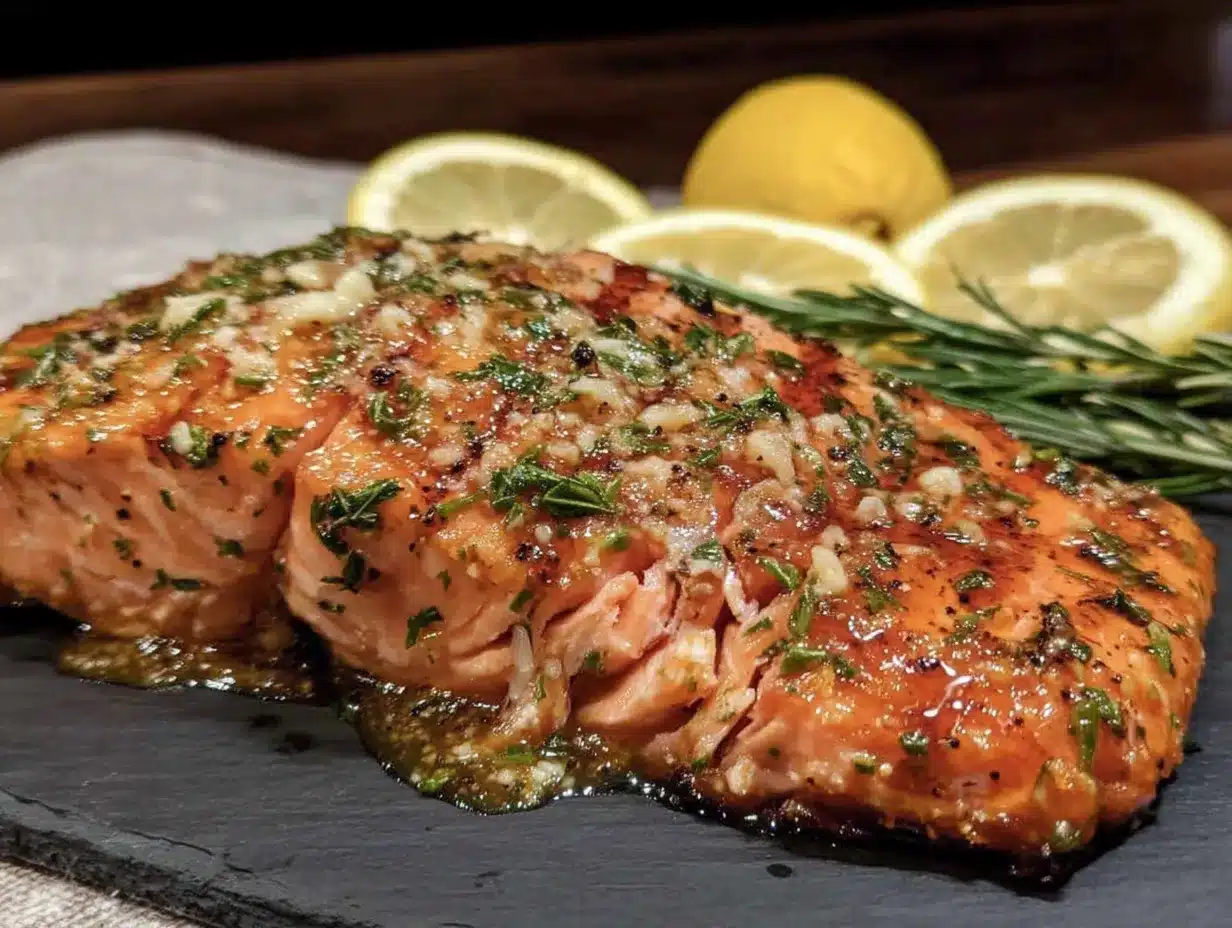
- 2 tablespoons unsalted butter, softened
- 1 teaspoon lemon zest
- 1 teaspoon fresh dill, chopped
- Pinch of salt
Ingredient Tips: Look for salmon fillets that are bright in color and smell fresh, not fishy. If you’re using frozen salmon, thaw it completely in the refrigerator overnight for the best texture. For the dill, fresh really does make a difference here—it’s brighter and more delicate. Dried dill works in a pinch, but use a little less since it’s more concentrated. And if your kids are extra sensitive to “green bits,” you can mince the dill very finely so it blends into the butter. I’ve done that plenty of times!
Substitution Guidance: Use dairy-free butter if needed—it works surprisingly well. You can swap fresh dill with parsley or chives for a different flavor profile. For a garlic-free version, simply skip the minced garlic. And if you don’t have lemons, a splash of white wine vinegar can add the needed acidity.
Equipment Needed
You don’t need a fancy kitchen to make this recipe work. Here’s what you’ll need:
- Baking sheet (a rimmed one works best to catch any butter drips)
- Parchment paper or aluminum foil (for easy cleanup—trust me on this one)
- Small bowl (for mixing the lemon dill butter)
- Chef’s knife and cutting board
- Measuring spoons
- Citrus zester or grater (a microplane works beautifully)
- Instant-read thermometer (optional, but takes the guesswork out of doneness)
If you don’t have a zester, you can use the fine side of a box grater. And honestly, if you don’t have an instant-read thermometer, you can check doneness by flaking the salmon with a fork—it should be opaque and flake easily. I’ve done it both ways, and the thermometer just gives me peace of mind.
Preparation Method
Let’s get cooking! This comes together faster than you’d think.
- Preheat your oven to 400°F (200°C). Line a baking sheet with parchment paper or aluminum foil for easy cleanup. I like foil because it makes the butter bath extra contained.
- Pat the salmon fillets dry with paper towels. This is a small step that makes a big difference—dry fish gets a nice golden crust instead of steaming. Season both sides generously with salt and pepper.
- Make the lemon dill butter mixture. In a small bowl, combine the melted butter, lemon juice, fresh dill, and minced garlic (if using). Stir it together—it should look like a glossy, herby sauce.
- Place the salmon fillets on the prepared baking sheet, skin-side down if they have skin. Pour the lemon dill butter mixture evenly over each fillet, making sure to coat the tops. Don’t be shy—this is where the flavor lives.
- Bake for 12-15 minutes, depending on the thickness of your fillets. For a 1-inch thick fillet, 12 minutes is usually perfect. The salmon should be opaque and flake easily with a fork. If you’re using a thermometer, aim for 125°F (52°C) for medium, or 135°F (57°C) for well-done.
- While the salmon bakes, make the topping. In a separate small bowl, mix the softened butter, lemon zest, chopped dill, and a pinch of salt until smooth. Set aside.
- When the salmon is done, remove it from the oven and let it rest for 2 minutes. Then top each fillet with a small dollop of the lemon dill butter. The residual heat will melt it into a glorious, flavorful sauce.
- Serve immediately. The butter will start to melt right away, so get it to the table fast. I usually spoon a little extra pan butter over the top before serving—waste not, want not!
Pro Tip: If your fillets are different thicknesses, check the thinner ones first and remove them early if needed. I learned this the hard way after serving my husband a piece of salmon that was a little too well-done. Now I use a thermometer and it’s foolproof.
Cooking Tips & Techniques
Here are a few things I’ve learned from making this recipe more times than I can count:
- Don’t skip the pat-dry step. Moisture is the enemy of a good sear or crust. Even though we’re baking, drying the fish helps it cook evenly and prevents that sad, watery texture.
- Room temperature salmon cooks more evenly. Take the fillets out of the fridge 10-15 minutes before baking. I know, I know—sometimes you forget. But it really does make a difference.
- Watch the clock closely. Salmon can go from perfectly flaky to dry in about 60 seconds. Set a timer for 10 minutes and check from there. Better to pull it out a minute early than a minute late.
- Use a thermometer for consistency. I resisted this for years, thinking I could judge by sight. Then I bought a $10 instant-read thermometer, and honestly, it changed my cooking life. No more guessing.
- Let it rest. That 2-minute rest after baking lets the juices redistribute. Cut into it too soon and you’ll have a puddle of flavor running onto the cutting board instead of staying in the fish.
One time, I forgot to set a timer and got distracted by a phone call. The salmon baked for 20 minutes. It was edible, but just barely—dry and a little tough. My kids ate it anyway (bless them), but I learned my lesson. Now I always set a timer, even if I think I’ll remember. You’ve probably been there too.
Variations & Adaptations
This recipe is wonderfully flexible. Here are some ways to switch it up:
- Garlic Herb Version: Add 1 teaspoon of dried thyme or oregano to the butter mixture. It gives the salmon a more savory, Mediterranean vibe. My husband loves this version.
- Lemon-Free Option: If your kids are sensitive to citrus, skip the lemon juice and zest, and use a splash of apple cider vinegar instead. The acidity still balances the richness of the butter.
- Spicy Kick: Add a pinch of red pepper flakes or a dash of smoked paprika to the butter. This is my personal favorite when I’m cooking just for the adults.
- Dairy-Free Adaptation: Use a high-quality dairy-free butter or olive oil instead. The texture will be slightly different, but still delicious. I’ve tried it with Miyoko’s vegan butter and it worked beautifully.
- Sheet Pan Meal: Add asparagus or broccoli to the baking sheet during the last 8 minutes of cooking. Everything cooks together and you have a complete meal with minimal cleanup.
I once tried a version with orange juice instead of lemon, thinking it would be fun and different. It was… okay. Not bad, but not as bright as the lemon. Stick with lemon for this one—it’s the classic for a reason.
Serving & Storage Suggestions
This salmon is best served warm, right out of the oven. Here’s how to make it shine:
- Serving Temperature: Serve immediately while the lemon dill butter is still melty and glossy. If the butter starts to solidify, just spoon a little of the warm pan juices over the top.
- Presentation: Place each fillet on a plate and spoon any remaining butter from the pan over the top. Garnish with a fresh sprig of dill and a lemon wedge for a restaurant-style touch.
- What to Serve With It: This pairs beautifully with roasted potatoes, steamed rice, or a simple green salad. For a kid-friendly plate, serve with buttered noodles and peas—my kids devour it this way.
- Storage: Store leftover salmon in an airtight container in the refrigerator for up to 3 days. The flavors actually meld together overnight, making it even more delicious the next day.
- Reheating: Reheat gently in a 300°F (150°C) oven for 5-7 minutes, or in the microwave on low power in 30-second bursts. Be careful not to overheat, or the salmon will dry out. I usually add a tiny pat of butter when reheating to keep it moist.
- Freezing: You can freeze the baked salmon for up to 2 months. Wrap each fillet tightly in plastic wrap and then foil. Thaw in the refrigerator overnight before reheating.
One of my favorite things about this recipe is how the flavors develop. Day-old salmon, flaked over a salad with some leftover roasted veggies? That’s a lunch I look forward to.
Nutritional Information & Benefits
This baked salmon with lemon dill butter isn’t just delicious—it’s good for you too. Here’s a quick breakdown:
Per serving (1 fillet with butter):
- Calories: ~320
- Protein: 34g
- Fat: 20g
- Carbohydrates: 1g
- Omega-3 fatty acids: High
Health Benefits: Salmon is packed with omega-3 fatty acids, which are great for heart and brain health—especially important for growing kids. The dill adds antioxidants and a fresh flavor that makes healthy eating feel like a treat. Lemon provides a boost of vitamin C, and the butter, while indulgent, helps with the absorption of fat-soluble vitamins. This recipe is naturally gluten-free and low-carb, making it suitable for a variety of dietary needs. If you’re watching your sodium, feel free to reduce the salt or use a salt-free seasoning blend. Honestly, this is one of those meals that makes you feel good about what you’re putting on the table.
Conclusion
This easy baked salmon with lemon dill butter is proof that you don’t need a complicated recipe or a perfect plan to get a delicious, family-friendly meal on the table. It came from a moment of panic, a half-empty fridge, and a desperate hope that it might work. And it did—not just for one bake sale, but for countless weeknight dinners since. The butter keeps the salmon tender, the lemon adds brightness, and the dill brings a fresh, herby note that even picky eaters seem to love. It’s simple, affordable, and ready in under half an hour.
I’d love to hear how it goes for you. Did your kids ask for seconds? Did you add your own twist? Drop a comment below and let me know—I read every single one. And if you loved this recipe, share it with a friend who needs a win in the kitchen. We’re all just trying to get dinner on the table, one flaky fillet at a time.
Frequently Asked Questions
Can I use frozen salmon for this recipe?
Yes, absolutely! Just make sure to thaw the salmon completely in the refrigerator overnight before cooking. Pat it dry thoroughly to remove any excess moisture, then proceed with the recipe as written. Cooking from frozen can lead to uneven cooking and a watery texture.
How do I know when the salmon is done?
The easiest way is to use an instant-read thermometer—the salmon should reach 125°F (52°C) for medium or 135°F (57°C) for well-done. If you don’t have a thermometer, look for the salmon to be opaque and flake easily with a fork. The flesh should separate into clean, moist flakes when gently pressed.
Can I make this recipe ahead of time?
You can prepare the lemon dill butter mixture up to 2 days in advance and store it in the refrigerator. You can also season the salmon and keep it covered in the fridge for up to 4 hours before baking. However, I recommend baking the salmon fresh for the best texture and flavor.
What if I don’t have fresh dill?
No problem! Dried dill works well in a pinch—use about 1 teaspoon instead of 1 tablespoon of fresh. You can also substitute with fresh parsley, chives, or even a pinch of dried thyme. The flavor will be slightly different, but still delicious.
How do I get my kids to eat salmon?
Start with small portions and let them see you enjoying it. The lemon dill butter makes the salmon mild and buttery, which is often more appealing to kids than stronger fish flavors. You can also serve it with familiar sides like buttered noodles or rice to make the meal feel less intimidating. And don’t stress if they don’t love it the first time—sometimes it takes a few tries!
Pin This Recipe!
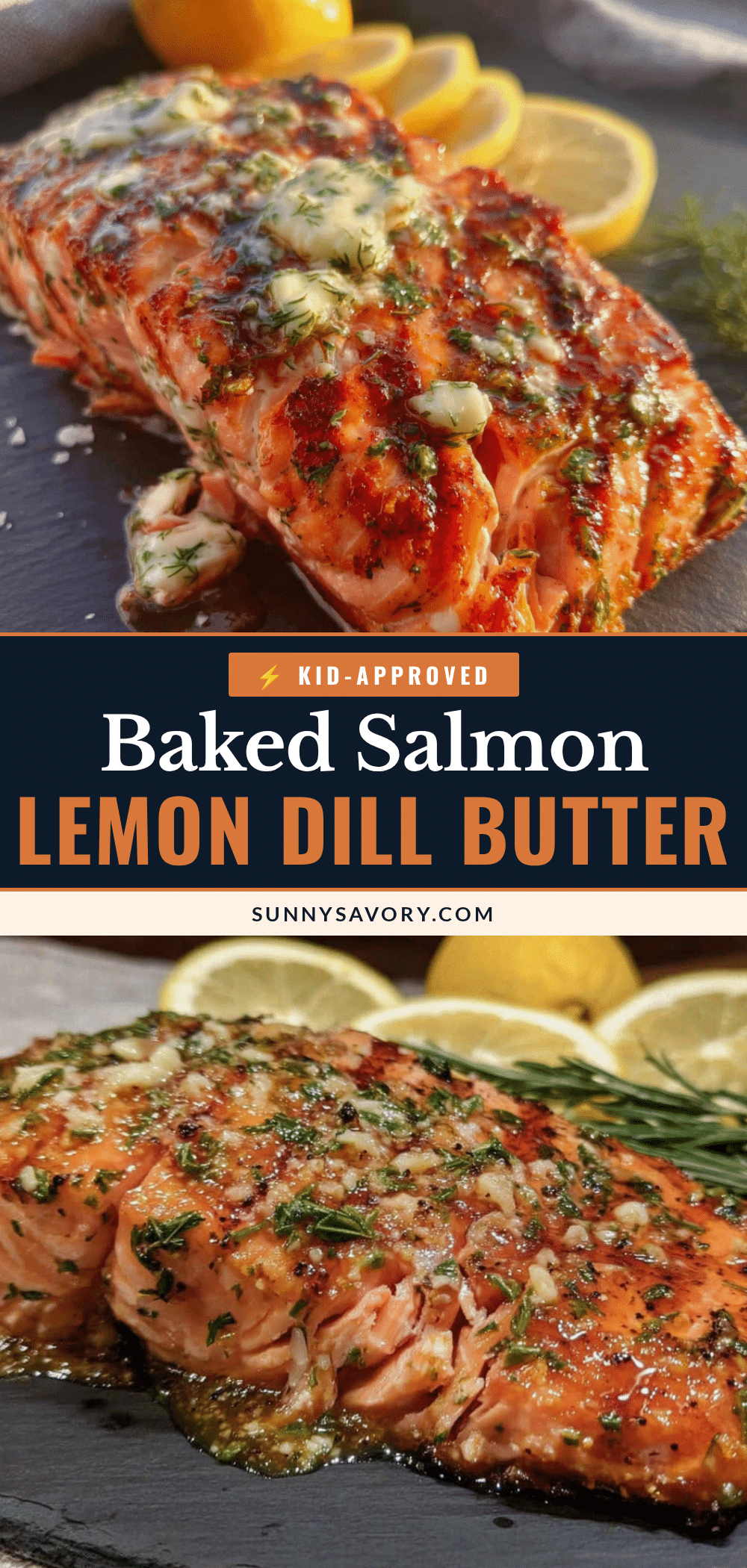
Easy Baked Salmon with Lemon Dill Butter That Kids Love

This easy baked salmon with lemon dill butter is proof that you don’t need a complicated recipe or a perfect plan to get a delicious, family-friendly meal on the table. The butter keeps the salmon tender, the lemon adds brightness, and the dill brings a fresh, herby note that even picky eaters seem to love.
- Prep Time: 10 minutes
- Cook Time: 15 minutes
- Total Time: 25 minutes
- Yield: 4 servings 1x
- Category: Main Course
- Cuisine: American
Ingredients
- 4 salmon fillets (about 6 ounces each, skin-on or skinless)
- Salt and black pepper, to taste
- 2 tablespoons unsalted butter, melted
- 1 tablespoon fresh lemon juice (about half a lemon)
- 1 tablespoon fresh dill, finely chopped (or 1 teaspoon dried dill)
- 1 clove garlic, minced (optional)
- 2 tablespoons unsalted butter, softened
- 1 teaspoon lemon zest
- 1 teaspoon fresh dill, chopped
- Pinch of salt
Instructions
- Preheat your oven to 400°F (200°C). Line a baking sheet with parchment paper or aluminum foil.
- Pat the salmon fillets dry with paper towels. Season both sides generously with salt and pepper.
- In a small bowl, combine the melted butter, lemon juice, fresh dill, and minced garlic (if using). Stir together.
- Place the salmon fillets on the prepared baking sheet, skin-side down if they have skin. Pour the lemon dill butter mixture evenly over each fillet.
- Bake for 12-15 minutes, depending on the thickness of your fillets. The salmon should be opaque and flake easily with a fork. If using a thermometer, aim for 125°F (52°C) for medium, or 135°F (57°C) for well-done.
- While the salmon bakes, in a separate small bowl, mix the softened butter, lemon zest, chopped dill, and a pinch of salt until smooth. Set aside.
- When the salmon is done, remove it from the oven and let it rest for 2 minutes. Then top each fillet with a small dollop of the lemon dill butter.
- Serve immediately. Spoon a little extra pan butter over the top before serving.
Notes
Pat the salmon dry for a better crust. Let salmon sit at room temperature for 10-15 minutes before baking for even cooking. Watch the clock closely; salmon can go from perfectly flaky to dry quickly. Let the salmon rest for 2 minutes after baking to allow juices to redistribute. For different thicknesses, check thinner fillets first and remove early if needed.
Nutrition
- Serving Size: 1 fillet with butter
- Calories: 320
- Sodium: 400
- Fat: 20
- Saturated Fat: 10
- Carbohydrates: 1
- Protein: 34
Keywords: baked salmon, lemon dill butter, easy salmon recipe, kid-friendly salmon, quick salmon dinner, healthy salmon recipe