Love this? Save it for later!
Share the inspiration with your friends
There used to be this tiny, unassuming cafe on a side street in Portland called The Larch that made a honey mustard salmon plate I still dream about. When they closed their doors three years ago—just a handwritten sign in the window one Tuesday—I genuinely mourned that meal. It wasn’t fancy, not even a little bit. Just perfectly glazed salmon, roasted vegetables that had those gorgeous caramelized edges, and this sticky-sweet-tangy situation happening on top. After twelve tries—some burnt, some underseasoned, one where I accidentally used spicy mustard and nearly cried—I finally cracked their code. And honestly? My version might even be better. The secret, let me tell you, is not overthinking the honey mustard ratio and letting the sheet pan do all the heavy lifting.
I remember standing in my kitchen that first week after The Larch closed, staring at a sad piece of salmon and wondering if I’d ever taste that dinner again. Maybe you’ve been there—that specific recipe grief where a restaurant closes and takes your favorite meal with it. I tried recreating it from memory: the slight char on the broccoli, the way the glaze caramelized without burning, the salmon staying impossibly flaky in the center. I messed up the mustard balance so many times my husband started joking we were running a honey mustard lab. But then, on attempt number thirteen, I pulled this sheet pan out of the oven and just knew. That first bite? I actually closed my eyes. That’s the moment I knew this recipe was staying in my rotation forever.
Why You’ll Love This Recipe
This easy honey mustard salmon sheet pan dinner isn’t just another weeknight recipe—it’s the kind of meal that makes you feel like you’ve got your life together, even on chaotic Tuesdays. I’ve tested this more times than I care to admit, tweaking temperatures, adjusting glaze thickness, and timing each vegetable’s roast to perfection. What I ended up with is a dinner that delivers restaurant-quality flavor with almost zero cleanup.
- Quick & Easy: From fridge to table in under 30 minutes. No marinating, no complicated steps, no multiple pans to wash.
- Simple Ingredients: You probably have honey, mustard, and olive oil in your kitchen right now. No specialty grocery runs required.
- Perfect for Busy Weeknights: This is my go-to when I need dinner on the table fast but still want something that feels special. It’s also great for meal prep since the leftovers reheat beautifully.
- Crowd-Pleaser: Even my kids who claim they “don’t like fish” ask for seconds. The honey mustard glaze is that good.
- Unbelievably Delicious: The combination of sticky-sweet glaze, perfectly roasted vegetables, and tender, flaky salmon is pure comfort food magic. It’s the kind of meal that makes you slow down and actually enjoy dinner.
What makes this version different from all the other sheet pan salmon recipes out there? It’s the glaze technique. Most recipes tell you to brush the glaze on and call it done. I found that dividing the glaze—using half for marinating and half for a final brush-on after roasting—creates this incredible layered flavor that’s both caramelized and fresh. It’s a small tweak that makes a massive difference. Plus, I’ve dialed in the exact vegetable-to-salmon timing so everything finishes at the same moment. No overcooked fish, no undercooked potatoes. Just perfect, stress-free dinner harmony.
This recipe isn’t just good—it’s the kind that makes you close your eyes after the first bite. It’s comfort food reimagined: faster, simpler, but with the same soul-soothing satisfaction. Perfect for impressing dinner guests without breaking a sweat, or turning a random Wednesday into something memorable.
What Ingredients You Will Need
This recipe uses straightforward, wholesome ingredients to create big flavor without any fuss. Most of these are pantry staples, and I’ve included notes on substitutions so you can adapt based on what you have on hand.
- For the Salmon & Glaze:
- 4 salmon fillets (about 6 ounces each), skin on or off—your preference. I like skin-on for extra crispiness. Look for fillets that are similar in thickness for even cooking.
- 1/3 cup honey (I prefer a mild wildflower honey, but any liquid honey works)
- 3 tablespoons Dijon mustard (I recommend Grey Poupon for its smooth, balanced tang)
- 2 tablespoons whole grain mustard (adds texture and those lovely little mustard seed pops)
- 2 tablespoons olive oil, plus more for drizzling
- 2 cloves garlic, minced (about 1 teaspoon)
- 1 tablespoon apple cider vinegar (brightens the glaze without making it vinegary)
- 1/2 teaspoon salt
- 1/4 teaspoon black pepper
- For the Vegetables:
- 1 pound baby potatoes, halved (Yukon Gold or red potatoes work great—they get creamy inside and crispy outside)
- 2 cups broccoli florets (fresh is best, but frozen works if you thaw and pat them dry first)
- 1 red bell pepper, cut into 1-inch chunks
- 1 red onion, cut into wedges
- 2 tablespoons olive oil
- 1/2 teaspoon garlic powder
- 1/2 teaspoon dried thyme (or rosemary—both are lovely)
- Salt and pepper to taste
- For Garnish (optional but recommended):
- Fresh parsley or dill, chopped
- Lemon wedges for squeezing
- Flaky sea salt for finishing
Ingredient Tips: For the best texture, use full-fat Dijon mustard—the low-fat versions can be watery and won’t caramelize as nicely. If you’re out of whole grain mustard, just use an extra tablespoon of Dijon; the texture will be slightly different but still delicious. For a dairy-free option, the recipe is already dairy-free! If you want a gluten-free version, just double-check your mustard labels (most are gluten-free, but some specialty blends aren’t).
I’ve tested this with different honey varieties, and the flavor does shift subtly. Orange blossom honey adds a floral note that’s lovely with salmon, while clover honey keeps it more neutral. Honestly, use whatever honey you have—it’ll still be fantastic.
Equipment Needed
One of the best things about this recipe is how little equipment it requires. Here’s what you’ll need:
- Large Rimmed Baking Sheet: A half-sheet pan (18×13 inches) is ideal. The rim is important to catch any glaze drips. If you don’t have one, any large baking sheet with sides will work.
- Parchment Paper or Aluminum Foil: For easy cleanup. I prefer parchment because nothing sticks to it, but foil works too—just give it a quick spray of cooking oil.
- Mixing Bowls: One small bowl for the glaze, one medium bowl for tossing vegetables.
- Whisk or Fork: For mixing the glaze ingredients together.
- Chef’s Knife and Cutting Board: For prepping vegetables and salmon.
- Measuring Spoons and Cups: For accurate glaze proportions.
- Pastry Brush (optional): For brushing the glaze onto the salmon. A spoon works just fine too.
Budget-Friendly Tip: You don’t need fancy equipment for this. I’ve made this recipe on a beat-up baking sheet from a thrift store and it turned out perfectly. If you don’t have a pastry brush, just use the back of a spoon to spread the glaze—it actually gives a more rustic, appealing finish.
Preparation Method
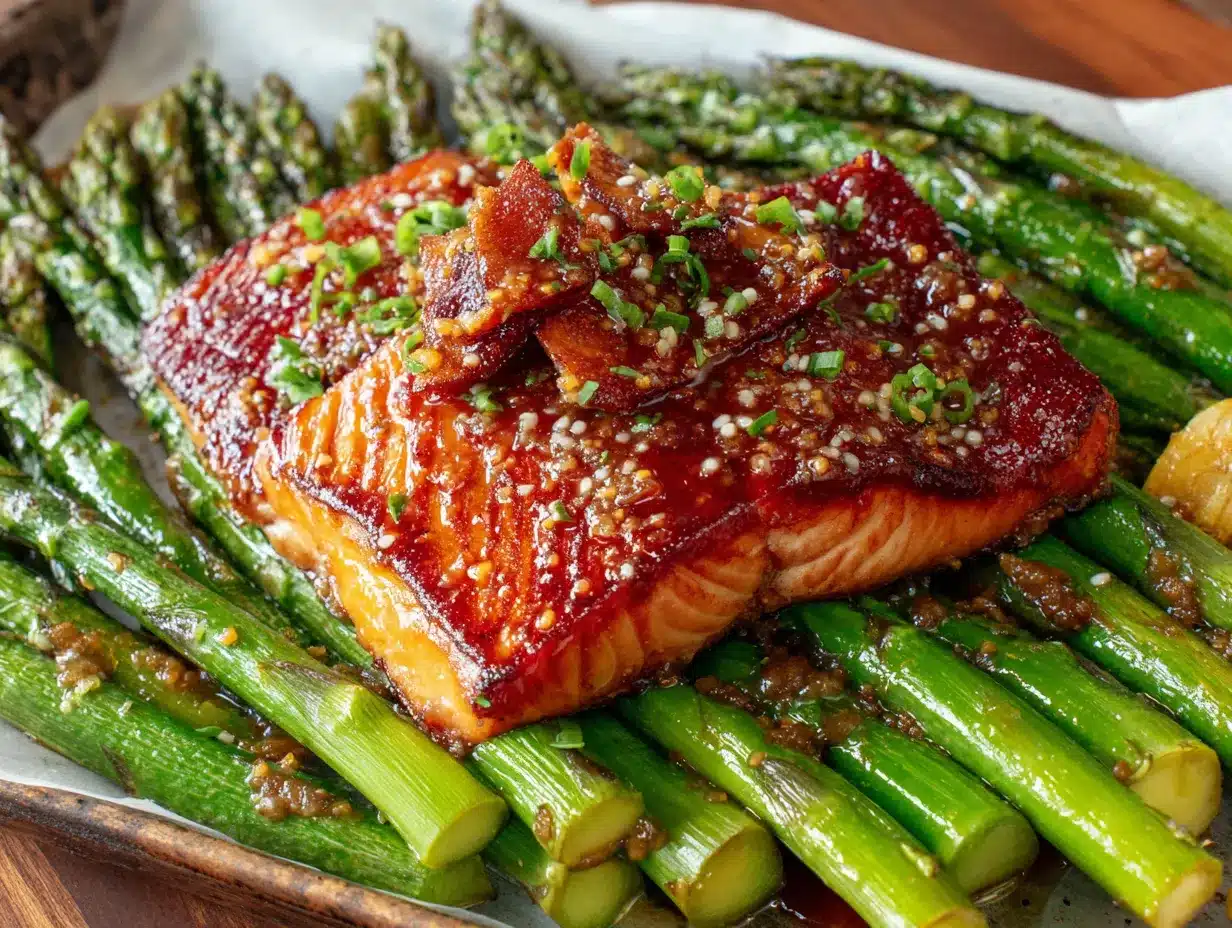
- Preheat your oven to 400°F (200°C). Position a rack in the middle of the oven. While it’s heating, line your baking sheet with parchment paper or foil for easy cleanup.
- Make the honey mustard glaze. In a small bowl, whisk together the honey, Dijon mustard, whole grain mustard, olive oil, minced garlic, apple cider vinegar, salt, and pepper. Taste it—it should be sweet, tangy, and a little punchy. If it tastes too sharp, add another teaspoon of honey. Set aside about 3 tablespoons of the glaze for brushing on after cooking.
- Prep the vegetables. In a medium bowl, toss the halved baby potatoes, broccoli florets, bell pepper chunks, and red onion wedges with 2 tablespoons olive oil, garlic powder, dried thyme, and a generous pinch of salt and pepper. Make sure everything is well coated.
- Start the vegetables roasting. Spread the seasoned vegetables in a single layer on your prepared baking sheet, leaving space in the center for the salmon. Roast for 10 minutes. This head start ensures the potatoes get tender and the broccoli gets those gorgeous charred edges before the salmon joins the party.
- While vegetables roast, prep the salmon. Pat the salmon fillets dry with paper towels. This is crucial for getting a nice sear and helping the glaze stick. Place the fillets on a plate and season lightly with salt and pepper.
- Add the salmon to the pan. After 10 minutes, remove the baking sheet from the oven. Push the vegetables to the sides to create space, then place the salmon fillets in the center, skin-side down if using skin-on fillets. Brush the fillets generously with the reserved glaze (the part you set aside for later—wait, no, use the main glaze here. Save the reserved portion for the final brush).
- Roast everything together. Return the baking sheet to the oven and roast for 12-15 minutes, depending on the thickness of your salmon. The salmon is done when it flakes easily with a fork and reaches an internal temperature of 145°F (63°C). The vegetables should be tender and caramelized.
- Final glaze brush. Remove the pan from the oven. Using the reserved 3 tablespoons of glaze, brush a fresh layer over the warm salmon. This second coating is the secret to that glossy, restaurant-quality finish and an extra punch of flavor.
- Rest and serve. Let the salmon rest on the pan for 2-3 minutes. This allows the juices to redistribute. Sprinkle with fresh parsley or dill, add a squeeze of lemon, and finish with a pinch of flaky sea salt. Serve directly from the sheet pan for maximum ease and minimal dishes.
Sensory Cue: At step 7, your kitchen should smell like a cozy restaurant. The honey will be caramelizing, the mustard will be mellowing into something rich, and the vegetables should be releasing their sweet, roasted aroma. The salmon will look glossy and golden, with slightly darker edges where the glaze has caramelized.
Timing Note: Total active prep time is about 15 minutes. The oven does the rest. This is truly a set-it-and-forget-it dinner that makes you look like a culinary hero.
Cooking Tips & Techniques
After making this recipe more times than I can count, I’ve collected a few hard-won tips that make a real difference:
Don’t overcrowd the pan. This is the number one mistake I made early on. If your baking sheet is too crowded, the vegetables will steam instead of roast, and you’ll lose those beautiful caramelized edges. Use a large enough pan and give everything a little breathing room. If you’re doubling the recipe, use two pans.
Pat your salmon dry. I cannot stress this enough. Wet salmon = steamed salmon. Dry salmon = caramelized, glazed perfection. Take an extra 30 seconds to really blot those fillets dry with paper towels before glazing.
Watch the glaze carefully. Honey-based glazes can go from beautifully caramelized to burnt in about 30 seconds. Keep an eye on the salmon during the last 5 minutes of roasting. If the glaze is browning too quickly, tent the pan loosely with foil.
Cut vegetables uniformly. This is the secret to even cooking. Halve your baby potatoes so they’re all roughly the same size. Cut bell peppers into similar-sized chunks. This ensures everything finishes at the same time, and you don’t end up with some mushy vegetables and some crunchy ones.
Use room temperature salmon. Let the salmon sit at room temperature for 10-15 minutes before roasting. Cold salmon straight from the fridge cooks unevenly—the outside will be done while the center is still raw. This small step makes a big difference in texture.
My biggest failure: I once forgot to set aside the reserved glaze and used it all before roasting. The salmon was fine, but it lacked that final glossy punch. Now I physically move the reserved glaze to a different spot on the counter so I don’t accidentally use it. Learn from my mistakes!
Variations & Adaptations
This recipe is wonderfully flexible. Here are some ways to make it your own:
Vegetable Swap: Not a fan of broccoli? Swap in asparagus (add it halfway through roasting so it doesn’t get mushy), green beans, zucchini chunks, or cauliflower. In the fall, I love using cubed butternut squash and Brussels sprouts—they get perfectly caramelized and sweet.
Different Protein: This glaze works beautifully on chicken thighs (bone-in or boneless) and even firm white fish like cod or halibut. For chicken, increase roasting time to about 25-30 minutes. For thinner fish fillets, reduce the time to 8-10 minutes.
Spicy Version: Add 1/2 teaspoon of red pepper flakes or a squirt of sriracha to the glaze for a sweet-and-spicy kick. I made this version for a game day gathering and it disappeared in minutes.
Low-Carb Adaptation: Skip the potatoes and double up on low-carb vegetables like broccoli, cauliflower, bell peppers, and zucchini. The recipe is naturally gluten-free and dairy-free, so it’s already friendly for many dietary needs.
Herb Infusion: Add a tablespoon of fresh chopped rosemary or thyme to the vegetable toss. The herbs infuse the vegetables while roasting and complement the honey mustard beautifully. I’ve also added a few sprigs of fresh dill to the salmon while it roasts—subtle, but lovely.
Personal Favorite Variation: I once added thinly sliced apples (Honeycrisp, my favorite) to the sheet pan during the last 10 minutes of roasting. They softened slightly, got caramelized edges, and added this sweet-tart pop that paired perfectly with the salmon. My husband still asks when I’m making “that apple salmon thing” again.
Serving & Storage Suggestions
Serving: This dish is best served warm, straight from the oven. I love bringing the whole sheet pan to the table for a casual, family-style presentation. The salmon should be flaky and tender, the vegetables caramelized and slightly crispy at the edges. A squeeze of fresh lemon juice right before serving brightens everything up.
What to Serve With It: This sheet pan dinner is fairly complete on its own, but if you’re feeding a crowd or want extra greens, a simple arugula salad with lemon vinaigrette is a perfect companion. The peppery arugula cuts through the sweet glaze beautifully. For a heartier meal, serve with quinoa or crusty bread to soak up any extra glaze.
Storage: Leftovers keep well in an airtight container in the refrigerator for up to 3 days. The flavors actually meld together overnight, making this a great next-day lunch option. I’ve been known to eat it cold, straight from the fridge—don’t judge me until you’ve tried it.
Reheating: The best way to reheat is in a 350°F (175°C) oven for about 8-10 minutes. This revives the caramelization on the vegetables and keeps the salmon from drying out. The microwave works in a pinch, but the salmon will be less flaky and the vegetables will lose their crispiness. If using the microwave, reheat in 30-second bursts and stop as soon as it’s warm.
Freezer Note: I don’t recommend freezing the assembled dish—the texture of both the salmon and vegetables suffers. However, you can freeze the honey mustard glaze in a small container for up to 3 months. Just thaw it in the refrigerator overnight and give it a good stir before using.
Nutritional Information & Benefits
This recipe strikes a nice balance between indulgence and nourishment. Here are the approximate nutritional values per serving (one salmon fillet plus vegetables):
| Nutrient | Amount |
|---|---|
| Calories | 485 |
| Protein | 38g |
| Fat | 18g |
| Carbohydrates | 42g |
| Fiber | 6g |
| Sugar | 24g |
| Sodium | 520mg |
Health Highlights: Salmon is packed with omega-3 fatty acids, which are fantastic for heart and brain health. The vegetables provide a good dose of vitamin C (from the bell peppers and broccoli), fiber (from the potatoes and broccoli), and antioxidants. Honey, while still a sugar, contains trace amounts of beneficial compounds and is less processed than refined sugar. This meal is naturally gluten-free and dairy-free, making it suitable for many common dietary restrictions.
Potential Allergens: This recipe contains fish (salmon). It does not contain dairy, gluten, eggs, or nuts, but always check your mustard labels if you have specific sensitivities.
From a wellness perspective, I love that this meal feels indulgent while still being packed with real, whole ingredients. It’s the kind of dinner that satisfies your cravings without leaving you feeling heavy or sluggish.
Conclusion
This easy honey mustard salmon sheet pan dinner has become a staple in my kitchen for good reason. It’s quick enough for a hectic Tuesday, impressive enough for guests, and so delicious that you’ll find yourself craving it on repeat. The combination of sticky-sweet glaze, tender flaky salmon, and perfectly roasted vegetables is pure weeknight magic.
I hope you give this recipe a try and make it your own. Maybe you’ll swap in different vegetables, add a spicy kick, or discover a new favorite variation I haven’t thought of yet. That’s the beauty of a good sheet pan dinner—it’s a template for deliciousness, not a rigid formula.
I’d love to hear how it turns out for you! Drop a comment below and let me know what vegetables you used, if you tried any fun variations, or just how much you loved that honey mustard glaze. And if you share your creation on social media, tag me—I genuinely get excited seeing your sheet pan masterpieces. Happy cooking, friends!
Frequently Asked Questions
Can I use frozen salmon for this recipe?
Yes, but you’ll need to thaw it completely in the refrigerator first (usually overnight). Pat it very dry before glazing, as frozen salmon tends to release more moisture. You may also need to add 2-3 minutes to the roasting time.
Can I make the honey mustard glaze ahead of time?
Absolutely! The glaze can be made up to 3 days in advance and stored in an airtight container in the refrigerator. Just give it a good stir before using, as the honey can settle at the bottom.
What if I don’t have whole grain mustard?
No problem at all. Just use an extra tablespoon of Dijon mustard instead. The texture will be slightly smoother, but the flavor will still be delicious. You can also add a pinch of mustard powder for a little extra kick.
How do I know when the salmon is perfectly cooked?
The most reliable method is using an instant-read thermometer—salmon is done at 145°F (63°C) in the thickest part. If you don’t have a thermometer, look for the fish to flake easily with a fork and the center to be opaque rather than translucent. The glaze should be caramelized and slightly darker at the edges.
Can I double this recipe for a crowd?
Yes, but use two separate baking sheets instead of one crowded pan. Overcrowding leads to steaming instead of roasting, and you’ll lose those beautiful caramelized edges. Just rotate the pans halfway through cooking for even results.
Pin This Recipe!
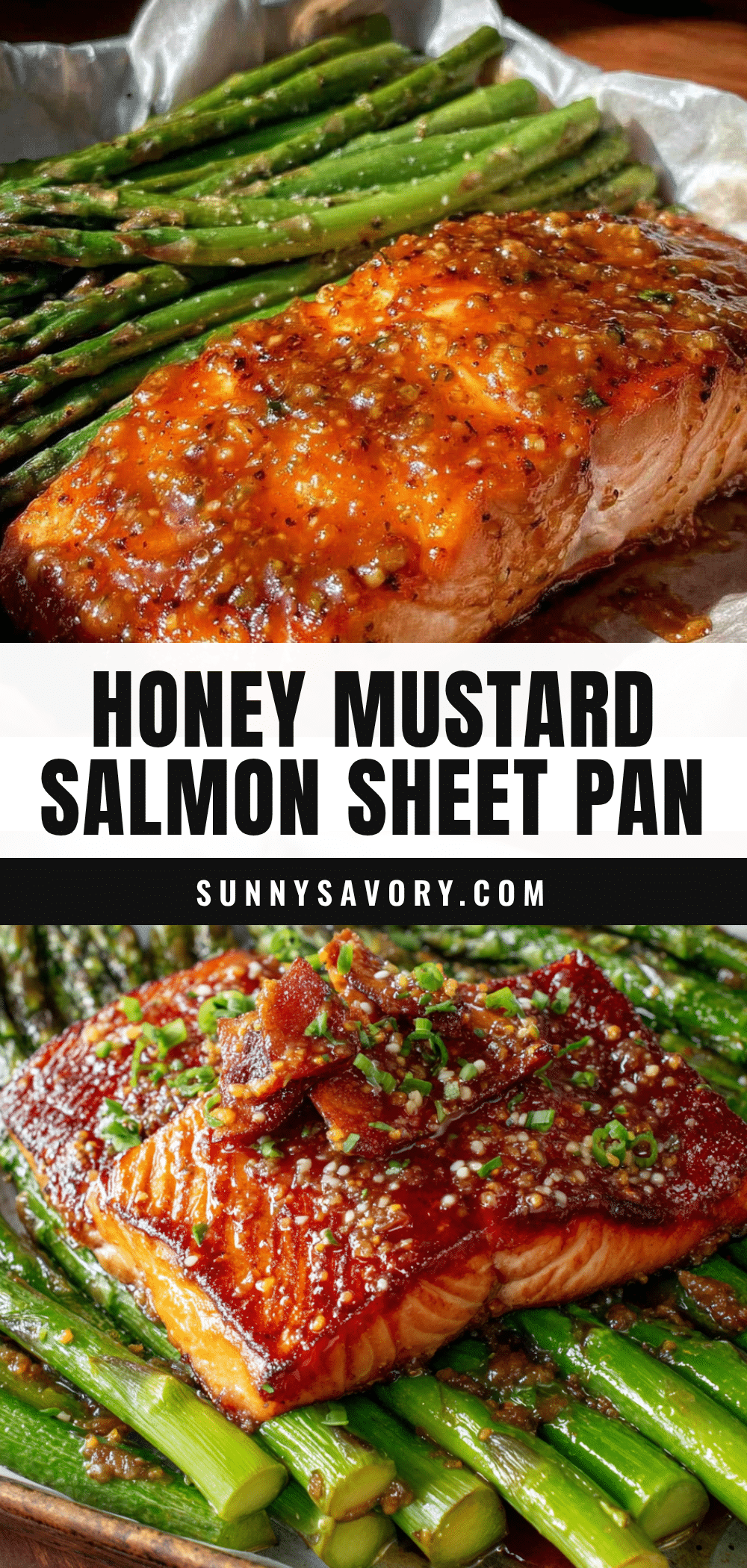
Easy Honey Mustard Salmon Sheet Pan Dinner
A quick and easy sheet pan dinner featuring perfectly glazed salmon and roasted vegetables, all cooked on one pan for minimal cleanup. The honey mustard glaze is the star, with a secret technique for layered flavor.
- Prep Time: 15 minutes
- Cook Time: 25 minutes
- Total Time: 40 minutes
- Yield: 4 servings 1x
- Category: Main Course
- Cuisine: American
Ingredients
- 4 salmon fillets (about 6 ounces each), skin on or off
- 1/3 cup honey
- 3 tablespoons Dijon mustard
- 2 tablespoons whole grain mustard
- 2 tablespoons olive oil, plus more for drizzling
- 2 cloves garlic, minced (about 1 teaspoon)
- 1 tablespoon apple cider vinegar
- 1/2 teaspoon salt
- 1/4 teaspoon black pepper
- 1 pound baby potatoes, halved
- 2 cups broccoli florets
- 1 red bell pepper, cut into 1-inch chunks
- 1 red onion, cut into wedges
- 2 tablespoons olive oil
- 1/2 teaspoon garlic powder
- 1/2 teaspoon dried thyme
- Salt and pepper to taste
- Fresh parsley or dill, chopped (for garnish)
- Lemon wedges (for serving)
- Flaky sea salt (for finishing)
Instructions
- Preheat your oven to 400°F (200°C). Position a rack in the middle of the oven. Line a large rimmed baking sheet with parchment paper or foil.
- In a small bowl, whisk together honey, Dijon mustard, whole grain mustard, 2 tablespoons olive oil, minced garlic, apple cider vinegar, 1/2 teaspoon salt, and 1/4 teaspoon black pepper. Set aside about 3 tablespoons of the glaze for brushing after cooking.
- In a medium bowl, toss halved baby potatoes, broccoli florets, bell pepper chunks, and red onion wedges with 2 tablespoons olive oil, garlic powder, dried thyme, and a generous pinch of salt and pepper.
- Spread the seasoned vegetables in a single layer on the prepared baking sheet, leaving space in the center for the salmon. Roast for 10 minutes.
- While vegetables roast, pat salmon fillets dry with paper towels and season lightly with salt and pepper.
- After 10 minutes, remove the baking sheet from the oven. Push vegetables to the sides to create space, then place salmon fillets in the center, skin-side down if using skin-on. Brush fillets generously with the main glaze (not the reserved portion).
- Return the baking sheet to the oven and roast for 12-15 minutes, until salmon flakes easily with a fork and reaches an internal temperature of 145°F (63°C), and vegetables are tender and caramelized.
- Remove the pan from the oven. Brush the reserved 3 tablespoons of glaze over the warm salmon.
- Let the salmon rest on the pan for 2-3 minutes. Sprinkle with fresh parsley or dill, squeeze lemon wedges over, and finish with flaky sea salt. Serve directly from the sheet pan.
Notes
For best results, pat salmon dry before glazing. Watch the glaze carefully during the last 5 minutes of roasting to prevent burning. Let salmon rest at room temperature for 10-15 minutes before roasting for even cooking. The reserved glaze brush after roasting creates a glossy, restaurant-quality finish.
Nutrition
- Serving Size: 1 salmon fillet plus
- Calories: 485
- Sugar: 24
- Sodium: 520
- Fat: 18
- Saturated Fat: 3
- Carbohydrates: 42
- Fiber: 6
- Protein: 38
Keywords: honey mustard salmon, sheet pan dinner, easy salmon recipe, weeknight dinner, healthy salmon, roasted vegetables, gluten-free, dairy-free