Love this? Save it for later!
Share the inspiration with your friends
I was sorting through a dusty box of old cookbooks at a church rummage sale last spring when the woman running the booth—a retired schoolteacher named Margaret with bright purple glasses—started telling me about her grandmother’s potato salad. I wasn’t looking for potato salad advice, honestly. I was hunting for a decent pie crust recipe. But there I was, kneeling on the concrete floor of a church basement, listening to Margaret explain how her grandmother would bake extra potatoes just to make this salad the next day. She scribbled the basic idea on the back of a donation receipt, and I shoved it in my pocket, thinking I’d probably never make it. That crumpled piece of paper sat on my fridge for two months before I actually tried it. Let me tell you—I should have made it sooner.
The thing that stopped me was the time. I mean, baking potatoes just for a side dish? That felt like a weekend project, not something I’d pull off on a Tuesday night when the kids are hungry and I’m running on three hours of sleep. But the first time I made this loaded baked potato salad, I realized something crucial. You don’t have to bake the potatoes fresh. You can use leftover baked potatoes from the night before. Or—and this changed everything—you can microwave them in under ten minutes and get almost the same texture. Margaret’s grandmother would probably roll over in her grave, but honestly? It works. And it tastes exactly like the inside of a fully loaded baked potato, minus the skin and plus a creamy, tangy dressing that ties it all together.
I’ve made this quick loaded baked potato salad with bacon and chives at least a dozen times since that rummage sale, and every single time, someone asks for the recipe. It’s one of those dishes that feels fancy but takes almost no effort. Maybe you’ve been there—staring at a pile of potatoes, wondering if you have the energy to make something that actually tastes good. This is that recipe. The one that saves your weeknight dinner without making you feel like you’ve been cooking for hours.
Why You’ll Love This Recipe
I’ve tested this recipe more times than I care to admit, and each batch taught me something new. The first time, I used too much mayo. The second time, not enough salt. By the third try, I had it dialed in, and I’ve been tweaking it ever since. Here’s why this version is the one you’ll come back to again and again:
- Quick & Easy: From start to finish, this comes together in about 30 minutes. No boiling water, no peeling potatoes—just microwave, chop, and mix. Perfect for those nights when dinner needs to happen yesterday.
- Simple Ingredients: You probably already have most of these in your kitchen. Potatoes, bacon, cheese, sour cream, mayo—these are pantry staples, not specialty items that require a trip to three different stores.
- Perfect for Weeknight Dinners: This loaded baked potato salad works as a main dish or a side. Pair it with grilled chicken, burgers, or eat it straight out of the bowl when you’re too tired to cook anything else.
- Crowd-Pleaser: I’ve brought this to potlucks, backyard barbecues, and family dinners. Kids love it. Adults love it. Even my picky-eating cousin asked for seconds.
- Unbelievably Delicious: The combination of creamy dressing, crispy bacon, sharp cheddar, and fresh chives creates that loaded baked potato flavor without the hassle of actually baking potatoes. It’s comfort food at its finest.
What makes this recipe different from the dozens of other potato salads out there is the texture. Instead of boiling the potatoes (which makes them waterlogged and mushy), we microwave them. This keeps the flesh firm but tender, with a slightly dry texture that soaks up the dressing perfectly. Plus, we leave the skins on for extra flavor and nutrients. It’s not just another potato salad—it’s the best version of loaded baked potato salad you’ll ever make.
This recipe is the kind that makes you close your eyes after the first bite. It’s comfort food reimagined—faster, easier, but with the same soul-soothing satisfaction. Perfect for impressing guests without stress, or turning a simple weeknight meal into something memorable.
What Ingredients You Will Need
This recipe uses simple, wholesome ingredients to deliver bold flavor and satisfying texture without the fuss. Most of these are pantry staples, and the ones that aren’t are easy to find at any grocery store.
- Russet potatoes, 2 pounds (about 4 medium potatoes) — Russets are ideal because they have a dry, fluffy texture that holds up well in salads. Look for firm potatoes without any green spots or sprouts. You can also use Yukon Gold potatoes for a creamier texture, but Russets give you that classic baked potato feel.
- Bacon, 8 slices (about 8 ounces) — Thick-cut bacon works best here because it stays crispy even after mixing. I personally prefer Wright Brand or Kirkland Signature for consistent quality. If you’re using thin bacon, just be aware it might crumble more. For a vegetarian option, you can use plant-based bacon or skip it entirely.
- Sharp cheddar cheese, 1 cup shredded (about 4 ounces) — Sharp cheddar gives you the most flavor, but mild cheddar or colby jack also work well. Shred your own cheese if you can—pre-shredded cheese has anti-caking agents that prevent it from melting smoothly into the dressing.
- Sour cream, ½ cup — Full-fat sour cream provides the richest flavor and creamiest texture. If you need a lighter option, Greek yogurt works as a substitute, though the dressing will be slightly tangier.
- Mayonnaise, ½ cup — Use a good-quality mayo like Hellmann’s or Duke’s. Avoid Miracle Whip—it’s too sweet and tangy for this recipe. You can use avocado oil mayo for a healthier option, and it works just fine.
- Fresh chives, ¼ cup chopped (about 8 to 10 stems) — Fresh chives add a mild onion flavor and beautiful green color. If you can’t find fresh chives, you can substitute 2 tablespoons of chopped green onions (green parts only) or 1 tablespoon of dried chives.
- Apple cider vinegar, 1 tablespoon — This adds a subtle tang that brightens the whole dish. White vinegar or lemon juice work as substitutes, but apple cider vinegar gives the best flavor.
- Dijon mustard, 1 teaspoon — Dijon adds depth and a slight kick. Yellow mustard works in a pinch, but the flavor won’t be as complex.
- Salt, ½ teaspoon — Use fine sea salt or table salt. You’ll add this to the dressing, not the potatoes themselves.
- Black pepper, ¼ teaspoon — Freshly ground black pepper is best, but pre-ground works too.
- Paprika, ½ teaspoon (optional, for garnish) — Smoked paprika adds a lovely smoky flavor and a pop of color. Regular paprika works too.
Substitution Guidance: For a dairy-free version, use vegan sour cream, vegan mayo, and dairy-free shredded cheese. For a gluten-free option, this recipe is naturally gluten-free as long as your bacon and mustard are certified gluten-free. If you’re watching your sodium, use low-sodium bacon and reduced-sodium cheese.
Equipment Needed
You don’t need fancy equipment to make this loaded baked potato salad. I’ve made it in a tiny apartment kitchen and a full-size kitchen, and it works the same either way.
- Microwave-safe plate — For cooking the potatoes. Any large plate works, but make sure it’s microwave-safe. I’ve used a regular dinner plate for years with no issues.
- Large mixing bowl — You’ll need a bowl big enough to hold all the ingredients. A 4-quart bowl is perfect. If you don’t have one, use a large pot or Dutch oven.
- Small bowl — For mixing the dressing. A cereal bowl or small mixing bowl works fine.
- Fork or potato masher — For testing potato doneness and lightly mashing some of the potatoes. A fork works perfectly—no need to buy a special tool.
- Chef’s knife and cutting board — For chopping bacon, chives, and potatoes. A sharp knife makes the job much easier.
- Skillet or frying pan — For cooking the bacon. A cast-iron skillet is ideal, but any non-stick or stainless steel pan works.
- Paper towels — For draining the bacon. You can also use a wire rack over a baking sheet if you prefer.
- Measuring cups and spoons — For accurate measurements. I recommend using dry measuring cups for the cheese and wet measuring cups for the sour cream and mayo.
- Rubber spatula or wooden spoon — For mixing everything together. A rubber spatula is gentler on the potatoes, but a wooden spoon works just fine.
Budget-Friendly Options: If you don’t have a microwave, you can boil the potatoes instead. Just cut them into 1-inch cubes and boil for 10 to 12 minutes until fork-tender. Drain well and let them cool before mixing. If you don’t have a skillet for the bacon, you can cook it in the microwave between paper towels—it’s faster and creates less mess.
Preparation Method

Let me walk you through this step by step. I’ve included time estimates and sensory cues so you know exactly what to look for at each stage.
- Cook the bacon (8 to 10 minutes): Place the bacon slices in a cold skillet. Turn the heat to medium and cook, flipping occasionally, until the bacon is crispy and browned. You’ll know it’s done when it’s deep golden brown and feels firm when you press it with a spatula. Transfer the bacon to a paper towel-lined plate to drain. Let it cool completely, then crumble it into small pieces. Pro tip: Save the bacon grease for another use—it’s amazing for roasting vegetables or frying eggs.
- Microwave the potatoes (8 to 12 minutes): While the bacon cooks, wash the potatoes thoroughly and pat them dry. Pierce each potato several times with a fork—this lets steam escape and prevents explosions. Place the potatoes on a microwave-safe plate and microwave on high for 4 minutes. Flip them over and microwave for another 4 to 6 minutes, until a fork slides easily into the center. The timing depends on your microwave wattage, so start checking at 8 minutes. The potatoes should feel tender but not falling apart. Let them cool for 5 to 10 minutes until they’re cool enough to handle.
- Make the dressing (2 to 3 minutes): In a small bowl, whisk together the sour cream, mayonnaise, apple cider vinegar, Dijon mustard, salt, and black pepper. Taste it and adjust the seasoning if needed. The dressing should be creamy, tangy, and slightly salty. If it seems too thick, add a teaspoon of milk or water to thin it out. Set the dressing aside while you prepare the potatoes.
- Cut the potatoes (3 to 5 minutes): Once the potatoes are cool enough to handle, cut them into 1-inch cubes. Leave the skins on—they add texture and nutrients. You should have about 4 to 5 cups of cubed potatoes. Place the cubes in a large mixing bowl. Here’s a trick I learned from Margaret: lightly mash about a quarter of the potatoes with a fork. This releases some starch and helps the dressing cling to the potatoes better.
- Assemble the salad (3 to 5 minutes): While the potatoes are still warm (not hot, just slightly warm), pour the dressing over them and gently fold everything together with a rubber spatula or wooden spoon. The warmth helps the potatoes absorb the dressing. Add the crumbled bacon, shredded cheddar cheese, and chopped chives. Fold gently until everything is evenly distributed. Be careful not to overmix—you want some chunks of potato to remain intact.
- Chill and serve (30 minutes to 2 hours): For the best flavor, cover the bowl with plastic wrap and refrigerate for at least 30 minutes before serving. This allows the flavors to meld together. If you’re in a hurry, you can serve it immediately, but the salad will taste even better after it’s had time to sit. Before serving, give it a gentle stir and taste for seasoning. You might need to add a pinch more salt or pepper. Garnish with extra chives and a sprinkle of paprika if desired.
Troubleshooting Tips: If your salad seems dry, add a tablespoon of sour cream or mayo at a time until it reaches the desired consistency. If it’s too wet, add more cheese or crumbled bacon to absorb the excess moisture. If the potatoes are too hot when you add the dressing, the sour cream might separate—let them cool to warm, not hot, before mixing.
Cooking Tips & Techniques
I’ve made this loaded baked potato salad enough times to learn what works and what doesn’t. Here are the most important lessons I’ve picked up along the way.
Don’t overcook the potatoes. This is the number one mistake I see people make. Overcooked potatoes turn mushy and fall apart when you mix them, giving you more of a mashed potato salad than a chunky one. You want the potatoes to be tender enough to pierce with a fork but still hold their shape. If you’re using the microwave method, err on the side of undercooking—you can always zap them for another minute if needed.
Use warm potatoes for better absorption. This was the game-changer for me. Warm potatoes absorb the dressing much better than cold ones, resulting in a creamier, more flavorful salad. Let the potatoes cool just enough that they won’t melt the cheese or cook the sour cream, but don’t wait until they’re completely cold. I usually let them sit for about 5 to 10 minutes after microwaving.
Let the salad rest overnight for the best flavor. I know this sounds counterintuitive for a “quick” recipe, but if you can make this a day ahead, do it. The flavors deepen and meld together beautifully overnight. The bacon stays surprisingly crispy, and the dressing soaks into the potatoes perfectly. Just give it a good stir before serving and add a splash of milk if it seems dry.
Cook the bacon until it’s extra crispy. Bacon continues to soften as it sits in the dressing, so starting with extra-crispy bacon ensures you’ll still have crunchy bits in every bite. I cook mine until it’s deep golden brown and almost brittle. If you’re using thick-cut bacon, this might take a few extra minutes.
Season in layers. Don’t just rely on the dressing for flavor. Season the potatoes lightly with salt while they’re still warm, and add a pinch of salt to the bacon as it cooks. This layering technique creates a more complex, well-rounded flavor that you can’t achieve with a single seasoning step.
One failure I learned from: The first time I made this, I used cold potatoes straight from the fridge. The dressing just sat on top of the cubes instead of soaking in, and the salad tasted bland and separated. I ended up tossing the whole batch and starting over with warm potatoes. Trust me on this one—warm potatoes are non-negotiable.
Variations & Adaptations
One of the things I love about this loaded baked potato salad is how adaptable it is. Here are some variations I’ve tried and loved.
Loaded Baked Potato Salad with Broccoli: Steam 1 cup of broccoli florets until tender-crisp, about 3 minutes. Chop them into small pieces and fold them into the salad along with the bacon and cheese. The broccoli adds a nice crunch and a boost of nutrients. This is my go-to version when I want to pretend I’m eating something healthy.
Southwest Loaded Baked Potato Salad: Swap the chives for ¼ cup of chopped cilantro, add ½ cup of canned black beans (rinsed and drained), and stir in ½ teaspoon of cumin and a pinch of cayenne pepper. Top with sliced jalapeños for extra heat. This version is fantastic with grilled chicken or fish.
Loaded Baked Potato Salad with Ranch: Replace the Dijon mustard and apple cider vinegar with 2 tablespoons of ranch dressing mix. Use the same amounts of sour cream and mayo. The ranch version is milder and creamier, making it a hit with kids. I’ve also used homemade ranch dressing in place of the sour cream and mayo mixture, and it works beautifully.
Dairy-Free Loaded Baked Potato Salad: Use vegan sour cream, vegan mayo, and dairy-free shredded cheese. Most plant-based cheeses melt differently, so I recommend adding them right before serving rather than mixing them in while the potatoes are warm. I’ve tried this with Follow Your Heart and Violife brands, and both worked well.
Loaded Baked Potato Salad with Ham: Replace the bacon with 1 cup of diced cooked ham. This is a great way to use up leftover holiday ham. The ham adds a different texture and a slightly sweeter flavor. I actually prefer this version for Easter brunch.
Personal variation I love: I once added a tablespoon of pickle relish to the dressing on a whim, and it was surprisingly good. The sweet and tangy relish adds a pop of flavor that complements the rich bacon and cheese. It’s not traditional, but it’s become one of my favorite secret ingredients.
Serving & Storage Suggestions
This loaded baked potato salad is incredibly versatile when it comes to serving. Here’s how I like to enjoy it.
Serving Temperature: This salad is best served cold or at room temperature. If you’ve refrigerated it, let it sit on the counter for 15 to 20 minutes before serving to take the chill off. The flavors are more pronounced when the salad isn’t ice-cold.
Presentation Ideas: For a casual dinner, serve the salad in a large bowl with a sprinkle of paprika and extra chives on top. For a more elegant presentation, use a lettuce cup or a hollowed-out tomato as a serving vessel. I’ve also served it in individual mason jars for picnics—it looks pretty and makes portion control easy.
Complementary Dishes: This salad pairs beautifully with grilled meats like burgers, hot dogs, chicken, or steak. It also works well alongside barbecue ribs or pulled pork. For a lighter meal, serve it with a simple green salad dressed with vinaigrette. If you’re serving it as a main dish, add a side of crusty bread or garlic toast.
Beverage Pairings: A crisp white wine like Sauvignon Blanc or a light lager beer complements the creamy, savory flavors. For non-alcoholic options, iced tea with lemon or sparkling water with a splash of lime works wonderfully.
Storage Instructions: Store leftover potato salad in an airtight container in the refrigerator for up to 4 days. The flavors actually improve after a day or two as the dressing soaks into the potatoes. I do not recommend freezing this salad—the texture of the potatoes and the dairy-based dressing will suffer significantly.
Reheating Methods: This salad is meant to be served cold, but if you prefer it warm, you can microwave individual portions for 30 to 45 seconds. Be aware that the bacon will lose some of its crispiness. Alternatively, you can let the salad come to room temperature on the counter for about 30 minutes before serving.
How Flavors Develop: The first day, this salad is good. The second day, it’s great. By the third day, the flavors have fully melded, and the salad is at its peak. The bacon does soften over time, so if you want to maintain maximum crunch, add extra crispy bacon on top just before serving leftovers.
Nutritional Information & Benefits
Here’s the estimated nutritional breakdown for one serving (about 1 cup) of this loaded baked potato salad. Keep in mind that these values are approximate and will vary based on the specific ingredients you use.
| Nutrient | Amount Per Serving |
|---|---|
| Calories | 385 |
| Total Fat | 24g |
| Saturated Fat | 9g |
| Cholesterol | 45mg |
| Sodium | 680mg |
| Total Carbohydrates | 28g |
| Dietary Fiber | 3g |
| Sugars | 2g |
| Protein | 12g |
| Vitamin C | 15% DV |
| Potassium | 620mg |
| Calcium | 15% DV |
Health Benefits of Key Ingredients: Potatoes are often unfairly demonized, but they’re actually a good source of vitamin C, potassium, and fiber (especially with the skins on). The bacon adds protein and B vitamins, while the cheese provides calcium. The chives contribute a small amount of vitamin K and antioxidants. This isn’t a health food by any means, but it’s not as nutritionally empty as you might think.
Dietary Considerations: This recipe is naturally gluten-free and nut-free. For a lower-carb version, you can substitute cauliflower florets for half of the potatoes. For a lower-fat version, use reduced-fat sour cream, light mayo, and turkey bacon. For a vegetarian version, omit the bacon or use plant-based bacon.
Potential Allergens: This recipe contains dairy (sour cream, cheese) and may contain gluten depending on the bacon and mustard you use. Always check labels if you’re cooking for someone with allergies.
My Personal Wellness Perspective: I believe in balance. This loaded baked potato salad is a treat, not an everyday meal. I serve it alongside a big green salad or grilled vegetables to round out the meal. Life is too short to skip the bacon and cheese, but it’s also too short to eat heavy food every single day. Enjoy this recipe in moderation, and don’t feel guilty about it.
Conclusion
This quick loaded baked potato salad with bacon and chives is the kind of recipe that earns a permanent spot in your rotation. It’s fast enough for a busy weeknight, impressive enough for a potluck, and comforting enough to make any meal feel special. The combination of creamy dressing, crispy bacon, sharp cheddar, and fresh chives is pure magic, and the fact that it comes together in about 30 minutes is just the icing on the cake.
I hope you give this recipe a try and make it your own. Maybe you’ll add extra bacon (I won’t judge). Maybe you’ll swap in Greek yogurt for the sour cream. Maybe you’ll discover a variation that becomes your family’s favorite. That’s the beauty of cooking—taking a good recipe and tweaking it until it feels like yours.
If you make this loaded baked potato salad, I’d love to hear about it. Leave a comment below and let me know how it turned out. Did you try any variations? Did your family love it? Share your photos on social media and tag me so I can see your creations. And if you have any questions, don’t hesitate to ask—I’m always happy to help.
Until next time, happy cooking! And remember—the best recipes are the ones that bring people together, even if they start with a crumpled receipt from a church rummage sale.
Frequently Asked Questions
Can I make this loaded baked potato salad ahead of time?
Absolutely! In fact, I recommend it. This salad tastes even better the next day after the flavors have had time to meld. Make it up to 2 days in advance, store it in an airtight container in the refrigerator, and give it a good stir before serving. If it seems dry, add a splash of milk or a dollop of sour cream.
Can I use red potatoes or Yukon Gold instead of Russets?
Yes, you can. Yukon Gold potatoes will give you a creamier texture, while red potatoes will be slightly waxier and hold their shape better. If you use red potatoes, you might need to adjust the cooking time slightly since they’re smaller and cook faster. Just microwave them until fork-tender.
How do I keep the bacon crispy in the salad?
Cook the bacon until it’s extra crispy before crumbling it into the salad. The bacon will soften as it sits in the dressing, so starting with very crispy bacon helps maintain some crunch. For the crispiest results, add extra bacon on top just before serving, rather than mixing it all into the salad.
Is this recipe gluten-free?
Yes, this recipe is naturally gluten-free as long as you use gluten-free bacon and gluten-free Dijon mustard. Most bacon is gluten-free, but some brands add flavorings that contain gluten, so always check the label. The potatoes, sour cream, cheese, and chives are all naturally gluten-free.
Can I freeze this loaded baked potato salad?
I do not recommend freezing this salad. The dairy-based dressing will separate and become grainy when thawed, and the potatoes will turn mushy and watery. If you need to make it ahead, refrigerate it for up to 4 days. For longer storage, freeze the cooked bacon separately and make the salad fresh when you’re ready to serve it.
Pin This Recipe!
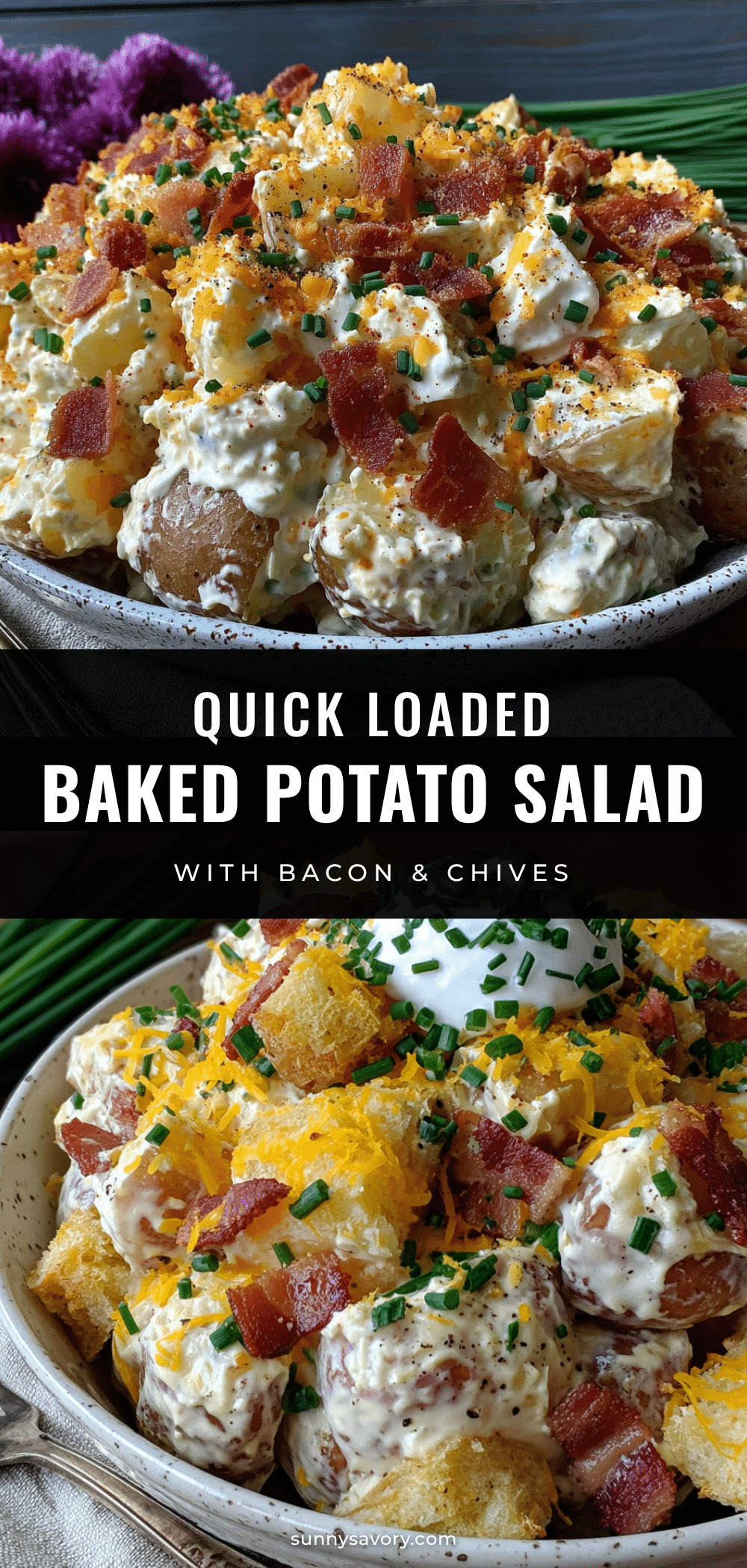
Easy Loaded Baked Potato Salad with Bacon

A quick and easy loaded baked potato salad with bacon, cheddar, and chives that comes together in about 30 minutes. Perfect for weeknight dinners, potlucks, and backyard barbecues.
- Prep Time: 15 minutes
- Cook Time: 15 minutes
- Total Time: 30 minutes
- Yield: 6 servings 1x
- Category: Side Dish
- Cuisine: American
Ingredients
- 2 pounds Russet potatoes (about 4 medium)
- 8 slices bacon (about 8 ounces), thick-cut
- 1 cup sharp cheddar cheese, shredded (about 4 ounces)
- ½ cup sour cream
- ½ cup mayonnaise
- ¼ cup fresh chives, chopped (about 8 to 10 stems)
- 1 tablespoon apple cider vinegar
- 1 teaspoon Dijon mustard
- ½ teaspoon salt
- ¼ teaspoon black pepper
- ½ teaspoon paprika (optional, for garnish)
Instructions
- Cook the bacon (8 to 10 minutes): Place bacon slices in a cold skillet. Turn heat to medium and cook, flipping occasionally, until crispy and deep golden brown. Transfer to a paper towel-lined plate to drain. Let cool completely, then crumble into small pieces.
- Microwave the potatoes (8 to 12 minutes): Wash potatoes thoroughly and pat dry. Pierce each potato several times with a fork. Place on a microwave-safe plate and microwave on high for 4 minutes. Flip and microwave for another 4 to 6 minutes until a fork slides easily into the center. Let cool for 5 to 10 minutes until cool enough to handle.
- Make the dressing (2 to 3 minutes): In a small bowl, whisk together sour cream, mayonnaise, apple cider vinegar, Dijon mustard, salt, and black pepper. Taste and adjust seasoning if needed. Set aside.
- Cut the potatoes (3 to 5 minutes): Once cool enough to handle, cut potatoes into 1-inch cubes, leaving skins on. Place in a large mixing bowl. Lightly mash about a quarter of the potatoes with a fork to help dressing cling.
- Assemble the salad (3 to 5 minutes): While potatoes are still warm (not hot), pour dressing over them and gently fold together. Add crumbled bacon, shredded cheddar cheese, and chopped chives. Fold gently until evenly distributed. Be careful not to overmix.
- Chill and serve (30 minutes to 2 hours): Cover bowl with plastic wrap and refrigerate for at least 30 minutes before serving. Before serving, stir gently and taste for seasoning. Garnish with extra chives and a sprinkle of paprika if desired.
Notes
For best flavor, let the salad rest overnight in the refrigerator. The flavors deepen and meld together beautifully. If the salad seems dry, add a tablespoon of sour cream or mayo at a time. If too wet, add more cheese or crumbled bacon. Warm potatoes absorb dressing better than cold ones. Cook bacon extra crispy to maintain crunch in the salad.
Nutrition
- Serving Size: 1 cup
- Calories: 385
- Sugar: 2
- Sodium: 680
- Fat: 24
- Saturated Fat: 9
- Carbohydrates: 28
- Fiber: 3
- Protein: 12
Keywords: loaded baked potato salad, potato salad with bacon, easy potato salad, quick potato salad, baked potato salad, bacon cheddar potato salad, potluck potato salad