Love this? Save it for later!
Share the inspiration with your friends
There used to be a tiny Spanish tapas bar on Hudson Street in New York that made the most incredible winter sangria I’ve ever tasted. When they closed their doors in 2018 — a casualty of rising rents and a changing neighborhood — I honestly felt a little lost. That deep burgundy drink with its hint of cinnamon and pop of pomegranate had become my December ritual. After probably a dozen attempts — some too sweet, others too tart, one that my husband politely called “aggressively spicy” — I finally got it. This quick winter sangria with pomegranate and apple cider is the exact recreation of that memory, and let me tell you, it was worth every single trial.
The secret? It’s not about expensive wine or complicated syrups. It’s about letting simple winter flavors — crisp apple cider, tart pomegranate, warm cinnamon — do their thing together. I mean, the first time I nailed it, I actually texted my sister-in-law at 9 PM on a Tuesday. That’s how good this felt.
Maybe you’ve been there — that one drink from a restaurant that haunts you. This quick winter sangria with pomegranate and apple cider is that drink. It comes together in under 10 minutes, uses ingredients you can grab at any grocery store, and tastes like you spent hours crafting it. Honestly, it’s become my go-to for holiday parties, quiet weeknights, and everything in between.
Why You’ll Love This Recipe
I’ve tested this quick winter sangria with pomegranate and apple cider at three different holiday gatherings, two book club meetings, and one very impromptu Tuesday night celebration. It passed every single test with flying colors. Here’s why this version stands out from every other sangria recipe you’ll find online.
- Quick & Easy : This comes together in under 10 minutes. No simmering syrups, no overnight steeping required. You literally chop an apple, pour everything in a pitcher, and stir. Perfect for those “oh no, guests are coming in an hour” moments.
- Simple Ingredients : You likely already have apple cider in your fridge from fall baking. Pomegranate seeds are available year-round now, and a decent bottle of red wine costs under $15. No fancy liquor store trips needed.
- Perfect for Winter Gatherings : Whether it’s a Christmas Eve dinner, New Year’s Eve party, or just a cozy Friday night in, this sangria feels celebratory without being fussy. It’s the kind of drink that makes a regular Tuesday feel special.
- Crowd-Pleaser : I’ve served this to wine snobs and casual drinkers alike. Everyone loves it. The apple cider softens the wine’s tannins, making it approachable for folks who usually find red wine too bold.
- Unbelievably Delicious : The combination of tart pomegranate, sweet apple cider, and warm cinnamon creates this cozy, spiced flavor that tastes like winter in a glass. It’s not too sweet, not too boozy — just perfectly balanced.
What makes this recipe different? It’s the ratio. Most sangria recipes drown the wine in sugar or fruit juice. This one lets the wine shine while the apple cider and pomegranate add depth without overpowering. After all those failed attempts at recreating that Hudson Street bar’s recipe, I learned that restraint is the real secret. This is the version I’d serve to that old bartender if I could find him.
What Ingredients You Will Need
This quick winter sangria with pomegranate and apple cider uses simple, seasonal ingredients to deliver big flavor without any fuss. Most of these are pantry staples during the colder months, and substitutions are easy if you need them.
For the Sangria Base
- 1 bottle (750 ml) dry red wine — I recommend a Spanish Tempranillo or a medium-bodied Merlot. Nothing too expensive — the $12-15 range works perfectly. The apple cider will add sweetness, so you want a wine that isn’t already fruity or jammy.
- 2 cups apple cider — Not apple juice! Apple cider has that tangy, unfiltered quality that makes this sangria special. Look for refrigerated cider in the produce section. I like Martinelli’s or a local orchard brand if available.
- 1/2 cup pomegranate juice — POM Wonderful works great here. This adds that beautiful ruby color and a tartness that balances the sweetness.
- 1/4 cup brandy or orange liqueur — Optional but recommended. Brandy adds warmth, while orange liqueur (like Cointreau or Triple Sec) brightens everything up. I usually go with brandy for a cozier winter vibe.
- 3 tablespoons honey or maple syrup — Start with 3 tablespoons and adjust to taste. The sweetness of your apple cider will vary by brand, so taste and add more if needed. I prefer honey for its floral notes, but maple syrup adds a lovely earthy sweetness.
For the Fruit
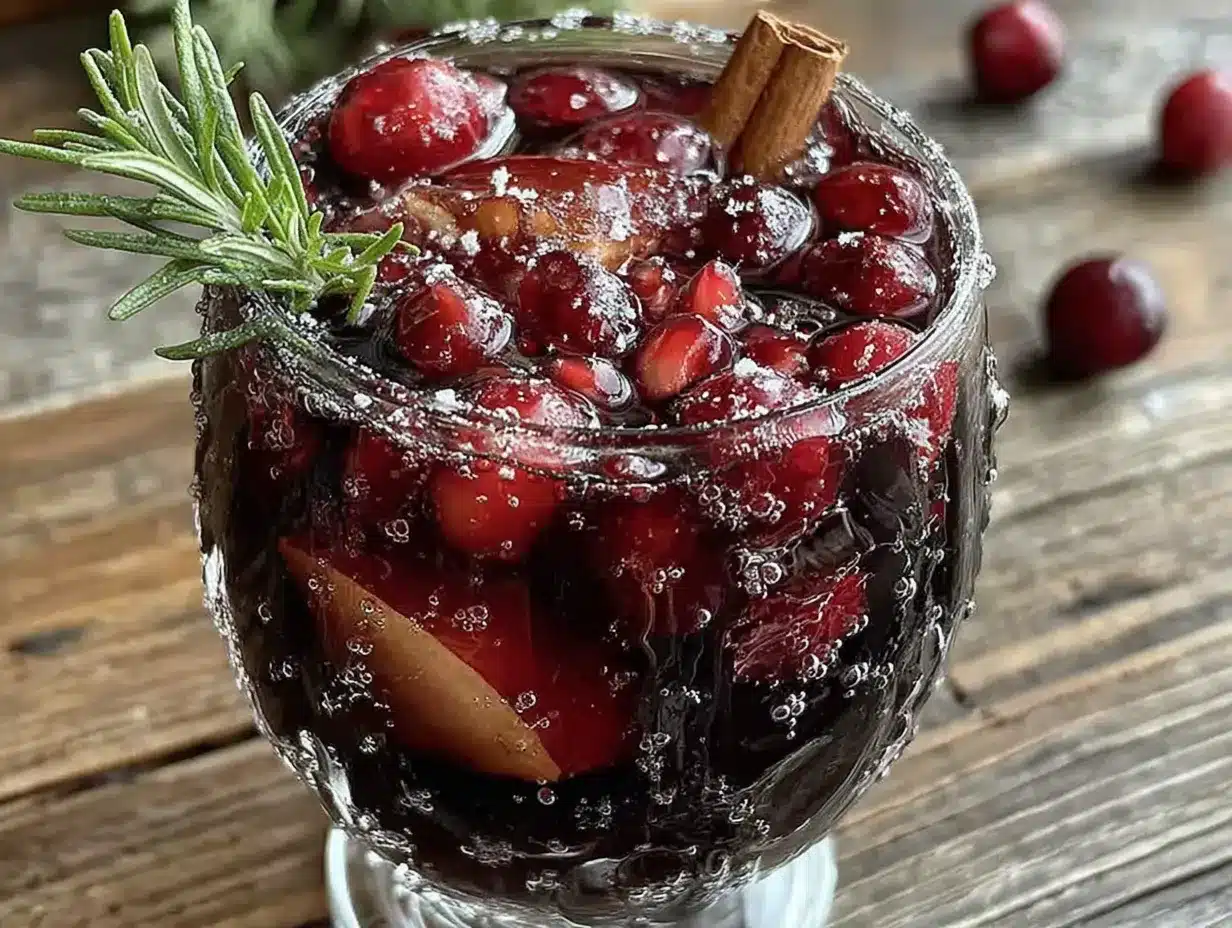
- 1 large apple, thinly sliced — Honeycrisp or Fuji work beautifully. Leave the skin on for color and texture. The apple slices will soften slightly as they soak up the wine, becoming almost candy-like after a few hours.
- 1 cup fresh pomegranate seeds — These little jewels add pops of tartness and gorgeous color. You can buy them pre-seeded in most grocery stores to save time. If pomegranates aren’t in season, dried cranberries make a decent substitute.
- 1 orange, thinly sliced — Leave the peel on. The orange oils will infuse the sangria with brightness. I like to use blood oranges when they’re available for an extra dramatic color.
- 1 cinnamon stick — Just one! Cinnamon is potent, and you want a subtle warmth, not a mouthful of spice. A star anise pod also works beautifully here.
- Optional: 1/4 cup fresh cranberries — These add a gorgeous festive look and a tiny burst of tartness. They’re purely decorative but worth it for holiday gatherings.
Equipment Needed
You don’t need fancy bar tools for this quick winter sangria with pomegranate and apple cider. Here’s what you’ll need:
- Large pitcher (at least 2 quarts) — A glass pitcher lets you show off the beautiful colors. If you don’t have one, a large mason jar or even a cleaned-out juice container works in a pinch.
- Sharp knife and cutting board — For slicing the apple and orange. A serrated knife works best for citrus.
- Measuring cups and spoons — For the cider, juice, and sweetener. Eyeballing works if you’re experienced, but measuring ensures consistency.
- Wooden spoon or long stirring spoon — For mixing everything together without crushing the fruit.
- Wine glasses or tumblers — Red wine glasses are traditional, but any glass works. I actually prefer short tumblers for sangria — they feel more casual and cozy.
- Optional: Citrus juicer — If you’re using fresh oranges for juice instead of slices, a juicer helps. But honestly, sliced oranges work just as well and look prettier.
My favorite pitcher is a simple glass one I found at a thrift store for $4. It’s nothing fancy, but it shows off the sangria’s deep ruby color perfectly. Don’t overthink the equipment — this recipe is designed for real kitchens with real constraints.
Preparation Method
This quick winter sangria with pomegranate and apple cider comes together in about 10 minutes of active time. Here’s how to do it:
- Prep your fruit (5 minutes) — Wash the apple and orange thoroughly. Thinly slice the apple — about 1/8 inch thick — and cut the orange into rounds. If your orange has seeds, remove them with the tip of your knife. Measure out your pomegranate seeds. Pro tip: If you’re buying a whole pomegranate, score it around the equator, break it open underwater, and gently separate the seeds. The seeds sink and the pith floats, making cleanup a breeze.
- Combine the liquids (2 minutes) — Pour the bottle of red wine into your pitcher. Add the apple cider, pomegranate juice, and brandy or orange liqueur if using. Stir gently to combine. The sangria base should look like a deep, dark ruby — almost black in the center of the pitcher.
- Sweeten to taste (1 minute) — Add the honey or maple syrup. Stir until fully dissolved. Taste the mixture — it should be pleasantly fruity with a gentle sweetness. If it’s too tart, add another tablespoon of sweetener. If it’s too sweet, add a splash more pomegranate juice or cider. Remember, the fruit will release more sweetness as it sits, so err on the slightly less sweet side.
- Add the fruit and spices (2 minutes) — Drop in the apple slices, orange rounds, pomegranate seeds, and cinnamon stick. If using fresh cranberries, add them now. Gently stir everything together, being careful not to break up the fruit slices. You want the fruit to look pretty, not mushy.
- Chill and rest (30 minutes minimum, 2 hours ideal) — Cover the pitcher and refrigerate for at least 30 minutes. This brief rest allows the flavors to meld and the fruit to absorb some of the wine. For best results, let it sit for 2 hours. The sangria will deepen in flavor and the fruit will become slightly infused with the wine. Don’t let it sit overnight — the fruit will break down and the sangria can become bitter from the orange pith.
- Serve over ice (1 minute) — Fill wine glasses or tumblers with ice cubes. Pour the sangria, making sure each glass gets some fruit. Use a slotted spoon to distribute the apple slices, orange rounds, and pomegranate seeds evenly. The fruit is actually part of the experience — those wine-soaked apple slices are absolutely delicious.
A quick note: If you’re serving this at a party, make the sangria base (without fruit) a day ahead and refrigerate. Add the fruit and cinnamon stick about 2 hours before serving. This prevents the fruit from becoming mushy while still letting the flavors develop beautifully.
Cooking Tips & Techniques
After making this quick winter sangria with pomegranate and apple cider more times than I care to count, I’ve learned a few tricks that make a real difference. Here are my hard-won tips:
Don’t skip the rest time. I know it’s tempting to serve immediately — especially when guests are waiting — but that 30-minute rest is crucial. The flavors need time to get to know each other. The wine softens, the fruit releases its juices, and the cinnamon infuses gently. I once served this immediately out of desperation, and it tasted like wine with floating fruit. Not the same at all.
Watch your wine choice. I learned this the hard way after using an inexpensive Cabernet Sauvignon that was already pretty tannic. The sangria came out harsh and astringent. Stick with fruity, medium-bodied reds like Tempranillo, Garnacha, or Merlot. If you’re unsure, ask at your local wine shop — tell them you’re making sangria and they’ll point you in the right direction.
Taste as you go. Everyone’s palate is different. Some people love a tart sangria, others want it sweeter. I always start with less sweetener and adjust. One batch I made with particularly sweet apple cider needed only 2 tablespoons of honey. Another batch with a tarter cider needed 4. Trust your taste buds.
Remove the cinnamon stick after 2 hours. Cinnamon is powerful, and after a few hours, it can overwhelm the other flavors. I usually fish it out after the resting period. If you want more cinnamon flavor, add a fresh stick to each glass when serving instead.
Use good ice. This sounds silly, but ice made from tap water can introduce off-flavors. Use filtered water or, even better, freeze some apple cider in ice cube trays. As the cubes melt, they’ll dilute the sangria with more apple flavor instead of water. Game changer for parties.
Variations & Adaptations
One of the best things about this quick winter sangria with pomegranate and apple cider is how adaptable it is. Here are some variations I’ve tried and loved:
Non-Alcoholic Version : Replace the red wine with a good quality non-alcoholic red blend or pomegranate-cranberry juice. Use sparkling apple cider instead of still cider for a festive fizz. Skip the brandy. This version is perfect for designated drivers, pregnant friends, or anyone who prefers to skip the alcohol. It’s so good that I’ve had guests ask for the “mocktail” version even when they were drinking.
Spiced Apple Sangria : Add 2-3 whole cloves and a star anise pod along with the cinnamon stick. The cloves add a warm, almost floral note that pairs beautifully with the apple cider. Just remember to remove them before serving — nobody wants to bite into a whole clove.
White Wine Winter Sangria : Use a crisp white wine like Sauvignon Blanc or Pinot Grigio instead of red. Add sliced pears and fresh ginger for a lighter, brighter version. The apple cider still works beautifully here, creating a drink that’s more like a spiced apple wine cocktail. This is my go-to for winter bridal showers or lighter gatherings.
Sparkling Sangria : Make the sangria base as directed but reduce the apple cider to 1 cup. Just before serving, top the pitcher with 2 cups of sparkling apple cider or ginger ale. The bubbles add a festive touch that’s perfect for New Year’s Eve celebrations.
Slow Cooker Hot Sangria : Combine all ingredients in a slow cooker and heat on low for 2-3 hours. Don’t let it boil. Serve warm in mugs with a cinnamon stick garnish. This version is incredibly cozy for cold winter nights and fills your house with the most amazing aroma.
Serving & Storage Suggestions
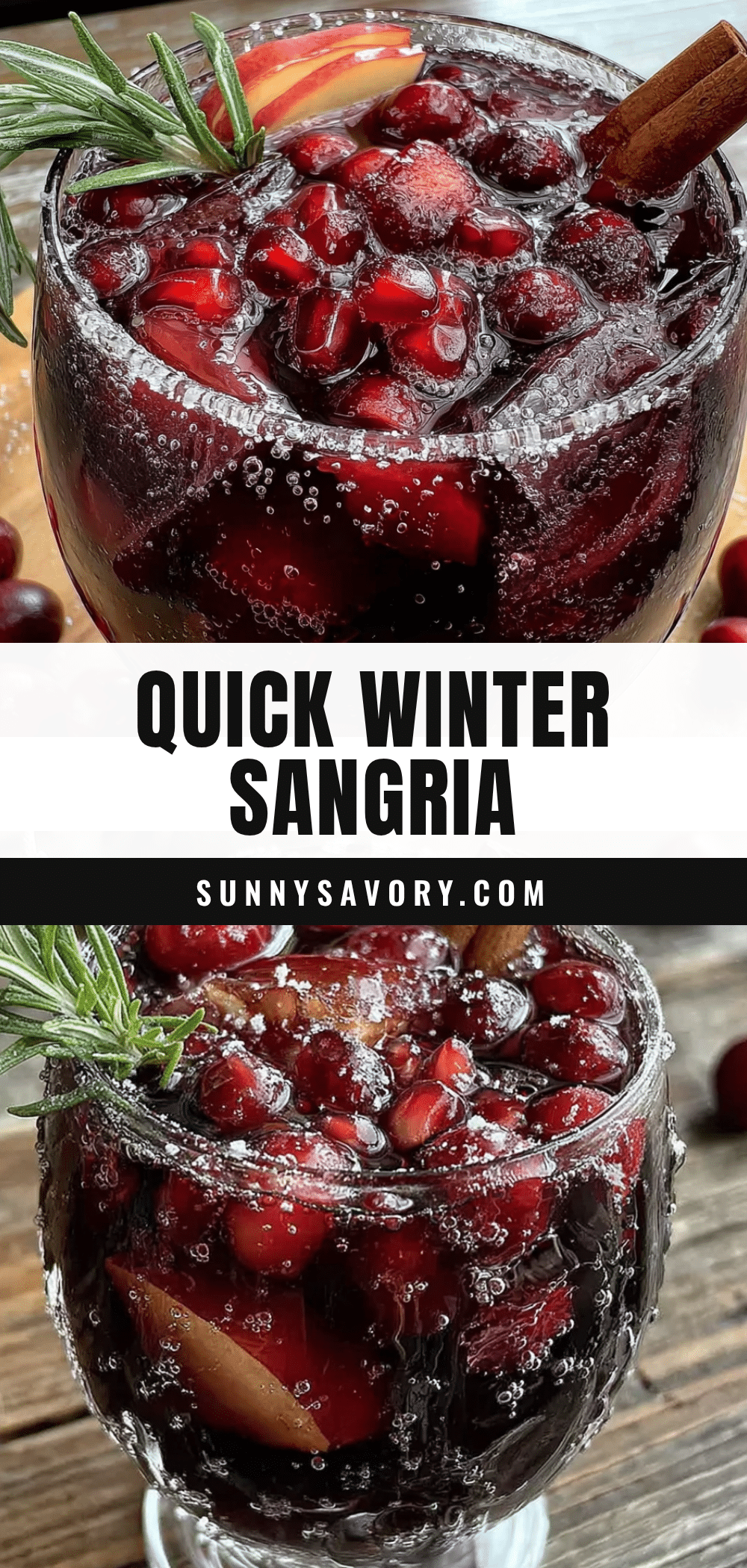
This quick winter sangria with pomegranate and apple cider is best served chilled over ice. The cold temperature keeps the flavors bright and refreshing, even in the middle of winter. I like to serve it in clear wine glasses or short tumblers so the beautiful ruby color and floating fruit are visible.
Garnish ideas : Add a fresh cinnamon stick to each glass for stirring. A sprig of fresh rosemary adds an unexpected herbal note that complements the apple and pomegranate beautifully. For a touch of sparkle, dip the rim of each glass in a mixture of sugar and cinnamon before pouring.
What to serve alongside : This sangria pairs beautifully with cheese boards, roasted nuts, and winter salads. It’s also fantastic alongside roasted pork, grilled chicken, or hearty stews. For dessert, try it with dark chocolate or apple crisp. The fruity, spiced notes complement so many winter dishes.
Storage : This sangria keeps well in the refrigerator for up to 2 days. The flavor actually improves after the first day as the fruit continues to infuse. However, after 48 hours, the fruit starts to break down and the sangria can develop a slightly bitter edge from the orange pith. If you have leftovers, strain out the fruit after 2 days and store the liquid alone for up to 4 days.
Reheating (for hot version) : If you made the hot sangria version, reheat it gently on the stovetop or in the microwave. Don’t boil it — you’ll cook off the alcohol and the flavors will become flat.
Make-ahead tip : Prep the fruit and measure the liquids separately up to 24 hours in advance. Combine everything 2 hours before serving. This makes party prep incredibly easy.
Nutritional Information & Benefits
This quick winter sangria with pomegranate and apple cider is a treat, but it does offer some surprising nutritional benefits. Here’s what you should know:
Estimated per serving (6 oz serving with fruit, without ice) :
- Calories: 180-220
- Carbohydrates: 25-30g
- Sugar: 20-25g (naturally occurring from fruit and cider)
- Alcohol: approximately 1 standard drink
- Vitamin C: 15% of daily value (from apple cider and orange)
- Antioxidants: High (from red wine and pomegranate)
Health highlights : Red wine contains resveratrol, a powerful antioxidant that supports heart health. Pomegranate seeds are packed with vitamin C, fiber, and anti-inflammatory compounds. Apple cider provides polyphenols that may support digestive health. Of course, this is still an alcoholic beverage, so moderation is key.
Dietary considerations : This sangria is naturally gluten-free, dairy-free, and vegan (if you use maple syrup instead of honey). It contains sulfites from the wine, which some people are sensitive to. If you’re watching your sugar intake, reduce the honey or maple syrup to 1 tablespoon — the fruit and cider provide plenty of natural sweetness.
I personally love that this sangria feels indulgent but isn’t loaded with artificial ingredients or massive amounts of added sugar. It’s a drink that celebrates real, whole ingredients.
Conclusion
This quick winter sangria with pomegranate and apple cider is more than just a drink — it’s a memory in a glass. It’s the taste of that little tapas bar on Hudson Street, the warmth of holiday gatherings, and the simple joy of sharing something beautiful with people you love.
What I love most about this recipe is how forgiving it is. Don’t have pomegranate seeds? Use cranberries. No apple cider? Try pear nectar. The template is flexible, and the results are always delicious. That’s the kind of recipe I want in my life — one that works with what I have, not one that demands a special trip to three different stores.
I hope you make this sangria for your next winter gathering, or better yet, for a random Tuesday night when you need a little extra warmth. When you do, tag me and let me know how it turned out. Did you add your own twist? Did it remind you of a favorite restaurant memory? I genuinely want to hear about it. That’s the best part of sharing recipes — watching them become part of someone else’s story.
Now go pour yourself a glass. You’ve earned it.
Frequently Asked Questions
Can I make this sangria ahead of time for a party?
Absolutely! Make the sangria base (without fruit) up to 24 hours in advance and refrigerate. Add the fruit and cinnamon stick about 2 hours before serving. This prevents the fruit from becoming mushy while still allowing the flavors to meld beautifully.
What’s the best wine to use for winter sangria?
A medium-bodied red wine like Tempranillo, Garnacha, or Merlot works best. Avoid heavy, tannic wines like Cabernet Sauvignon — they can make the sangria taste harsh. You don’t need an expensive bottle; the $12-15 range is perfect.
Can I use pomegranate arils from a jar instead of fresh?
You can, but fresh pomegranate seeds have better texture and flavor. Jarred arils can be mushy and sometimes have a metallic taste. If fresh pomegranates aren’t available, dried cranberries make an excellent substitute.
How long does this sangria last in the refrigerator?
It’s best within 2 days of making it. After 48 hours, the fruit starts to break down and the orange pith can make the sangria bitter. If you have leftovers, strain out the fruit after 2 days and store the liquid alone for up to 4 days.
Can I make this non-alcoholic?
Yes! Replace the red wine with non-alcoholic red wine or pomegranate-cranberry juice. Use sparkling apple cider instead of still cider for a festive touch. Skip the brandy. It’s delicious and perfect for guests who don’t drink alcohol.
Pin This Recipe!
Easy Winter Sangria: Pomegranate & Apple Cider Recipe
A quick and easy winter sangria with pomegranate and apple cider that comes together in under 10 minutes. This cozy, spiced drink is perfect for holiday gatherings or quiet weeknights.
- Prep Time: 10 minutes
- Cook Time: 0 minutes
- Total Time: 10 minutes (plus 30 minutes to 2 hours chilling)
- Yield: 6 servings 1x
- Category: Beverage
- Cuisine: Spanish-inspired
Ingredients
- 1 bottle (750 ml) dry red wine (such as Tempranillo or Merlot)
- 2 cups apple cider
- 1/2 cup pomegranate juice
- 1/4 cup brandy or orange liqueur (optional)
- 3 tablespoons honey or maple syrup
- 1 large apple (Honeycrisp or Fuji), thinly sliced
- 1 cup fresh pomegranate seeds
- 1 orange, thinly sliced
- 1 cinnamon stick
- Optional: 1/4 cup fresh cranberries
Instructions
- Prep your fruit (5 minutes): Wash the apple and orange thoroughly. Thinly slice the apple (about 1/8 inch thick) and cut the orange into rounds. Remove any seeds from the orange. Measure out the pomegranate seeds.
- Combine the liquids (2 minutes): Pour the red wine into a large pitcher. Add the apple cider, pomegranate juice, and brandy or orange liqueur (if using). Stir gently to combine.
- Sweeten to taste (1 minute): Add the honey or maple syrup and stir until dissolved. Taste and adjust sweetness if needed.
- Add the fruit and spices (2 minutes): Add the apple slices, orange rounds, pomegranate seeds, cinnamon stick, and optional cranberries. Gently stir to combine without breaking the fruit.
- Chill and rest (30 minutes minimum, 2 hours ideal): Cover the pitcher and refrigerate for at least 30 minutes to allow flavors to meld. For best results, let it rest for 2 hours.
- Serve over ice (1 minute): Fill glasses with ice. Pour the sangria, ensuring each glass gets some fruit. Use a slotted spoon to distribute the fruit evenly.
Notes
Don’t skip the rest time; it allows flavors to meld. Remove the cinnamon stick after 2 hours to prevent overpowering. Use good ice (filtered water or frozen apple cider cubes) to avoid off-flavors. For make-ahead, prepare the sangria base without fruit up to 24 hours in advance and add fruit 2 hours before serving.
Nutrition
- Serving Size: 6 oz
- Calories: 200
- Sugar: 23
- Sodium: 10
- Carbohydrates: 28
- Fiber: 1
- Protein: 1
Keywords: winter sangria, pomegranate sangria, apple cider sangria, easy sangria recipe, holiday sangria, red wine sangria