Love this? Save it for later!
Share the inspiration with your friends
My brother-in-law Mark asked why I couldn’t just brown the butter with the sage leaves from the start. I started to explain why that wouldn’t work — that you need to infuse the milk first, that the sage would burn, that there was a proper order to things. Then I stopped. Honestly, I had no good reason. I’d just always done it the other way, the way my grandmother taught me, and I’d never questioned it. So I shrugged and said, “You know what? Let’s try it your way.”
He dumped a whole stick of butter into a cold pan, tossed in a handful of fresh sage leaves, and turned the heat to medium. I stood there biting my tongue, ready to say “I told you so” when the sage turned black. But it didn’t. The butter melted, the sage leaves started crisping at the edges, and the whole kitchen filled with this nutty, herbaceous smell that made my stomach growl. Mark looked at me with that smug grin older brothers-in-law are famous for, and I just laughed. I mean, what else could I do?
We poured the whole thing — butter, crispy sage leaves and all — over a pot of Yukon Gold potatoes we’d boiled until they were falling apart. I mashed them with a little warm milk and salt, then folded in that liquid gold. The first bite stopped me mid-sentence. It was rich without being heavy, savory with this warm, almost toasty undertone from the browned butter, and those crispy sage leaves added this little pop of texture that made every forkful interesting. Maybe you’ve been there — when someone who doesn’t cook much suggests something that sounds wrong but turns out perfect.
That was three Thanksgivings ago, and I haven’t made mashed potatoes any other way since. This recipe has become my go-to for holidays, Sunday dinners, and even random Tuesday nights when I need a little comfort. It’s simple enough for a weeknight but fancy enough to impress company. And every time I make it, I think about how sometimes the best ideas come from the people who aren’t afraid to question how things have always been done.
Why You’ll Love This Recipe
These brown butter sage mashed potatoes aren’t just another side dish — they’re the kind of recipe that makes people ask for seconds before they’ve finished their first helping. I’ve tested this method more times than I can count, tweaking the butter-to-potato ratio and the timing of the sage until everything clicked. Here’s why this version works so well:
- Quick & Easy : Comes together in about 35 minutes, most of which is hands-off boiling time. Perfect for busy holiday prep or last-minute dinner cravings.
- Simple Ingredients : You likely already have potatoes, butter, and sage in your kitchen. No fancy cream or specialty cheeses required.
- Perfect for Holidays : This dish looks and tastes special enough for Thanksgiving, Christmas, or Easter dinner. The browned butter gives it a golden hue that photographs beautifully.
- Crowd-Pleaser : I’ve served these to picky eaters, dairy-free folks (with a little substitution), and serious foodies — everyone goes back for more.
- Unbelievably Delicious : The combination of nutty browned butter, crispy sage, and creamy potatoes is next-level comfort food. It’s the kind of side that steals the show from the main course.
What makes this recipe different from all the other mashed potato recipes out there? It’s the technique. Browning the butter with the sage leaves right in the pan creates an infused flavor that you just can’t get by adding sage later. The leaves crisp up like little potato chips, adding texture and visual appeal. Plus, using Yukon Gold potatoes means you get naturally creamy mash without needing tons of cream or butter — though we’re still using plenty of butter, let’s be real.
This recipe isn’t just good — it’s the kind that makes you close your eyes after the first bite. It’s comfort food reimagined: familiar enough to feel like home, but elevated in a way that feels special. Perfect for impressing guests without stress, or turning a simple Tuesday dinner into something memorable.
What Ingredients You Will Need
This recipe uses simple, wholesome ingredients to deliver bold flavor and satisfying texture without the fuss. Most of these are pantry staples, and the few specialty items are easy to find at any grocery store.
- Yukon Gold Potatoes (2 pounds) : These are my absolute favorite for mashed potatoes. They have a naturally buttery flavor and creamy texture that works perfectly here. Russets will work in a pinch, but they’re starchier and need more liquid. Look for potatoes that feel firm and heavy for their size.
- Unsalted Butter (1 stick / 8 tablespoons) : I recommend using unsalted butter so you can control the salt level. For the best flavor, use a high-quality brand like Kerrygold or Plugrà — the higher fat content browns more evenly and tastes richer.
- Fresh Sage Leaves (12-15 leaves) : Fresh sage is non-negotiable here. Dried sage won’t crisp up the same way, and the flavor is more muted. Look for leaves that are bright green and fragrant, without any brown spots.
- Whole Milk (1/2 cup) : Whole milk gives the creamiest results, but you can use 2% or even oat milk in a pinch. Warm the milk before adding it to the potatoes — cold milk will make them gummy.
- Salt (1 teaspoon, plus more for the water) : Use kosher salt for the cooking water and fine sea salt for seasoning. I prefer Diamond Crystal kosher salt for its clean flavor.
- Black Pepper (1/2 teaspoon, freshly ground) : Freshly ground pepper makes a difference here. The floral notes in fresh pepper complement the sage beautifully.
- Garlic (2 cloves, optional) : I sometimes add a couple of smashed garlic cloves to the boiling water for a subtle garlic flavor. Totally optional, but worth mentioning.
Ingredient Selection Tips: When choosing sage, look for leaves that are uniform in size so they brown evenly. If your sage leaves are huge, tear them in half before frying. For the potatoes, avoid any with green spots or sprouting eyes — they can taste bitter.
Substitution Guidance: For a dairy-free version, use vegan butter and unsweetened oat milk. The browning won’t be quite as rich, but it still works. If you can’t find fresh sage, try fresh rosemary or thyme instead — just remove the leaves from the stems before frying.
Equipment Needed
You don’t need any fancy equipment for this recipe, which is part of what makes it so great. Here’s what you’ll need:
- Large Pot (5-6 quart) : For boiling the potatoes. Make sure it’s big enough that the potatoes have room to move around.
- Colander : For draining the cooked potatoes.
- Potato Masher or Ricer : I prefer a ricer for the smoothest texture, but a good old-fashioned masher works perfectly too. I’ve used both and honestly, the masher gives a more rustic texture that I kind of love.
- Small Skillet or Saucepan : For browning the butter and sage. Use a light-colored pan so you can see the butter change color.
- Wooden Spoon or Silicone Spatula : For stirring the butter as it browns.
- Measuring Cups and Spoons : For accuracy, though honestly, I eyeball the butter and sage now.
- Chef’s Knife and Cutting Board : For peeling and chopping potatoes if needed.
Budget-Friendly Options: If you don’t have a ricer, a fork works in a pinch — just be prepared for a chunkier texture. A stainless steel skillet works fine for browning butter; just watch it closely since it’s harder to see the color change.
Preparation Method
- Prepare the Potatoes (5 minutes) : Peel the Yukon Gold potatoes and cut them into evenly sized chunks, about 1.5 inches each. This ensures they cook at the same rate. Rinse the cut potatoes under cold water to remove excess starch — this helps them stay fluffy instead of gummy.
- Boil the Potatoes (15-20 minutes) : Place the potato chunks in your large pot and cover them with cold water by about an inch. Add a generous tablespoon of kosher salt — the water should taste like the sea. Bring to a boil over high heat, then reduce to a simmer. Cook until the potatoes are fork-tender, meaning a knife slides in with no resistance. Start checking at 12 minutes; you don’t want them falling apart completely.
- Warm the Milk (2 minutes) : While the potatoes cook, warm the milk in a small saucepan or in the microwave. You want it warm to the touch, not boiling. Set it aside until you’re ready to mash.
- Brown the Butter with Sage (5 minutes) : In your small skillet, melt the butter over medium heat. Add the sage leaves in a single layer. Swirl the pan gently as the butter melts. After about 2-3 minutes, the butter will start to foam and then turn golden. Watch carefully — the color will change from yellow to golden to amber quickly. When you see brown specks forming at the bottom of the pan and the butter smells nutty, remove it from the heat immediately. The sage leaves should be crispy and darker green. Don’t walk away from the pan during this step — browned butter can burn in seconds.
- Drain the Potatoes (1 minute) : Once the potatoes are tender, drain them in a colander. Let them sit for a minute to steam dry — excess moisture will make your mash watery.
- Mash the Potatoes (3-4 minutes) : Return the drained potatoes to the pot or transfer them to a large bowl. Mash them with your masher or put them through a ricer. If using a masher, don’t overwork them — a few lumps are fine and actually add nice texture. Pour in the warm milk and mash again until combined.
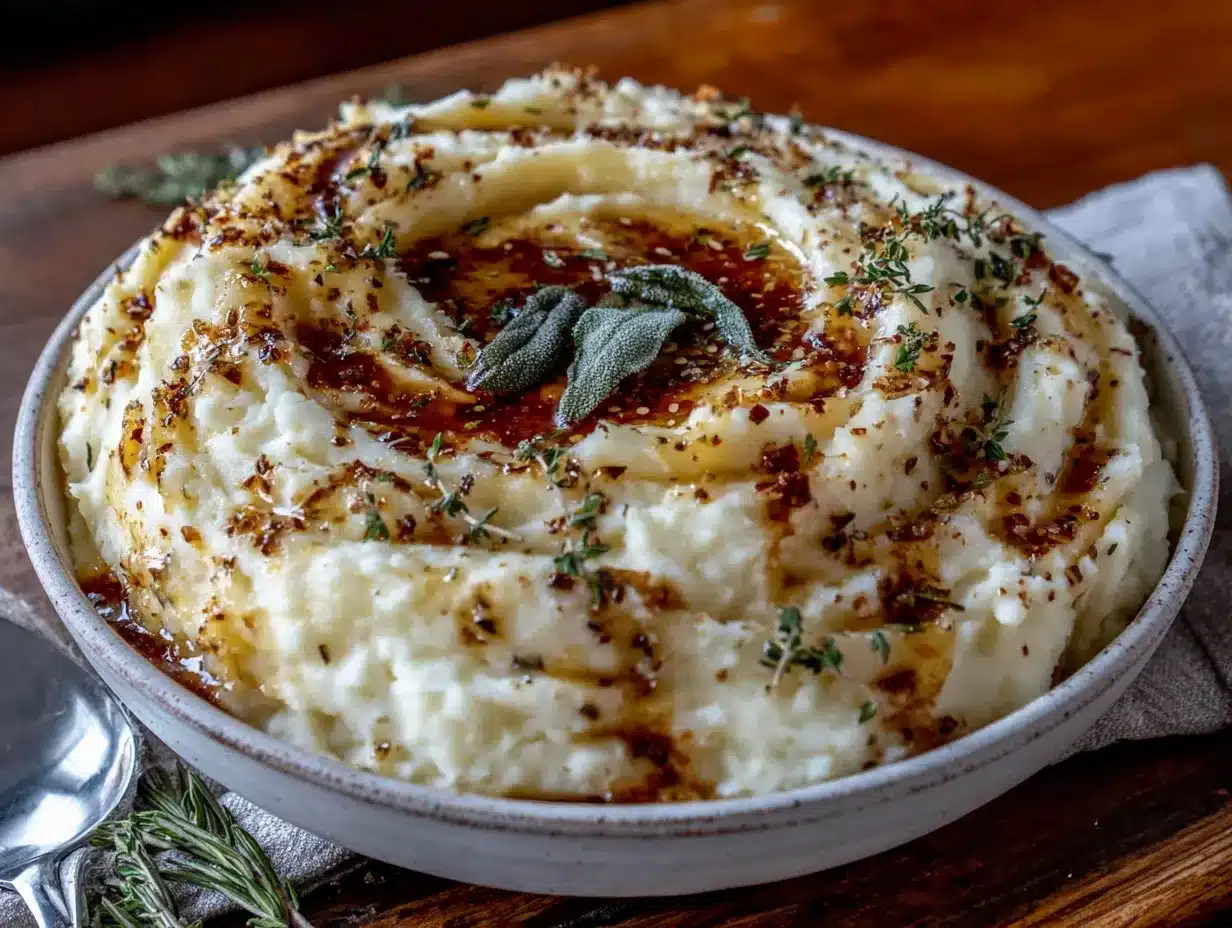
- Fold in the Brown Butter (1 minute) : Pour the browned butter and crispy sage leaves over the mashed potatoes. Fold gently with a spatula until the butter is fully incorporated. The potatoes will turn a lovely pale golden color. Season with salt and pepper to taste, folding once more.
- Serve Immediately (0 minutes) : Transfer to a serving bowl and garnish with extra crispy sage leaves if you reserved any. These potatoes are best served hot, right after making them.
Sensory Cues: When the butter is browning, you’ll smell a nutty, toasty aroma that’s completely different from regular melted butter. The sage leaves will go from bright green to a darker, almost olive green — they should be crisp enough to crackle when you bite them. The finished potatoes should be creamy and smooth, with visible specks of browned butter throughout.
Troubleshooting Tip: If your potatoes turn out gummy, you likely overworked them or used too much water. Next time, let them steam dry longer after draining, and use a ricer instead of a mixer.
Cooking Tips & Techniques
I’ve made these brown butter sage mashed potatoes at least two dozen times, and I’ve learned a few things the hard way. Here are my best tips for getting them perfect every time:
Master the Brown Butter: The biggest mistake people make is walking away from the pan. Brown butter goes from perfect to burnt in about 30 seconds. Use a light-colored pan so you can see the color change, and keep the heat at medium — not high. When you see golden specks forming at the bottom and the butter smells like toasted nuts, pull it off the heat immediately. I once got distracted by my phone and ended up with black butter that smelled like burnt popcorn. Trust me, start over if that happens.
Don’t Rinse the Potatoes Too Much: I know I said to rinse the cut potatoes, but don’t soak them. A quick rinse to remove surface starch is fine, but soaking them for longer than a few minutes will leach out flavor and nutrients. Just a quick swish under cold water, then straight into the pot.
Warm Your Milk: This is a small step that makes a big difference. Cold milk will cool down your hot potatoes and make them stiff and gluey. Warm the milk gently — I usually microwave it for 45 seconds — and it will incorporate smoothly into the mash.
Multitasking Strategy: While the potatoes boil, you can prep everything else. Warm the milk, measure your salt and pepper, and have your butter and sage ready to go. The browning happens in the last 5 minutes of potato cooking, so time it so the butter is ready right when the potatoes are drained.
Variations & Adaptations
One of the things I love about this recipe is how flexible it is. Here are some variations I’ve tried and loved:
Dairy-Free Version: Use vegan butter and unsweetened oat milk or cashew milk. The browning won’t be quite as dramatic, but it still works. I’ve used Miyoko’s vegan butter with good results — it browns better than most plant-based butters.
Garlic Lover’s Version: Add 3-4 smashed garlic cloves to the butter as it browns. Remove them before pouring the butter over the potatoes, or leave them in for a more intense garlic flavor. I did this for a garlic-obsessed friend and she said it was the best mashed potatoes she’d ever had.
Herb Mix-Up: Swap half the sage for fresh thyme or rosemary sprigs. The woody herbs infuse beautifully into the butter and add a different aromatic note. I’ve done a sage-thyme combo for Thanksgiving and it was a hit.
Cheesy Twist: Fold in 1/2 cup of grated Parmesan or aged Gruyère after mashing. The salty, nutty cheese complements the browned butter perfectly. Just make sure the cheese is finely grated so it melts smoothly.
Low-Carb Adaptation: Swap the potatoes for cauliflower florets. Steam the cauliflower until very tender, then mash and proceed with the browned butter and sage. It’s not the same texture, but the flavor is surprisingly close.
Serving & Storage Suggestions
These brown butter sage mashed potatoes are best served hot, right off the stove. Transfer them to a warmed serving bowl and garnish with a few extra crispy sage leaves on top for visual appeal. I like to drizzle a tiny bit of the browned butter over the top before serving — it makes the presentation look intentional and beautiful.
What to Serve With Them: These potatoes are incredible alongside roasted chicken, grilled steak, or pan-seared pork chops. For holidays, they pair beautifully with roasted turkey, glazed ham, or prime rib. A simple green salad with lemon vinaigrette balances the richness perfectly.
Storage Instructions: Leftover mashed potatoes can be stored in an airtight container in the refrigerator for up to 4 days. The texture will change slightly as they sit — they’ll firm up and lose some creaminess. To reheat, add a splash of warm milk and stir over low heat, or microwave in 30-second bursts, stirring between each.
Freezer Instructions: These potatoes freeze well for up to 3 months. Spoon them into a freezer-safe container, press a piece of plastic wrap directly onto the surface to prevent freezer burn, and seal. Thaw overnight in the refrigerator before reheating. The texture won’t be quite as creamy after freezing, but the flavor is still fantastic.
Flavor Development: Honestly, these potatoes taste even better the next day. The browned butter flavor deepens and the sage infuses more fully into the potatoes. I often make a double batch on purpose so I have leftovers for lunch the next day.
Nutritional Information & Benefits
Here’s the approximate nutritional breakdown per serving (based on 6 servings):
- Calories: 280
- Total Fat: 16g
- Saturated Fat: 10g
- Cholesterol: 40mg
- Sodium: 420mg
- Total Carbohydrates: 30g
- Dietary Fiber: 3g
- Sugar: 3g
- Protein: 5g
Health Benefits: Yukon Gold potatoes are a good source of vitamin C, potassium, and vitamin B6. The skin contains most of the fiber, so if you want a nutritional boost, leave the skins on for a more rustic version. Sage has been used in traditional medicine for its anti-inflammatory properties and is rich in antioxidants. Browned butter contains conjugated linoleic acid, which some studies suggest may have health benefits — though let’s be honest, we’re eating this for the flavor, not the health claims.
Dietary Considerations: This recipe is vegetarian and can be made vegan with substitutions. It contains dairy and is not gluten-free in its standard form (though potatoes themselves are gluten-free). For a lower-calorie version, reduce the butter to 4 tablespoons and use low-fat milk.
Conclusion
These brown butter sage mashed potatoes have become my signature dish for a reason. They’re simple enough for a weeknight but fancy enough to impress the pickiest dinner guests. The nutty browned butter, the crispy sage leaves, the creamy potatoes — every element works together in a way that feels both familiar and surprising.
I hope you’ll try this recipe and make it your own. Maybe you’ll add garlic, swap in rosemary, or leave the skins on for extra texture. That’s the beauty of a good base recipe — it’s a starting point, not a rulebook. And if you make it the way my brother-in-law Mark suggested, with the sage browning right in the butter from the start, you might just find yourself questioning everything you thought you knew about mashed potatoes.
If you give this recipe a try, I’d love to hear how it turned out! Leave a comment below and let me know what variations you tried. And if you’re looking for more holiday side dishes, be sure to check out my creamy garlic parmesan mashed potatoes or my roasted garlic green beans for a complete holiday menu. Happy cooking, friends!
Frequently Asked Questions
Can I use dried sage instead of fresh?
I really don’t recommend it. Dried sage won’t crisp up the same way, and the flavor is more muted and slightly bitter. Fresh sage is worth seeking out for this recipe — it makes a huge difference in both texture and taste.
Can I make these potatoes ahead of time?
Yes! You can make them up to 2 days ahead. Store them in the refrigerator and reheat gently with a splash of warm milk. The texture won’t be quite as perfect as fresh, but the flavor actually deepens overnight.
What if I can’t find Yukon Gold potatoes?
Russet potatoes work in a pinch, but they’re starchier and need more liquid. You might need to add an extra 2-3 tablespoons of milk to get the right consistency. Red potatoes are too waxy and won’t mash as smoothly.
Can I use a hand mixer instead of mashing by hand?
You can, but be careful not to overmix. A hand mixer can quickly turn mashed potatoes into glue if you overwork them. I prefer mashing by hand for the best texture, but if you’re short on time, use the mixer on low speed for just 30 seconds.
How do I keep the sage leaves crispy?
The key is to fry them in the butter until they’re just crispy — about 2-3 minutes — and then remove them from the pan immediately. If you leave them in the hot butter, they’ll continue to cook and can become bitter. I usually set a few aside on a paper towel to garnish the top of the finished dish.
Pin This Recipe!
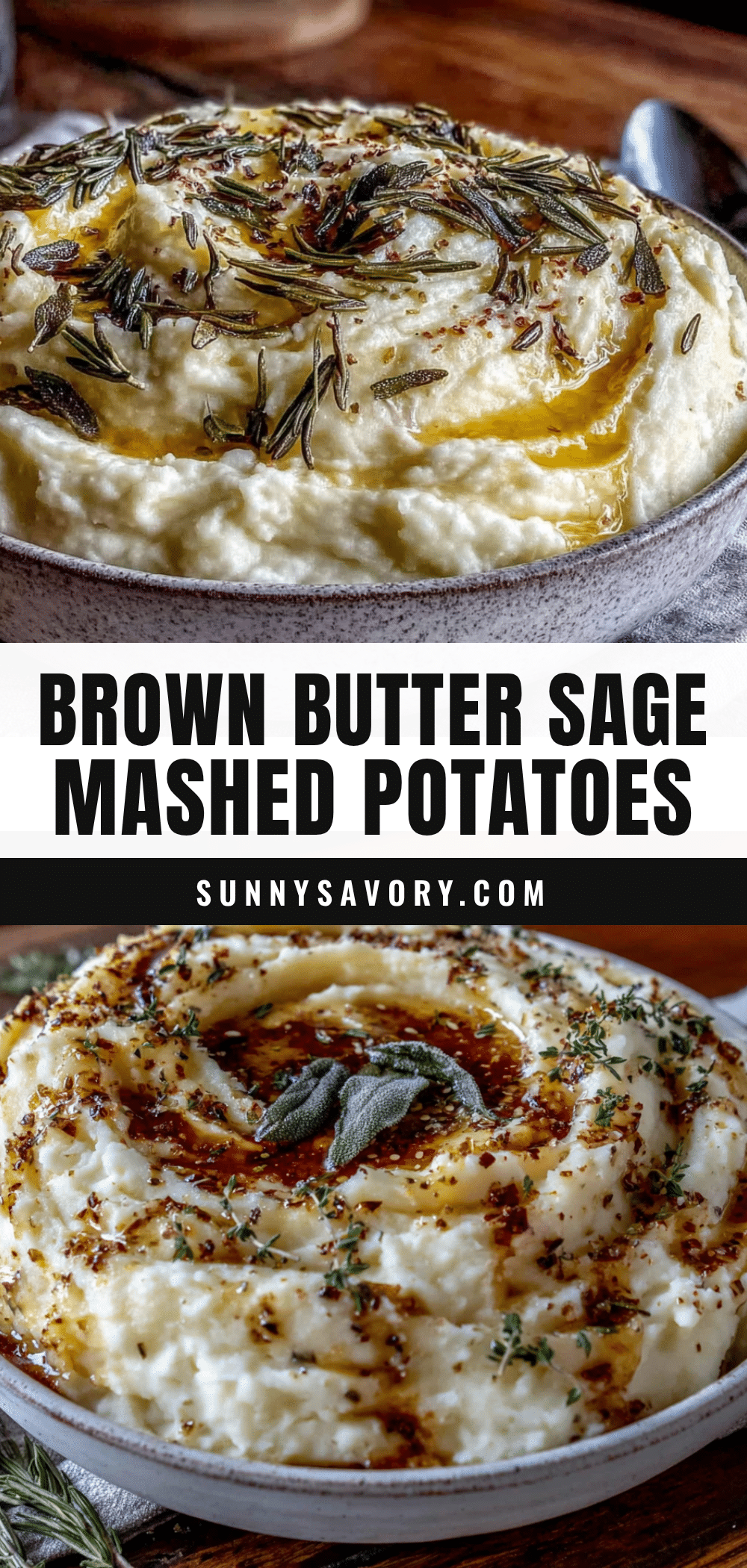
Perfect Brown Butter Sage Mashed Potatoes: Easy Holiday Side

These brown butter sage mashed potatoes are rich, creamy, and packed with nutty, herbaceous flavor. A simple yet elegant side dish perfect for holidays or weeknight comfort.
- Prep Time: 5 minutes
- Cook Time: 25 minutes
- Total Time: 30 minutes
- Yield: 6 servings 1x
- Category: Side Dish
- Cuisine: American
Ingredients
- 2 pounds Yukon Gold potatoes
- 1 stick (8 tablespoons) unsalted butter
- 12–15 fresh sage leaves
- 1/2 cup whole milk
- 1 teaspoon kosher salt (plus more for cooking water)
- 1/2 teaspoon freshly ground black pepper
- 2 cloves garlic (optional)
Instructions
- Peel the Yukon Gold potatoes and cut them into evenly sized chunks, about 1.5 inches each. Rinse under cold water to remove excess starch.
- Place the potato chunks in a large pot and cover with cold water by about an inch. Add a generous tablespoon of kosher salt. Bring to a boil over high heat, then reduce to a simmer. Cook until fork-tender, about 15-20 minutes.
- While the potatoes cook, warm the milk in a small saucepan or microwave until warm to the touch.
- In a small skillet, melt the butter over medium heat. Add the sage leaves in a single layer. Swirl the pan gently. After 2-3 minutes, the butter will foam and turn golden. When brown specks form and the butter smells nutty, remove from heat immediately.
- Drain the potatoes in a colander and let them steam dry for 1 minute.
- Return the drained potatoes to the pot or transfer to a large bowl. Mash with a potato masher or ricer. Pour in the warm milk and mash again until combined.
- Pour the browned butter and crispy sage leaves over the mashed potatoes. Fold gently until fully incorporated. Season with salt and pepper to taste.
- Serve immediately, garnished with extra crispy sage leaves if desired.
Notes
For best results, use a light-colored pan to monitor butter browning. Warm the milk before adding to prevent gummy potatoes. Don’t overwork the potatoes to avoid a gluey texture. Leftovers can be stored in the refrigerator for up to 4 days or frozen for up to 3 months.
Nutrition
- Serving Size: 1 serving
- Calories: 280
- Sugar: 3
- Sodium: 420
- Fat: 16
- Saturated Fat: 10
- Carbohydrates: 30
- Fiber: 3
- Protein: 5
Keywords: brown butter sage mashed potatoes, holiday side dish, creamy mashed potatoes, easy mashed potatoes, Thanksgiving side