Love this? Save it for later!
Share the inspiration with your friends
The holiday dinner was in twelve hours and I’d completely forgotten to plan a main course. My mother-in-law, Linda, was coming, and she’s the kind of cook who brings a three-layer cake to a casual barbecue. Everyone else would be bringing their signature dishes—green bean casserole, sweet potato soufflé, a salad that takes an hour to shave the Brussels sprouts. I had a five-pound bone-in rib roast sitting in my fridge, a head of garlic, and a sinking feeling in my stomach. I’d bought the roast on a whim, thinking I had more time. Now I was panicking, scrolling through my phone for a recipe that didn’t require a marinade I’d need to start three days ago. I found a simple garlic herb paste recipe, crossed my fingers, and got to work. Honestly, I was just hoping it wouldn’t be dry.
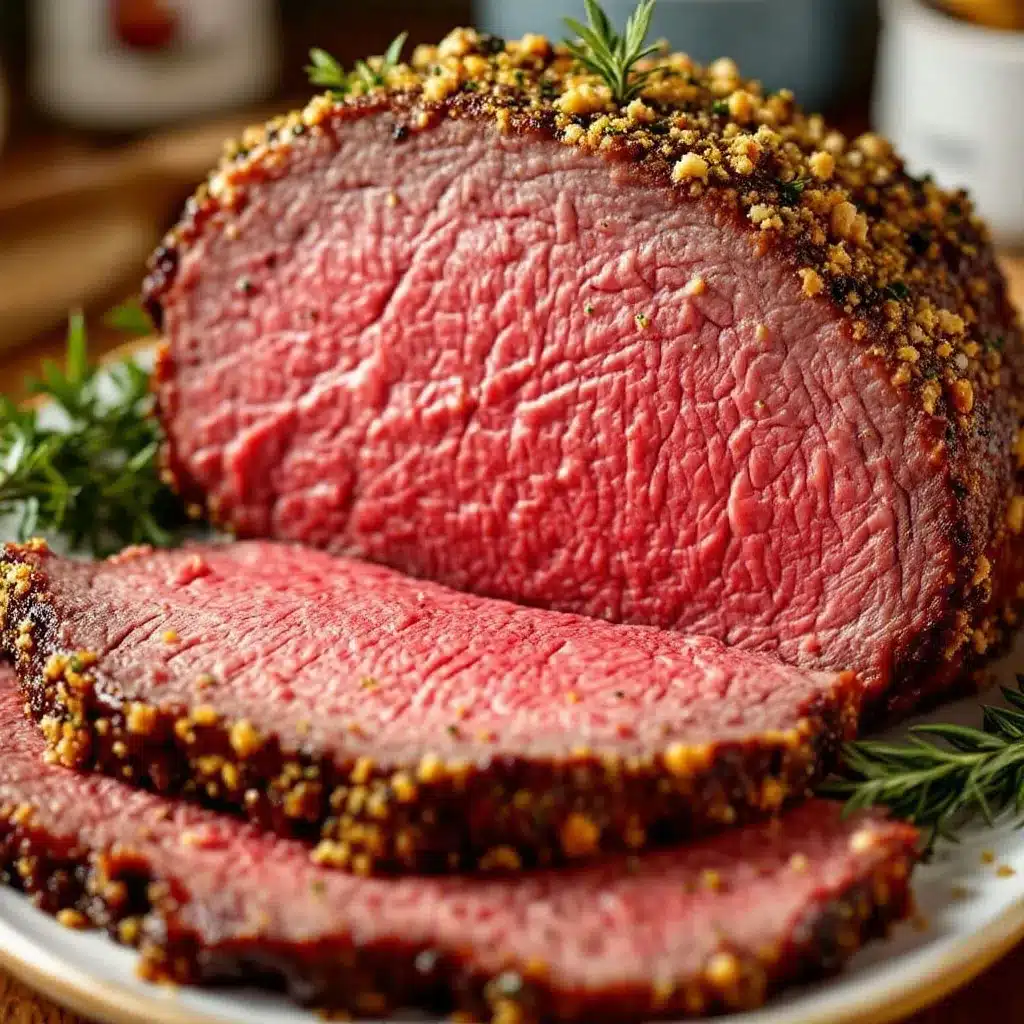
I mashed the garlic and herbs together, slathered that paste all over the roast, and let it sit for an hour. I didn’t have a meat thermometer that worked—the battery was dead—so I had to guess the doneness by touch, pressing on the meat like I’d seen on a cooking show once. When I pulled it out of the oven, the crust was deeply golden and the kitchen smelled like a steakhouse. I let it rest, held my breath, and carved it. It was perfectly pink from edge to edge. Linda asked for the recipe before she even finished her first slice. I mean, maybe you’ve been there—that moment when a kitchen disaster turns into a total victory. That’s the story of this Perfect Garlic Herb Prime Rib Roast. It’s the recipe I now make every holiday, not because I have to, but because it actually works. Every. Single. Time.
Why You’ll Love This Recipe
This isn’t just another prime rib recipe. I’ve tested this method more times than I can count, tweaking the herb ratios and the roasting temperature until it was foolproof. Here’s why this one stands out and why it will earn a permanent spot in your holiday rotation:
- Incredibly Easy to Prepare: The active prep time is about 15 minutes. The oven does the rest of the work. No basting, no flipping, no complicated techniques.
- Simple, High-Impact Ingredients: You need a handful of fresh herbs, garlic, salt, pepper, and olive oil. No weird specialty items or hard-to-find spices.
- Perfect for the Holiday Table: It’s impressive enough for Christmas dinner, New Year’s Eve, or a milestone birthday. It looks like you spent all day, but you didn’t.
- Guaranteed to Impress a Crowd: The garlic herb crust creates a beautiful, flavorful bark, while the inside stays tender and juicy. It gets rave reviews from picky eaters and foodies alike.
- Foolproof Results Every Time: The secret is the high-heat sear followed by a low-and-slow roast. This method delivers a perfect medium-rare center with a beautifully browned crust, without the stress of constant temperature checks.
What makes this recipe different from the rest? It’s the technique. Most recipes ask you to sear the roast on the stovetop first, which is messy and splatters oil everywhere. This method uses a blast of high heat in the oven to create that crust, then turns the temperature way down to cook it gently. It’s a set-it-and-forget-it approach that gives you a perfect result. This isn’t just another version of prime rib—it’s your best version. It’s the kind of roast that makes you close your eyes after the first bite. It’s comfort food reimagined for the holidays—rich, celebratory, but without the stress.
What Ingredients You Will Need
This recipe uses simple, high-quality ingredients to deliver bold flavor. Most of these are pantry staples or easy to find at any grocery store. The quality of the beef matters most here, so splurge a little on a good cut.
- For the Garlic Herb Paste:
- 8 cloves garlic, minced (about 2 tablespoons)
- 3 tablespoons fresh rosemary, finely chopped
- 3 tablespoons fresh thyme leaves, chopped
- 2 tablespoons fresh parsley, chopped
- 2 tablespoons olive oil
- 1 tablespoon kosher salt (use less if using table salt)
- 2 teaspoons freshly ground black pepper
- For the Roast:
- 1 (5-7 pound) bone-in prime rib roast, trimmed (ask your butcher to cut the bones off and tie them back on for easier carving)
- 1 tablespoon olive oil (for the pan)
- 1 cup beef broth (for the pan, optional, for au jus)
Ingredient Tips & Substitutions:
For the garlic, I prefer using fresh cloves. Pre-minced garlic in a jar has a different, more bitter flavor. For the herbs, fresh is non-negotiable here. Dried herbs will burn under the high heat and won’t create the same fragrant crust. If you don’t have rosemary, you can use all thyme or add a teaspoon of dried oregano. For a milder flavor, use half the garlic. If you need a dairy-free option, this recipe is already dairy-free as written. For a gluten-free au jus, simply use a gluten-free beef broth. I recommend using a brand like Better Than Bouillon for the broth—it has a deep, rich flavor that makes a fantastic jus.
Equipment Needed
You don’t need a lot of fancy tools to make this roast, but a few key items will make the process much easier.
- Roasting Pan: A heavy-duty roasting pan with a rack is ideal. The rack lifts the roast so air can circulate, ensuring even cooking. If you don’t have a rack, you can place the roast on a bed of thickly sliced onions and carrots to lift it up.
- Meat Thermometer: This is the most important tool. An instant-read thermometer is perfect. I’ve used both a digital probe thermometer and a simple dial thermometer, and both work fine. The key is to not open the oven door too often, so a probe thermometer with a cord that stays in the oven is a game-changer.
- Chef’s Knife: A sharp chef’s knife is essential for mincing garlic and chopping herbs. A dull knife will crush the herbs and release bitter flavors.
- Cutting Board: A large, sturdy cutting board for carving the roast. A wooden or plastic board with a groove to catch juices is ideal.
- Kitchen Twine: If your butcher didn’t tie the roast, you’ll need kitchen twine to tie the bones back onto the meat. This helps the roast cook evenly and makes carving easier.
Preparation Method
Follow these steps carefully, and you’ll have a show-stopping roast. The key is patience—letting the roast come to room temperature and rest after cooking are non-negotiable steps.
- Prep the Roast (1 hour before cooking): Take the prime rib out of the refrigerator 1 hour before you plan to cook it. This is crucial. A cold roast will cook unevenly, with a raw center and an overdone exterior. Pat the roast dry with paper towels. This helps the herb paste stick and promotes browning.
- Make the Herb Paste (10 minutes): In a small bowl, combine the minced garlic, chopped rosemary, thyme, parsley, olive oil, salt, and pepper. Stir until it forms a thick paste. The smell at this point is incredible—earthy and bright.
- Season the Roast (5 minutes): Place the roast on a cutting board. Using your hands, rub the herb paste all over the entire surface of the meat, including the ends and the fat cap. Don’t be shy. Really work it in. If the bones are tied on, get the paste between the meat and the bones, too.
- Preheat the Oven (20 minutes): Preheat your oven to 450°F (232°C). Make sure the rack is in the center position. Place your roasting pan in the oven to heat up for 10 minutes. A hot pan helps create a better sear.
- Sear the Roast (20 minutes): Carefully remove the hot roasting pan from the oven. Drizzle the 1 tablespoon of olive oil into the pan. Place the roast, fat-side up, directly on the rack in the pan. Return the pan to the oven and roast at 450°F for 20 minutes. This high-heat blast creates that beautiful, golden-brown crust. Your kitchen will smell amazing.
- Lower the Heat and Roast (Variable time): Without opening the oven door, reduce the oven temperature to 325°F (163°C). Continue roasting until the internal temperature reaches your desired doneness. Use your meat thermometer to check the temperature in the thickest part of the meat, away from the bone.
- Rare: 120-125°F (49-52°C) — about 12-15 minutes per pound
- Medium-Rare: 130-135°F (54-57°C) — about 15-18 minutes per pound (This is my sweet spot)
- Medium: 140-145°F (60-63°C) — about 18-22 minutes per pound
- Well-Done: 150°F+ (66°C+) — not recommended for prime rib, it will be dry
For a 6-pound roast, medium-rare typically takes about 1 hour and 45 minutes total (including the sear time). Start checking the temperature at the 1-hour 30-minute mark.
- Rest the Roast (30 minutes): This is the hardest part. Once the roast reaches your target temperature, remove it from the oven. Transfer it to a cutting board. Loosely tent it with aluminum foil. Let it rest for at least 30 minutes. Do not skip this. The internal temperature will rise another 5-10 degrees during this time (carryover cooking). Resting allows the juices to redistribute throughout the meat, so they don’t run out onto the cutting board when you carve.
- Make the Au Jus (While the roast rests): While the roast rests, place the roasting pan on the stovetop over medium-high heat. Add the 1 cup of beef broth (or water) to the pan. Using a wooden spoon, scrape up all the browned bits from the bottom of the pan. Let it simmer for 2-3 minutes, until slightly reduced. Strain the jus through a fine-mesh sieve into a serving bowl. Season with a pinch of salt and pepper if needed.
- Carve and Serve (5 minutes): Remove the kitchen twine and the bones. The bones will come off easily. Slice the roast against the grain into 1/2-inch to 3/4-inch thick slices. The meat should be a perfect rosy pink. Serve immediately with the warm au jus on the side.
Cooking Tips & Techniques
I’ve made this recipe more times than I can count, and I’ve learned a few things the hard way. Here are my best tips for success.
The Biggest Mistake: Not letting the roast come to room temperature. I once rushed this step and ended up with a roast that was medium-well on the outside and still cold in the center. Give it the full hour. It makes a world of difference.
My Personal Failure: The first time I made this, I used dried herbs because I thought it wouldn’t matter. The crust was bitter and the herbs tasted like burnt hay. Fresh herbs are not optional here. They create a fragrant, flavorful bark that is the star of the dish.
Thermometer Strategy: Don’t rely on the pop-up timer that comes with some roasts. They are notoriously inaccurate. Invest in a good instant-read thermometer. I like to check the temperature in two different spots to be sure. Also, remember carryover cooking—pull the roast out 5 degrees before your target temperature.
Timing and Multitasking: Plan your sides around the roast. Since the roast needs to rest for 30 minutes, that’s the perfect time to finish your mashed potatoes, roast your vegetables, or make your gravy. The oven will be free after the roast comes out, so you can use it to warm your dinner rolls or finish a casserole.
Consistency Tip: For the most even cooking, choose a roast that is uniform in thickness. A roast that is thin on one end and thick on the other will cook unevenly. If that’s all you can find, you can fold a piece of foil and place it under the thinner end to insulate it a bit.
Variations & Adaptations
This recipe is a fantastic base, and it’s easy to customize. Here are a few ways I’ve adapted it over the years.
- Herb Swap: Not a fan of rosemary? Use a combination of thyme, sage, and marjoram instead. This gives it a more earthy, almost poultry-like flavor that pairs beautifully with beef. I tried this version for Thanksgiving one year when I was too tired to make turkey.
- Spicy Crust: Add 1-2 teaspoons of smoked paprika and 1/2 teaspoon of cayenne pepper to the herb paste. This creates a smoky, slightly spicy crust that is incredible. It’s my go-to for New Year’s Eve dinner.
- Garlic Lovers Version: Double the garlic. Use 16 cloves instead of 8. Roast the garlic cloves first (toss them in olive oil and roast at 400°F for 20 minutes) before mashing them into the paste. Roasted garlic is sweeter and milder, so you get a huge garlic flavor without the sharp bite.
- Dairy-Free Au Jus: The au jus recipe is already dairy-free. But if you want a richer sauce, you can whisk in a tablespoon of nutritional yeast at the end for a savory, cheesy flavor without the dairy.
- Different Cooking Method: You can also cook this roast using the reverse sear method. Roast the meat at 250°F (121°C) until it reaches 120°F (49°C) internally. Then, sear it in a blazing hot oven (500°F/260°C) for 10 minutes. This method gives you an even more even cook from edge to edge, but it takes longer.
Serving & Storage Suggestions
This roast is a centerpiece, so treat it like one. Here’s how to serve it and what to do with any leftovers (if you’re lucky enough to have any).
Serving: Serve the prime rib warm, straight from the rest. Arrange the slices on a large, warm platter. Spoon a little of the au jus over the top for moisture, and serve the rest on the side in a gravy boat. The meat should be a beautiful rosy pink. For a classic holiday presentation, garnish the platter with fresh sprigs of rosemary and thyme.
What to Serve With It: This roast pairs perfectly with classic sides. Creamy mashed potatoes or roasted potatoes are a must to soak up the au jus. Roasted carrots, green beans with almonds, or a simple arugula salad with a lemon vinaigrette cut through the richness. For beverages, a full-bodied red wine like a Cabernet Sauvignon or a Malbec is a classic choice.
Storage: Store leftover prime rib in an airtight container in the refrigerator for up to 4 days. The flavors will actually deepen overnight. To reheat, the best method is to place slices in a baking dish with a splash of beef broth, cover with foil, and warm in a 300°F (150°C) oven for 10-15 minutes. Avoid the microwave, as it will toughen the meat.
Freezing: You can freeze cooked prime rib for up to 3 months. Slice it first, then wrap the slices tightly in plastic wrap and place them in a freezer-safe bag. To thaw, move the bag to the refrigerator overnight. Reheat using the oven method above.
Nutritional Information & Benefits
While this is a celebratory dish, it does offer some nutritional benefits. Here’s a quick overview.
Estimated Nutritional Values (per 6-ounce serving, not including au jus):
- Calories: 450
- Fat: 32g
- Protein: 38g
- Carbohydrates: 2g
- Fiber: 0g
- Sugar: 0g
Health Benefits: Prime rib is an excellent source of high-quality protein, which is essential for muscle building and repair. It’s also rich in iron, zinc, and B vitamins, particularly B12, which supports energy levels and neurological function. The garlic and herbs in this recipe are packed with antioxidants and have anti-inflammatory properties. The olive oil provides healthy monounsaturated fats.
Dietary Considerations: This recipe is naturally gluten-free, dairy-free, and low-carb/keto-friendly. It is not suitable for vegetarian or vegan diets. The primary allergen is beef itself.
My Personal Perspective: I believe in balance. This is not an everyday meal, but it’s a fantastic choice for a special occasion. When you’re celebrating, you want food that feels indulgent and satisfying. This roast delivers on that front while still being made from whole, recognizable ingredients. It’s a treat you can feel good about.
Conclusion
This Perfect Garlic Herb Prime Rib Roast is more than just a holiday recipe—it’s a confidence builder. It’s the dish that will make you feel like a rockstar in the kitchen, even if you’re a beginner. I love this recipe because it proves that you don’t need complicated techniques or a dozen pans to create something truly spectacular. It’s just good ingredients, treated with respect, and a little bit of patience.
I honestly believe this is the best prime rib you’ll ever make at home. The herb crust is fragrant and flavorful, the meat is tender and juicy, and the whole process is surprisingly stress-free. I encourage you to customize it to your taste—swap the herbs, add some spice, or try the reverse sear method. Make it your own.
Have you tried this recipe? I’d love to hear about it! Leave a comment below and let me know how it turned out, or share your own twist on it. Don’t forget to pin this recipe for later and share it with your friends who love to cook. Happy holidays, and happy cooking!
Frequently Asked Questions
Can I use a boneless prime rib roast for this recipe?
Yes, you can. The cooking time will be slightly shorter because boneless roasts cook faster. Use the same method, but start checking the internal temperature about 10-15 minutes earlier than you would for a bone-in roast of the same weight. The bone acts as an insulator, so a boneless roast will cook more quickly.
What if I don’t have a meat thermometer?
I strongly recommend getting one. It’s the only way to guarantee perfect doneness. If you absolutely don’t have one, you can use the “touch test.” Press the center of the roast with your finger. For medium-rare, it should feel like the fleshy part of your palm below your thumb when your hand is relaxed. For medium, it should feel like that same spot when you touch your thumb and middle finger together. This method is not as reliable, so use it as a last resort.
Can I prepare the herb paste the night before?
Absolutely. This is a great time-saver. You can make the herb paste up to 24 hours in advance. Store it in an airtight container in the refrigerator. Let it come to room temperature for about 15 minutes before rubbing it on the roast. The flavors will meld together beautifully overnight.
My roast is smaller (3-4 pounds). How do I adjust the cooking time?
The high-heat sear time stays the same (20 minutes at 450°F). For the low-heat roasting time, use the per-pound estimate. For a 4-pound roast, you’re looking at about 1 hour to 1 hour 15 minutes total at 325°F after the sear. Always rely on your meat thermometer over the clock. Start checking the temperature at the 45-minute mark.
Can I cook this roast from frozen?
I do not recommend it. Cooking a frozen roast will result in a very uneven cook. The outside will be overdone before the inside is even thawed. Always thaw your prime rib completely in the refrigerator. It takes about 24 hours for every 5 pounds of meat. Plan ahead and take it out of the freezer at least 2 days before you plan to cook it.
Pin This Recipe!
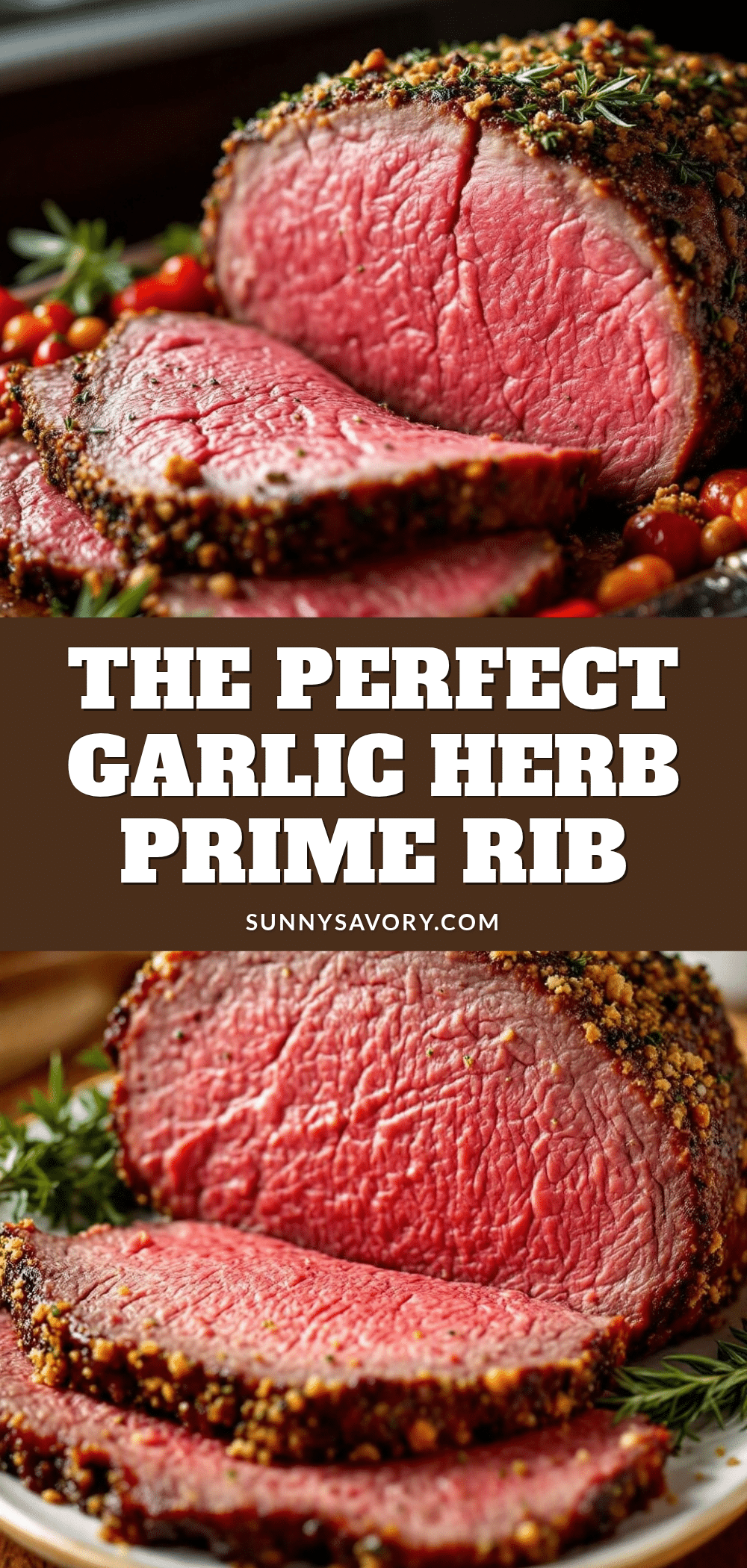
Perfect Garlic Herb Prime Rib Roast: Easy Holiday Recipe
This foolproof prime rib recipe features a fragrant garlic herb crust and a tender, juicy interior. With a simple high-heat sear followed by a low-and-slow roast, it delivers perfect medium-rare results every time, making it an impressive yet stress-free centerpiece for any holiday table.
- Prep Time: 15 minutes
- Cook Time: 1 hour 45 minutes
- Total Time: 2 hours 30 minutes
- Yield: 8 servings 1x
- Category: Main Course
- Cuisine: American
Ingredients
- 8 cloves garlic, minced (about 2 tablespoons)
- 3 tablespoons fresh rosemary, finely chopped
- 3 tablespoons fresh thyme leaves, chopped
- 2 tablespoons fresh parsley, chopped
- 2 tablespoons olive oil
- 1 tablespoon kosher salt (use less if using table salt)
- 2 teaspoons freshly ground black pepper
- 1 (5-7 pound) bone-in prime rib roast, trimmed (ask your butcher to cut the bones off and tie them back on for easier carving)
- 1 tablespoon olive oil (for the pan)
- 1 cup beef broth (for the pan, optional, for au jus)
Instructions
- Prep the Roast (1 hour before cooking): Take the prime rib out of the refrigerator 1 hour before you plan to cook it. Pat the roast dry with paper towels.
- Make the Herb Paste (10 minutes): In a small bowl, combine the minced garlic, chopped rosemary, thyme, parsley, olive oil, salt, and pepper. Stir until it forms a thick paste.
- Season the Roast (5 minutes): Place the roast on a cutting board. Using your hands, rub the herb paste all over the entire surface of the meat, including the ends and the fat cap. If the bones are tied on, get the paste between the meat and the bones, too.
- Preheat the Oven (20 minutes): Preheat your oven to 450°F (232°C). Place your roasting pan in the oven to heat up for 10 minutes.
- Sear the Roast (20 minutes): Carefully remove the hot roasting pan from the oven. Drizzle the 1 tablespoon of olive oil into the pan. Place the roast, fat-side up, directly on the rack in the pan. Return the pan to the oven and roast at 450°F for 20 minutes.
- Lower the Heat and Roast (Variable time): Without opening the oven door, reduce the oven temperature to 325°F (163°C). Continue roasting until the internal temperature reaches your desired doneness. For medium-rare (130-135°F), a 6-pound roast typically takes about 1 hour and 45 minutes total (including the sear time). Start checking the temperature at the 1-hour 30-minute mark.
- Rest the Roast (30 minutes): Once the roast reaches your target temperature, remove it from the oven. Transfer it to a cutting board. Loosely tent it with aluminum foil. Let it rest for at least 30 minutes.
- Make the Au Jus (While the roast rests): While the roast rests, place the roasting pan on the stovetop over medium-high heat. Add the 1 cup of beef broth (or water) to the pan. Using a wooden spoon, scrape up all the browned bits from the bottom of the pan. Let it simmer for 2-3 minutes, until slightly reduced. Strain the jus through a fine-mesh sieve into a serving bowl. Season with a pinch of salt and pepper if needed.
- Carve and Serve (5 minutes): Remove the kitchen twine and the bones. Slice the roast against the grain into 1/2-inch to 3/4-inch thick slices. Serve immediately with the warm au jus on the side.
Notes
Let the roast come to room temperature for 1 hour before cooking. Use fresh herbs for the best flavor. Rest the roast for at least 30 minutes after cooking. For a boneless roast, start checking temperature 10-15 minutes earlier. The herb paste can be made up to 24 hours in advance.
Nutrition
- Serving Size: 6 ounces
- Calories: 450
- Sodium: 800
- Fat: 32
- Saturated Fat: 12
- Carbohydrates: 2
- Protein: 38
Keywords: prime rib, garlic herb prime rib, holiday roast, Christmas dinner, New Year's Eve, beef roast, easy prime rib, foolproof prime rib