Love this? Save it for later!
Share the inspiration with your friends
The woman at the community garden plot next to mine watched me yanking stubborn parsnips out of the cold ground for a solid minute before she said anything. I was losing the battle, honestly—the dirt was hard and the parsnips were winning. She just shook her head, walked over with this little hand fork, and showed me how to loosen the soil first without breaking the roots. Her name was Rosa, and she had been gardening that same plot for twenty years. We got to talking, and somewhere between the parsnips and the kale, she mentioned she had a stew simmering at home that would make those roots taste like heaven. She described it so casually, like it was nothing special—just beef, wine, and patience in a slow cooker. I asked for the details, and she shrugged and said, “You brown the meat good, you don’t rush the wine, and you let the pot do the rest.” That was it. No fancy lecture, no written recipe. Just that one sentence and a knowing smile.
I went home and tried to recreate what she described, and honestly? The first attempt was a little thin. I had not browned the meat long enough, and I used a cheap wine that made everything taste a bit sharp. But Rosa’s approach stuck with me—the idea that a slow cooker could turn a handful of humble ingredients into something that felt like a hug on a cold night. I tweaked and tested, and somewhere around attempt number four, I landed on this version. It has that deep, winey richness that fills your kitchen with the kind of smell that makes neighbors wander over, but it comes together in under twenty minutes of active work. Maybe you have been there—standing in front of your pantry on a Tuesday night, tired, hungry, and wondering how to make a decent dinner without spending an hour at the stove. This stew is for those nights. It is for the evenings when you want something that tastes like you fussed, but you really just threw everything in a pot and walked away. That is the magic Rosa taught me, and I have been making it ever since.
Why You Will Love This Recipe
Let me tell you why this particular stew has earned a permanent spot in my weeknight rotation. I have tested it on tired Tuesday evenings, on lazy Sunday afternoons, and even on a chaotic Wednesday when the kids had homework and I had exactly zero patience left. It delivers every single time.
- Quick Prep, Slow Cook Results: You only need about 20 minutes of hands-on time. The slow cooker does the heavy lifting while you work, relax, or wrangle the family. Dinner is ready when you are.
- Simple, Affordable Ingredients: No trips to a specialty store. Beef chuck, carrots, potatoes, onions, and a decent bottle of red wine—that is the whole grocery list. You probably have half of these things already.
- Perfect for Busy Weeknights: This is not a weekend-project stew. It is a set-it-and-forget-it dinner that tastes like you spent hours tending the pot. The slow cooker makes it possible to have a hearty meal on the table even on your busiest days.
- Crowd-Pleaser Status: I have served this to picky eaters, to steakhouse snobs, and to my mother-in-law who never compliments anything. Everyone asks for seconds. The red wine adds a depth that even kids seem to love, though they will never guess the secret ingredient.
- Unbelievably Comforting: The beef turns fork-tender, the vegetables soak up all that rich broth, and the whole thing has this velvety texture that feels like comfort in a bowl. It is the kind of meal that makes you close your eyes after the first bite.
What makes this version different from all the other slow cooker stews out there? It comes down to two things: browning the meat properly and choosing the right wine. I am not talking about a complicated technique—just a hot pan and a little patience. That step alone transforms the flavor from good to unforgettable. And the wine? You do not need something expensive, but you do want something you would actually drink. A medium-bodied red like Merlot or Côtes du Rhône works beautifully. Skip the “cooking wine” aisle entirely. This stew is proof that a few smart choices and a slow cooker can turn a regular weeknight into something special without any stress.
What Ingredients You Will Need
This recipe relies on simple, hearty ingredients that come together to create a deeply flavorful stew. Nothing fancy here—just good, honest food that works together beautifully.
- Beef chuck (2 pounds, cut into 1.5-inch cubes): This is my go-to cut for stew. It has enough marbling to stay tender during the long slow cook, and it breaks down into those melt-in-your-mouth pieces you dream about. Look for chuck with nice streaks of fat running through it—that is where the flavor lives. You can use brisket or round in a pinch, but chuck gives the best texture.
- All-purpose flour (3 tablespoons): This helps thicken the stew and gives the meat a light coating that browns beautifully. If you are gluten-free, use a 1:1 gluten-free flour blend or arrowroot powder.
- Olive oil (2 tablespoons): For browning the meat. Use a neutral oil with a high smoke point like avocado oil if that is what you have. I prefer olive oil for the flavor it adds to the fond (those brown bits stuck to the pan).
- Yellow onions (2 medium, diced): Onions form the aromatic base of this stew. They soften and sweeten as they cook, blending into the broth. I use yellow onions for their balanced flavor, but white or sweet onions work too.
- Garlic (4 cloves, minced): Fresh garlic is non-negotiable here. Pre-minced jarred garlic will work in a pinch, but fresh gives that punchy, aromatic quality that makes the stew sing.
- Tomato paste (3 tablespoons): This adds depth and a hint of acidity that balances the richness of the beef and wine. I recommend double-concentrated tomato paste in a tube—it keeps in the fridge for ages and you can use just what you need.
- Red wine (1.5 cups, about 375 ml): The star of the show. Use a dry red wine you enjoy drinking—Merlot, Cabernet Sauvignon, or a French Côtes du Rhône all work wonderfully. The alcohol cooks off, leaving behind a complex, fruity depth. Do not use “cooking wine” or anything labeled as such; it is loaded with salt and preservatives.
- Beef broth (2 cups, about 480 ml): Use low-sodium broth so you can control the salt level. I prefer a good-quality boxed broth or Better Than Bouillon paste mixed with water. Homemade is lovely if you have it, but not necessary.
- Carrots (4 medium, peeled and cut into 1-inch chunks): Carrots add sweetness and color. I cut them into hearty chunks so they hold their shape during the long cook. Baby carrots work in a pinch, but they tend to be less flavorful.
- Potatoes (1.5 pounds, about 4 medium, peeled and cut into 1.5-inch chunks): Yukon Gold potatoes are my top choice—they hold their shape and have a buttery texture. Russets will break down more and thicken the stew, which is fine if you prefer a thicker broth. Red potatoes work well too and you can leave the skins on for extra texture.
- Celery (3 stalks, sliced): Celery adds a subtle savory note and a bit of crunch that softens as it cooks. Do not skip it—it is part of the classic mirepoix base that builds flavor.
- Fresh thyme (4 sprigs) and bay leaves (2): These herbs infuse the stew with earthy, aromatic flavor. If you only have dried thyme, use 1 teaspoon. Remove the bay leaves before serving—they are tough and not pleasant to bite into.
- Frozen peas (1 cup): Added at the very end, peas bring a pop of color and sweetness. They do not need much cooking, just a few minutes to warm through. Fresh peas work too if you have them.
- Salt and black pepper: Season as you go. I start with 1 teaspoon of salt and ½ teaspoon of pepper, then adjust at the end. Remember that the broth and wine add some saltiness, so go easy at first.
- Fresh parsley (chopped, for garnish): A sprinkle of fresh parsley right before serving adds brightness and a fresh finish. Totally optional, but it makes the stew look as good as it tastes.
Equipment Needed
You do not need a lot of fancy gear for this recipe. Here is what you will need and a few tips from my own kitchen.
- Slow cooker (5 to 6 quart): This is the workhorse. A 5 or 6-quart model is the perfect size for this recipe—big enough to hold everything without crowding, but not so large that the liquid evaporates too quickly. I use a basic programmable model that switches to warm when the timer goes off. Fancy features are nice, but not necessary.
- Large skillet or Dutch oven: You need this for browning the meat and sautéing the onions. A heavy-bottomed skillet works best because it holds heat evenly. Cast iron is my favorite, but any large pan will do. Do not skip this step—browning is where the flavor starts.
- Cutting board and sharp knife: A good chef’s knife makes quick work of cutting the beef and vegetables. A dull knife is more dangerous than a sharp one, so take a minute to hone yours before you start.
- Wooden spoon or spatula: For stirring the meat and scraping up the browned bits from the skillet. Those bits are pure flavor, and you want them in the stew, not stuck to the pan.
- Measuring cups and spoons: You will need these for the wine, broth, and seasonings. I keep a set of dry measuring cups and a liquid measuring cup handy.
- Tongs: These make flipping the beef cubes during browning much easier than using a fork. A fork can pierce the meat and let juices escape, so tongs are the better tool here.
If you do not have a slow cooker, you can make this in a Dutch oven on the stovetop or in the oven at 325°F (160°C) for about 2.5 to 3 hours. The results are slightly different—the stovetop version will reduce more and have a thicker broth—but it is still delicious.
Preparation Method
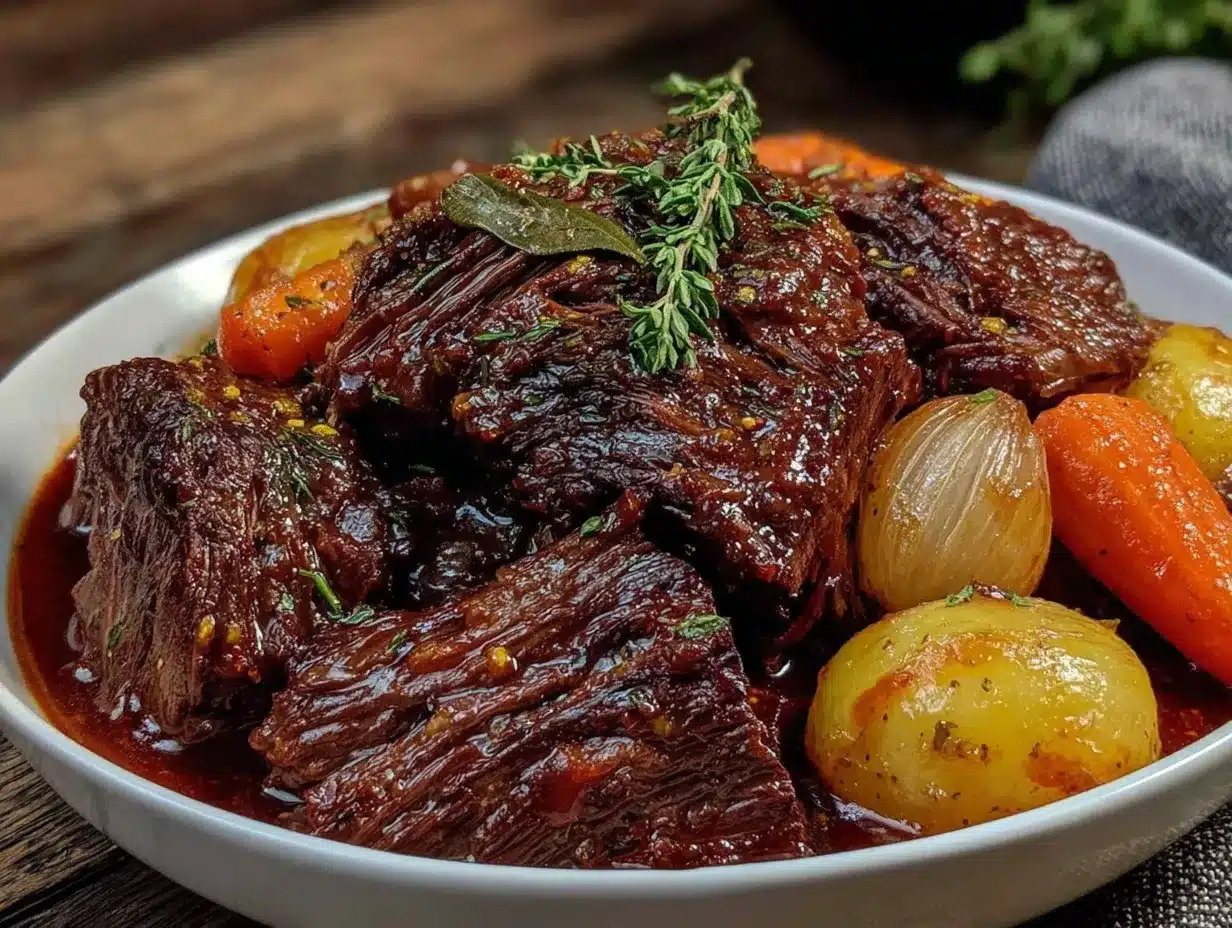
Let me walk you through this step by step. I have made this stew dozens of times, and these are the little details that make the difference between a good stew and a great one.
- Prep the beef and vegetables (10 minutes): Pat the beef cubes dry with paper towels. This is important—dry meat browns better. Season them generously with salt and pepper. Toss the beef with the 3 tablespoons of flour until each piece is lightly coated. Set aside. While you do that, dice the onions, mince the garlic, and chop the carrots, celery, and potatoes. Keep the potatoes in a bowl of cold water so they do not turn brown.
- Brown the beef (8 to 10 minutes): Heat 1 tablespoon of olive oil in your large skillet over medium-high heat until it shimmers. Add half the beef cubes in a single layer—do not crowd the pan. Let them brown undisturbed for 2 to 3 minutes per side. You want a deep, dark crust, not just a pale tan. Use tongs to flip them. Transfer the browned beef to the slow cooker. Repeat with the remaining oil and beef. This step feels like a hassle, I know, but trust me—it is the single most important thing you will do. That brown crust is pure flavor.
- Sauté the aromatics (5 minutes): Reduce the heat to medium. Add the diced onions to the same skillet (do not wipe it out—those browned bits are gold). Cook, stirring occasionally, for about 3 minutes until the onions soften and turn translucent. Add the minced garlic and cook for 30 seconds more, just until fragrant. Scrape the bottom of the pan with your wooden spoon to loosen any stuck bits. Transfer the onions and garlic to the slow cooker.
- Deglaze the pan with tomato paste and wine (3 minutes): Add the tomato paste to the hot skillet and stir it around for about 1 minute. This cooks out the raw flavor and deepens the tomato taste. Pour in about ½ cup of the red wine and use your wooden spoon to scrape up every last browned bit from the bottom of the pan. This is called deglazing, and it is where the magic happens. Pour this mixture into the slow cooker.
- Add the remaining liquid and herbs (2 minutes): Pour the rest of the wine and the beef broth into the slow cooker. Add the thyme sprigs and bay leaves. Give everything a gentle stir to combine. The liquid should come about halfway up the ingredients—if it looks low, add a splash more broth or water.
- Layer in the vegetables: Add the carrots, celery, and potatoes to the slow cooker. Push them down into the liquid so they cook evenly. Do not add the peas yet—they go in at the end.
- Cook low and slow (6 to 8 hours on low, or 4 to 5 hours on high): Cover the slow cooker and set it to low for 6 to 8 hours or high for 4 to 5 hours. Low and slow gives you the most tender beef and the deepest flavor. If you are short on time, high works, but the beef will be slightly less tender. I almost always cook it on low—it is worth the wait.
- Add the peas and adjust seasoning (5 minutes before serving): About 5 minutes before you are ready to eat, stir in the frozen peas. They only need to warm through. Remove the thyme sprigs and bay leaves. Taste the stew and adjust the salt and pepper. You might want a pinch more salt or a crack of fresh pepper—trust your taste buds.
- Rest and serve (10 minutes): Let the stew sit in the slow cooker on warm for 10 minutes before serving. This allows the flavors to settle and the broth to thicken slightly. Ladle into bowls and garnish with fresh parsley if you like. Serve with crusty bread or over mashed potatoes for the ultimate comfort meal.
Cooking Tips & Techniques
I have made every mistake in the book with this stew, so let me save you some trouble. These tips come from personal experience—some learned the hard way.
Do not skip the browning. I know it adds an extra step and dirties another pan, but that deep brown crust on the beef is where the entire flavor foundation comes from. The first time I made this, I was in a rush and just dumped raw beef into the slow cooker. The result was edible but bland—like beef-flavored water. Browning the meat creates the Maillard reaction, which is just a fancy way of saying it makes things taste incredibly savory and rich. If you are really pressed for time, you can brown the meat the night before and keep it in the fridge.
Choose your wine wisely. You do not need a $30 bottle, but do not use something you would not drink. A dry red like Merlot, Cabernet Sauvignon, or Zinfandel works beautifully. I have used a decent $8 bottle of Merlot with great results. Avoid anything labeled “cooking wine”—it has added salt and preservatives that will ruin your stew. If you do not drink alcohol, you can substitute an equal amount of beef broth plus 1 tablespoon of balsamic vinegar for acidity.
Cut your vegetables into uniform pieces. This is one of those little things that makes a big difference. If your carrot chunks are twice the size of your potato chunks, they will not cook at the same rate. Aim for 1 to 1.5-inch pieces across the board. I learned this after serving a bowl where some carrots were still crunchy and others had dissolved into mush.
Resist the urge to peek. Every time you lift the lid on a slow cooker, you release heat and add about 20 minutes to the cooking time. I know it is tempting to stir and check, but try to leave it alone until the last hour. The stew will be better for it.
Thicken the stew at the end if you like. Some people prefer a thicker, gravy-like broth. If that is you, mix 2 tablespoons of cornstarch with 2 tablespoons of cold water to make a slurry. Stir it into the stew about 20 minutes before serving and let it cook, uncovered, until it thickens. I personally like the broth as-is, but this trick works perfectly.
Variations & Adaptations
One of the things I love about this stew is how flexible it is. Here are a few ways to make it your own.
Vegetarian version: Swap the beef for 2 cans of drained and rinsed chickpeas or a package of cremini mushrooms, halved. Use vegetable broth instead of beef broth. The mushrooms add that umami depth that mimics the richness of beef. Brown the mushrooms in the same way you would the beef—they release liquid at first, then brown beautifully.
Herb swap: If you do not have fresh thyme, use 1 teaspoon of dried thyme. You can also add a sprig of rosemary or a teaspoon of dried oregano for a different flavor profile. I once threw in a leftover sprig of sage, and it was surprisingly good—earthy and warm.
Add more vegetables: This stew is a great way to use up whatever is in your crisper drawer. Parsnips, turnips, sweet potatoes, or even a handful of green beans work well. Just keep the total vegetable volume about the same—too many veggies and the broth will be thin.
Make it spicy: Add a pinch of red pepper flakes or a diced jalapeño along with the onions for a little heat. I tried this on a whim one winter and loved the contrast between the rich wine broth and the subtle kick.
Dairy-free and gluten-free: This recipe is naturally dairy-free. For gluten-free, use a gluten-free flour blend or arrowroot powder for coating the beef, and make sure your broth is gluten-free. Most boxed broths are, but check the label.
Serving & Storage Suggestions
This stew is at its best served hot, straight from the slow cooker. Ladle it into wide, shallow bowls so you get plenty of broth with every spoonful. A slice of crusty bread is essential for sopping up the juices—I love a good sourdough or a rustic French loaf. If you want to go next-level, serve it over a scoop of buttery mashed potatoes or a bed of egg noodles. The potatoes in the stew are plenty, but carbs on carbs is a beautiful thing on a cold night.
For a complete meal, pair it with a simple green salad dressed with lemon and olive oil. The acidity cuts through the richness of the stew perfectly. A glass of the same red wine you used in the cooking is the obvious drink pairing, but a dark beer or even a sparkling water with lemon works too.
Storage: This stew tastes even better the next day. Let it cool completely, then transfer it to an airtight container. It will keep in the refrigerator for up to 4 days. The flavors meld and deepen overnight, so do not be surprised if tomorrow’s leftovers taste even better than today’s dinner.
Freezing: This stew freezes beautifully. Portion it into freezer-safe containers or zip-top bags, leaving a little room for expansion. It will keep for up to 3 months. Thaw overnight in the refrigerator before reheating.
Reheating: The best way to reheat stew is on the stovetop over medium-low heat, stirring occasionally. Add a splash of broth or water if it has thickened too much. You can also microwave individual portions in 1-minute intervals, stirring between each. The texture of the potatoes may change slightly after freezing—they get a bit softer—but the flavor remains excellent.
Nutritional Information & Benefits
This stew is a hearty, balanced meal on its own. Here is an approximate breakdown per serving (based on 6 servings):
- Calories: 420
- Protein: 35 grams
- Fat: 14 grams
- Carbohydrates: 32 grams
- Fiber: 6 grams
- Sugar: 8 grams
- Sodium: 680 mg (varies based on broth and added salt)
The beef provides high-quality protein and iron, which is great for energy and healthy blood. Carrots and potatoes are packed with vitamin A, vitamin C, and potassium. The red wine adds antioxidants called polyphenols, which are good for heart health in moderation. This is a satisfying, nutrient-dense meal that will keep you full and fueled for hours.
If you are watching your sodium, use low-sodium broth and go easy on the added salt. You can also reduce the potatoes for a lower-carb option—swap in extra carrots or celery instead.
Conclusion
This quick slow cooker beef stew with red wine has become my go-to for those nights when I need dinner to take care of itself. It is the recipe I turn to when the week has been long, the weather is cold, and I want something that feels like a warm hug without spending hours in the kitchen. Rosa’s simple advice—brown the meat good, do not rush the wine, and let the pot do the rest—has never steered me wrong.
I hope you give this stew a try and make it your own. Add extra garlic if that is your thing. Throw in some mushrooms. Serve it over mashed potatoes or with a hunk of bread. The beauty of a recipe like this is that it welcomes your personal touch. Let me know how it turns out in the comments—I genuinely love hearing about your kitchen adventures. And if you have a favorite slow cooker trick, share that too. We are all in this together, figuring out how to get a good dinner on the table without losing our minds. Happy cooking!
Frequently Asked Questions
Can I make this stew without a slow cooker?
Absolutely. You can make it in a Dutch oven on the stovetop or in the oven. Brown the meat and sauté the aromatics in the same pot, then add the liquid and vegetables. Bring it to a simmer, cover, and cook in a 325°F (160°C) oven for about 2.5 to 3 hours, or simmer on the stovetop over low heat for about 2 hours. Check the liquid level occasionally and add more broth if needed.
What is the best cut of beef for slow cooker stew?
Beef chuck is the best choice. It has enough fat and connective tissue to break down into tender, flavorful pieces during the long cook. Brisket or bottom round can work, but they are leaner and may turn out slightly drier. Avoid lean cuts like sirloin—they will toughen rather than tenderize.
Can I use frozen beef directly in the slow cooker?
I do not recommend it. Frozen beef will take much longer to come to a safe temperature, and you will not be able to brown it properly. Browning is essential for flavor. Thaw the beef in the refrigerator overnight before cooking, or if you are in a hurry, use the defrost setting on your microwave.
Why is my stew broth too thin?
This usually happens if there is too much liquid or if the stew has not cooked long enough. Next time, reduce the broth to 1.5 cups instead of 2. You can also thicken the finished stew with a cornstarch slurry (2 tablespoons cornstarch mixed with 2 tablespoons cold water) stirred in during the last 20 minutes of cooking.
Can I add other vegetables like mushrooms or parsnips?
Yes, absolutely. Mushrooms, parsnips, turnips, and even sweet potatoes all work beautifully. Just keep the total vegetable volume similar to what the recipe calls for. If you add mushrooms, brown them in the skillet after the beef to develop their flavor before adding them to the slow cooker.
Pin This Recipe!
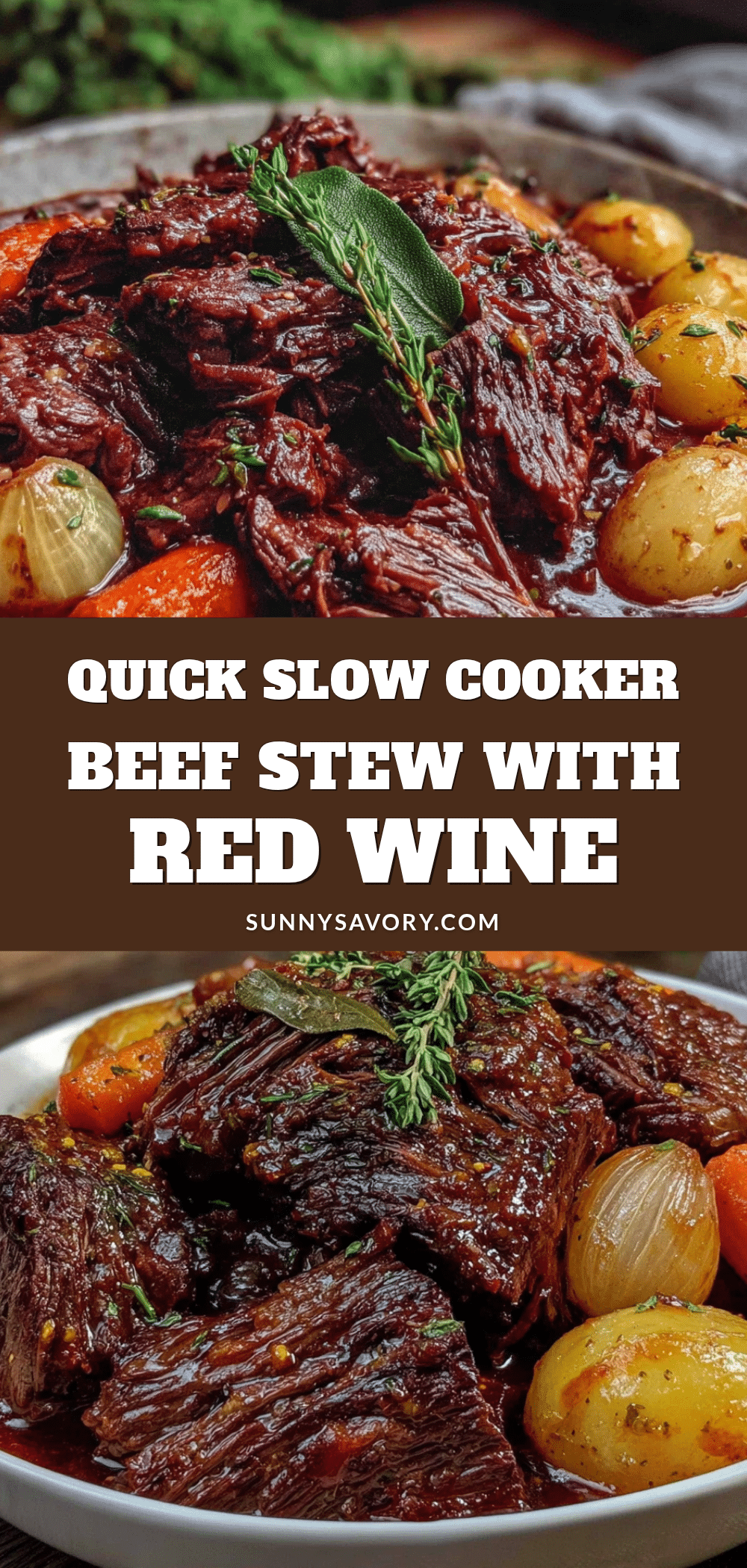
Quick Slow Cooker Beef Stew with Red Wine
A deeply flavorful, comforting beef stew made with red wine and simple ingredients, all prepared in a slow cooker with minimal hands-on time. Perfect for busy weeknights.
- Prep Time: 20 minutes
- Cook Time: 6 hours (low) or 4 hours (high)
- Total Time: 6 hours 20 minutes (low) or 4 hours 20 minutes (high)
- Yield: 6 servings 1x
- Category: Main Course
- Cuisine: American
Ingredients
- 2 pounds beef chuck, cut into 1.5-inch cubes
- 3 tablespoons all-purpose flour
- 2 tablespoons olive oil
- 2 medium yellow onions, diced
- 4 cloves garlic, minced
- 3 tablespoons tomato paste
- 1.5 cups dry red wine (e.g., Merlot, Cabernet Sauvignon, or Côtes du Rhône)
- 2 cups low-sodium beef broth
- 4 medium carrots, peeled and cut into 1-inch chunks
- 1.5 pounds Yukon Gold potatoes, peeled and cut into 1.5-inch chunks
- 3 stalks celery, sliced
- 4 sprigs fresh thyme
- 2 bay leaves
- 1 cup frozen peas
- Salt and black pepper to taste
- Fresh parsley, chopped (for garnish)
Instructions
- Pat the beef cubes dry with paper towels. Season generously with salt and pepper. Toss with flour until lightly coated. Set aside.
- Heat 1 tablespoon olive oil in a large skillet over medium-high heat. Add half the beef in a single layer and brown undisturbed for 2-3 minutes per side. Transfer to slow cooker. Repeat with remaining oil and beef.
- Reduce heat to medium. Add diced onions to the same skillet and cook for 3 minutes until softened. Add minced garlic and cook 30 seconds more. Transfer to slow cooker.
- Add tomato paste to the skillet and stir for 1 minute. Pour in ½ cup red wine and scrape up browned bits. Pour into slow cooker.
- Add remaining wine and beef broth to slow cooker. Add thyme sprigs and bay leaves. Stir gently.
- Add carrots, celery, and potatoes to slow cooker, pushing them into the liquid.
- Cover and cook on low for 6-8 hours or on high for 4-5 hours.
- About 5 minutes before serving, stir in frozen peas. Remove thyme sprigs and bay leaves. Adjust salt and pepper to taste.
- Let stew rest on warm for 10 minutes. Ladle into bowls and garnish with fresh parsley. Serve with crusty bread or over mashed potatoes.
Notes
Do not skip browning the meat—it builds deep flavor. Use a dry red wine you would drink, not cooking wine. For a thicker stew, mix 2 tablespoons cornstarch with 2 tablespoons cold water and stir in during the last 20 minutes of cooking. Leftovers taste even better the next day.
Nutrition
- Serving Size: 1 serving (about 1.5
- Calories: 420
- Sugar: 8
- Sodium: 680
- Fat: 14
- Saturated Fat: 4
- Carbohydrates: 32
- Fiber: 6
- Protein: 35
Keywords: slow cooker beef stew, red wine beef stew, easy beef stew, comfort food, weeknight dinner