Love this? Save it for later!
Share the inspiration with your friends
I was standing in the frozen foods aisle at Aldi last Tuesday when the smell hit me. Not from the freezer section, obviously, but from somewhere deep in my memory—sharp and sweet, with a hint of bacon fat and something almost like mulled wine. And just like that, I was seven years old again, sitting at my German neighbor Frau Mueller’s worn kitchen table, watching her shred a deep purple cabbage with a knife that looked way too big for her tiny hands.
She’d let me stir the pot, which felt like a huge deal at the time. The cabbage would start out this vibrant, almost neon purple, and then slowly, as the apples broke down and the vinegar did its thing, it would turn into this incredible jewel-toned dish that looked like something from a fairy tale. I honestly didn’t even like cabbage back then—I mean, what kid does? But this stuff was different. It was sweet, it was tangy, it had little bits of salty bacon in it, and I would eat bowl after bowl of it while Frau Mueller smiled and said something in German that I’m pretty sure meant “slow down, kid.”
She moved away when I was twelve, and I never got her recipe. For years, I tried to recreate that flavor—too sour, too sweet, too mushy, too bland. You know that feeling when you just can’t quite get there? It drove me crazy. But after maybe a dozen attempts and a lot of burned-bottom pots, I finally cracked it. This sweet and savory Bavarian red cabbage with apples and bacon is the one. It’s the one that makes me close my eyes after the first bite, the one that tastes like a Tuesday afternoon in a tiny kitchen with a kind woman who didn’t speak much English but sure knew how to cook.
Why You’ll Love This Recipe
Look, I get it. Cabbage can be boring. It can be watery, or it can smell like a wet sock when you cook it too long. This is not that cabbage. This is cabbage that has been completely transformed, and honestly, it might just become your new favorite side dish.
- Quick & Easy: This comes together in about 45 minutes, most of which is just letting it simmer on the stove. Perfect for a Tuesday night when you want something that feels special but doesn’t require a ton of effort.
- Simple Ingredients: You probably already have most of this stuff in your kitchen. Cabbage, apples, bacon, vinegar, a few spices. No weird ingredients you’ll use once and then let sit in your pantry for three years.
- Perfect for Any Occasion: It’s great with pork chops or sausages for a cozy fall dinner, but honestly, I’ve served it alongside roast chicken and even with a simple grilled cheese. It works everywhere.
- Crowd-Pleaser: I have yet to meet someone who doesn’t like this. Kids, adults, picky eaters—everyone goes for it. The sweetness from the apples and the saltiness from the bacon just works.
- Unbelievably Delicious: The texture is what gets me. The cabbage softens but still has a little bite, the apples melt into almost a compote, and the bacon stays chewy. It’s comfort food that tastes way more complex than it actually is.
What makes this version different from all the other red cabbage recipes out there? It’s the balance. Most recipes lean too hard into the sweet or too hard into the sour. This one hits that perfect middle ground, and the bacon adds a savory depth that makes the whole thing sing. It’s not just another cabbage dish—it’s the cabbage dish you’ll keep coming back to.
What Ingredients You Will Need
This recipe uses simple, wholesome ingredients to build layers of flavor that taste like you spent hours in the kitchen. Most of these are pantry staples or easy to find at any grocery store.
For the Main Dish
- 1 medium head red cabbage (about 2 pounds or 900g), cored and thinly sliced. Look for a cabbage that feels heavy for its size and has tight, crisp leaves. The outer leaves should be deep purple without too many brown spots.
- 4 slices thick-cut bacon, chopped into 1-inch pieces. I prefer applewood-smoked bacon for this, but any good quality bacon works. The fat renders out and becomes the cooking base, so don’t skimp here.
- 2 medium apples, peeled, cored, and diced into 1/2-inch cubes. I use Granny Smith for the tartness, but Honeycrisp or Braeburn work great too. In the fall, I’ll use whatever I picked at the orchard. The apples should be firm, not mealy.
- 1 medium yellow onion, diced. About 1 cup. A sweet onion like Vidalia works well here, but any yellow onion will do.
- 1/4 cup apple cider vinegar. This is non-negotiable for that tangy punch. Don’t use white vinegar—it’s too harsh. I like Bragg’s for the flavor, but any unfiltered apple cider vinegar is good.
- 1/4 cup brown sugar, packed. Light or dark both work. Dark brown sugar gives a deeper molasses flavor that I personally love, but light keeps it a bit more delicate.
- 1/2 cup apple juice or cider. This adds sweetness and helps braise the cabbage. Unsweetened is best so you control the sugar level.
- 1 teaspoon caraway seeds. Optional, but traditional. They add a subtle anise-like flavor that pairs beautifully with the cabbage and apples.
- 1 bay leaf.
- 1/2 teaspoon salt, plus more to taste.
- 1/4 teaspoon black pepper.
- Pinch of ground cloves. Just a tiny pinch—they’re potent. This adds that warm, almost Christmas-y spice note that makes the dish feel so cozy.
Ingredient Tips & Substitutions
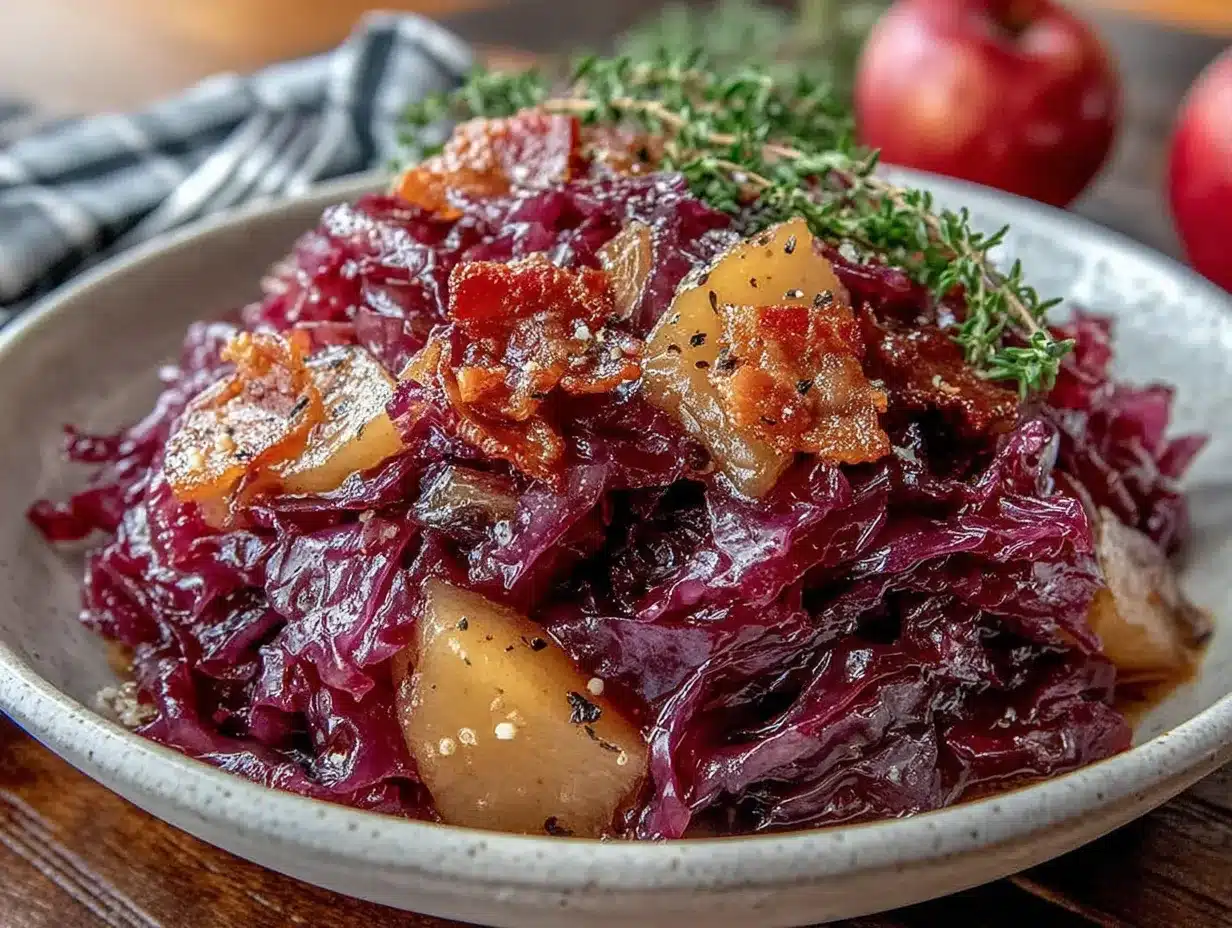
For a vegetarian version, simply skip the bacon and start by sautéing the onion in 2 tablespoons of butter or olive oil. You’ll miss that smoky flavor, so consider adding a teaspoon of smoked paprika to compensate. I’ve done this for my vegetarian sister-in-law, and she loved it, though she did say it wasn’t quite the same. Fair enough.
If you’re watching your sugar intake, you can reduce the brown sugar to 2 tablespoons or swap it for a sugar-free alternative. Just know that the dish will be more tart and less balanced. I’ve tried it with honey, and it works, but the flavor profile shifts. Honey is sweeter, so use less—about 2 tablespoons.
For the apples, I really recommend sticking with a firm, tart variety. If all you have is Red Delicious, which are mealy and sweet, the dish will turn out mushy and overly sugary. Not ideal. Granny Smith is my go-to, and I buy them by the bag when they’re in season.
Equipment Needed
You don’t need a lot of fancy equipment for this, which is part of why I love it. Here’s what you’ll need:
- A large, heavy-bottomed pot or Dutch oven. I use my 5.5-quart Le Creuset for this, and it’s perfect. The heavy bottom helps distribute heat evenly and prevents the sugars from burning. If you don’t have a Dutch oven, a large stainless steel pot works, but you’ll need to stir more often to prevent sticking.
- A sharp chef’s knife. Slicing a whole head of cabbage is much easier with a sharp knife. A dull one will just smash the leaves and make a mess. I use a 8-inch Wüsthof, but any sharp knife will do.
- A cutting board. Preferably large enough to handle a whole cabbage without things falling off the sides.
- A wooden spoon or silicone spatula. For stirring. Metal can scratch your Dutch oven, so stick with wood or silicone.
- A measuring cup and spoons. For the liquids and spices.
- A vegetable peeler. For the apples, unless you don’t mind the peels. I don’t mind them, but for this dish, I prefer the apples peeled so they melt into the cabbage more smoothly.
Preparation Method
Alright, let’s get cooking. This is straightforward, but I’ll walk you through every step so you don’t miss anything.
- Prep your ingredients first. This is one of those dishes where having everything ready to go makes a huge difference. Core and thinly slice the cabbage—aim for strips about 1/4-inch wide. Don’t go too thin, or it’ll turn to mush. Dice the onion, chop the bacon, peel and dice the apples. Measure out your vinegar, brown sugar, and apple juice. Trust me, once the bacon starts sizzling, you don’t want to be scrambling to chop an onion.
- Cook the bacon. Place your Dutch oven over medium heat and add the chopped bacon. Cook for about 5-7 minutes, stirring occasionally, until the bacon is crispy and the fat has rendered out. Use a slotted spoon to transfer the bacon to a paper towel-lined plate, leaving the fat in the pot. Don’t drain it—that fat is liquid gold for flavor.
- Sauté the onion. Add the diced onion to the pot with the bacon fat. Cook over medium heat for about 4-5 minutes, until the onion is soft and translucent. It should be fragrant and starting to brown just a little at the edges. If it’s browning too fast, turn the heat down.
- Add the cabbage. This is the moment where the pot looks way too full, and you’ll panic. Don’t. Add the sliced cabbage to the pot and stir to coat it in the bacon fat and onions. Cook for about 5 minutes, stirring frequently. The cabbage will start to wilt and reduce in volume significantly. I promise, it will all fit.
- Add the apples and seasonings. Stir in the diced apples, caraway seeds (if using), bay leaf, salt, pepper, and the tiny pinch of ground cloves. Give everything a good stir so the spices are distributed.
- Add the liquids. Pour in the apple cider vinegar, brown sugar, and apple juice. Stir everything together. The liquid should come about halfway up the cabbage. If it doesn’t, add a splash of water or more apple juice.
- Simmer. Bring the pot to a gentle boil, then reduce the heat to low. Cover the pot with a lid and let it simmer for 30-40 minutes. Stir it every 10 minutes or so to make sure nothing is sticking to the bottom. The cabbage should be tender but not mushy, and the liquid should have reduced to a syrupy glaze. If it looks too dry at any point, add a splash of water.
- Finish and serve. Remove the bay leaf and discard it. Stir in the reserved crispy bacon bits, reserving a few for garnish if you’re feeling fancy. Taste and adjust seasoning—you might want a pinch more salt or a splash more vinegar for brightness. Serve hot or warm.
Pro tip: This dish actually tastes better the next day. The flavors meld together overnight in the fridge. So if you can, make it a day ahead and reheat it gently on the stove.
Cooking Tips & Techniques
I’ve made this recipe more times than I can count, and I’ve definitely had my share of failures. Here’s what I’ve learned the hard way so you don’t have to.
Don’t skip the bacon fat. I know it’s tempting to drain it off for health reasons, but that fat is what gives the dish its savory backbone. If you must reduce the fat, use just 1 tablespoon of bacon fat and supplement with a tablespoon of butter. But honestly, live a little.
Watch your heat. This is a gentle braise, not a hard boil. If you cook it too fast, the liquid will evaporate before the cabbage is tender, and you’ll end up with burnt sugar on the bottom of your pot. I learned this the hard way on attempt number three. Low and slow is the way to go.
Slice the cabbage consistently. If some pieces are thick and some are thin, they won’t cook evenly. You’ll end up with some crunchy bits and some mushy bits. Take the extra minute to make your slices uniform.
Don’t overcrowd the pot. If you’re doubling the recipe, use a bigger pot or cook it in two batches. Overcrowding means the cabbage steams instead of braising, and you’ll lose that nice caramelized flavor.
Acid balance is key. The vinegar should be noticeable but not overpowering. If your cabbage tastes too sour at the end, add a little more brown sugar. If it’s too sweet, add a splash more vinegar. Taste as you go—that’s the only way to get it right.
Variations & Adaptations
One of the best things about this recipe is how adaptable it is. Here are a few ways I’ve changed it up over the years.
German-Style with Sausage
For a heartier meal, add 4-6 bratwurst or kielbasa links to the pot during the last 20 minutes of cooking. Nestle them right into the cabbage. The sausages absorb all that sweet and sour flavor, and you get a full meal in one pot. I do this on Oktoberfest and it’s always a hit.
Slow Cooker Version
If you want to set it and forget it, this works great in a slow cooker. Cook the bacon and sauté the onion on the stovetop first, then transfer everything to the slow cooker. Cook on low for 4-6 hours or on high for 2-3 hours. The texture will be softer, almost like a compote, but the flavor is just as good.
Spiced-Up Version
Add 1/2 teaspoon of ground cinnamon and 1/4 teaspoon of ground nutmeg along with the other spices. This gives the dish a warmer, more holiday-oriented flavor. I do this version around Christmas, and it pairs beautifully with roast pork or goose.
Low-Carb Adaptation
Skip the brown sugar and use a sugar substitute like erythritol or monk fruit. Replace the apple juice with water or unsweetened apple cider vinegar diluted with water. The apples will still add some natural sweetness, so it won’t be completely sugar-free, but it’ll be much lower in carbs.
Serving & Storage Suggestions
This dish is incredibly versatile in how you serve it. Here are my favorite ways.
Serving Temperature: I prefer this served warm, but it’s also delicious at room temperature. If you’re doing a buffet, room temp is actually ideal because the flavors really open up.
What to Serve With It: This is the ultimate side dish for pork—pork chops, roast pork loin, or even pulled pork sandwiches. It’s also amazing with sausages, roast chicken, or duck. For a vegetarian meal, serve it over creamy polenta or alongside a big pile of mashed potatoes. The sweet and sour cabbage cuts through the richness of the potatoes perfectly.
Storage: Store leftovers in an airtight container in the refrigerator for up to 5 days. The flavor actually improves after a day or two, so don’t be afraid to make it ahead.
Freezing: This freezes beautifully. Let it cool completely, then transfer to a freezer-safe container or zip-top bag. It will keep for up to 3 months. Thaw overnight in the refrigerator before reheating.
Reheating: Reheat gently on the stovetop over medium-low heat, adding a splash of water or apple juice if it seems dry. You can also microwave it in 30-second bursts, stirring in between. Don’t overheat it, or the cabbage will turn mushy.
Nutritional Information & Benefits
While this dish feels indulgent, it actually has some solid nutritional benefits. Here’s the breakdown per serving (about 1 cup, assuming 6 servings):
| Nutrient | Amount |
|---|---|
| Calories | 185 |
| Total Fat | 8g |
| Saturated Fat | 3g |
| Cholesterol | 15mg |
| Sodium | 320mg |
| Total Carbohydrates | 28g |
| Dietary Fiber | 5g |
| Sugars | 18g |
| Protein | 5g |
Red cabbage is a nutritional powerhouse. It’s packed with vitamin C, vitamin K, and anthocyanins—the antioxidants that give it that beautiful purple color. These compounds have anti-inflammatory properties and support heart health. The apples add more fiber and vitamin C, while the bacon, well, the bacon adds flavor and a little protein. Everything in moderation, right?
Dietary Considerations: This recipe is naturally gluten-free and can be made dairy-free (the bacon fat replaces butter). For a lower-sugar version, reduce the brown sugar and use unsweetened apple juice.
Conclusion
This sweet and savory Bavarian red cabbage with apples and bacon is more than just a side dish—it’s a little piece of comfort that you can make any night of the week. It’s the kind of recipe that makes you feel like you’ve accomplished something, even though it’s honestly not that hard. The smell alone will make your whole kitchen feel cozy and welcoming.
I hope you give this a try, and I hope it becomes a staple in your home like it has in mine. Don’t be afraid to tweak it to your taste—add more bacon, use different apples, throw in some extra spices. That’s the beauty of cooking. You make it your own.
If you do make it, I’d love to hear how it turned out. Drop a comment below and let me know if you added your own twist, or just tell me how much you loved it. And hey, if you have a memory of a dish like this from your own childhood, share that too. I’d love to hear about it.
Happy cooking, friends. This one’s for Frau Mueller, wherever she is.
Frequently Asked Questions
Can I make this without bacon?
Absolutely. For a vegetarian version, skip the bacon and sauté the onion in 2 tablespoons of butter or olive oil. Add 1/2 teaspoon of smoked paprika to get some of that smoky flavor back.
Do I have to use apple cider vinegar?
It’s strongly recommended for the best flavor, but in a pinch, you can use red wine vinegar or even a splash of balsamic. White vinegar is too harsh and will make the dish taste sharp.
How do I prevent the cabbage from turning mushy?
Don’t overcook it, and make sure you’re not slicing it too thin. Aim for 1/4-inch strips and check for doneness at the 30-minute mark. The cabbage should be tender but still have a little bite.
Can I use green cabbage instead of red?
You can, but the flavor will be different. Green cabbage is milder and won’t have the same beautiful color. You’ll also need to adjust the cooking time slightly, as green cabbage cooks a bit faster.
How long does this keep in the fridge?
Stored in an airtight container, it will keep for up to 5 days. The flavor actually improves after a day or two. Just reheat gently on the stovetop or in the microwave.
Pin This Recipe!
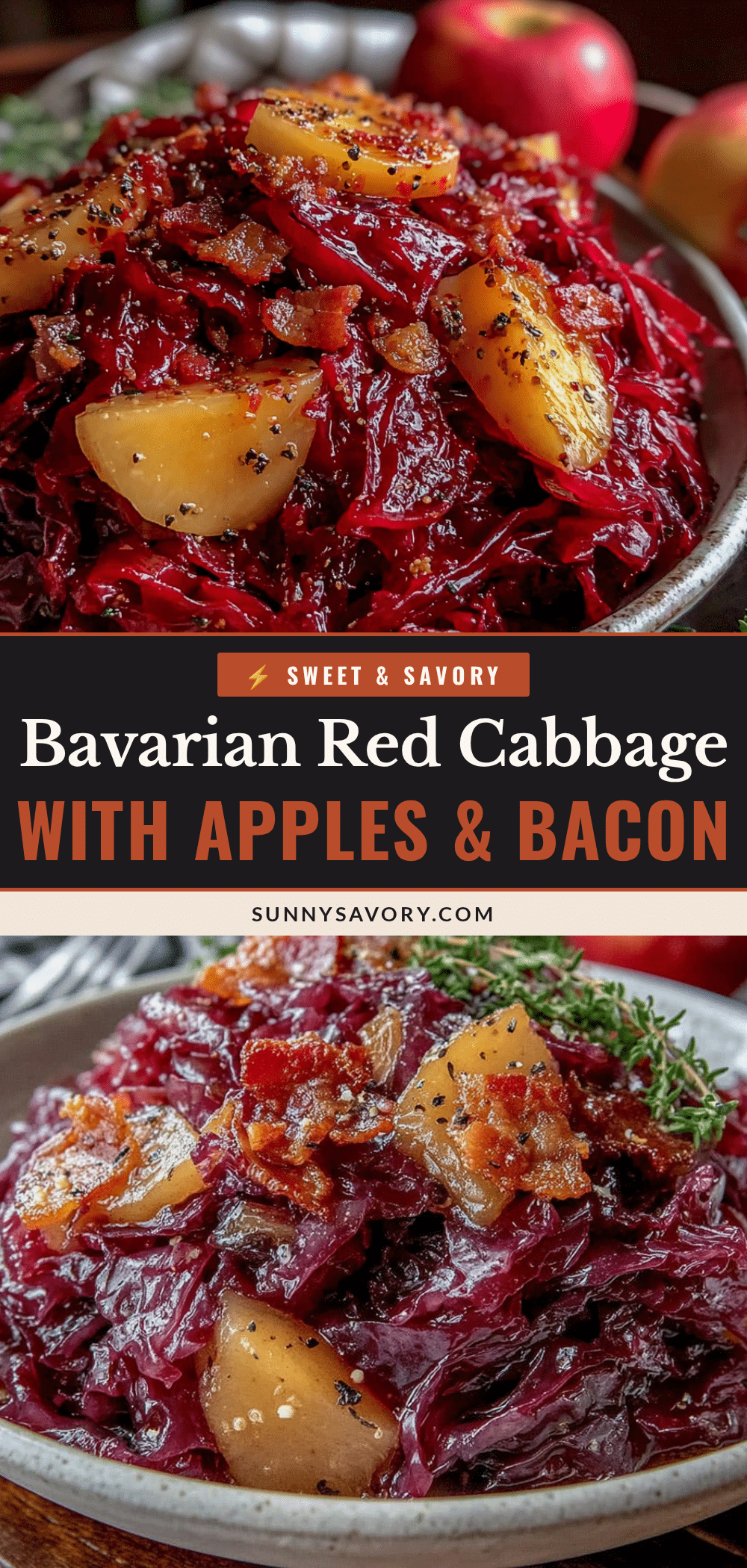
Sweet and Savory Bavarian Red Cabbage with Apples and Bacon

This sweet and savory Bavarian red cabbage with apples and bacon is a comforting side dish that balances tangy, sweet, and smoky flavors. It’s quick to make with simple ingredients and perfect for any occasion.
- Prep Time: 15 minutes
- Cook Time: 40 minutes
- Total Time: 55 minutes
- Yield: 6 servings 1x
- Category: Side Dish
- Cuisine: German
Ingredients
- 1 medium head red cabbage (about 2 pounds or 900g), cored and thinly sliced
- 4 slices thick-cut bacon, chopped into 1-inch pieces
- 2 medium apples (Granny Smith recommended), peeled, cored, and diced into 1/2-inch cubes
- 1 medium yellow onion, diced (about 1 cup)
- 1/4 cup apple cider vinegar
- 1/4 cup brown sugar, packed
- 1/2 cup apple juice or cider (unsweetened preferred)
- 1 teaspoon caraway seeds (optional)
- 1 bay leaf
- 1/2 teaspoon salt, plus more to taste
- 1/4 teaspoon black pepper
- Pinch of ground cloves
Instructions
- Prep your ingredients first: core and thinly slice the cabbage into 1/4-inch strips, dice the onion, chop the bacon, peel and dice the apples, and measure out the vinegar, brown sugar, and apple juice.
- Cook the bacon: Place a Dutch oven over medium heat and add the chopped bacon. Cook for 5-7 minutes, stirring occasionally, until crispy. Transfer bacon to a paper towel-lined plate, leaving the fat in the pot.
- Sauté the onion: Add the diced onion to the pot with the bacon fat. Cook over medium heat for 4-5 minutes until soft and translucent.
- Add the cabbage: Add the sliced cabbage to the pot and stir to coat in the bacon fat and onions. Cook for about 5 minutes, stirring frequently, until the cabbage starts to wilt.
- Add the apples and seasonings: Stir in the diced apples, caraway seeds (if using), bay leaf, salt, pepper, and pinch of ground cloves.
- Add the liquids: Pour in the apple cider vinegar, brown sugar, and apple juice. Stir to combine. The liquid should come about halfway up the cabbage; add a splash of water or more apple juice if needed.
- Simmer: Bring to a gentle boil, then reduce heat to low. Cover and simmer for 30-40 minutes, stirring every 10 minutes, until the cabbage is tender and the liquid has reduced to a syrupy glaze.
- Finish and serve: Remove the bay leaf and discard. Stir in the reserved crispy bacon bits (reserve a few for garnish if desired). Taste and adjust seasoning with more salt or vinegar as needed. Serve hot or warm.
Notes
This dish tastes even better the next day as the flavors meld. For a vegetarian version, skip the bacon and sauté the onion in 2 tablespoons of butter or olive oil, adding 1/2 teaspoon smoked paprika for smoky flavor. To prevent mushiness, don’t slice the cabbage too thin and check doneness at 30 minutes.
Nutrition
- Serving Size: 1 cup
- Calories: 185
- Sugar: 18
- Sodium: 320
- Fat: 8
- Saturated Fat: 3
- Carbohydrates: 28
- Fiber: 5
- Protein: 5
Keywords: Bavarian red cabbage, sweet and sour cabbage, German side dish, braised red cabbage, apples and bacon, Oktoberfest recipe, comfort food